
You’re sitting at a red light and suddenly your Jeep Compass dashboard flashes an unfamiliar “A.” icon or reads “Stop/Start Not Ready.” Your stomach drops. Is your engine about to die?
The Jeep Compass auto start warning light indicates that the Engine Stop/Start (ESS) system cannot function properly. In most cases, a weak or aging 12V battery is the primary culprit. The system requires a minimum battery state of charge, typically above 75%, to safely shut off and restart the engine at stops. When voltage drops below that threshold, the vehicle disables ESS and displays the warning. Less frequently, a faulty hood latch sensor, an unbuckled seatbelt, extreme cabin temperatures, or an open door can also trigger this light.
The good news? This warning rarely means your engine is failing. Below, you’ll learn exactly what this indicator looks like, why it appears, and how to fix it yourself before paying for a dealership visit.
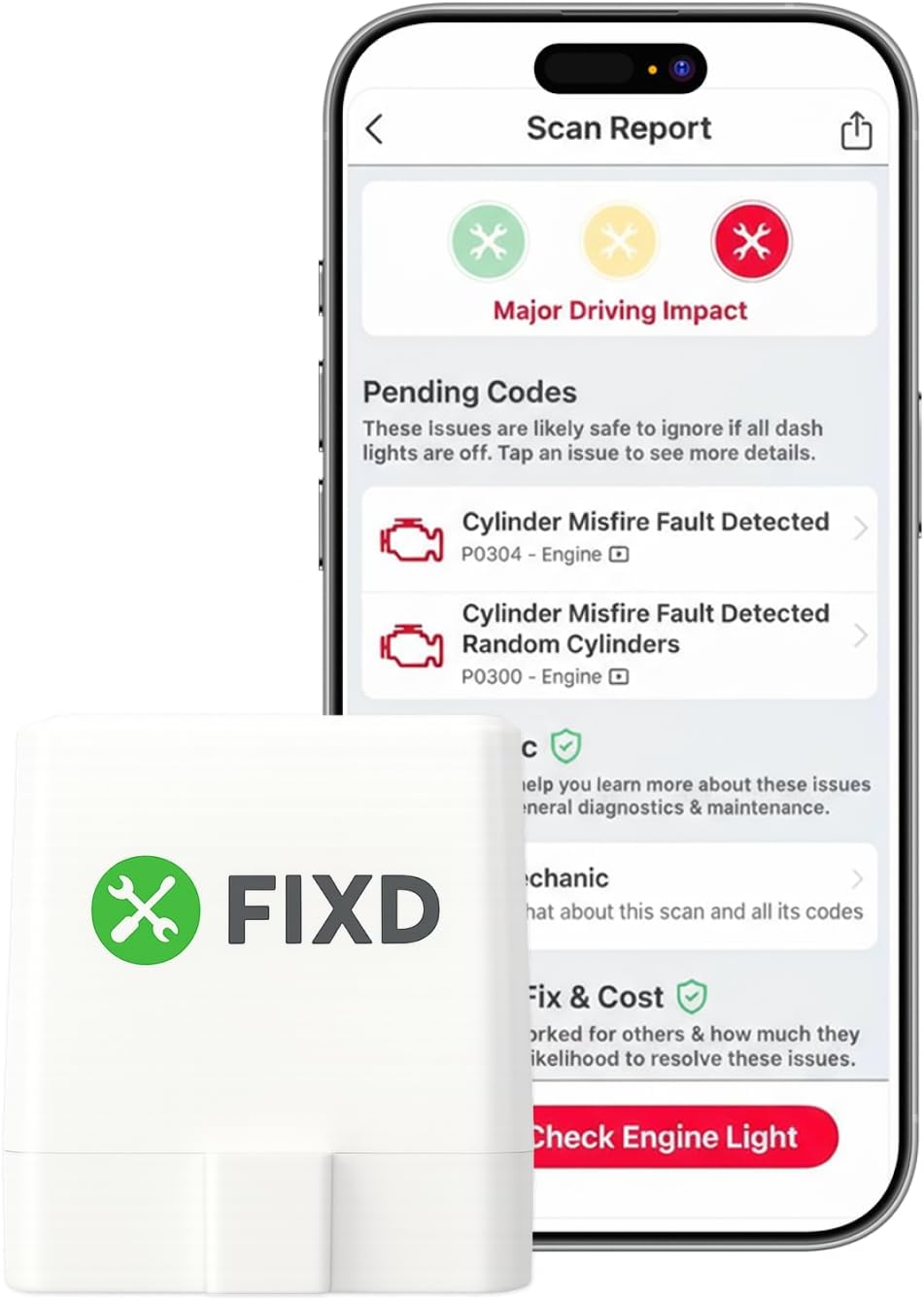
Best Bluetooth OBD2 Scanner
Detect 39,000+ Issues With Enhanced Codes. Save $1000s on car repairs & buying used vehicles by diagnosing problems yourself.
Shop on Amazon
Key Takeaways
- The Jeep Compass auto start warning light indicates the Engine Stop/Start system is temporarily disabled, usually due to a weak 12V battery below 75% charge or 12.4V at rest.
- A persistent warning light does not mean your engine will stall at a traffic light; the system is actually protecting you by keeping the engine running when conditions aren’t safe for an auto-restart.
- Battery voltage testing with a multimeter and OBD2 code scanning are the first diagnostic steps you can perform yourself before visiting a dealership.
- Replacing an aging AGM battery (typically lasting 3–5 years) and resetting the Intelligent Battery Sensor by disconnecting the negative terminal for 15 minutes resolves the warning in most cases.
- Secondary causes like a faulty hood latch sensor, unbuckled seatbelt, open doors, or extreme HVAC demand can also trigger the Stop/Start Not Ready warning and should be checked if battery voltage tests normal.
What the Auto Start-Stop Warning Light Actually Looks Like
The ESS warning on your Jeep Compass dashboard appears as a green or amber circle containing the letter “A” with an exclamation mark, sometimes shown as “A.” inside a circular arrow. When the system is working normally, the icon stays green. The moment the system detects a problem, it switches to amber or displays a text message reading “Stop/Start Not Ready” or “ESS System Unavailable.”
On 2017–2026 Jeep Compass models, this indicator sits in the instrument cluster, usually near the tachometer or within the driver information display (DID). Some owners confuse it with the electronic throttle control light, but the two are distinct. The ESS icon specifically references the auto start-stop feature, while the electronic throttle control light looks like a lightning bolt between reversed parentheses.
If you see the amber “A.” icon on your Jeep Compass dashboard, the vehicle is telling you it won’t shut off the engine at your next stop. The engine keeps running continuously, which means slightly higher fuel consumption but no immediate safety risk. Don’t panic, but don’t ignore it either, because a persistent warning often signals declining battery health that could eventually leave you stranded.
Here’s a quick visual reference:
| Icon Appearance | Color | Meaning |
|---|---|---|
| “A” with circular arrows | Green | ESS active and functioning |
| “A.” with circular arrows | Amber | ESS temporarily disabled |
| “Stop/Start Not Ready” text | Amber | System conditions not met |
| “Service Stop/Start System” text | Red/Amber | Fault detected, service needed |
Why the Auto Start-Stop Warning Light Turns On
The ESS system in your Jeep Compass relies on a precise set of conditions before it will shut off the engine. If even one condition fails, the system disables itself and triggers the warning.
Battery Health and Its Role in Triggering the Warning
Your 12V AGM (Absorbent Glass Mat) battery is the single most important component for the Stop/Start system. The ESS monitors battery voltage in real time through an Intelligent Battery Sensor (IBS) mounted on the negative battery terminal. When the sensor detects that voltage has fallen below approximately 12.4V at rest, or the state of charge drops below 75%, the system won’t risk shutting off the engine because it may not have enough power to restart it.
This is why the Jeep Compass battery health and Auto Start connection is so critical. AGM batteries in ESS-equipped vehicles degrade faster than standard batteries because they endure far more start cycles. A typical Jeep Compass battery lasts 3–5 years, but owners in hot climates like Arizona or Texas often see failure closer to the 3-year mark. Cold weather is equally punishing, battery capacity can drop 30–50% when temperatures fall below 20°F.
“My 2020 Compass started showing Stop/Start Not Ready every morning in January. Replaced the battery and it fixed it instantly. The OEM battery was only 3 years old.” via r/JeepCompass
If your battery tests above 12.6V but the warning persists, the IBS itself may need a reset. Disconnecting the negative terminal for 15 minutes can recalibrate the sensor, though some cases require a dealer-level scan tool to perform a proper Jeep Compass battery sensor reset.
Other Common Causes Beyond the Battery
Beyond battery voltage, several other conditions can prevent ESS from engaging:
- Hood latch sensor malfunction: The hood latch sensor on the Jeep Compass tells the ESS that the hood is securely closed. A corroded or failed sensor makes the system think the hood is open, disabling Stop/Start as a safety precaution. This is a common issue on 2017–2021 models.
- Seatbelt not fastened: The driver’s seatbelt must be buckled. ESS won’t activate if the system detects the driver is unbuckled.
- Door ajar: Any door or the liftgate registering as open will prevent ESS engagement.
- HVAC demand: If your climate control system is working hard to heat or cool the cabin, the system prioritizes comfort over fuel savings and keeps the engine running.
- Engine not at operating temperature: A cold engine won’t trigger ESS until coolant reaches approximately 160°F.
- Steering wheel turned significantly: If you’re mid-maneuver, ESS stays off to ensure immediate power availability.
A faulty alternator or charging system issue can also mimic battery problems. If your Jeep Compass alternator charging system isn’t delivering 13.8–14.4V while running, the battery slowly drains and ESS shuts down.
Will Your Jeep Compass Stall at a Traffic Light?
This is the question that keeps Compass owners up at night, and the answer is reassuring. No, the ESS warning light does not mean your Jeep will stall at a traffic light. When the system displays “Stop/Start Not Ready,” it’s doing the opposite of what you fear: it’s keeping the engine running because conditions aren’t safe for an auto-restart.
The ESS is a conservative system by design. It only shuts off the engine when every parameter checks out, battery charge, engine temperature, HVAC load, brake pressure, and more. If anything falls outside the acceptable range, the engine simply stays on. You drive normally. The only difference is slightly higher fuel consumption at idle.
“People think the car is going to die on them. It won’t. The warning means the system is protecting you by NOT shutting off. Your engine runs like it would in any car without Start/Stop.” via JeepGarage.org
That said, if you’re seeing the ESS light on while driving accompanied by other warnings, like a check engine light, the electronic throttle control light, or a battery warning, you should pull over safely and have the vehicle inspected. Multiple simultaneous warnings can indicate a charging system failure that could eventually stall the engine.
How to Diagnose the Problem Yourself
You don’t need a dealership to perform initial diagnostics. Start with these steps:
1. Test your battery voltage. Use a digital multimeter or a dedicated battery tester like the ANCEL BA101 Battery Tester to check resting voltage. A healthy AGM battery reads 12.6V or higher with the engine off. Anything below 12.4V indicates the battery needs charging or replacement.

2. Scan for OBD2 codes. Plug in an OBD2 scanner to check for stored fault codes. Common OBD2 codes for Jeep Compass Start/Stop issues include P0A0D (ESS system performance), U0100 (lost communication with ECM), and P1ECE (Stop/Start system fault). An affordable tool like the BlueDriver Bluetooth OBD2 Scanner pairs with your phone and reads manufacturer-specific codes, not just generic ones.
3. Inspect the hood latch sensor. Open the hood and locate the rubber-tipped sensor plunger on the latch assembly. Check for corrosion, debris, or a broken wire connector. Clean the contacts with electrical contact cleaner. If the pin doesn’t spring back when pressed, the sensor likely needs replacement.
4. Check the basics. Confirm the driver’s seatbelt is buckled, all doors are fully closed, and the climate system isn’t set to maximum. These simple conditions account for a surprising number of ESS warnings.
For ongoing monitoring, the FIXD OBD2 Scanner App ($19.99/year subscription) sends real-time battery health alerts and translates fault codes into plain English. It’s particularly useful for tracking Jeep Compass battery voltage requirements over time.
Step-by-Step Fixes to Clear the Warning Light
Once you’ve identified the cause, here’s how to resolve the most common triggers:
Fix 1: Charge or Replace the Battery
If your battery tests below 12.4V, connect a smart charger rated for AGM batteries and bring it back to full charge. If the battery is over 3 years old and won’t hold a charge above 12.5V after a full cycle, replace it. The Jeep Compass requires a Group 48 (H6) AGM battery, a standard flooded battery will not support ESS properly. The ACDelco Gold 48AGM Battery is a reliable, cost-effective replacement that meets OEM specifications.
Fix 2: Reset the Battery Sensor
After installing a new battery, the IBS needs recalibration. Disconnect the negative terminal for 15 minutes, reconnect it, then drive the vehicle for at least 30 minutes to allow the system to relearn battery parameters. Some owners report needing a dealer scan tool to fully register the new battery in the ECU.
Fix 3: Replace the Hood Latch Sensor
A replacement hood latch sensor typically costs $25–$60 for the part. It’s a 15-minute job, unplug the old sensor’s electrical connector, unbolt it, and bolt in the new one. This fix resolves the Stop/Start system fault service required message for many 2017–2021 Compass owners.
Fix 4: Disable Auto Start Temporarily
If you want to know how to disable Auto Start on your Jeep Compass while you troubleshoot, press the “A-off” button on the dashboard each time you start the vehicle. Note that this setting doesn’t save between drive cycles, you’ll need to press it every time.
Data Insights and Analysis
According to 2025 NHTSA complaint data, battery-related ESS failures account for the highest volume of Stop/Start complaints across Stellantis vehicles, with cold-weather states showing roughly 40% more reported incidents between November and February. Stellantis Technical Service Bulletin 08-074-22 REV.A specifically addresses ESS unavailability tied to IBS sensor calibration drift on 2017–2023 Jeep Compass and Renegade models.
Expert Note: "The IBS doesn't just measure voltage, it calculates internal resistance and state of health using coulomb counting. When the sensor's calibration drifts after 2–3 years, it may report the battery as 'weak' even when voltage tests fine. A proper reset or IBS replacement restores accuracy and re-enables ESS.", Automotive Electrical Systems Engineering
In 2025, Stellantis began phasing ESS out of select trim levels in North America, suggesting the automaker recognizes the ownership frustration this feature causes. Until your model year receives a software update, battery maintenance remains your best defense.
Frequently Asked Questions
What does the auto start warning light mean on my Jeep Compass?
The Jeep Compass auto start warning light indicates your Engine Stop/Start (ESS) system cannot function properly. It appears as a green or amber ‘A’ icon with circular arrows. When amber, it means the system is temporarily disabled, usually due to low battery charge (below 75%), cold temperatures, or sensor issues. Your engine will continue running normally—no immediate safety risk.
Why is my Jeep Compass showing ‘Stop/Start Not Ready’?
Your vehicle displays ‘Stop/Start Not Ready’ when one or more ESS conditions aren’t met. The most common cause is a weak 12V battery below 12.4V. Other triggers include a faulty hood latch sensor, unbuckled seatbelt, open door, extreme cabin temperatures, or an engine that hasn’t reached operating temperature yet.
Can a weak battery cause the Jeep Compass auto start warning light?
Yes. The 12V AGM battery is the primary trigger for the auto start warning light. The ESS system requires battery charge above 75% (approximately 12.4V) to safely shut off and restart the engine. AGM batteries degrade faster in hot climates (3 years) or cold weather, when capacity can drop 30–50% below 20°F.
Will my Jeep Compass stall if the auto start light is on?
No. The auto start warning light does not mean your engine will stall. When the light appears, the system is protecting you by keeping the engine running because conditions aren’t safe for auto-restart. Your vehicle will operate normally with slightly higher fuel consumption at idle.
How do I fix the auto start warning light on my Jeep Compass?
First, test your battery voltage with a multimeter—healthy AGM batteries read 12.6V or higher. If below 12.4V, charge or replace the battery. Other fixes include cleaning the hood latch sensor, ensuring seatbelts are buckled, and checking that all doors are closed. If issues persist, use an OBD2 scanner to check for fault codes.
Is the Jeep Compass hood latch sensor a common cause of the auto start warning?
Yes, the hood latch sensor is a frequent culprit on 2017–2021 Compass models. A corroded or failed sensor makes the system think the hood is open, disabling Stop/Start. The sensor appears as a rubber-tipped plunger on the hood latch assembly. You can clean it with electrical contact cleaner or replace it for $25–$60.
Read More:
- Jeep Wrangler Death Wobble Fix (How to Diagnose and Fix It)
- Jeep Grand Cherokee AC Not Working? No-Tool Diagnostic Guide
- Jeep Compass Not Starting but Has Power? Causes and Fixes