
You’re cruising down the highway when your dash lights up with “ADAS System Unavailable.” Suddenly, your adaptive cruise control, lane-keeping assist, and pre-collision warning go dark. It’s unnerving, and it’s happening to thousands of Ford F-150, Chevy Silverado/Blazer, and Kia EV6/EV9 owners right now.
The “ADAS System Unavailable” warning means your vehicle’s Advanced Driver Assistance Systems have temporarily or permanently lost functionality, usually due to sensor obstructions, software bugs, or calibration drift. In most cases, you can resolve this yourself without a $300+ dealer visit. But some scenarios do require professional recalibration, and I’ll tell you exactly which ones.
After 20-plus years turning wrenches and calibrating ADAS sensors on everything from fleet trucks to brand-new EVs, I’ve seen this warning pop up for reasons ranging from a muddy bumper to a botched OTA update. Let’s break down the causes and fixes by vehicle.
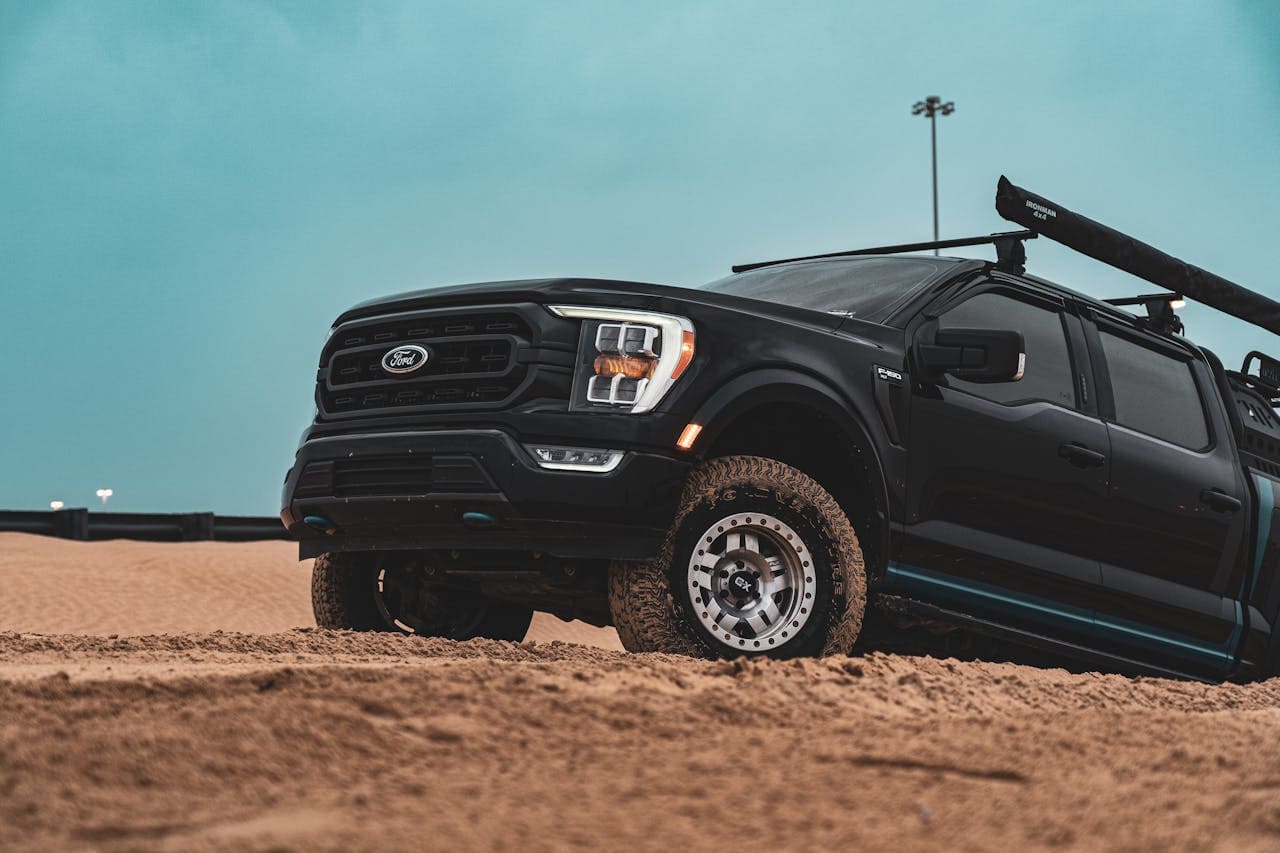
What Does ADAS Mean
ADAS stands for Advanced Driver Assistance Systems. It’s the umbrella term for all the electronic safety features your vehicle uses to help you drive: adaptive cruise control, automatic emergency braking, blind-spot monitoring, lane-departure warning, and rear cross-traffic alert. These systems rely on a network of cameras, radar modules, ultrasonic sensors, and sometimes LiDAR to monitor your surroundings in real time.
When your vehicle displays “ADAS System Unavailable,” it’s telling you one or more of these systems can’t function. The car isn’t broken in a mechanical sense, your engine, transmission, and brakes still work. But the electronic safety net you’ve come to rely on is offline.
The warning can be temporary or persistent. A temporary warning usually clears after you restart the vehicle or the environmental condition passes (heavy rain, ice on sensors). A persistent warning points to a deeper issue: a failed sensor, corrupted software, or a calibration that’s drifted out of spec after a windshield replacement or fender-bender.
Here's what matters: your vehicle is still drivable. But you lose critical safety features. If adaptive cruise control or automatic emergency braking is offline, you need to increase your following distance and stay alert. Don't ignore this warning for weeks hoping it resolves itself.
Common Causes of ADAS Warning
Sensor Obstructions and Environmental Factors
This is the number-one reason for temporary ADAS warnings, and it’s the easiest to fix. Your forward-facing camera sits behind the windshield, typically near the rearview mirror. Your radar module lives behind the front grille or bumper emblem. Both are sensitive to anything that blocks their line of sight.
Common physical obstructions include:
- Mud, road salt, or bug splatter on the front bumper covering the radar module
- Ice or snow buildup on the windshield near the camera housing
- Heavy rain, dense fog, or direct sun glare overwhelming the camera sensor
- Aftermarket tint or film applied across the windshield camera zone
- A cracked or replaced windshield that wasn’t recalibrated
One F-150 owner on the Ford F-150 Forum put it simply:
“Took it to the dealer twice. Turned out my bull bar was reflecting radar signal back into the sensor.”
Aftermarket accessories are a huge culprit that technicians frequently overlook.
Environmental factors usually resolve once conditions improve. If your warning clears after the sun dries things off or you clean the bumper, you’ve found your answer. If it doesn’t clear, move on to the next cause.
Software Glitches and Calibration Issues
Modern vehicles run millions of lines of code. Your ADAS modules communicate over the CAN bus network with the body control module, instrument cluster, and powertrain control module. A single corrupted update or voltage spike can throw a fault code that disables the entire ADAS suite.
OTA (over-the-air) updates are a frequent offender. Ford, GM, and Kia have all pushed updates in 2024 and 2025 that temporarily broke ADAS functions for certain model years. Sometimes the update installs incompletely, especially if the battery voltage drops during the process.
Calibration drift is the other big one. Every time you replace a windshield, adjust your suspension, or even hit a significant pothole, your camera and radar alignment can shift. The tolerances are tight, we’re talking fractions of a degree. A camera that’s off by just 0.5 degrees can misread lane markings at highway speed.
For diagnosing software-related ADAS faults at home, I recommend ForSCAN for Ford vehicles and a compatible OBD2 adapter. ForSCAN lets you read ADAS-specific DTCs (Diagnostic Trouble Codes) that generic code readers miss. It’s a subscription-based tool, but worth every penny if you own a late-model Ford.
If you need a reliable OBD2 scanner that covers Ford, GM, and Kia ADAS modules, the Autel MaxiCOM MK808S/MK808BT Pro is my go-to recommendation. It reads manufacturer-specific codes and can perform some basic resets that clear temporary ADAS faults.

ADAS Issues on Ford F150
The 2021–2025 Ford F-150 is one of the most common vehicles I see with ADAS failures. Ford uses a forward-facing camera module (IPMA, Image Processing Module A) mounted to the windshield and a radar module behind the front bumper fascia. Both are required for Co-Pilot360 features.
The most reported issue on the F-150 involves the IPMA losing communication after a windshield replacement. Ford requires a static calibration procedure using targets placed at specific distances in front of the truck. If your glass shop skipped this step, your ADAS will throw an unavailable warning within miles.
Another recurring problem is TSB 22-2511, which addresses false ADAS faults related to the front camera module software. Ford released a reprogramming fix. If your truck hasn’t had this update applied, that’s likely your culprit. You can check your TSB status through your Ford dealer or by running your VIN through Ford’s owner portal.
Here’s a helpful video that walks through Ford F-150 ADAS troubleshooting:
Video Credit: FordTechMakuloco / YouTube
Battery health also plays a role. The F-150’s ADAS modules draw significant current. A weak battery, especially in trucks with the 2.7L or 3.5L EcoBoost that sit for extended periods, can cause voltage drops that trigger ADAS faults. Test your battery with a load tester before chasing sensor problems.
ADAS Issues on Chevy Models
GM handles ADAS differently than Ford. The 2022–2025 Chevy Silverado and Blazer use a front camera module integrated into the windshield and a long-range radar behind the Chevy bowtie emblem. GM’s Super Cruise-equipped models add a driver attention camera on the steering column.
The most widespread Chevy ADAS issue involves the front radar module losing calibration after minor front-end collisions, even parking lot bumps. GM’s radar calibration requires a dynamic procedure (driving the vehicle at specific speeds on marked roads), which makes DIY calibration harder than Ford’s static method.
A Silverado owner on GM-Trucks.com shared:
“Had the ADAS unavailable message for three weeks. Dealer charged me $180 to find out the radar module connector had corrosion. Cleaned it myself for free.”
That connector corrosion issue is real and documented. GM’s front radar module sits low behind the bumper where it’s exposed to road spray. Check the electrical connector for green corrosion and clean it with electronic contact cleaner.
| Feature | Ford F-150 (Co-Pilot360) | Chevy Silverado (Safety Suite) | Kia EV6/EV9 (Drive Wise) |
|---|---|---|---|
| Forward Camera Location | Windshield-mounted IPMA | Windshield-integrated | Windshield-mounted |
| Radar Module Location | Behind front bumper | Behind bowtie emblem | Behind front bumper |
| Calibration Type | Static (targets) | Dynamic (road drive) | Static + Dynamic |
| Common Failure Point | IPMA after windshield swap | Radar connector corrosion | Software/OTA update bugs |
| DIY Difficulty | Moderate | Moderate-High | Low-Moderate |
ADAS Issues on Kia EVs
The Kia EV6 and EV9 represent a newer generation of ADAS hardware, and their issues lean heavily toward software. Kia’s Drive Wise system uses a front camera, forward radar, and corner radars for Highway Driving Assist 2 (HDA2), which provides semi-autonomous highway driving.
The EV6 in particular has a well-documented history of ADAS warnings triggered by OTA updates. Kia pushed several software updates throughout 2024 and early 2025 that affected HDA2 functionality. Some owners reported that HDA2 became completely unavailable after an update, requiring a dealer visit to reflash the ADAS control unit.
The EV9 has fewer reported issues, but its larger sensor suite (it adds more ultrasonic sensors for its size) means more potential failure points. Cold weather is a frequent trigger. The EV9’s front radar module can ice over quickly in winter driving, and unlike some competitors, Kia doesn’t offer a heated radar option.
One practical fix that EV6 and EV9 owners swear by: disconnect the 12V battery for 15 minutes, then reconnect. This forces a full system reboot and clears temporary faults stored in the ADAS control module. It won’t fix a hardware failure, but it resolves software-related warnings about 60% of the time in my experience.
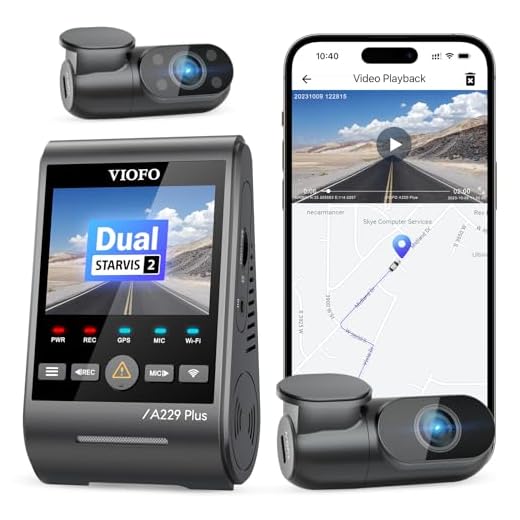
For Kia EV owners who want to monitor battery voltage and ADAS module status regularly, the VIOFO A229 Plus Dash Cam pulls double duty, it records your drives and monitors battery voltage, which helps you correlate low-voltage events with ADAS warnings.
Troubleshooting the ADAS Warning
Before you spend money, run through this checklist. I use this same sequence in my shop when a vehicle comes in with an ADAS fault.
First, clean all sensors. Wash the front bumper area thoroughly and clean the windshield around the rearview mirror housing. Use glass cleaner on the inside of the windshield where the forward camera sits. You’d be surprised how often a fingerprint or haze on the inside glass triggers the warning.
Second, check your battery voltage. You need a minimum of 12.4 volts with the engine off. Anything below 12.2V can cause ADAS modules to shut down as a self-protection measure. A simple multimeter reading takes 30 seconds and can save you hours of troubleshooting.
Third, perform a full key-off reset. Turn the vehicle off, open and close the driver’s door (this signals the BCM to fully shut down), and wait five minutes. Then restart. This clears most temporary software faults.
Fourth, check for OTA updates. Ford, GM, and Kia all have owner apps that show pending software updates. If an update is available, install it with the vehicle running on a full charge or with a battery maintainer connected.
Fifth, scan for DTCs with a manufacturer-specific scanner. Generic OBD2 readers won’t pull ADAS codes. You need a tool like ForSCAN (Ford), GM’s Tech2 equivalent, or a multi-brand scanner like the FOXWELL NT710 mentioned earlier.
If none of these steps resolve the warning, you’re likely dealing with a hardware failure or a calibration that requires professional equipment.
When to Visit a Professional
I’m the last person to send you to a dealer unnecessarily. But ADAS calibration has real limits for DIY work. Here’s where I draw the line.
You need a professional if your windshield was replaced and no calibration was performed afterward. Static ADAS calibration requires specific targets positioned at exact distances, typically 3 to 5 meters from the front of the vehicle, in a controlled indoor environment. Most home garages can’t accommodate this setup, and the calibration targets alone cost $2,000+.
You also need professional help if you have a confirmed radar module failure. Replacing a radar module requires programming the new unit to the vehicle’s VIN and performing a dynamic calibration drive. This requires dealer-level software in most cases.
According to AAA’s research on ADAS calibration, recalibration costs range from $150 to over $300 depending on the system. But skipping it after a windshield replacement can cause your automatic emergency braking to aim several feet off-target, a safety risk you shouldn’t gamble with.
Finally, if your vehicle is still under warranty, a persistent ADAS fault should be documented at the dealer. ADAS components are expensive ($800–$1,500 for a camera module), and warranty coverage saves you real money. The National Highway Traffic Safety Administration (NHTSA) complaints database is also worth checking, if enough owners report the same failure, a recall or extended warranty may follow.
Don’t let anyone tell you every ADAS warning requires a dealer visit. Most don’t. But when the fix exceeds your tools and space, a certified ADAS technician is money well spent.
Frequently Asked Questions
What does the “ADAS System Unavailable” warning mean on a Ford F-150, Chevy, or Kia EV?
The “ADAS System Unavailable” warning means your vehicle’s Advanced Driver Assistance Systems—including adaptive cruise control, lane-keeping assist, and automatic emergency braking—have lost functionality. Common causes include sensor obstructions, software glitches, calibration drift, or low battery voltage. Your vehicle is still drivable, but critical safety features are offline.
How do I fix the ADAS System Unavailable warning without going to a dealer?
Start by cleaning the front bumper radar area and windshield camera zone. Check battery voltage (minimum 12.4V). Perform a full key-off reset by turning the vehicle off, opening and closing the driver’s door, and waiting five minutes before restarting. Also check for pending OTA updates and scan for DTCs using a manufacturer-specific tool like ForSCAN or the FOXWELL NT710.
Why does my Kia EV6 or EV9 show ADAS unavailable after a software update?
Kia pushed several OTA updates in 2024 and 2025 that affected Highway Driving Assist 2 (HDA2) functionality on the EV6 and EV9. Incomplete or buggy updates can disable ADAS features. Disconnecting the 12V battery for 15 minutes forces a full system reboot and resolves software-related ADAS warnings roughly 60% of the time. A dealer reflash may be needed for persistent issues.
Does a windshield replacement require ADAS recalibration?
Yes. The forward-facing ADAS camera is mounted to the windshield, so any replacement shifts its alignment. Ford F-150s require static calibration with precision targets, while Chevy models need a dynamic calibration drive. Skipping recalibration can cause automatic emergency braking to aim several feet off-target. Costs typically range from $150 to over $300 depending on the vehicle.
Can aftermarket accessories cause the ADAS System Unavailable warning?
Absolutely. Bull bars, aftermarket grille guards, tinted windshield film over the camera zone, and custom bumper covers can block or reflect radar and camera signals. One F-150 owner traced persistent ADAS faults to a bull bar reflecting the radar signal back into the sensor. Always verify that accessories don’t obstruct the front camera or radar module.
How much does it cost to repair or recalibrate an ADAS system?
According to AAA research, ADAS recalibration typically costs $150 to over $300 depending on the system and vehicle. If a camera or radar module needs replacement, parts alone run $800 to $1,500. Check your warranty coverage before paying out of pocket, and file an NHTSA complaint if you suspect a widespread defect—it may lead to a recall or extended warranty.
Sources:
- NHTSA – Chevy Silverado/Sierra Front Camera TSB (23-NA-136)
- Consumer Reports – Guide to Maintaining Car Sensors
- Reddit (r/KiaEV6) – Blind Spot Assist Failure & Dealer Fixes
- Reddit (r/Ford) – Solving Persistent F-150 ADAS “Unavailable” Errors
- Reddit (r/KiaEV9) – Missing Blind-spot Dashboard View Fix
Read More: