
You’re rolling down I-80 when your Freightliner Cascadia dash lights up with “ENG 0” and a vague warning. Your gut tightens. Is this a full derate situation or something minor? Let’s cut through the confusion.
The ENG 0 code on a Freightliner is not a standalone fault code. It identifies the source address of the message, meaning your Primary Engine Controller (ECM) is broadcasting a fault. The “0” refers to Source Address 0 on the J1939 data link, which is reserved for the engine controller. To find the actual problem, you must drill into your ICU (Instrument Cluster Unit) menu and retrieve the specific SPN/FMI codes behind the ENG 0 header. Those codes tell you whether you’re dealing with a minor sensor glitch or a stop-engine condition that demands immediate attention.
After two decades of diagnosing Detroit Diesel DD13, DD15, and Cummins-powered Freightliners, I can tell you that most drivers panic when they see ENG 0, but the real story is always hiding one or two menu levels deeper. This guide walks you through exactly how to find it.
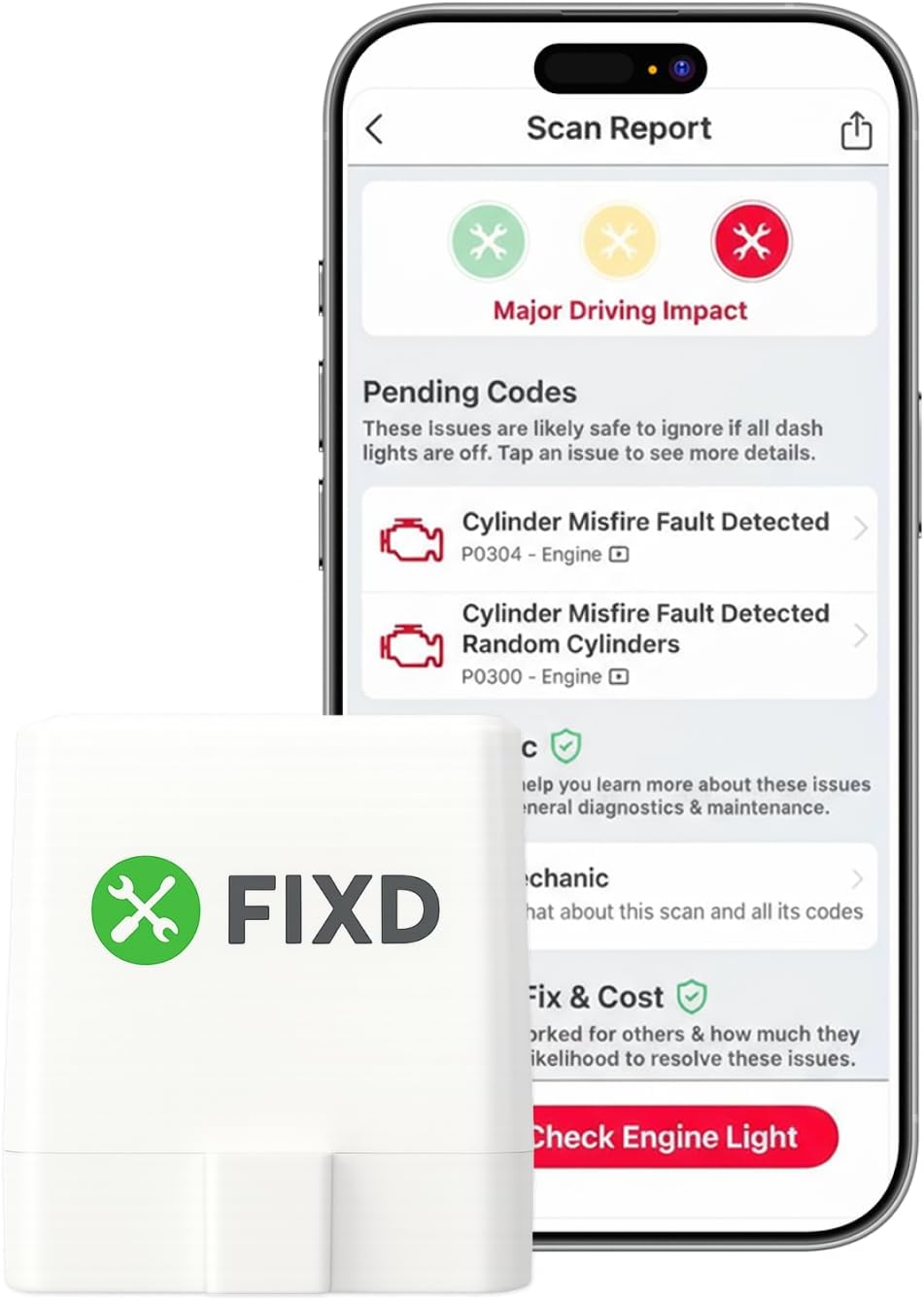
Best Bluetooth OBD2 Scanner
Detect 39,000+ Issues With Enhanced Codes. Save $1000s on car repairs & buying used vehicles by diagnosing problems yourself.
Shop on Amazon
Key Takeaways
- The ENG 0 code is not a fault itself—it’s a source address indicating the engine ECM is broadcasting; the actual problem is hidden in the SPN/FMI codes behind it.
- Always retrieve the full SPN/FMI pair from your Freightliner’s ICU diagnostic menu to determine severity, as the same ENG 0 header can represent anything from a minor sensor glitch to a stop-engine condition.
- Common ENG 0 triggers include chafed wiring harnesses on the engine, failing NOx sensors, coolant temperature sensor issues, and corroded ECM connectors—most are inexpensive fixes once identified.
- Weak or misaligned battery voltage and loose connector pins are among the leading causes of phantom ENG 0 faults; inspect batteries first and check the engine harness routing near heat sources like the EGR tube.
- Use OEM-level diagnostic software and scan tools to pull freeze-frame data and occurrence counts; dashboard-only fault reading misses critical troubleshooting information that prevents unnecessary part replacement.
Before you pull over and call for a tow, understand this: your Freightliner’s dash display organizes fault messages by source. ENG 0 simply means the engine ECM is talking. It’s the digital equivalent of a return address on an envelope, it tells you who sent the message, not what the message says.
Your first move should always be to scroll through the ICU fault menu. On a Cascadia, press and hold the diagnostic button on the dash (or use the stalk-mounted controls) to cycle through active faults. You’ll see entries like “ENG 0, SPN 3226 FMI 4” or similar. That SPN/FMI pair is the actual fault code that tells you what’s broken and how it failed.
This distinction matters because a single ENG 0 header can sit in front of dozens of different faults, from a minor coolant temperature sensor drift to a critical turbo boost pressure failure that triggers a 5-mph derate.
Understanding the ENG 0 Code and Its Implications
What the ENG 0 Code Indicates
ENG 0 designates Source Address 0 on the SAE J1939 communication network. According to SAE International’s J1939 standard, Source Address 0 is assigned to the primary engine controller. Every fault the ECM detects gets broadcast with this prefix. So when your dash reads “ENG 0,” it’s confirming the engine control module generated that alert, not a transmission controller, not the ABS module, and not the body controller.
On Detroit Diesel EPA10 and later engines (DD13, DD15, DD16), the ECM monitors over 200 parameters simultaneously. Any out-of-range reading triggers a diagnostic trouble code that the ICU displays with the ENG 0 tag.
Common Scenarios for ENG 0 Display
Drivers most often see ENG 0 messages in these situations:
- After a hard cold start, Glow plug or intake heater faults surface briefly
- During DPF regeneration, Exhaust temperature sensor readings fall outside expected ranges
- Following aftertreatment fluid (DEF) issues, NOx sensor or DEF quality codes activate
- When a wiring harness rubs through, Short-to-ground or open-circuit faults on engine sensors
“Had ENG 0 pop up on my 2019 Cascadia. Turned out to be a chafed wire on the turbo speed sensor harness right where it crosses the EGR tube. $40 fix once I found it.” via r/Truckers
Impact on Vehicle Operation
The severity depends entirely on the SPN/FMI behind the ENG 0 header. Some faults trigger a simple check-engine lamp with no power loss. Others activate a progressive derate, first reducing you to 65 mph, then 55, and eventually 5 mph if you ignore the warning long enough. Critical faults like low oil pressure (SPN 100) or high coolant temperature (SPN 110) can force an automatic engine shutdown. Always retrieve the full code before deciding whether to keep driving.
Diagnostic Protocols and Communication Standards
Role of J1708, J1587, and J1939 in Fault Detection
Freightliner trucks use multiple communication protocols depending on model year. Older units (pre-2007) primarily use the J1708/J1587 data link, which runs on a two-wire twisted pair at 9600 baud. Newer Cascadias and M2 models rely on J1939 CAN bus, which operates at 250 kbps and carries significantly more data. The ENG 0 source address convention applies specifically to J1939.
| Feature | J1708/J1587 | J1939 (CAN) |
|---|---|---|
| Speed | 9600 baud | 250 kbps |
| Protocol Type | Serial | CAN 2.0B |
| Source Address for Engine | MID 128 | SA 0 (ENG 0) |
| Common Model Years | Pre-2007 | 2007+ |
| Fault Format | MID/PID/SID + FMI | SPN + FMI |
This is why you’ll sometimes see references to “ECU 128” on older trucks, it’s the J1708 equivalent of ENG 0.
Importance of System Connectivity
J1939 is a multi-drop network. Every module on the truck shares the same pair of CAN wires. A single bad connector or corroded pin on the backbone can knock out communication from the ECM to the dash, causing ghost ENG 0 faults or missing data. Check your 9-pin diagnostic connector and the inline connectors at the firewall pass-through first.
Using Diagnostic Tools Effectively
A quality diagnostic adapter like the Nexiq USB-Link 3 paired with Detroit Diesel Diagnostic Link (DDDL) or Cummins INSITE gives you the full picture. The dash ICU shows limited information, usually just the SPN, FMI, and a brief description. A laptop-based scan tool reveals freeze-frame data, occurrence counts, and related fault trees that help you pinpoint root causes.

For fleet shops running multiple brands, subscription-based platforms like Noregon JPRO provide multi-make coverage and guided diagnostics that walk entry-level techs through each fault step by step.
Retrieving Additional Fault Codes
On the Cascadia dash, hold the SEL/RESET button for several seconds to enter the diagnostic menu. Use the up/down arrows to scroll through active and inactive faults. Write down every SPN/FMI pair, not just the first one. Multiple ENG 0 faults often share a root cause. For example, SPN 3226 FMI 4 (aftertreatment SCR catalyst conversion) and SPN 4094 FMI 18 (NOx sensor) frequently appear together and both trace back to a single failing NOx sensor.
Key Components and Sensors Related to ENG 0 Code
Electrical and Starting System Checks
Your first-look inspection should always start at the batteries. Low voltage causes erratic ECM behavior and phantom fault codes. Verify both batteries hold above 12.4V with no load. Check the main engine harness where it runs along the valve cover, this is the single most common chafing point on DD15 engines. A quality multimeter like the Fluke 87V is indispensable for checking voltage drops across ground circuits and sensor supply wires.

Also inspect the ECM power and ground connections directly. Corroded or loose ECM connector pins cause intermittent ENG 0 faults that disappear when you wiggle the harness, a classic symptom of ECM power loss.
Emissions and Exhaust Monitoring Components
The aftertreatment system generates a large share of ENG 0-tagged faults on EPA10 and newer trucks. Key components include:
- NOx sensors (inlet and outlet), SPN 4094, 4360
- DPF differential pressure sensor, SPN 3251
- DEF dosing valve and pump, SPN 5246, 4334
- Exhaust gas temperature sensors (EGT 1 through EGT 5), SPN 3242–3246
A failed outlet NOx sensor is one of the most frequent triggers for a progressive derate on DD15 engines.
Cooling and Temperature Sensors
Coolant temperature (SPN 110) and charge air cooler temperature (SPN 172) faults appear under ENG 0 when sensors drift or fail. Don’t overlook the coolant level sensor, a faulty one can trigger a stop-engine light even though your coolant is full.
“My Cascadia threw ENG 0 with a stop engine light. Pulled the SPN and it was 110 FMI 0, coolant temp reading way too high. Turned out the sensor connector had backed out half a click. Pushed it in, cleared codes, done.” via The Truckers Report Forum
Transmission and PTO Monitoring
While ENG 0 specifically tags engine-origin faults, certain transmission and PTO-related parameters do route through the engine ECM. Throttle position (SPN 91), vehicle speed from the engine’s perspective (SPN 84), and PTO engagement signals can all generate ENG 0 messages if the ECM detects inconsistent data.
Resolving ENG 0 Code and Preventing Future Issues
Step-by-Step Troubleshooting Process
- Record the full fault, Write down every SPN/FMI pair from your ICU display
- Check battery voltage, Confirm 12.4V+ at both batteries, engine off
- Inspect the engine harness, Focus on valve cover routing, EGR crossover tube contact points, and firewall pass-through connectors
- Check ECM connectors, Look for backed-out pins, corrosion, or moisture intrusion
- Scan with a diagnostic tool, Pull freeze-frame data and occurrence counts
- Cross-reference SPN/FMI, Use Detroit’s fault code manual or Cummins QuickServe to identify the specific sensor or circuit
- Repair and clear, Fix the root cause, then clear codes and road-test
Best Practices for Maintenance
Prevention beats roadside troubleshooting every time. During PMs, have your technician physically inspect the engine harness for abrasion, especially near heat sources. Apply dielectric grease to ECM and sensor connectors. Keep your diagnostic software updated: Detroit releases calibration updates that can resolve false-positive faults. And maintain your batteries, weak batteries cause more phantom ENG 0 codes than most drivers realize.
Data Insights and Analysis
According to the American Trucking Associations’ Technology & Maintenance Council, electrical and data link faults account for roughly 30% of all unplanned roadside breakdowns in Class 8 trucks. Aftertreatment-related faults represent the fastest-growing category of engine derates on EPA10+ diesel engines.
Expert Note: "The ENG 0 display confuses drivers because it looks like a fault code, but it's really a network address. The actual failure always hides behind the SPN/FMI. Technicians who skip the SPN lookup and start replacing parts based on symptoms alone waste thousands in unnecessary component swaps, especially with NOx sensors and DPF assemblies."
When to Seek Professional Help
If you see a red stop engine lamp alongside ENG 0, do not continue driving. Pull over safely and call for service. If you see an amber check engine light with no power loss, you can generally drive to the nearest qualified shop. But any fault that reappears after clearing codes needs a technician with OEM-level diagnostic software. Intermittent J1939 communication faults and ECM internal errors are beyond what a basic scan tool can diagnose, those require advanced breakout box testing and waveform analysis.
Frequently Asked Questions
What does the ENG 0 code mean on a Freightliner truck?
ENG 0 designates Source Address 0 on the J1939 data network, confirming the Primary Engine Controller (ECM) generated the alert. It’s not a fault code itself—you must retrieve the underlying SPN/FMI codes from your ICU menu to identify the actual problem behind the ENG 0 header.
How do I find the actual fault code behind an ENG 0 message?
On a Cascadia, hold the SEL/RESET button to access the diagnostic menu and scroll through faults using up/down arrows. Write down every SPN/FMI pair displayed. These codes reveal the specific sensor or circuit failure, such as ‘ENG 0, SPN 3226 FMI 4,’ which tells you exactly what’s broken.
Can I keep driving if my Freightliner shows an ENG 0 code?
It depends on the underlying SPN/FMI code. If you see a red stop-engine lamp, do not drive—call for service immediately. An amber check-engine light typically allows safe driving to a repair shop. Retrieve the full fault code first to assess severity before deciding whether to continue.
What are the most common causes of ENG 0 faults on Freightliner Cascadias?
Common causes include chafed engine harness wiring, failed NOx sensors, coolant temperature sensor drift, DEF system faults, DPF issues, low battery voltage, and corroded ECM connector pins. Aftertreatment and electrical problems account for the largest share of ENG 0-tagged faults on EPA10 and newer engines.
What diagnostic tools do I need to properly diagnose an ENG 0 code?
A quality diagnostic adapter like the Nexiq USB-Link 3 paired with Detroit Diesel Diagnostic Link (DDDL) or Cummins INSITE software reveals freeze-frame data and fault trees. Subscription platforms like Noregon JPRO provide multi-make coverage. A basic multimeter helps check voltage and ground circuits for electrical issues.
Why does my Freightliner ICU show ENG 0 even after I clear the codes?
Recurring ENG 0 faults after clearing codes indicate an unresolved root cause. Common culprits include intermittent J1939 communication issues, corroded connectors, chafed wiring that only grounds under vibration, or ECM internal errors. Advanced diagnostic testing and waveform analysis are often needed to pinpoint intermittent problems.
Sources:
- SAE J1939 Standards Overview, SAE International
- Freightliner Cascadia Driver’s Manual, Daimler Truck North America
- r/Truckers, Reddit Community for Commercial Drivers
- The Truckers Report Forum, Freightliner Discussion
- American Trucking Associations, Technology & Maintenance Council
Read More:
- Freightliner Fault Codes List (Every SPN, FMI, and MID Code)
- ECU 128 Code Freightliner (The Complete Engine Fault Guide)
- BH 33 Code Freightliner (Troubleshooting & Repair Guide)