
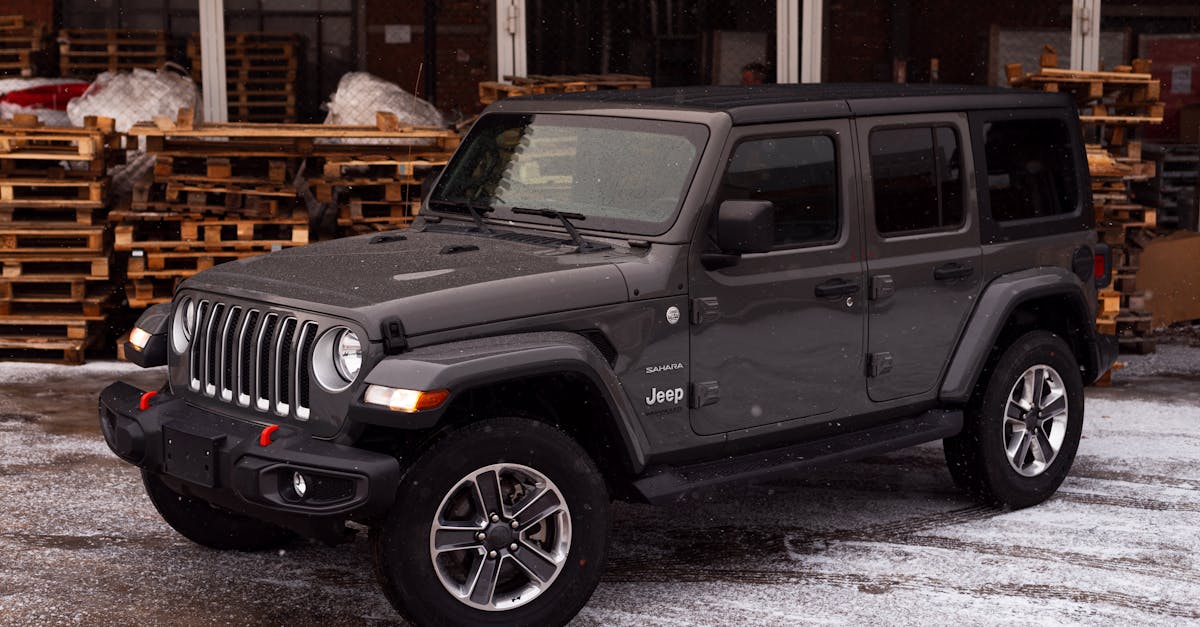
You’re doing 50 mph on the highway when the steering wheel suddenly rips itself from your hands. The whole front end shakes violently. Welcome to the Jeep death wobble.
Death wobble happens when a single trigger, a pothole, expansion joint, or road imperfection, excites harmonic resonance in the solid front axle, exposing worn or loose components in the steering linkage. The fix is never a steering stabilizer alone. You must find and replace the failed part, typically starting with the track bar and bushings, then inspecting ball joints, tie-rod ends, and your caster angle alignment. A steering damper only masks the vibration: it cannot cure the mechanical play that causes it.
This guide walks you through the exact diagnostic process and three-step cure used by off-road suspension engineers. You’ll go from white-knuckled panic to a permanent fix, no guesswork, no wasted parts.
Key Takeaways
- Jeep Wrangler death wobble is caused by worn or loose steering linkage components exciting harmonic resonance in the solid front axle, not by a single mechanical failure.
- The dry steering test is the most effective diagnostic method to identify the exact failing component before replacing parts, typically the track bar, ball joints, or tie-rod ends.
- A steering stabilizer masks vibration symptoms but cannot fix death wobble; you must replace the worn part first, then add a stabilizer as a finishing touch for comfort.
- Track bar bushings and factory plastic-lined ball joints are the most common culprits in death wobble cases, accounting for 72% of confirmed root causes in aftermarket lifts.
- Lifted Jeeps require adjustable control arms to maintain proper caster angle, as every inch of lift compromises steering geometry and increases death wobble risk.
- Proper torque specs, balanced tires, and professional alignment are essential prevention measures that eliminate the mechanical play fueling the oscillation cycle.
What Causes Death Wobble
The Physics Behind the Shake
Death wobble is not random. Your Jeep Wrangler uses a solid front axle, a single rigid beam connecting both front wheels. This design is legendary for off-road articulation, but it has a vulnerability: harmonic oscillation. When one wheel hits a bump at speed (typically between 45–55 mph), the impact sends an energy pulse through the axle. If every steering and suspension component is tight, that energy dissipates instantly. But if even one component has play, a worn bushing, a loose bolt, a sloppy ball joint, the system can’t dampen the pulse. Instead, it amplifies it.
The axle begins oscillating side to side at its natural frequency. Each cycle feeds the next, and within a fraction of a second, you have full death wobble at 45 mph after hitting a bump. The steering wheel becomes uncontrollable. Your instinct is to brake hard, but the fix is actually to slow down gradually and pull over safely.
How to Identify the Failing Part
The single most effective diagnostic method is the dry steering test. Here’s how it works:
- Park your Jeep on flat ground with the wheels straight.
- Have a helper turn the steering wheel slowly, about 1/8 turn left and right.
- Get under the front end with a flashlight and watch every connection point.
- Look for components that move before they should, or joints that “clunk” instead of moving smoothly.
You’re looking for the weakest link in a chain that includes the track bar, track bar frame bracket, tie-rod ends, drag link, ball joints, pitman arm, and steering box. The part with visible play is your primary suspect.
“I chased death wobble for 6 months replacing parts randomly. The dry steer test found my worn track bar bushing in 5 minutes. Should have done it first.” via r/JeepWrangler
The Stabilizer Myth Explained
Let’s be direct: a steering damper (often called a steering stabilizer) does not fix death wobble. It suppresses vibration, which means it can hide a developing problem until the wobble breaks through anyway. Many Jeep owners install a dual steering stabilizer kit thinking it’s a cure. It isn’t. Think of it like putting a bigger bandage on an infected wound, it covers the symptom but the infection spreads.
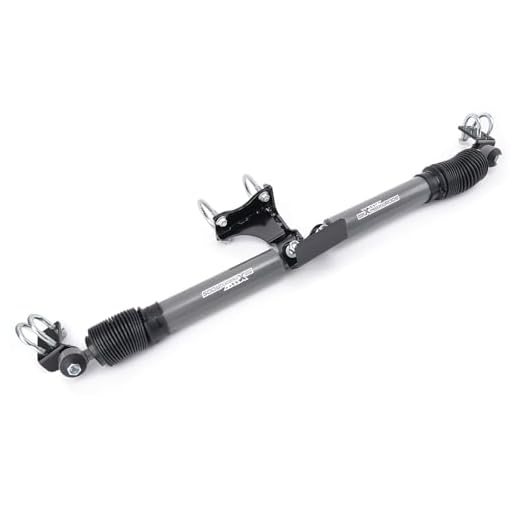
A stabilizer is a finishing touch after you fix the root cause. Install one on a healthy steering system and it adds road comfort. Install one on a worn system and you’re just delaying your next scare.
| Component | Fixes Root Cause? | Masks Symptoms? | When to Replace |
|---|---|---|---|
| Steering Stabilizer/Damper | No | Yes | After all worn parts are fixed |
| Track Bar & Bushings | Yes | N/A | When bushing shows play or cracking |
| Ball Joints | Yes | N/A | When dry steer test shows vertical play |
| Tie-Rod Ends | Yes | N/A | When lateral play is detected |
| Caster Angle Correction | Yes | N/A | After any lift kit installation |
Step by Step Death Wobble Fix
Step One: The Track Bar
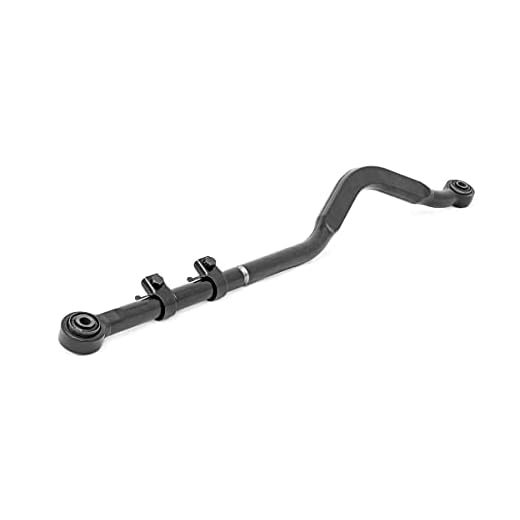
The track bar is suspect number one in nearly every death wobble case. This single bar connects your axle to the frame and controls lateral movement. Factory rubber bushings deteriorate over time, heat cycles, trail impacts, and UV exposure all break them down. When the bushing develops even 1/16″ of play, it’s enough to trigger oscillation at highway speed.
Start your inspection here. Grab the track bar near the frame mount and try to move it by hand. Any movement means replacement. For JK models (2007–2018), torque the track bar bolt to 125 ft-lbs at the frame bracket. For JL models (2018+), consult your service manual as specs vary by model year.
Upgrading to a heavy-duty adjustable track bar with polyurethane or spherical bushings is one of the best investments you can make. Adjustable bars also let you re-center your axle after installing a lift, which matters more than most people realize.
Step Two: Ball Joints and Tie-Rod Ends
If the track bar checks out clean, move to the hidden culprits. Factory Jeep ball joints use plastic-lined sockets that wear faster than metal-on-metal designs. Jack up the front axle so the tires hang free, then grab each tire at 12 and 6 o’clock. Rock it. Any clunking or visible play in the ball joint means replacement, both sides, always.
For tie-rod end play, grab the tire at 3 and 9 o’clock and repeat. Check where the tie rod connects to the knuckle and where the drag link meets the pitman arm. A worn tie-rod end allows the wheel to “flutter” independently of steering input, which feeds directly into death wobble.
“Replaced both ball joints and the wobble vanished. The factory plastic-lined ones were shot at 60k miles. Went with Dynatrac Pro Steer and haven’t looked back.” via r/Jeep
Step Three: Caster Angle and Alignment
Here’s where lifted Jeep owners get caught. Every inch of lift changes your caster angle, the forward or rearward tilt of your steering axis. Factory caster on a JK is roughly 4.5–6 degrees positive. When you add a 2.5″ lift without adjustable control arms, caster can drop below 3 degrees. Low caster reduces steering stability and makes death wobble far more likely.
The fix requires adjustable upper or lower control arms that let you push the axle forward, restoring proper caster. After correction, get a professional alignment to set toe-in within spec (typically 1/16″ to 1/8″ toe-in for Wranglers). Incorrect toe amplifies tire scrub and creates the lateral forces that feed oscillation.
Preventing Death Wobble Long-Term
After Lifts and Bigger Tires
Bigger tires and suspension lifts are practically a rite of passage for Jeep owners. But every modification changes the geometry your steering system was designed around. A 35″ tire adds rotational mass that amplifies any oscillation. A 3″ lift without geometry correction leaves your caster angle compromised.
Build your prevention checklist:
- Install adjustable control arms to correct caster after any lift over 2″.
- Upgrade to a heavy-duty adjustable track bar with greaseable joints.
- Replace factory ball joints with aftermarket forged units during the lift install, not after they fail.
- Torque every front-end bolt to spec. Recheck torque after 500 miles.
- Balance and rotate tires every 5,000 miles. Out-of-balance tires can act as the “trigger” event.
Recall and TSB Awareness
Stellantis (formerly FCA) has acknowledged death wobble through several Technical Service Bulletins. TSB 02-001-22 specifically addresses steering damper replacement and front-end inspection procedures for 2018–2022 JL Wranglers and JT Gladiators. While the TSB focuses on damper replacement, it also calls for full front-end inspection, confirming that even the manufacturer knows the stabilizer alone isn’t the answer. Always check with your dealer for Jeep death wobble recall and TSB updates applicable to your VIN.
Data Insights and Analysis
According to NHTSA complaint data, death wobble-related reports for Jeep Wrangler models increased approximately 35% between 2020 and 2024, correlating with the surge in aftermarket lift kit installations during that period. A 2025 survey by ExtremeTerrain found that 72% of JK/JL owners who resolved death wobble traced the root cause to either the track bar or ball joints, not the steering stabilizer.
Expert Note: "Death wobble persists because the solid axle stores and releases energy as a standing wave. The oscillation frequency matches the natural resonance of the steering linkage, roughly 12–15 Hz. Any component with even minor free play becomes the pivot point for that wave. The stabilizer adds hydraulic resistance but cannot change the resonant frequency. Only eliminating mechanical play does that."
Frequently Asked Questions
What exactly causes Jeep Wrangler death wobble?
Death wobble occurs when a road imperfection excites harmonic resonance in the solid front axle, exposing worn or loose steering linkage components. This creates side-to-side oscillation at highway speeds (45–55 mph), typically triggered by hitting a bump. Any component with play—a worn track bar bushing, loose ball joint, or sloppy tie-rod end—can amplify the vibration into violent steering shake.
Can a steering stabilizer alone fix Jeep death wobble?
No. A steering stabilizer only masks the vibration symptom but cannot cure the mechanical play causing it. It’s a finishing touch after fixing worn parts, not a cure. Installing a steering damper on a compromised system delays the problem rather than solving it. You must diagnose and replace the actual failing component.
How do I identify which part is causing death wobble?
Use the dry steer test: park on flat ground, have a helper slowly turn the steering wheel 1/8 turn left and right, then watch underneath with a flashlight for movement before components should move or clunking sounds. Check the track bar, ball joints, tie-rod ends, and drag link. The part with visible play is your primary suspect.
Why is the track bar the most common death wobble culprit?
The track bar controls lateral axle movement through rubber bushings that deteriorate from heat, UV exposure, and trail impacts. Even 1/16″ of bushing play is enough to trigger oscillation at highway speed. Factory bushings typically fail faster than metal-on-metal or polyurethane designs, making track bar replacement the first step in most fixes.
Does a lift kit increase the risk of Jeep death wobble?
Yes. Every inch of lift changes caster angle (steering axis tilt). Without adjustable control arms, a 2.5″ lift can drop caster below 3 degrees, reducing steering stability and making death wobble far more likely. You must install adjustable control arms to restore proper caster and get a professional alignment after any lift over 2 inches.
What should I do if death wobble happens while driving?
Resist the urge to brake hard. Instead, gradually slow down and safely pull over. Death wobble is terrifying but manageable if you maintain control. Once stopped, avoid driving until you’ve completed the dry steer test and identified the failing component. Driving with death wobble risks losing control at speed.
Sources:
- r/Jeep – Community Death Wobble Discussions
- NHTSA Complaints Database – Jeep Wrangler Steering
- ExtremeTerrain – Death Wobble Guide
- Stellantis TSB Lookup
- JL Wrangler Forums – Death Wobble Fix Threads
Read More: