
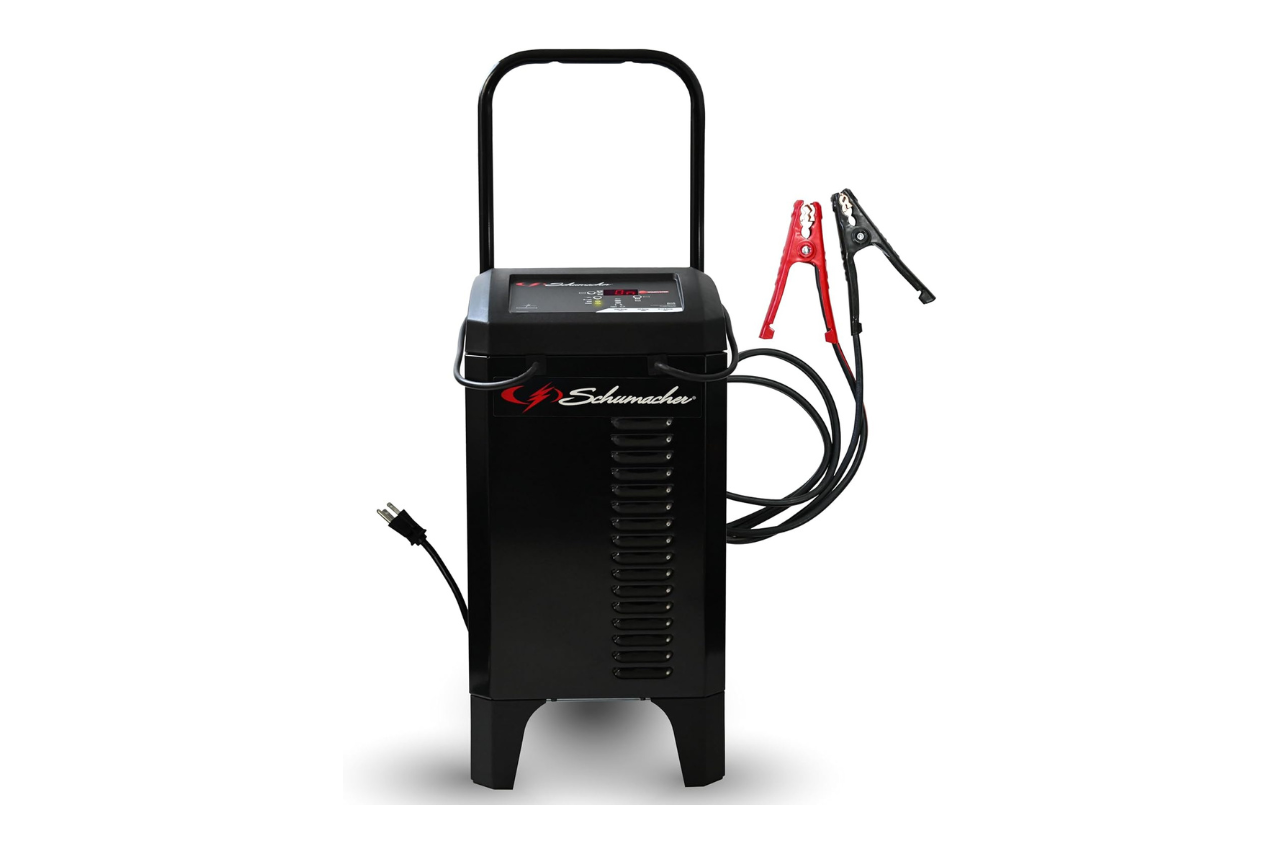
If you’ve ever watched a portable jump pack wheeze and die against a cold-soaked diesel, you already know why shop-style chargers exist.
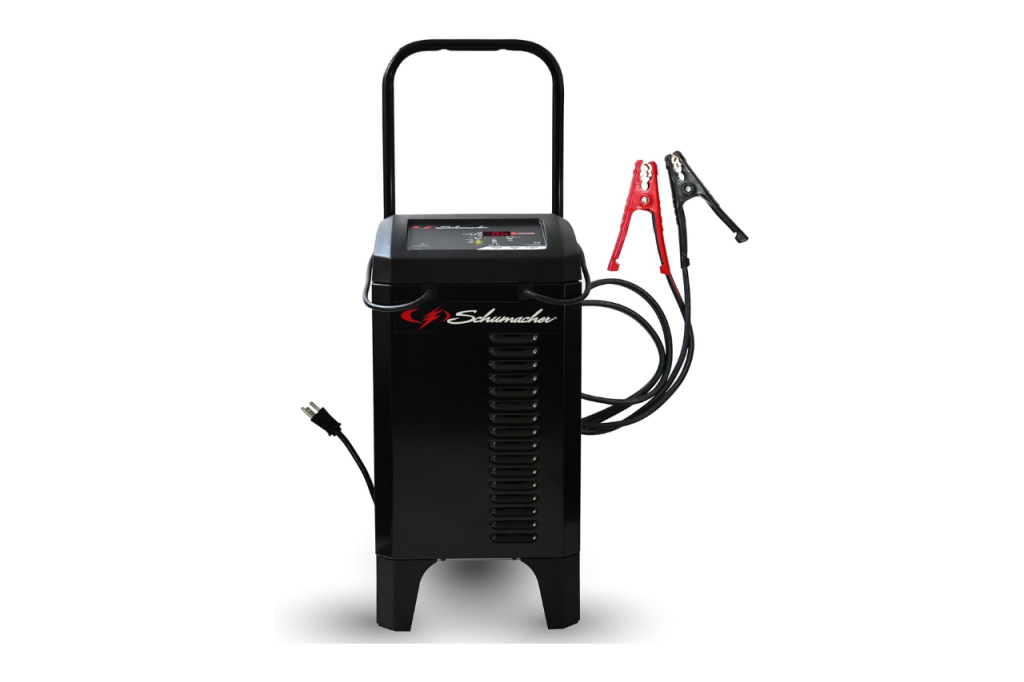
The Schumacher 200 Amp wheeled battery charger, available in models like the SC1324 and SC1309, is one of the most dependable high-current engine starters and multi-stage maintainers you can buy for a home garage or small shop. Its 200A engine start mode reliably cranks large V8 trucks and SUVs back to life, its 40A boost mode delivers a meaningful charge in under an hour, and its microprocessor-controlled 6A/2A trickle settings keep AGM, Gel, and deep cycle batteries safely maintained over long storage periods. It’s a genuine workhorse, though the transformer weight and manual-mode learning curve are real trade-offs you should know about before buying.
Key Takeaways
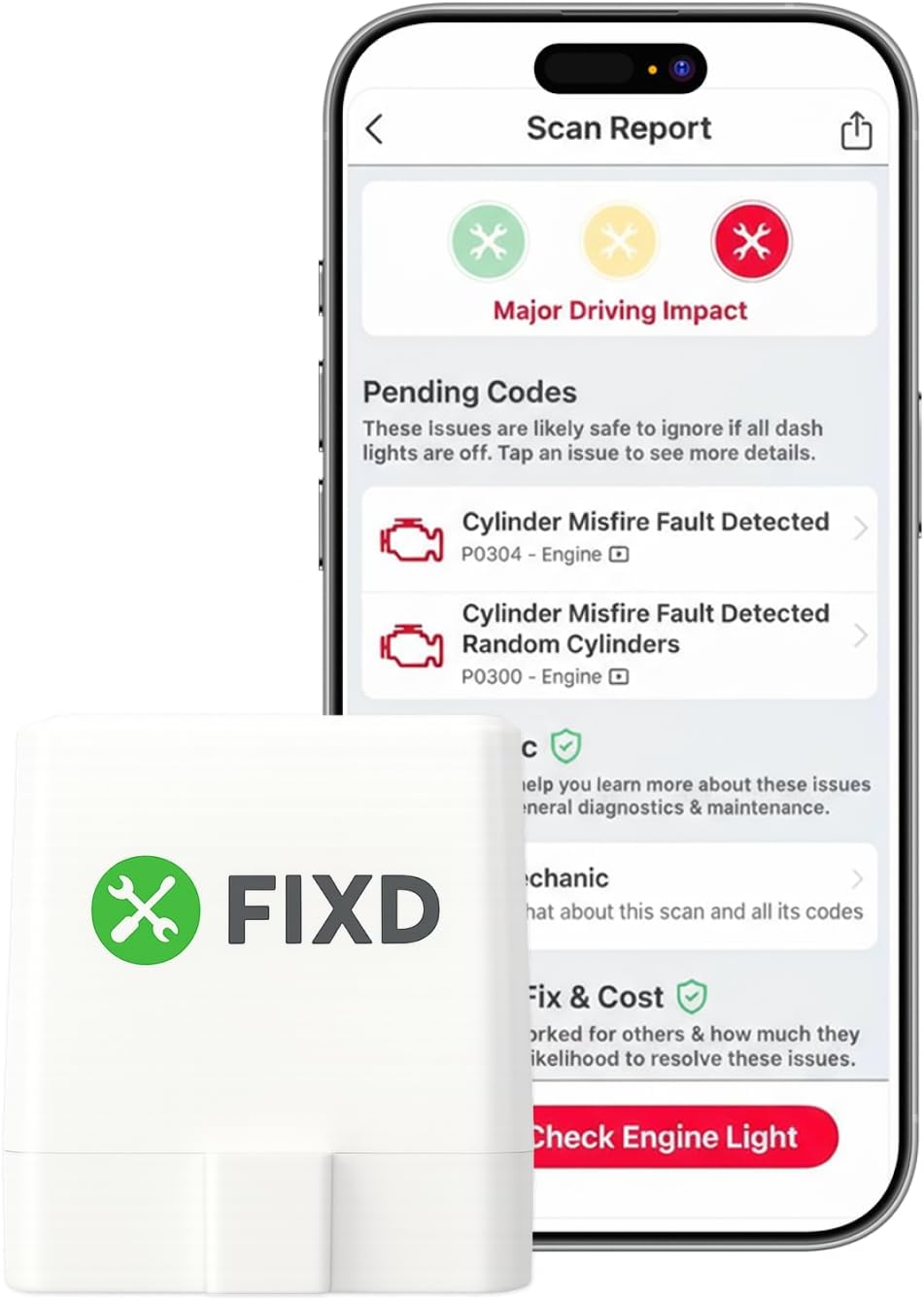
Best Bluetooth OBD2 Scanner
Detect 39,000+ Issues With Enhanced Codes. Save $1000s on car repairs & buying used vehicles by diagnosing problems yourself.
Shop on Amazon- The Schumacher 200 amp battery charger delivers reliable 200A engine start power for large trucks and diesel vehicles, plus 40A boost mode that charges dead batteries to startable voltage in 30–45 minutes.
- Microprocessor-controlled multi-stage charging automatically adjusts for AGM, Gel, and deep cycle batteries, with a 2A maintain mode that safely stores seasonal equipment for months without sulfation damage.
- SC1324 offers fully automatic operation (safer for beginners), while the SC1309 includes manual mode for experienced mechanics to handle severely discharged batteries that automatic chargers may reject.
- Built-in battery and alternator tester eliminates the need for a separate multimeter, helping diagnose whether battery failure or charging system issues are causing starting problems.
- At 25–30 lbs with retractable handle and wheels, the Schumacher wheeled charger is mobile enough for garage use but not pocket-portable—it’s designed for stationary or semi-portable shop work rather than in-vehicle emergency kits.
- Transformer-based design maintains consistent power delivery in extreme cold (unlike lithium jump starters) and lasts a decade with proper maintenance, making it the preferred choice for fleet shops and home garage enthusiasts.
What Makes the Schumacher 200 Amp Battery Charger Stand Out
Schumacher has been building battery chargers since 1947, and their wheeled 200A units carry that legacy forward in a practical way. Unlike compact lithium jump starters that lose effectiveness in extreme cold, these transformer-based chargers plug into a standard 120V outlet and deliver consistent, high-amperage power regardless of ambient temperature. The SC1324 and SC1309 both feature a retractable handle and heavy-duty wheels, which matters more than you’d think when you’re rolling a 30-pound unit across a gravel shop floor.
The built-in alternator and battery tester is another standout. Rather than grabbing a separate multimeter, you can diagnose charging system problems right from the unit’s front panel. According to Schumacher’s official product page, these models support both 6V and 12V batteries, making them useful for everything from your daily-driver truck to a vintage tractor.
Key Features and Specifications
Here’s what you’re actually getting under the hood of these units:
- 200A Engine Start – Delivers a powerful burst for cranking large gas and diesel engines, including V8 trucks and SUVs with deeply discharged batteries.
- 40A Boost Mode – Pushes a rapid charge into a dead battery, often getting you enough juice to start within 20–30 minutes.
- 6A Charge / 2A Maintain – Microprocessor-controlled multi-stage charging that steps down automatically to prevent overcharging.
- 6V and 12V Compatibility – Works with standard flooded, AGM, Gel, and deep cycle batteries.
- Reverse Hook-Up Protection – The charger won’t activate if you accidentally swap the clamp polarity, preventing sparks and damage.
- Built-In Battery and Alternator Tester – Lets you diagnose whether your battery or your vehicle’s charging system is the actual problem.
- Retractable Handle and Wheels – Makes the unit genuinely portable even though its transformer weight.
The SC1324 operates in fully automatic mode with a microprocessor that manages the entire multi-stage charging process, bulk, absorption, and float. The SC1309, by contrast, offers a manual override option, which experienced mechanics appreciate for stubborn batteries that automatic chargers sometimes refuse to recognize.
| Feature | SC1324 | SC1309 |
|---|---|---|
| Engine Start | 200A | 200A |
| Boost Charge | 40A | 40A |
| Charging Modes | Automatic Only | Manual + Automatic |
| Battery Types | Standard, AGM, Gel | Standard, AGM, Deep Cycle |
| Alternator Test | Yes | Yes |
| Wheels/Handle | Yes | Yes |
Real-World Performance: Charging Speed and Reliability
I’ve used Schumacher wheeled chargers in fleet maintenance bays for years, and the 200A engine start mode does what it promises. Hook the heavy-gauge clamps to a stone-dead Group 65 battery in a Chevy Silverado, flip to Engine Start, and you’ll hear the starter motor grind to life within seconds. It’s not gentle, this mode is designed for emergencies, not daily use, but it consistently outperforms portable lithium jump packs on large displacement engines.
The 40A boost mode is where these chargers earn their keep for everyday shop work. A deeply discharged 12V battery that reads around 10.5V will typically reach a startable voltage (roughly 12.4V) in about 30 to 45 minutes on boost. That’s dramatically faster than the 6A standard charge setting, which can take 8–12 hours on the same battery. For weekend warriors who forgot to disconnect a dome light overnight, the boost mode is a genuine time-saver.
The microprocessor-controlled 2A maintain mode is equally important, even if it’s less dramatic. If you store an RV, boat, or seasonal truck over winter, leaving the Schumacher connected on its trickle setting keeps the battery at optimal float voltage without the sulfation damage that kills batteries left sitting. The automatic shutoff and multi-stage charging process means you can genuinely walk away and trust it.
One honest caveat: the heavy-duty transformer design means these units run warm during extended boost sessions. That’s normal for this class of charger, but make sure you’re operating in a ventilated space.
Pros and Cons Based on User Feedback
User reviews across Amazon and automotive forums paint a consistent picture. People love the cranking power and hate the weight. Here’s a balanced breakdown.
Pros:
- The 200A engine start mode works reliably on large trucks and SUVs, even in cold weather
- The 40A boost mode delivers a usable charge fast
- The retractable handle and wheels make it mobile enough for most garages
- Reverse hook-up protection prevents costly mistakes
- Multi-stage automatic charging protects AGM and Gel batteries from overcharging
Cons:
- At roughly 25–30 lbs, it’s not something you toss in your trunk
- The analog ammeters on some models can be hard to read precisely
- Manual mode (SC1309) requires some knowledge to avoid overcharging standard batteries
- Some users report the clamp quality could be better for the unit’s power output
“I’ve had my Schumacher for 3 years, use it on everything from my F-250 to my lawn tractor. The engine start has never let me down. Only complaint is the clamps feel cheap for a unit this powerful.” via r/MechanicAdvice
Who Should Buy the Schumacher 200 Amp Battery Charger
This charger makes the most sense for three types of users. First, if you own a truck, SUV, or diesel vehicle that occasionally sits long enough to drain the battery, the 200A engine start mode eliminates the need for a second vehicle or a tow truck. Second, if you maintain seasonal equipment, RVs, boats, farm tractors, the automatic 2A maintain mode protects your batteries through months of storage.
Third, and this is the sweet spot, home garage enthusiasts who work on multiple vehicles will appreciate having one unit that handles everything from emergency starts to long-term maintenance across Standard, AGM, and Gel battery types. The built-in alternator tester adds diagnostic capability that saves you from chasing phantom electrical problems.
If you’re looking for something truly portable to keep in your car, this isn’t it. The NOCO Boost Pro GB150 is a better glove-box option. But for a stationary or semi-portable garage tool, the Schumacher wheeled charger is hard to beat. And if you want to pair it with a proper battery maintenance setup, a Battery Tender Plus makes a solid companion for lighter vehicles.


How It Compares to Other 200 Amp Chargers on the Market
The Schumacher SC1324 and SC1309 compete directly with units like the Clore Automotive Jump-N-Carry and the SOLAR Pro-Logix PL2310. Where Schumacher wins is versatility, the combination of engine start, boost, standard charge, and maintain modes in a single wheeled unit with battery testing built in. Most competitors at this amperage level lack the microprocessor-controlled automatic shutoff or require you to manually monitor the charge.
The SC1324 vs SC1309 comparison itself comes down to control preference. The SC1324’s fully automatic operation is safer for beginners charging AGM and deep cycle batteries. The SC1309’s manual mode gives experienced mechanics the ability to push power into severely depleted batteries that automatic chargers sometimes reject as “bad.” Both share the same 200A start / 40A boost core, so the cranking performance is identical.
Compared to lithium jump starters, transformer-based chargers like these don’t degrade with age the same way. A lithium pack loses capacity over 2–3 years: a well-maintained transformer charger can last a decade. That durability argument is a big reason fleet shops still rely on wheeled units.
Tips for Getting the Most Out of Your Schumacher Charger
Always match the battery type selector to your actual battery. Charging an AGM battery on the Standard setting can push voltage too high and permanently damage cells. The microprocessor adjusts the multi-stage charging curve based on your selection, so getting this right matters.
Use the built-in battery tester before charging. If the battery tests as completely failed (shorted cell), no amount of charging will save it, and you’ll avoid wasting hours. Similarly, run the alternator test after a charge, if your alternator is underperforming, you’ll just end up with another dead battery next week.
For the 200A engine start mode, Schumacher recommends connecting the charger and letting it charge on 40A boost for 10–15 minutes before cranking. This preloads the battery slightly and reduces stress on the charger’s transformer. Don’t just clamp on and immediately crank, it works, but it shortens component life.
If you encounter error codes or the charger refuses to start, check the Schumacher support page for model-specific troubleshooting steps. Common issues include corroded clamp connections triggering reverse-polarity protection and voltage too low for auto-detect on deeply discharged batteries (the manual mode on the SC1309 bypasses this).
Data Insights & Analysis
According to a 2025 AAA automotive research report, battery-related breakdowns remain the number one reason for roadside assistance calls in the United States, accounting for roughly 30% of all service requests. Also, AAA data shows that batteries over three years old fail at significantly higher rates during temperature extremes, exactly the scenario where a 200A engine start charger proves its value.
A 2025 survey from the Auto Care Association found that DIY automotive maintenance spending increased by approximately 12% year-over-year, reflecting a growing trend of home garage enthusiasts investing in professional-grade equipment like wheeled chargers rather than relying on shop visits.
Expert Note: "Transformer-based chargers maintain consistent amperage delivery under load because they convert AC to DC through copper windings rather than relying on capacitor-stored energy like lithium packs. This is why a 200A-rated transformer unit delivers true 200A at the clamps, while many portable jump starters experience significant voltage sag under the same load, sometimes delivering only 60–70% of their rated peak amperage to the battery terminals."
Verdict
The Schumacher 200 Amp wheeled battery charger earns its spot as one of the best wheeled battery chargers for a home garage or small fleet operation. The 200A engine start delivers when portable jump packs can’t, the 40A boost mode saves real time, and the microprocessor-controlled maintenance modes protect your investment in AGM and specialty batteries. Yes, it’s heavy. Yes, the clamps could be upgraded. But for a transformer-based unit that handles everything from dead-cold truck starts to winter battery maintenance, it’s genuinely hard to find a better all-in-one solution at this level.

Schumacher Electric Wheeled Automatic 6A Car Battery Charger and 200A Engine Starter, 6-in-1 Solution, Maintainer, 40A Boost, for 6V/12V Power Sport,...
Frequently Asked Questions
What is the Schumacher 200 amp battery charger best used for?
The Schumacher 200 amp battery charger excels at emergency engine starts for large trucks and SUVs, rapid 40A boost charging for dead batteries, and long-term maintenance of AGM, Gel, and deep cycle batteries. It’s ideal for home garage owners, seasonal vehicle storage, and multi-vehicle maintenance across different battery types.
How fast does the Schumacher SC1324 charge a dead battery?
On 40A boost mode, a deeply discharged 12V battery (around 10.5V) typically reaches startable voltage (12.4V) in 30–45 minutes. Standard 6A charging takes 8–12 hours on the same battery, making boost mode ideal for quick turnarounds.
What’s the difference between the SC1324 and SC1309 models?
Both deliver identical 200A engine start and 40A boost power. The SC1324 operates fully automatic, safer for beginners and AGM batteries. The SC1309 includes manual override, allowing experienced mechanics to charge severely depleted batteries that automatic chargers reject.
Can a Schumacher 200 amp battery charger work in cold weather?
Yes. Unlike lithium jump starters that lose effectiveness in extreme cold, the Schumacher’s transformer-based design plugs into a standard 120V outlet and delivers consistent 200A cranking power regardless of ambient temperature, making it reliable year-round.
Is the Schumacher 200 amp battery charger portable enough for in-car storage?
No. At 25–30 pounds with a transformer design, it’s not practical for trunk storage or travel. It’s best suited as a stationary or semi-portable garage tool. For in-car portability, consider compact lithium jump starters like the NOCO Boost Pro GB150.
How long do transformer-based chargers like Schumacher last compared to lithium alternatives?
Well-maintained transformer chargers can last a decade or longer without significant capacity loss. Lithium jump packs typically degrade after 2–3 years of regular use, making transformer-based units more durable for long-term garage investments.
Sources:
- Schumacher Electric Wheeled Chargers Collection
- Schumacher Electric Support and Troubleshooting
- AAA Newsroom – Battery and Roadside Assistance Data
- Auto Care Association – DIY Maintenance Trends
- r/MechanicAdvice – Schumacher Charger Discussions
Read More: