This post contains affiliate links. Purchases may earn me a commission at no extra cost to you.
If your Freightliner’s dash just lit up with an ABS warning and you’re staring at a “136” fault, don’t panic, but don’t ignore it either. That number holds the key to your next move.
ABS 136 is not a single fault code. It’s the electronic module address (MID 136) assigned to your Anti-Lock Braking System ECU on the J1939 data link. When you see MID 136 on your diagnostic display, it tells you the ABS module itself is reporting a problem, but you need to dig deeper into the accompanying SID (Section Identifier) and FMI (Failure Mode Identifier) codes to pinpoint the actual failed component. Without reading those sub-codes, you’re essentially looking at an envelope without opening the letter inside.
This guide walks you through exactly what triggers the ABS 136 fault, the symptoms you’ll notice, and the step-by-step process to diagnose and fix the issue, whether you’re on the shoulder of I-80 or back at the shop.
The Freightliner ABS 136 code identifies the Anti-Lock Braking System module but requires reading accompanying SID and FMI sub-codes to pinpoint the actual failure—such as a wheel speed sensor, corroded connector, or wiring damage.
Wheel speed sensors and wiring harness damage account for over 60% of all ABS 136 faults, while moisture intrusion and connector corrosion are major culprits that can often be resolved with cleaning and dielectric grease application.
You can diagnose an ABS 136 fault yourself using a J1939-compatible scanner to read the full code, then perform visual inspection of connectors and sensors—measure sensor resistance (900–2,200 ohms for Bendix systems) and air gap (0.020″–0.040″) to confirm the issue.
Road testing above 15 mph after repairs ensures all four wheel speed sensors are verified by the ABS module, with the light staying off through multiple key cycles indicating a successful fix.
ABS warning lights trigger DOT inspection failures and reduce braking performance on wet surfaces, making prompt diagnosis and repair essential—seek professional help for multiple simultaneous SIDs, CAN bus faults, or ECU replacement.
What Does the ABS 136 Code Mean on a Freightliner?
MID 136 identifies the Anti-Lock Braking System module in the SAE J1587/J1939 diagnostic protocol used across heavy-duty trucks. Every major electronic module on your Freightliner has a unique MID, the engine is MID 128, the transmission is MID 130, and the ABS controller is MID 136. When your ICU (Instrument Cluster Unit) or a diagnostic scanner reports a fault under MID 136, it’s telling you the ABS ECU has flagged an internal or external problem.
The critical detail most drivers miss: MID 136 alone doesn’t tell you what broke. You need two additional pieces of information. The SID identifies which specific component or subsystem failed, such as SID 001 for the left front wheel speed sensor or SID 005 for the right rear. The FMI tells you how it failed, FMI 02 means erratic data, FMI 05 means current below normal, and FMI 14 means the fault is valid but above the normal operating range.
Your ABS module could be a Bendix EC-60 or a Wabco (now ZF) unit, depending on your truck’s build year and spec. Bendix systems are common on Freightliner Cascadia models built after 2007, while older M2 and Columbia models may run Wabco controllers. Identifying your module brand matters because the SID tables differ between manufacturers. You can usually find the brand stamped directly on the ABS module, which is mounted on the frame rail near the rear axle.
A quick way to pull the full fault string on a Freightliner M2 is through the ICU dash display. Cycle through the diagnostic menu using the stalk buttons until you reach the ABS section. On a Cascadia, you can often access it through the Driver Information Display. Either way, write down the full code, MID 136, SID, and FMI, before you start troubleshooting.
Common Causes of the ABS 136 Fault Code
Several issues trigger an ABS 136 fault, and moisture is near the top of the list. Water intrusion into the main ABS harness connector causes corrosion on the pins, which creates intermittent signal loss between the wheel speed sensors and the ECU. This is especially common after pressure washing or driving through standing water for extended periods.
Here are the most frequent culprits behind a MID 136 fault:
Damaged wheel speed sensors, Road debris, brake dust buildup, or physical impact can crack the sensor body or sever the wiring.
Incorrect sensor air gap, The gap between the sensor tip and the tooth ring (exciter ring) should typically be 0.020″–0.040″. An out-of-spec gap produces weak or erratic signals.
Corroded ABS ground studs, A poor chassis ground at the ABS module creates voltage reference errors across all sensor channels.
Chafed or pinched wiring, Harness routing near suspension components or frame rub points causes intermittent opens and shorts.
Faulty ABS module, Internal ECU failure, though less common, does happen, particularly on high-mileage units exposed to extreme vibration.
J1939 data link communication errors, If the CAN bus wiring between the ABS module and the rest of the truck’s network is damaged, the ABS can’t report or receive data properly.
“Had ABS light come on, turned out to be a corroded ground wire on the frame. Cleaned it up and the code cleared itself after a drive cycle.” via r/Truckers
Intermittent ABS fault codes are particularly frustrating. The difference between active and inactive codes matters here. An active code means the fault exists right now. An inactive code means the system detected a fault previously but it’s not currently present, often pointing to a loose connection or temperature-sensitive wiring issue.
Symptoms You May Notice When ABS 136 Is Active
The most obvious sign is the ABS warning light illuminated on your dash. On a Freightliner Cascadia, this appears as a yellow ABS indicator. If the trailer ABS light is also flashing, that’s a separate system, don’t confuse the tractor and trailer ABS faults.
Beyond the warning light, you may experience:
Longer stopping distances on wet or slippery surfaces because the ABS can’t modulate brake pressure.
Wheel lockup during hard braking, which can cause flat spots on tires and loss of steering control.
Stability control deactivation, On trucks equipped with Bendix ESP (Electronic Stability Program), an ABS fault will disable the entire stability system since it relies on wheel speed data.
DOT inspection failures, An illuminated ABS light is a violation during roadside inspections under FMCSA regulations.
One symptom drivers often overlook is a pulsating brake pedal during normal stops. This can indicate the ABS is falsely activating because it’s receiving bad speed data from a failing sensor. If you feel the pedal kicking back at low speeds on dry pavement, that’s a red flag.
“My ABS light kept coming on every time I hit a bump. Found out the sensor wire was rubbing on the axle housing. Taped it up and rerouted it, no issues since.” via The Truckers Report Forum
How to Diagnose the ABS 136 Code Step by Step
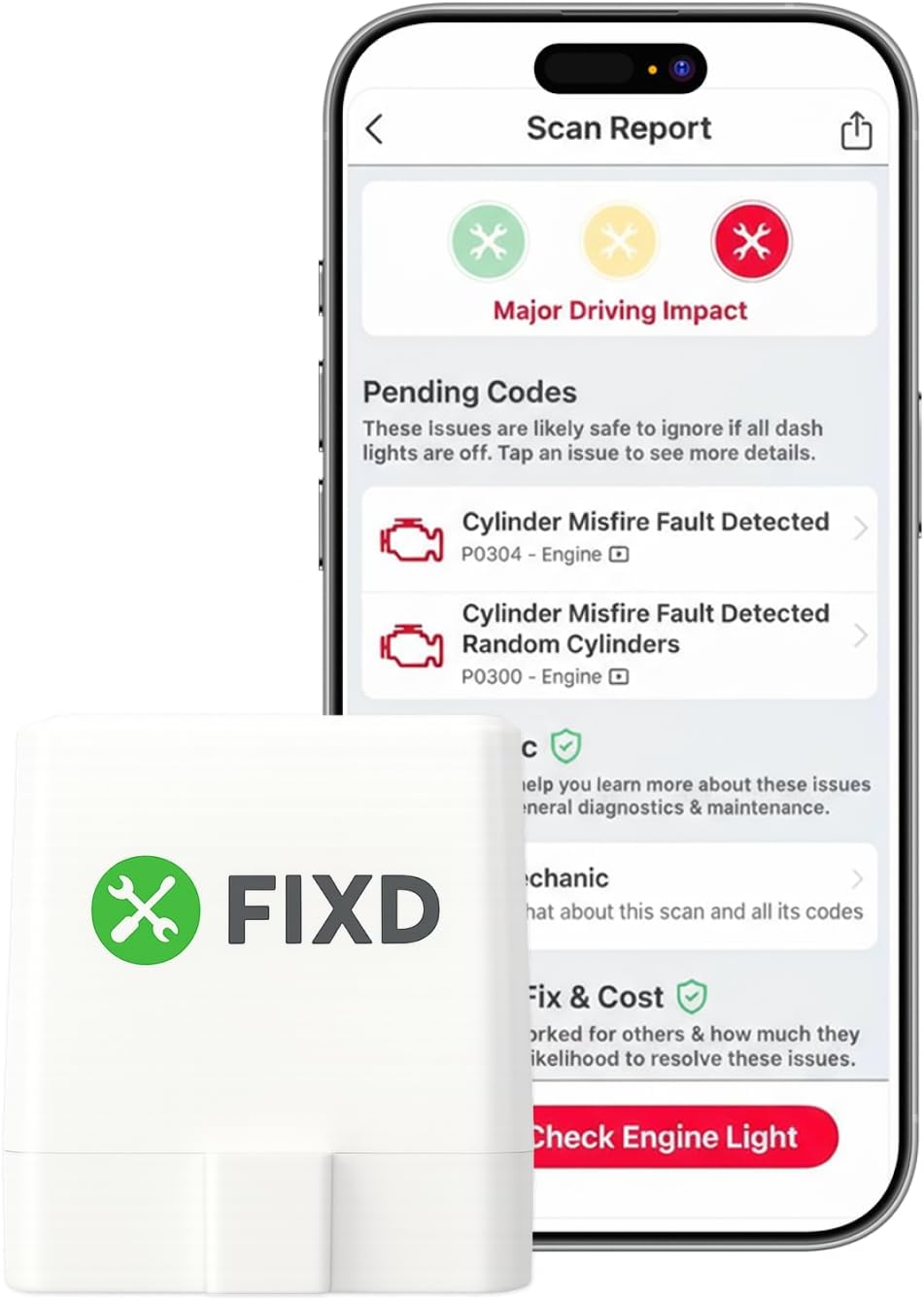
Start by reading the full fault code. Use a diagnostic tool that supports J1587 and J1939 protocols, the Nexas NL102 Plus Heavy Duty Truck Scanner is a solid option for owner-operators who want to pull ABS codes without visiting a dealer. Connect it to the 9-pin or 6-pin diagnostic port (usually under the dash on the driver’s side), and record every MID 136 code including SID and FMI values.
NEXAS Heavy Duty Truck Scanner NL102 Full System Diesel Truck Scan Tool for Cummins, Isuzu, Freightliner, Caterpillar, Detroit, Peterbilt, 2-in-1 Code Reader...
Next, perform a visual inspection. Check the main ABS connector at the ECU for signs of moisture, green corrosion, or pushed-back pins. Wiggle the connector while watching for intermittent fault behavior. Inspect the wiring harness along the frame rail, look for chafing where the harness crosses frame brackets or air lines.
For software-based diagnostics, Bendix ACom is the industry-standard tool for Bendix ABS systems. It provides real-time wheel speed data, allows you to run automated sensor tests, and can clear fault codes after repairs. Fleet maintenance shops often subscribe to Bendix ACom software for comprehensive ABS troubleshooting.
Wheel Speed Sensor Inspection and Testing
Wheel speed sensors are the most common failure point in the ABS 136 fault chain. Each sensor generates an AC voltage signal as the exciter ring teeth pass by its magnetic tip. A healthy sensor typically produces between 0.2V and 2.0V AC at low wheel rotation speeds, increasing with speed.
To test sensor resistance, disconnect the sensor at the nearest harness junction and measure across the two sensor pins with a multimeter set to ohms. Most Bendix-compatible sensors read between 900–2,200 ohms. A reading outside that range, or an open-loop (OL) reading, confirms a failed sensor.
Check the air gap next. Using a brass feeler gauge (never steel, as it can magnetize and affect the sensor), measure the distance between the sensor face and the exciter ring teeth. Bendix specifies a gap of 0.020″–0.040″ for most applications. If you’ve recently replaced brake components, the gap may have shifted.
Inspect the exciter ring itself. A cracked, chipped, or missing tooth on the ring produces an erratic signal that the ECU interprets as wheel slip or sensor failure. Spin the wheel slowly by hand while watching for visible damage. Also look for metallic debris clinging to the sensor tip, the magnet attracts small metal particles that can interfere with the signal.
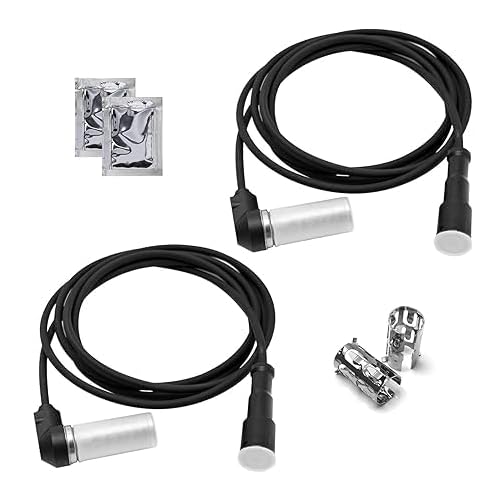
Finally, compare sensor readings across all wheels. If one channel shows significantly different resistance or voltage output, you’ve likely found your problem. A replacement ABS wheel speed sensor kit can get you back on the road quickly if you confirm a sensor failure.
Here’s a quick comparison of Bendix vs. Wabco ABS systems on Freightliner trucks:
Feature
Bendix (EC-60/EC-80)
Wabco (ZF)
Common Models
Cascadia, New Cascadia
M2, Columbia, older models
Diagnostic Software
Bendix ACom
Wabco Toolbox
Sensor Resistance Range
900–2,200 ohms
1,000–2,400 ohms
Typical Air Gap Spec
0.020″–0.040″
0.018″–0.035″
J1939 MID
136
136
Module Location
Frame rail, rear axle area
Frame rail, rear axle area
How to Fix the Freightliner ABS 136 Code
Your fix depends entirely on the SID and FMI you pulled during diagnosis. Here’s a breakdown of common repairs:
For corroded connectors and ground studs, disconnect the ABS harness, clean every pin with electrical contact cleaner, and use a small wire brush on the ground stud mounting surface. Apply dielectric grease to all connector interfaces before reassembly. This alone resolves a surprising number of intermittent ABS 136 faults.
For failed wheel speed sensors, remove the mounting bolt, pull the old sensor straight out, and push the new sensor in until it contacts the exciter ring. Then back it off slightly and tighten the bolt, the sensor will self-adjust to the correct air gap on many Bendix setups. Verify the gap with a feeler gauge anyway.
For wiring damage, repair the harness using solder-and-heat-shrink connections (not butt connectors) and reroute the harness away from moving or abrasive components. Secure with proper P-clamps and loom.
After any repair, you need to clear the codes and road-test. Drive above 15 mph so the ABS can verify all four wheel speed sensor signals. If the light stays off through several key cycles and a highway run, your repair is solid. On a Freightliner Cascadia, you can reset the ABS light through the diagnostic display after codes are cleared, but the light returns if the underlying fault isn’t truly fixed.
When to Seek Professional Repair vs. DIY
You can handle sensor replacements, connector cleaning, and basic wiring repairs with standard hand tools and a multimeter. These are roadside-friendly fixes that any mechanically confident owner-operator can tackle.
But certain situations demand a professional shop:
Multiple SIDs reporting simultaneously, This often points to an internal ECU failure or a major harness problem that needs pin-by-pin diagnosis.
J1939 communication faults, If the ABS module can’t communicate with the truck’s network, the CAN bus wiring or terminating resistors may be the issue, and improper repairs here can knock out other modules.
ABS module replacement, Swapping the ECU requires reprogramming with Bendix ACom or Wabco Toolbox to match your truck’s axle configuration, tire size, and gear ratio settings.
Stability control recalibration, After any ABS module swap, the ESP system needs a full recalibration drive procedure.
Data Insights and Analysis
According to the FMCSA’s 2025 roadside inspection data, brake-related violations, including ABS warning lamp defects, accounted for roughly 27% of all out-of-service orders during Level I inspections. That makes ABS issues the single largest category of OOS violations in commercial trucking.
A 2025 analysis of fleet maintenance records showed that wheel speed sensors and wiring harness damage accounted for over 60% of all MID 136 fault events, with ECU failures representing less than 10% of cases. Moisture intrusion was cited as a contributing factor in nearly a third of those sensor and harness failures.
Expert Note: "The ABS sensor signal is a low-voltage AC waveform, often under 1 volt at parking lot speeds. Any resistance added by corrosion, a loose pin, or a stretched air gap drops that signal below the ECU's detection threshold. The module doesn't know the difference between a bad sensor and a bad connection, it just sees insufficient signal and flags the code. That's why cleaning connectors fixes so many of these faults that look like sensor failures."
Frequently Asked Questions
What does the ABS 136 code mean on a Freightliner truck?
ABS 136 (MID 136) identifies the Anti-Lock Braking System module reporting a fault on your Freightliner. However, MID 136 alone doesn’t indicate the specific problem. You must read the accompanying SID (Section Identifier) and FMI (Failure Mode Identifier) codes to pinpoint the actual failed component, such as a wheel speed sensor or ground stud.
What are the most common causes of the Freightliner ABS 136 fault code?
Common causes include damaged or failed wheel speed sensors, incorrect sensor air gaps (should be 0.020″–0.040″), corroded ABS ground studs, chafed or pinched wiring harnesses, moisture intrusion into connectors, and faulty ABS module electronics. According to fleet maintenance analysis, wheel speed sensors and wiring harness damage account for over 60% of MID 136 faults.
How can I diagnose a Freightliner ABS 136 code myself?
Use a diagnostic scanner supporting J1587/J1939 protocols like the Nexas NL102 Plus. Read the complete fault code including MID, SID, and FMI values. Perform visual inspection of the ABS connector for corrosion and harness for damage. Test wheel speed sensors with a multimeter for resistance (900–2,200 ohms for Bendix systems) and verify air gaps using a brass feeler gauge.
Can a dirty ABS connector cause the ABS 136 code?
Yes, corroded or moisture-damaged ABS connectors are a leading cause of ABS 136 faults. Water intrusion causes pin corrosion and intermittent signal loss between sensors and the ECU. Disconnecting the harness, cleaning pins with electrical contact cleaner, applying dielectric grease, and reassembling often resolves intermittent ABS 136 codes completely.
What symptoms indicate an active ABS 136 fault on my Freightliner?
An illuminated yellow ABS warning light on your Cascadia dash is the primary indicator. Additional symptoms include longer stopping distances, wheel lockup during hard braking, pulsating brake pedal at low speeds on dry pavement, and stability control deactivation. These symptoms mean the ABS can’t modulate brake pressure properly and require immediate diagnosis.
Should I drive my Freightliner with an active ABS 136 fault code?
You can operate the truck short distances to a repair facility, but extended operation is risky. An active ABS 136 fault disables anti-lock braking, reducing braking performance on wet or slippery surfaces and increasing lockup risk. Additionally, an illuminated ABS light constitutes an out-of-service violation under FMCSA regulations during roadside inspections, making it a legal compliance issue.
Disclaimer: This content is provided for educational and informational purposes only. Equipment symptoms, repairs, and diagnostic procedures may vary by make, model, year, and condition. Always consult a qualified technician, your equipment’s service manual, and verified manufacturer recalls or service bulletins before performing repairs. GearFixes.com assumes no liability for damages resulting from the use of information on this site.