
You’re cruising down the highway when that amber light flashes on your Subaru Outback’s dashboard. A sinking feeling hits: the check engine light just triggered, and now your cruise control blinks and EyeSight shuts off.
The Subaru Outback check engine light signals that your onboard diagnostic system (OBD-II) has detected a fault in the engine, emissions, or powertrain, ranging from a loose gas cap to oxygen sensor failures, CVT transmission errors, or catalytic converter malfunctions. When this light activates, your EyeSight driver-assist features disable automatically as a safety protocol, and you’ll need an OBD2 scanner to retrieve diagnostic trouble codes (DTCs) and identify the exact issue before resetting the system or making repairs.
Your Outback’s computer runs constant checks on dozens of sensors, and any reading outside normal range trips that light. Understanding what triggered it, and how to fix it, keeps you on the road safely and saves you from unnecessary dealer visits.
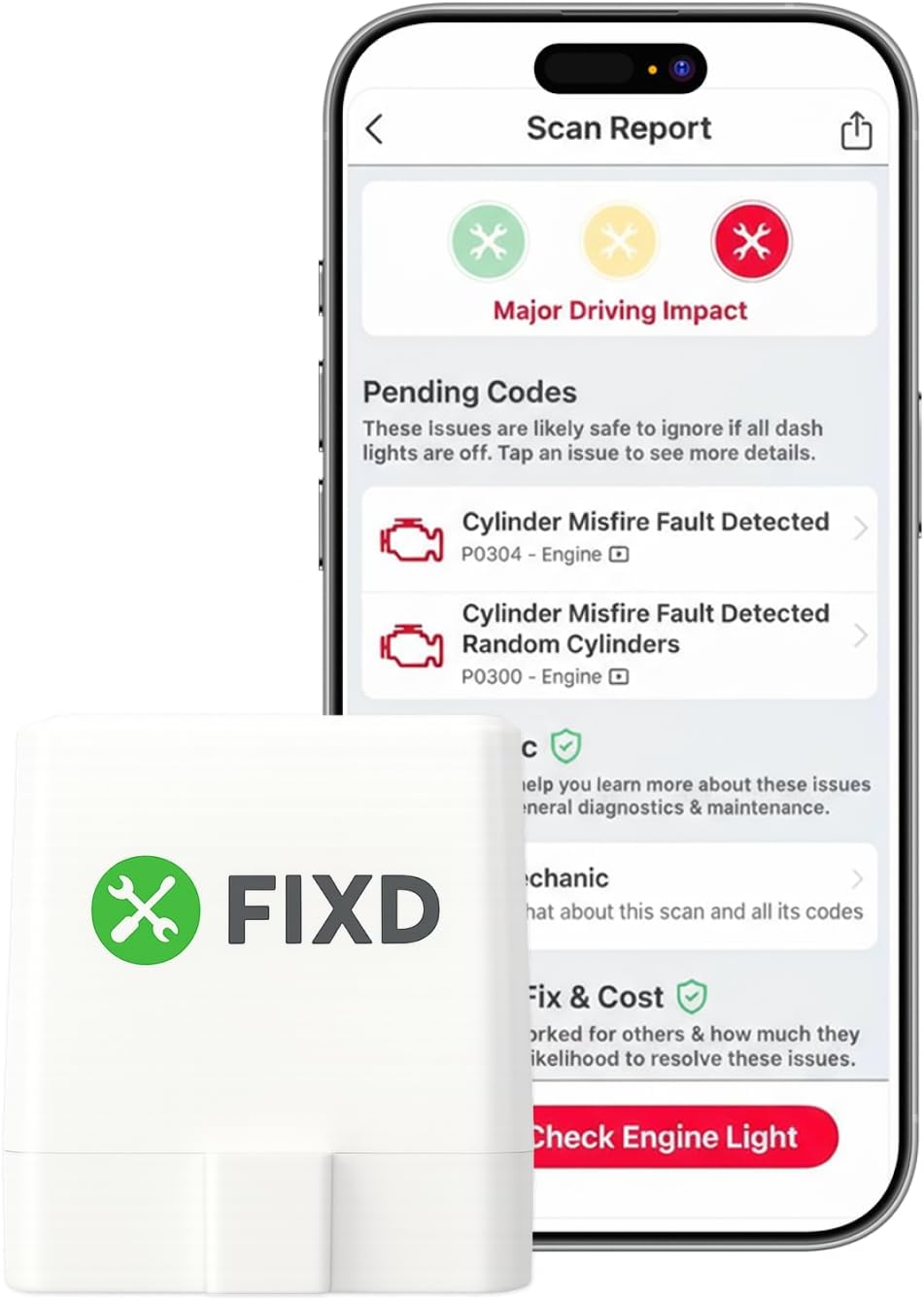
Best Bluetooth OBD2 Scanner
Detect 39,000+ Issues With Enhanced Codes. Save $1000s on car repairs & buying used vehicles by diagnosing problems yourself.
Shop on Amazon
Key Takeaways
- A Subaru Outback check engine light signals an OBD-II fault in the engine, emissions, or powertrain; a steady light lets you drive cautiously, but a flashing light indicates active misfires requiring immediate attention.
- The most common causes of check engine light issues are oxygen sensor failure, loose gas caps, catalytic converter problems, and mass airflow sensor malfunctions, with diagnostic trouble codes (DTCs) identifiable using a $20–$120 OBD2 scanner.
- After diagnosing the fault, repair costs range from $15 for a gas cap to $1,800 for catalytic converter replacement, and DIY fixes like spark plugs, O2 sensors, and MAF sensor cleaning can save hundreds in labor.
- Your Outback’s EyeSight driver-assist features, cruise control, and X-Mode automatically disable when the check engine light activates, reducing safety capabilities until the fault is cleared.
- Always fix the root cause rather than just resetting the light; for example, a failing oxygen sensor often triggers catalytic converter codes, so replacing the sensor first can prevent an expensive $1,500 converter repair.
- After completing repairs, use an OBD2 scanner to clear codes and allow the ECU to relearn through 50–100 miles of mixed driving to ensure readiness monitors are set for emissions testing.
What Does the Check Engine Light Mean in Your Subaru Outback?
Your Outback’s check engine light is part of the OBD-II emissions monitoring system required on all vehicles since 1996. The engine control unit (ECU) continuously monitors over 40 parameters, air-fuel ratio, exhaust gas oxygen levels, ignition timing, throttle position, and CVT fluid temperature. When any reading drifts beyond pre-set thresholds, the ECU logs a diagnostic trouble code and illuminates the amber warning lamp on your instrument cluster.
Modern Outbacks (2015–2026) tie safety systems directly to powertrain health. When the check engine light activates, your cruise control, EyeSight adaptive features, and X-Mode all-wheel-drive management automatically disable. Subaru engineers programmed this lockout because faulty sensors or misfires can produce unreliable data that interferes with electronic stability and collision-avoidance algorithms. You’ll still drive normally, but advanced driver-assist functions won’t return until you clear the fault.
The light appears in three states: steady amber (non-critical fault detected), flashing amber (active misfire causing catalytic converter damage risk), or steady with cruise control blinking (emissions fault plus driver-assist lockout). A flashing light demands immediate attention, pull over and shut down to prevent expensive catalytic converter overheating. Steady lights let you drive cautiously to a safe location for diagnosis.
Most Common Causes of Check Engine Light in Subaru Outback
Oxygen Sensor Failure
The front and rear oxygen (O2) sensors measure exhaust gas composition before and after the catalytic converter. Subaru Outbacks run two upstream sensors (one per cylinder bank) and two downstream sensors. Codes P0136, P0137, P0138, P0420, and P0421 indicate O2 sensor circuit faults or catalytic efficiency below threshold. Sensors typically fail between 80,000–120,000 miles due to carbon buildup, oil contamination from worn valve stem seals, or thermal stress.
When an O2 sensor reports incorrect voltage, your ECU can’t adjust fuel trim properly. You’ll notice rough idle, hesitation during acceleration, and reduced fuel economy, sometimes dropping 2–4 MPG. Replacement requires a specialized oxygen sensor socket (22mm offset design) and anti-seize compound rated for exhaust temperatures. Upstream sensors thread into the exhaust manifold and cost $60–$120 each: downstream sensors mount behind the catalytic converter.
Loose or Damaged Gas Cap
Subaru’s evaporative emissions (EVAP) system maintains sealed pressure from the fuel tank through charcoal canisters to the purge valve. A loose, cracked, or missing gas cap triggers code P0457 (EVAP leak detected, loose cap) or P0456 (small leak). After fueling, you must turn the cap until it clicks three times to seat the O-ring seal properly.
Many Outback owners report the gas cap warning after quick fuel stops where they didn’t tighten fully. The OBD system runs an EVAP pressure test during normal driving, and any leak larger than 0.020 inches sets a code. Inspect your cap’s rubber gasket for cracks, dirt, or stiffness. OEM Subaru caps cost around $25 and include a fresh seal, aftermarket caps often leak. If the cap looks good, you may have a cracked EVAP canister or stuck purge valve.
Catalytic Converter Issues
Catalytic converters reduce hydrocarbon and NOx emissions by over 90% when operating above 600°F. Subaru Outbacks use underfloor catalytic converters that fail between 100,000–150,000 miles, especially if you ignore upstream O2 sensor faults or burn oil. Code P0420 (catalyst system efficiency below threshold, Bank 1) or P0421 (Bank 2) means the rear O2 sensor reads too similar to the front sensor, indicating the catalyst isn’t converting pollutants.
You might hear a rattling sound from broken catalyst substrate, notice sulfur smell from the exhaust, or experience power loss on hills. Replacement involves cutting the old converter from the exhaust pipe and welding or clamping a new unit. Subaru dealerships charge $1,200–$2,200 for OEM parts and labor. Aftermarket direct-fit converters run $400–$800 but may not last as long or meet strict emissions in California and other CARB states.
Mass Airflow Sensor Problems
The mass airflow (MAF) sensor sits between your air filter and throttle body, measuring intake air volume so the ECU can calculate correct fuel injection. Codes P0101, P0102, or P0103 indicate MAF sensor circuit range or performance issues. Dirt, oil residue from over-oiled aftermarket air filters, or failed hot-wire elements cause false readings.
Symptoms include hard starting, stalling at idle, black exhaust smoke, or surging throttle response. You can clean the MAF sensor using dedicated MAF cleaner spray (never brake cleaner or carburetor cleaner, which damage the delicate hot wire). Remove the sensor, spray the wire element with short bursts, let it air-dry for 10 minutes, then reinstall. If cleaning doesn’t fix it, replacement sensors cost $150–$250 and install in five minutes with a Phillips screwdriver.
How to Read Check Engine Light Codes on Your Outback
You need an OBD2 scanner to retrieve diagnostic trouble codes stored in your Outback’s ECU. The 16-pin OBD-II port sits under the dashboard on the driver’s side, left of the steering column near the hood release. Basic code readers cost $20–$40 and display five-digit codes (like P0420): advanced Bluetooth scanners ($60–$120) connect to your smartphone and show live sensor data, freeze-frame snapshots, and readiness monitors.
Plug the scanner into the port with the ignition off, then turn the key to the “On” position without starting the engine. The scanner powers up and communicates with your ECU. Select “Read Codes” or “Scan” on the device menu. Codes starting with “P0” are generic powertrain codes (standardized across all manufacturers): “P1” codes are Subaru-specific. Write down all codes and freeze-frame data, this shows engine RPM, coolant temperature, and vehicle speed when the fault occurred.
Common Subaru Outback codes include:
- P0300: Random cylinder misfire (worn spark plugs, coil packs, or low fuel pressure)
- P0420/P0421: Catalytic converter efficiency low
- P0171/P0172: Fuel system too lean or too rich (vacuum leak or MAF sensor fault)
- P0456/P0457: EVAP leak (gas cap or purge valve)
- P0138/P0141: O2 sensor circuit malfunction
- P0700: Transmission control system fault (CVT-related)
Cross-reference codes on Subaru’s official diagnostic database or community forums like r/SubaruOutback where owners share repair experiences.
What to Do When the Check Engine Light Comes On
First, assess how the light behaves. A steady amber light means you can drive cautiously to a safe spot for diagnosis. A flashing light signals active misfires that risk catalytic converter damage, reduce speed immediately, avoid hard acceleration, and get off the road within a few miles. Pull over, shut off the engine, and arrange a tow if the light keeps flashing after restart.
Check the basics before panicking. Inspect your gas cap: remove it, check the seal for cracks or debris, and reinstall until you hear three distinct clicks. If you just refueled, this fixes about 15% of check engine alerts. Pop the hood and look for obvious issues, disconnected vacuum hoses, loose air intake clamps, corroded battery terminals, or fluid leaks. Low oil or coolant can trip sensor warnings.
Scan the codes yourself or visit an auto parts store, many chains offer free code reading. Once you have the code, decide if it’s DIY-fixable (gas cap, air filter, spark plugs) or requires professional help (catalytic converter, CVT sensors, wiring faults). Don’t ignore the light for weeks: some faults worsen and cause secondary damage. For example, running on a bad O2 sensor ruins your catalytic converter, turning a $120 repair into a $1,500 job.
“My 2018 Outback threw P0420 at 95k miles. Dealer quoted $1,800 for the cat. I replaced the upstream O2 sensor for $90 and cleared the code, hasn’t come back in 8,000 miles.” via SubaruOutback.org Forums
Always verify the root cause before replacing expensive parts. Catalytic converter codes often stem from failing O2 sensors, not the converter itself.
Can You Drive With the Check Engine Light On?
You can drive with a steady check engine light for short distances, but you’re risking further damage and higher repair bills. The light indicates something operates outside normal parameters, continuing to drive may stress other components. For instance, a failing MAF sensor causes incorrect fuel mixture, which fouls spark plugs, washes cylinder walls with excess fuel, and damages catalytic converters.
Your Outback remains mechanically safe for basic operation, but all driver-assist features shut down. No adaptive cruise control, no lane-keep assist, no pre-collision braking, and no automatic high beams. If you rely on EyeSight for highway commuting or long trips, you lose critical safety layers. X-Mode all-wheel-drive management may also disable, reducing off-road capability.
Avoid towing, steep mountain passes, or spirited driving until you diagnose the fault. Engines running rich or lean generate excess heat. CVT transmission codes can indicate fluid overheating or pressure issues that cause belt slip and permanent damage if you keep driving hard. Plan to scan codes and evaluate severity within 24 hours. Some codes (like P0456 EVAP leak) are low-risk: others (like P0300 random misfire) demand immediate repair.
How to Reset the Check Engine Light on a Subaru Outback
Resetting the light without fixing the underlying problem just makes it come back, usually within 10–50 miles once the OBD system reruns its tests. But after you complete a repair, you’ll want to clear codes and verify the fix holds. Most OBD2 scanners have a “Clear Codes” or “Erase DTCs” function. With the scanner plugged in and ignition on (engine off), select that option and confirm. The check engine light goes out immediately.
You can also disconnect the battery to force a hard reset. Use a 10mm wrench to loosen the negative terminal clamp, wait 15 minutes, then reconnect. This clears all stored codes and resets the ECU’s adaptive fuel trim memory. Your radio presets and clock reset too, and the engine may idle roughly for the first few minutes as the ECU relearns baseline parameters. Drive through varied conditions (city, highway, idle) for 50–100 miles so the OBD system completes all readiness monitors.
Subaru Outbacks require specific drive cycles to set readiness monitors for emissions testing. You need at least eight cold starts (engine off for four hours), sustained 55 MPH highway cruising for 10+ minutes, and several idle periods. If you reset codes right before a smog test, you’ll fail because monitors show “Not Ready.” Check your scanner’s readiness status before visiting the testing station.
If the light returns within a day, you didn’t fix the root cause. Re-scan for codes, sometimes the same code reappears, or a new related code shows up. For example, replacing a bad downstream O2 sensor might reveal that the catalytic converter truly is failing, and the sensor was just reporting accurate data.
Year-Specific Issues: Common Problems by Generation
2010–2014 (Fourth Generation): These Outbacks suffer from head gasket oil weep and excessive oil consumption on 2.5L engines, which fouls O2 sensors and triggers P0420 codes prematurely. CVT fluid overheating causes P0700 and P0741 codes, especially in hot climates or when towing. Check your CVT fluid level and condition every 30,000 miles.
2015–2019 (Fifth Generation): The introduction of direct injection and revised EyeSight systems brought P0014 (camshaft position timing over-advanced) and P0456 EVAP leak codes. Carbon buildup on intake valves causes misfires (P0301–P0304) around 80,000 miles. Many owners report flickering check engine lights during cold starts in winter, tied to battery voltage drops that confuse the ECU.
“2017 Outback threw P0014 three times in two months. Dealer found the cam sensor connector corroded from road salt. $40 part, ten-minute fix.” via r/Subaru
2020–2026 (Sixth Generation): Newer Outbacks with the FA24 2.4L turbo engine show fewer check engine issues overall, but battery voltage codes (P0562) appear when the OEM battery weakens after three years. The upgraded EyeSight 4.0 system is more sensitive to any powertrain fault, disabling features even for minor EVAP leaks. Turbo models occasionally throw P0234 (overboost) if the wastegate actuator sticks.
Repair Costs: What to Expect When Fixing Check Engine Light Issues
Repair expenses vary wildly depending on the fault. Here’s a realistic breakdown:
| Repair | Parts Cost | Labor Cost | Total |
|---|---|---|---|
| Gas cap replacement | $15–$30 | DIY | $15–$30 |
| Oxygen sensor (single) | $60–$150 | $80–$120 | $140–$270 |
| Mass airflow sensor | $150–$250 | $50–$80 | $200–$330 |
| Spark plugs (set of 4) | $40–$80 | $100–$150 | $140–$230 |
| Ignition coil (single) | $60–$100 | $70–$100 | $130–$200 |
| EVAP purge valve | $80–$140 | $90–$130 | $170–$270 |
| Catalytic converter | $400–$1,200 | $300–$600 | $700–$1,800 |
| CVT fluid & filter service | $120–$200 | $150–$250 | $270–$450 |
Dealerships charge 20–40% more than independent Subaru specialists. Get quotes from at least two shops and ask if they use OEM or quality aftermarket parts. For emissions components (O2 sensors, catalytic converters), OEM parts often last longer and ensure you pass state inspections.
If you’re handy, many fixes are DIY-friendly. Changing spark plugs, O2 sensors, or the MAF sensor requires basic hand tools and takes 30–90 minutes. Invest in a quality OBD2 scanner so you can monitor live data and verify repairs. For electrical troubleshooting or CVT issues, leave it to a certified Subaru tech, mistakes with the transmission or wiring harness get expensive fast.
Frequently Asked Questions
What does a check engine light mean on a Subaru Outback?
The Subaru Outback check engine light signals that your onboard diagnostic system (OBD-II) detected a fault in the engine, emissions, or powertrain. This could range from a loose gas cap to oxygen sensor failures, CVT transmission errors, or catalytic converter malfunctions. The light indicates your ECU has logged a diagnostic trouble code requiring diagnosis.
Why does my Subaru Outback’s EyeSight disable when the check engine light comes on?
When the check engine light activates, EyeSight driver-assist features, cruise control, and X-Mode disable automatically as a safety protocol. Subaru programmed this lockout because faulty sensors or misfires produce unreliable data that interferes with electronic stability and collision-avoidance algorithms. Advanced features won’t return until the fault is cleared.
What are the most common causes of check engine light in a Subaru Outback?
The most common causes include oxygen sensor failure (codes P0136-P0421), loose or damaged gas caps (P0457), catalytic converter issues (P0420/P0421), and mass airflow sensor problems (P0101-P0103). Other frequent triggers include CVT transmission faults, spark plug issues, and EVAP system leaks. Identifying the specific diagnostic trouble code reveals the exact problem.
Can I drive my Subaru Outback with the check engine light on?
You can drive short distances with a steady check engine light, but it risks further damage and higher repair costs. A flashing check engine light signals active misfires threatening catalytic converter damage—pull over immediately. Either way, all driver-assist features disable, and continuing to drive may stress other components like the CVT or fuel system.
How do I read check engine light codes on my Subaru Outback?
You need an OBD2 scanner, which plugs into the 16-pin OBD-II port under the dashboard left of the steering column. Basic code readers cost $20–$40; advanced Bluetooth scanners ($60–$120) show live sensor data. With the ignition on and engine off, select “Read Codes” to retrieve diagnostic trouble codes starting with P0 (generic) or P1 (Subaru-specific).
What should I do immediately when my Subaru Outback’s check engine light flashes?
A flashing check engine light indicates active misfires risking catalytic converter damage. Reduce speed immediately, avoid hard acceleration, and get off the road within a few miles. Pull over, shut off the engine, and arrange a tow if the light persists after restart. Never ignore a flashing light, as continuing to drive causes expensive secondary damage.
Read More:
- Subaru Check Engine Light (Here’s the Master Diagnostic Guide)
- Subaru Forester Check Engine Light (Owner’s Diagnostic Guide)