
You turn the key, hear the engine roar to life, and watch the dashboard. Every warning light blinks off, except one. That stubborn Check Engine Light stays glowing, refusing to disappear with the rest of the cluster.
When your Check Engine Light stays on immediately after starting your car, it signals that your vehicle’s onboard computer (ECU) detected a fault during the startup sequence, most commonly low battery voltage pulling down ECU reference voltage, cold start ignition misfires from worn spark plugs or failing ignition coils, faulty oxygen sensors sending erratic readings during warm-up, or secondary air injection pump failures on emissions-equipped engines.
Understanding why this happens and what you should do next can save you from a breakdown, expensive repairs, or unnecessary worry. Let’s walk through the diagnostic steps and practical fixes you need.
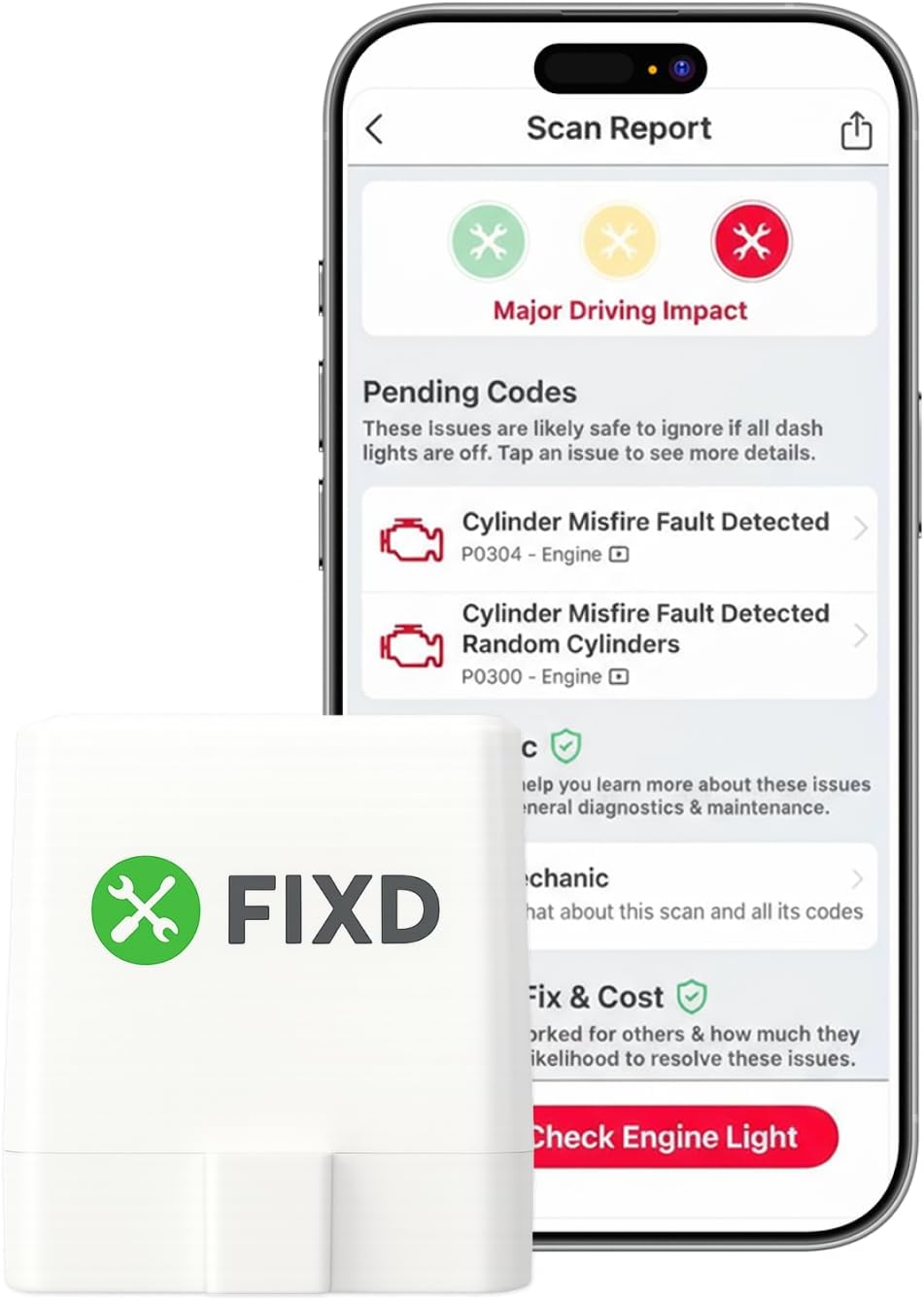
Best Bluetooth OBD2 Scanner
Detect 39,000+ Issues With Enhanced Codes. Save $1000s on car repairs & buying used vehicles by diagnosing problems yourself.
Shop on Amazon
Key Takeaways
- A Check Engine Light that stays on immediately after starting your car indicates your vehicle’s ECU detected a fault during startup—most commonly low battery voltage, ignition misfires, oxygen sensor issues, or secondary air injection failures.
- Use an OBD-II scanner to read diagnostic trouble codes that pinpoint the exact cause of your Check Engine Light, such as P0300 for misfires or P0420 for catalytic converter problems.
- Quick fixes like tightening a loose gas cap, cleaning battery terminals, or replacing spark plugs can resolve many Check Engine Light issues at startup without expensive repairs.
- A solid Check Engine Light is usually safe to drive with, but a flashing light indicates severe misfire and requires immediate attention to prevent catalytic converter damage.
- Clear your Check Engine Light only after fixing the underlying problem—clearing codes without repair risks further engine damage and can cause emissions test failures.
What Does the Check Engine Light Indicate?
Your Check Engine Light connects directly to your car’s Electronic Control Unit (ECU), a computer that monitors dozens of sensors throughout the engine, transmission, and emissions systems. When any sensor reports data outside its normal operating range, the ECU logs a diagnostic trouble code (DTC) and illuminates the light.
During normal startup, the light glows briefly as part of a bulb check, the dashboard’s way of proving all warning systems work. This bulb check lasts two to three seconds. If your Check Engine Light remains solid after the engine catches and runs, the ECU stored at least one fault code before or during cranking.
The light itself doesn’t tell you what failed. It only confirms the ECU flagged something. You’ll need an OBD-II scanner to pull the specific code, whether it’s a P0300 random misfire, P0171 lean fuel mixture, or P0420 catalytic converter efficiency issue. The code points you toward the faulty component or system.
Why Your Check Engine Light Comes On Right After Starting
Cold starts demand the most from your car’s electrical and ignition systems. Battery voltage dips during cranking, sometimes as low as 9–10 volts, which can drop the ECU’s reference voltage below its safe threshold. When the ECU loses stable power, it may throw a temporary code and light the dash.
Ignition misfires spike during cold starts because fuel doesn’t atomize as easily in a cold combustion chamber. Worn spark plugs or weak ignition coils struggle to create a strong spark, causing one or more cylinders to misfire in the first few revolutions. The ECU catches this immediately and logs a misfire code.
Secondary air injection systems, found on many modern cars to reduce cold-start emissions, pump fresh air into the exhaust manifold. If the air pump or check valve fails, the ECU sets a P0410 or P0411 code the instant you start the engine, according to General Motors Service Bulletins.
Oil pressure switches can also trigger startup codes. Some ECUs expect oil pressure to build within two seconds of cranking. A sluggish or failing pressure switch delays that signal, prompting a warning light.
Common Causes of Check Engine Light at Startup
Loose or Faulty Gas Cap
Your fuel system runs under slight pressure to prevent vapor leaks. A loose, cracked, or missing gas cap lets pressure escape, triggering an evaporative emissions code, often P0442 or P0455. The ECU detects this leak during startup self-tests.
“My 2021 Accord threw a Check Engine Light every cold morning. Dealer found the gas cap seal was cracked. $12 fix.” via r/Honda
Tighten your cap until it clicks three times. If the light stays on, try a replacement cap, they’re inexpensive and available at any auto parts store.
Oxygen Sensor Issues
Oxygen sensors measure exhaust gas composition to help the ECU adjust fuel delivery. Cold sensors respond slowly, and failing sensors send erratic voltage. The ECU compares upstream and downstream O2 readings during startup: mismatches log codes like P0130 or P0420.
O2 sensors wear out every 60,000–100,000 miles. If your car has high mileage and the light appears at startup, suspect the upstream sensor first. A FIXD OBD2 scanner can confirm which bank and sensor failed.

Catalytic Converter Problems
Your catalytic converter cleans exhaust gases by converting harmful pollutants into safer compounds. When it clogs or its internal honeycomb breaks down, exhaust backpressure rises and efficiency drops. The ECU monitors converter performance using downstream O2 sensors.
A failing converter often triggers a P0420 or P0430 code immediately after a cold start when exhaust flow and temperature are abnormal. Catalytic converter replacement costs $800–$2,500 depending on your vehicle, so verify the diagnosis with a mechanic before replacing it.
Mass Airflow Sensor Failure
The Mass Airflow (MAF) sensor measures incoming air volume so the ECU can calculate the correct fuel injection amount. A dirty or failing MAF sends bad data, causing rough idling, hesitation, and lean or rich fuel mixture codes (P0171, P0174).
Dust, oil vapor from a dirty air filter, or sensor element contamination cause most MAF failures. Cleaning the sensor with MAF-specific cleaner often restores function. If cleaning doesn’t help, replacement sensors cost $50–$300.
Battery or Electrical System Malfunction
Low battery voltage during cranking pulls down the ECU’s power supply. When voltage drops below 9 volts, the ECU may reset or fail to complete startup checks, logging a code. Corroded battery terminals, a weak battery with insufficient Cold Cranking Amps (CCA), or a failing alternator all contribute.
“Check Engine Light came on every start when temps hit 10°F. Battery tested at 420 CCA instead of 650. New battery, problem gone.” via r/MechanicAdvice
Test your battery with a load tester at any auto parts store, most do it free. Replace the battery if CCA falls below 75% of its rated spec.
How to Diagnose the Problem Using an OBD-II Scanner
An OBD-II scanner plugs into the diagnostic port under your dashboard (usually near the steering column) and reads fault codes stored in the ECU. Budget scanners cost $20–$40: advanced models like the BlueDriver Bluetooth Pro offer live data and repair suggestions.
Turn the ignition to “On” without starting the engine. Plug in the scanner, power it on, and select “Read Codes.” The scanner displays alphanumeric codes, P-codes for powertrain, B-codes for body, C-codes for chassis. Write down every code and its description.
Common startup codes include:
- P0300–P0304: Random or cylinder-specific misfires
- P0171/P0174: System too lean (Bank 1 or 2)
- P0420/P0430: Catalyst efficiency below threshold
- P0410/P0411: Secondary air injection system fault
- P0562: System voltage low
Cross-reference codes using free databases like OBD-Codes.com or the scanner’s app. Freeze frame data, snapshots of engine conditions when the code set, help pinpoint intermittent faults.
When It’s Safe to Keep Driving vs. When to Stop Immediately
A solid Check Engine Light means the ECU detected a fault but the system still functions. You can usually drive to a repair shop or auto parts store for diagnosis. But, watch for these warning signs that demand immediate attention:
- Flashing Check Engine Light: Indicates severe misfire that can damage the catalytic converter. Pull over safely and shut off the engine.
- Loss of power or rough running: The problem affects driveability. Stop driving.
- Strange noises or smells: Grinding, knocking, or burning odors signal imminent failure.
- Other warning lights: If oil pressure, temperature, or brake lights join the Check Engine Light, stop immediately.
If the engine runs smoothly, you’re not losing power, and the light stays solid, it’s usually safe to drive short distances. But don’t ignore it, persistent codes damage other components over time.
Steps to Take When Your Check Engine Light Appears at Startup
Step 1: Check the gas cap. Tighten it and see if the light clears after a few drive cycles.
Step 2: Scan for codes using an OBD-II reader. Note all codes and freeze frame data.
Step 3: Inspect battery terminals for corrosion. Clean with a wire brush and baking soda solution if needed.
Step 4: Test battery voltage with a multimeter. You should see 12.4–12.7 volts at rest and above 13.5 volts with the engine running.
Step 5: If codes point to a specific sensor (O2, MAF, or oil pressure), inspect wiring and connectors for damage.
Step 6: Replace worn spark plugs if your car has over 30,000 miles on the current set.
Step 7: If you can’t pinpoint the issue, take the car to a trusted mechanic with your scan results.
How to Reset Your Check Engine Light (And Whether You Should)
Clearing the light without fixing the underlying problem wastes time and risks further damage. But after a repair, you’ll want to reset the light to confirm the fix worked.
Use your OBD-II scanner’s “Clear Codes” function. This erases stored codes and turns off the light. Drive the car through several cycles (cold start, highway, city) to let the ECU recheck all systems. If the fault persists, the light returns.
Disconnecting the battery for 15 minutes also resets the ECU, but you’ll lose radio presets and may need to relearn idle and throttle position. Most mechanics recommend scanner-based resets.
Never clear codes just to pass an emissions test or sell a car. The ECU sets a “readiness monitor” flag when codes are cleared: inspection equipment detects this and fails the vehicle.
Prevention Tips to Avoid Future Check Engine Light Issues
Replace spark plugs and ignition coils on schedule, usually every 60,000–100,000 miles. Fresh plugs prevent cold-start misfires.
Change your engine air filter every 15,000–30,000 miles to protect the MAF sensor from contamination.
Use a battery maintainer or trickle charger if you take short trips or drive infrequently. This keeps battery voltage high and prevents ECU resets.
Inspect and clean battery terminals twice a year. Corrosion increases resistance and causes voltage drop during cranking.
Use Top-Tier gasoline with detergent additives to keep fuel injectors and intake valves clean. Deposits cause lean conditions and misfire codes.
Schedule regular oil changes. Clean oil protects sensors and keeps the variable valve timing system (if equipped) functioning correctly.

Frequently Asked Questions
Why does my check engine light come on immediately after starting the car?
Your check engine light activates immediately after starting when the ECU detects a fault during startup. Common causes include low battery voltage, cold-start ignition misfires from worn spark plugs, faulty oxygen sensors, loose gas caps, or secondary air injection pump failures. Use an OBD-II scanner to read the specific diagnostic trouble code.
Is it safe to drive with a check engine light on?
A solid check engine light is generally safe for short drives to a repair shop. However, stop immediately if the light flashes (severe misfire), you lose power, smell burning, or hear unusual noises. A flashing light indicates catalytic converter damage risk and requires immediate attention.
What are the most common causes of check engine light at startup?
The most common startup causes include loose or cracked gas caps (P0442 code), oxygen sensor failures, catalytic converter problems, mass airflow sensor contamination, battery voltage drops below 9 volts, and worn spark plugs causing misfires. Each requires different diagnostic steps and repairs.
How do I use an OBD-II scanner to diagnose check engine light codes?
Plug the OBD-II scanner into your diagnostic port (usually under the dashboard near the steering column) with the ignition on but engine off. Select ‘Read Codes’ to display fault codes like P0300 (misfire) or P0171 (lean mixture). Write down all codes and cross-reference them using free databases like OBD-Codes.com.
Can a check engine light clear itself without repairs?
A check engine light can turn off temporarily if the fault was intermittent, but it will return if the underlying problem persists. After repairs, use your OBD-II scanner’s ‘Clear Codes’ function, then drive through multiple cycles to confirm the fix. Never clear codes without addressing the root cause.
How much does it cost to fix a check engine light issue?
Costs vary widely: a loose gas cap costs $12, oxygen sensor replacement runs $150–$300, mass airflow sensor cleaning is free to $100, but catalytic converter replacement can reach $800–$2,500. Diagnosis with an OBD-II scanner (free to $50) helps identify the problem before spending money on repairs.
Read More:
- Check Engine Light On (What It Means, Reasons and What to Do)
- Check Engine Light Flashing (Emergency Steps to Save Your Engine)
- Check Engine Light Stays On (Causes and Here’s the Workshop Fix Guide)
- Check Engine Light Came On Then Went Off (Causes Explained)