
Your Ford Fusion AC stopped blowing cold, you tried a recharge can, and nothing changed. Now the compressor won’t even engage. Sound familiar?
Here’s what most shops won’t tell you: on 2013–2020 Ford Fusion models, the most common reason the AC compressor refuses to kick on, even though a full refrigerant charge, is a faulty evaporator temperature sensor (part number DG9Z-19C734-A) that sends false readings to the PCM, which then shuts down the compressor clutch as a protective measure. This is not a compressor failure, and you do not need a $1,200 evaporator core replacement. A simple bypass test can confirm the sensor is your problem in under 10 minutes.
Before you let a shop talk you into a new compressor or a full dashboard teardown, read this guide. We’ll walk you through exactly how the system works, what’s actually failing, and the precise technical language you need to protect yourself from unnecessary repairs.
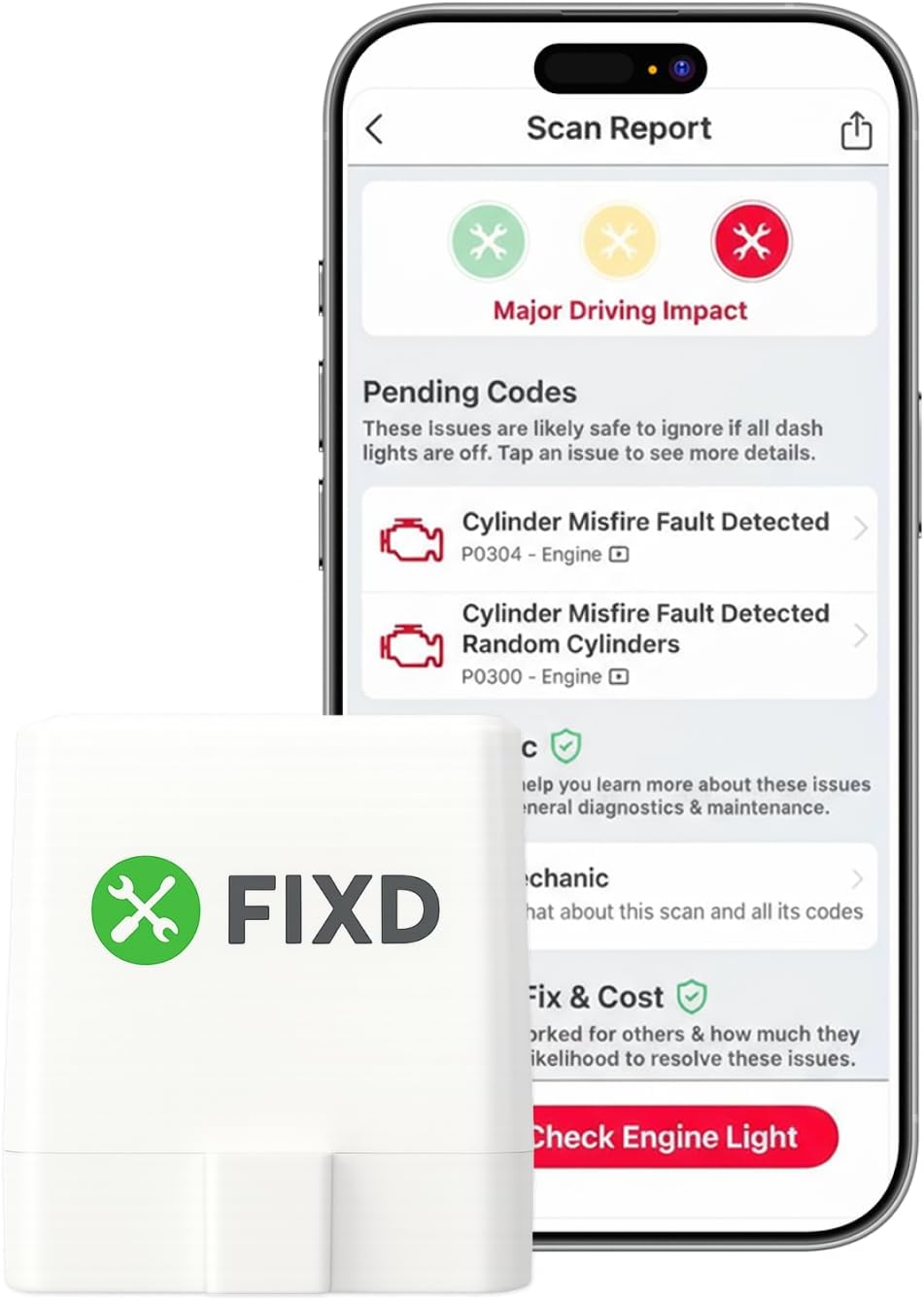
Best Bluetooth OBD2 Scanner
Detect 39,000+ Issues With Enhanced Codes. Save $1000s on car repairs & buying used vehicles by diagnosing problems yourself.
Shop on Amazon
Key Takeaways
- On 2013–2020 Ford Fusion models, the most common cause of AC not working is a faulty evaporator temperature sensor sending false readings to the PCM, not a failed compressor costing $1,200.
- The evaporator temp sensor bypass test using a 10kΩ resistor can confirm the diagnosis in under 15 minutes and save you from unnecessary dashboard teardown.
- Ford Fusion AC blows cold then hot cycles indicate the evaporator temperature sensor is drifting, while hot air on one side only points to a failed blend door actuator.
- Stuck active grille shutters on EcoBoost models restrict condenser airflow and trigger the AC pressure switch, a $0 fix if you manually free them or a $180–$400 repair if the motor fails.
- Before visiting a shop, gather AC pressure readings and document your bypass test results to prevent costly upsells—most Ford Fusion AC repairs cost $30–$350, not the inflated $900+ dealer quotes.
How the Ford Fusion Air Conditioning System Works
Your Ford Fusion uses a closed-loop AC system controlled by the Powertrain Control Module (PCM). The PCM monitors multiple sensor inputs, refrigerant pressure, evaporator temperature, ambient air temperature, before it commands the AC compressor clutch to engage. If any single sensor reading falls outside its expected range, the PCM will not send the ground signal to the compressor clutch relay, and your AC stays off.
The system uses either R-134a (2013–2017 models) or R-1234yf (2018–2020 models) refrigerant. The compressor pressurizes the refrigerant, pushes it through the condenser (mounted behind the front grille), then through the expansion valve, and finally into the evaporator core buried deep behind the dashboard. The evaporator temperature sensor sits directly on the evaporator core and reports its temperature back to the PCM roughly 10 times per second.
Here’s where the 2013–2020 Ford Fusion gets tricky. The evaporator temp sensor on these models is known to drift or fail intermittently. When it reports a temperature below 32°F, even if the evaporator is actually at 45°F, the PCM assumes the core is freezing and cuts compressor operation entirely. You’ll feel the AC blow cold for a few minutes, then it switches to warm air. That pattern, Ford Fusion AC blows cold then hot, is the classic signature of this sensor flaw.
On EcoBoost models (especially the 1.5L and 2.0L), there’s an additional layer: the active grille shutters. These motorized shutters in front of the condenser open and close to manage engine temperature and aerodynamics. If the grille shutter motor fails or the shutters get stuck closed (common after debris accumulation or a minor front-end impact), airflow across the condenser drops to near zero.
Your high-pressure side readings spike, the AC pressure switch trips, and the PCM disables the compressor. Many Ford Fusion 1.5 EcoBoost AC troubleshooting cases trace back to stuck grille shutters rather than any actual AC component failure.
Common Reasons Your Ford Fusion AC Stops Blowing Cold Air
Low or Leaked Refrigerant
The most basic cause is low refrigerant. Your system needs a precise charge, typically around 22 oz for R-134a models. Even a 3–4 oz deficit can cause the low-pressure switch (located on the accumulator near the firewall) to prevent compressor engagement. Common leak points include the condenser seams, the Schrader valve cores on the service ports, and the compressor shaft seal.
If you’ve already tried a DIY recharge can and the compressor still won’t engage, the issue likely isn’t low refrigerant. The recharge can may have actually overcharged the system, pushing the Ford Fusion AC high pressure side too high and tripping the high-pressure cutoff. A proper manifold gauge reading is the only way to confirm correct charge levels.
Faulty Compressor or Compressor Clutch
A genuinely failed compressor does happen, but it’s far less common than sensor or electrical faults on the Fusion. If the PCM is not commanding AC clutch engagement, the compressor itself isn’t the problem, the signal path is. You can verify this by checking for 12V at the compressor clutch connector with the AC requested on. No voltage? The PCM never sent the command. This is the classic “PCM not commanding AC clutch Ford Fusion” scenario, and it almost always points upstream to the evaporator temp sensor or pressure switch.
Blown Fuse or Bad Relay
Check Ford Fusion AC fuse 12 in the engine compartment fuse box. This 10A fuse protects the AC clutch circuit. Also check the AC clutch relay in the same box. A relay that tests fine on the bench but fails under load is a common gremlin. Swap it with an identical relay from another circuit to test.
Clogged or Failing Condenser
A condenser blocked by road debris, bugs, or bent fins restricts heat dissipation. The high-pressure side climbs above 300 PSI at idle, and the system shuts down. You’ll notice Ford Fusion AC blowing warm air at idle but cooling returns at highway speed when airflow increases. Rinse the condenser carefully with a garden hose from the engine side outward.
Blend Door Actuator Malfunction
If your Ford Fusion AC blows hot on the driver side but cold on the passenger side, the blend door actuator has likely failed. The Fusion uses separate actuators for driver and passenger zones in dual-climate models. A failed actuator makes a clicking sound behind the dash when you change temperature settings. The HVAC blend door actuator replacement on the Ford Fusion requires removing the lower dash panel but does not require a full dashboard teardown.
“My 2015 Fusion was blowing hot on the driver side only. Dealer wanted $800. Turned out to be a $45 blend door actuator I replaced in my driveway in 30 minutes.” via r/fordfusion
Electrical Issues and Sensor Failures
This is the big one. The evaporator temperature sensor symptoms on the Ford Fusion include intermittent cooling, “AC Off” messages on the climate display, and a compressor that cycles every 5–10 seconds before giving up. The ambient air temp sensor (mounted behind the front bumper) can also cause issues if it reads incorrectly, the PCM uses it as part of its AC enable logic.
The Ford Fusion service special message SSM 45456 specifically addresses evaporator temperature sensor calibration drift on certain production runs. If your VIN falls within the affected range, the fix may involve a PCM recalibration rather than sensor replacement.
Cabin Air Filter Blockage
A severely clogged cabin air filter restricts airflow across the evaporator, which causes it to ice up. The evaporator temp sensor then reads below freezing (correctly, this time) and the PCM shuts things down. Before chasing electrical ghosts, pull the cabin air filter from behind the glove box and inspect it. Replace it if it’s matted with debris. This $12 fix resolves more Ford Fusion cabin air filter airflow problems than people realize.
Here’s a quick comparison of the most common failures and their typical symptoms:
| Symptom | Likely Cause | Estimated Cost |
|---|---|---|
| AC blows cold then hot | Evaporator temp sensor | $30–$85 (part) |
| Hot driver side, cold passenger | Blend door actuator | $40–$65 (part) |
| Compressor won’t engage at all | Fuse, relay, or sensor signal | $5–$85 |
| Cools at highway speed only | Clogged condenser or stuck grille shutters | $0–$350 |
| AC works then “AC Off” message | Evap sensor or pressure switch | $30–$120 |
How to Diagnose the Problem Yourself
Here’s the bypass test that can save you a fortune. You’ll need a multimeter, a 10mm socket, and about 15 minutes.
Step 1: Locate the evaporator temp sensor connector. It’s behind the glove box, clipped to a wiring harness near the blower motor. Drop the glove box by squeezing the side tabs inward.
Step 2: Unplug the sensor. With the engine running and AC requested, disconnect the two-pin evaporator temp sensor connector.
Step 3: Insert a known resistance. Using a 10kΩ resistor (or a small potentiometer), bridge the two pins in the harness-side connector. A 10kΩ reading simulates approximately 50°F to the PCM, well within the “safe” operating range.
Step 4: Observe the compressor. If the compressor clutch immediately engages and cold air returns, you’ve confirmed the evaporator temperature sensor is your problem. The compressor, refrigerant charge, and electrical path are all fine.
Step 5: For EcoBoost owners, check the grille shutters. With the car off, reach behind the front bumper and manually push the shutter vanes. They should pivot freely. If they’re stuck shut, unplug the shutter motor connector and leave the shutters propped open. Start the car and test the AC. Restored cooling confirms the Ford Fusion active grille shutters were blocking condenser airflow.
For ongoing diagnostics, the FIXD OBD2 Scanner gives you live evaporator temp sensor data and can read Ford-specific AC DTCs that generic code readers miss. And if you’re planning the blend door actuator replacement yourself, the Dorman 604-252 Blend Door Actuator is a direct fit for 2013–2020 Fusion models.


“Did the resistor bypass on my ’16 Fusion SE. Compressor kicked on instantly. Sensor was the whole problem. Saved me from a $1,400 dealer quote for an evaporator replacement.” via r/MechanicAdvice
To reset the Ford Fusion HVAC module without tools, disconnect the battery for 60 seconds, reconnect it, then cycle the ignition to “Run” without starting. Set the climate control to 60°F, press both the defrost and recirculation buttons simultaneously for five seconds, and release. The HVAC module recalibrates the blend doors over the next 30 seconds.
When to Take Your Ford Fusion to a Mechanic
If your bypass test didn’t restore compressor engagement, the issue lives deeper in the system. A few scenarios genuinely require professional equipment:
- Refrigerant recovery and precise recharge. If you suspect overcharge from a DIY can, you need a recovery machine. The Ford Fusion AC recharge capacity for R-134a is 22 oz (±0.5 oz) on most 2.5L and EcoBoost models. R-1234yf systems require a completely different (and expensive) machine.
- Expansion valve failure. The Ford Fusion AC expansion valve sits at the evaporator inlet behind the dash. If it’s stuck closed, the low-pressure side reads too low (below 20 PSI) while the high side stays abnormally high. This requires dashboard removal, there’s no shortcut.
- Internal compressor failure. If the clutch engages but you hear grinding or metallic rattling, the compressor internals are damaged. Metallic debris circulates through the system and contaminates the condenser, receiver/drier, and expansion valve. A full system flush is mandatory before installing a replacement compressor.
- Blower motor resistor vs. fan speed controller. On 2013–2016 models, a failed blower motor resistor kills certain fan speeds. On 2017–2020 models, Ford switched to an electronic fan speed controller module. Different parts, different diagnostic approaches.
Bring your AC pressure readings (both high and low side) and your bypass test results to the shop. Tell the technician: “I bypassed the evaporator temp sensor with a 10kΩ resistor and the compressor did/did not engage. Here are my manifold readings.” That sentence alone signals you’ve done your assignments and prevents the default $1,200 evaporator replacement upsell.
Data Insights and Analysis
According to NHTSA complaint data through early 2026, air conditioning failures rank among the top five reported issues for the 2013–2020 Ford Fusion, with a noticeable spike in reports during the 2015 and 2017 model years. The Ford Fusion also appears frequently in Consumer Reports’ reliability data as having below-average climate system ratings for those specific years.
Expert Note: "The evaporator temp sensor on the Fusion uses a negative temperature coefficient (NTC) thermistor. As the thermistor ages, its resistance curve shifts, it reads colder than actual temperature at moderate ambient conditions. The PCM interprets this as an icing condition and disengages the compressor clutch. The sensor itself costs $30, but because Ford mounted it on the evaporator core behind the firewall, most shops quote full dash removal labor at $900+. The bypass resistor test confirms the failure without any disassembly."
Estimated Repair Costs for Ford Fusion AC Issues
Here’s what you should expect to pay, broken down by the actual failure, not the inflated “we need to replace everything” shop quote:
- Evaporator temp sensor (with dash removal): $900–$1,200 at a dealer. DIY with the bypass resistor method: under $5 as a temporary fix, or $30–$85 for the sensor if you’re comfortable with dash work.
- AC compressor replacement: $650–$1,100 including labor, refrigerant recovery, and recharge.
- Blend door actuator: $150–$350 at a shop. DIY: $40–$65 for the part plus about 30–45 minutes.
- Condenser replacement: $300–$600 installed.
- Active grille shutter motor (EcoBoost): $180–$400 at a dealer. Cleaning stuck shutters yourself costs nothing.
- Cabin air filter: $12–$20 at any auto parts store. Two-minute swap.
- AC pressure switch: $25–$60 for the part. Accessible without removing any major components.
- Refrigerant recharge (professional, with leak check): $150–$250.
The pattern here is clear. Most Ford Fusion AC failures trace back to sensors, actuators, or airflow restrictions, not to the compressor itself. Arm yourself with the right diagnostic data before you walk into any shop, and you’ll avoid the most expensive misdiagnosis in the Fusion repair playbook.
Frequently Asked Questions
Why does my Ford Fusion AC compressor won’t engage even after recharging?
On 2013–2020 Ford Fusion models, a faulty evaporator temperature sensor (DG9Z-19C734-A) commonly causes the PCM to shut down the compressor clutch. The sensor sends false readings below 32°F, triggering a protective freeze-protection shutdown. A simple 10kΩ resistor bypass test can confirm this in under 10 minutes without dash removal.
What causes Ford Fusion AC to blow cold then hot intermittently?
Intermittent cold-to-hot cycling is the classic signature of an evaporator temperature sensor failure. The sensor drifts out of calibration, falsely reporting freezing temperatures to the PCM, which disengages the compressor clutch as a safety measure. This pattern is extremely common on 2013–2020 Fusion models.
How can I test if the evaporator temperature sensor is causing my AC problem?
Locate the evaporator temp sensor connector behind the glove box. With the engine running and AC on, unplug it and bridge the two pins with a 10kΩ resistor. If the compressor clutch immediately engages and cold air returns, the sensor is your problem. This bypass test takes 10–15 minutes and saves expensive diagnostic labor.
Can a stuck grille shutter motor prevent my Ford Fusion AC from working?
Yes, especially on EcoBoost models (1.5L and 2.0L). Stuck-closed active grille shutters block condenser airflow, spiking high-pressure readings and triggering the AC pressure switch cutoff. Check that the shutter vanes pivot freely behind the front bumper; debris or front-end impacts commonly jam them shut.
What’s the real cost to fix a Ford Fusion AC that won’t work?
Costs vary by actual failure: evaporator temp sensor DIY is under $5 (bypass) to $30–$85 (replacement), blend door actuator $40–$65 DIY, clogged condenser free (rinse) to $300–$600 (replacement), and professional refrigerant recharge $150–$250. Most failures aren’t compressor issues—avoid $900+ dash-removal quotes without first running the bypass test.
Does a clogged cabin air filter cause Ford Fusion AC to stop cooling?
Yes. A severely clogged cabin air filter restricts evaporator airflow, causing it to ice up. The evaporator temperature sensor then reads below freezing and signals the PCM to shut down the compressor. Replacing the $12–$20 cabin air filter behind the glove box is a quick diagnostic check before pursuing electrical troubleshooting.
Sources:
- NHTSA Complaints for Ford Fusion
- r/fordfusion – Reddit Community
- Ford Fusion Forum – FordFusionForum.com
- r/MechanicAdvice – Reddit Community
- Consumer Reports Ford Fusion Reliability
Read More:
- Ford Navigation Not Working (Reasons and How to Fix It)
- Ford Escape Cooling Fan Problems (Here’s the Causes and Solution)
- Ford F-150 Battery Drain (The Definitive Power-Down Guide)