
That amber warning light on your E350 dashboard disrupts your refined driving experience. Your Mercedes deserves immediate attention when sensors detect irregularities in your powertrain system.
The Mercedes E350 check engine light signals malfunctions ranging from simple EVAP leaks (loose gas cap) to serious cylinder misfires. Your M272 or M276 engine stores diagnostic trouble codes that reveal oxygen sensor failures, MAF contamination, catalytic converter efficiency loss, or intake manifold tumble flap issues. You must read these OBD2 codes with a scanner to determine severity, steady lights indicate non-critical faults, while flashing warnings mean active misfires causing catalytic damage.
This guide walks you through systematic troubleshooting for V6 and turbocharged inline-4 generations, covering balance shaft codes, thermostat failures, and EVAP system leaks specific to E-Class platforms.
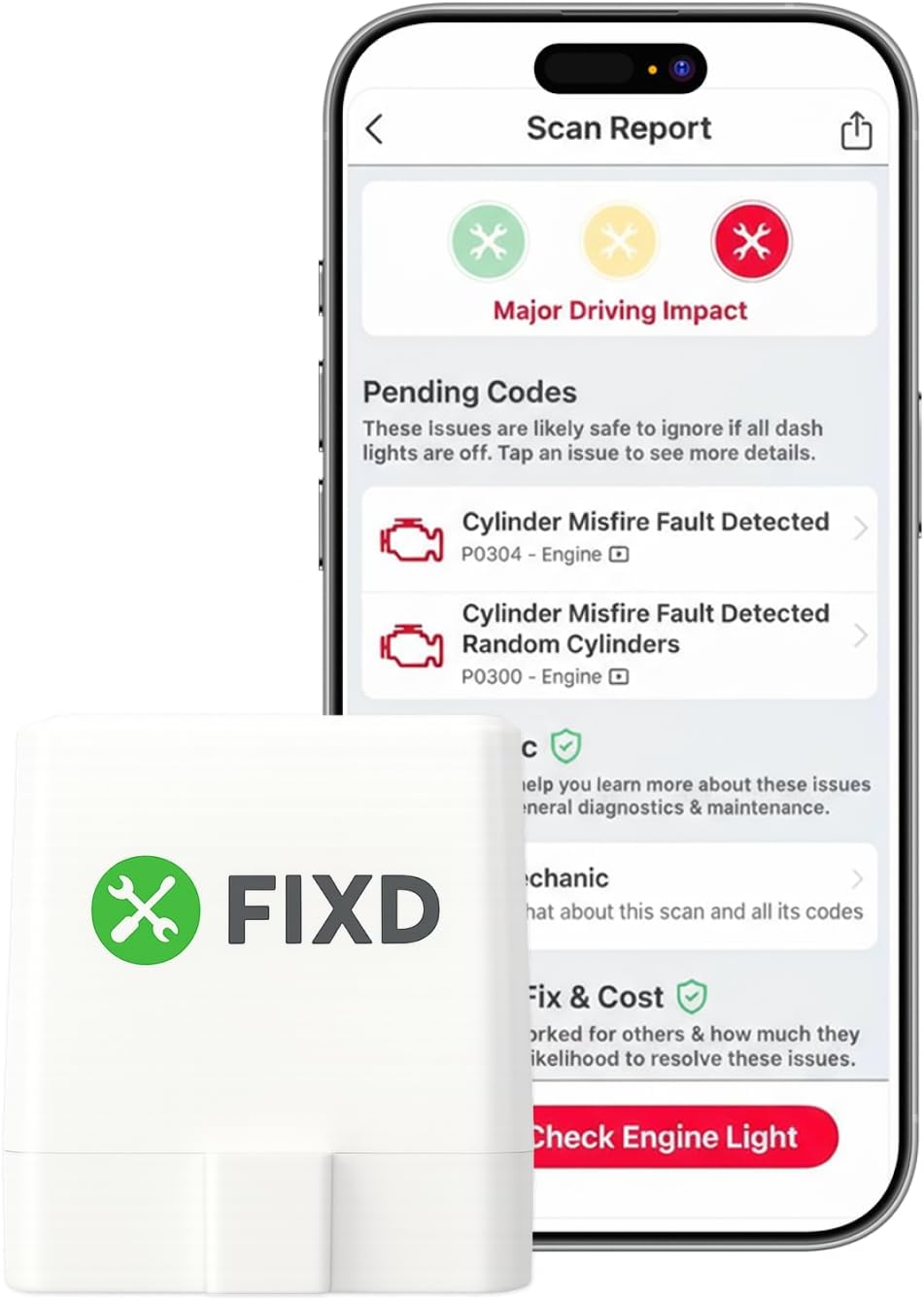
Best Bluetooth OBD2 Scanner
Detect 39,000+ Issues With Enhanced Codes. Save $1000s on car repairs & buying used vehicles by diagnosing problems yourself.
Shop on Amazon
Key Takeaways
- A steady Mercedes E350 check engine light allows cautious driving while a flashing light indicates active misfires that can destroy your catalytic converter within minutes—pull over immediately if the light flashes.
- The most common E350 check engine light causes are oxygen sensor failures, mass airflow sensor contamination, and catalytic converter degradation, which you can diagnose by reading OBD2 codes with a $50-$200 scanner.
- Simple DIY checks like tightening your gas cap, inspecting spark plug wires, and cleaning the MAF sensor with proper CRC cleaner can resolve many check engine issues before spending $300+ at a shop.
- Repair costs range from $220 for an oxygen sensor at an independent shop to $5,400 for intake manifold replacement at a dealership—Mercedes specialists offer 40-50% savings compared to dealership rates.
- Prevent 70% of check engine light occurrences by following Mercedes service intervals, using only MB 229.5/229.51 approved synthetic oil, and addressing small oil leaks before they damage ignition coils and fuel systems.
- Never clear check engine codes without diagnosing the root cause, as masked faults worsen over time—a $140 oxygen sensor problem ignored for 10,000 miles escalates into an $1,800 catalytic converter replacement.
What Does the Light Mean?
Your E350’s onboard diagnostics monitor 150+ powertrain parameters every millisecond. When sensors detect values outside Mercedes-Benz specifications, the system illuminates the check engine light and stores a fault code in the engine control unit.
A steady amber light indicates a stored fault that doesn’t immediately threaten engine safety. You can continue driving cautiously while scheduling diagnostics within 48 hours. Common steady-light triggers include oxygen sensor degradation or small EVAP leaks.
A flashing check engine light signals active cylinder misfires. Your ECU detects incomplete combustion that sends unburned fuel into the catalytic converter, risking thermal damage to the $1,800 emissions component. Pull over safely and reduce engine load immediately, continuing to drive melts catalyst substrates and destroys downstream oxygen sensors.
Most Common Causes
Oxygen Sensor Failures
Your E350 uses two oxygen sensors per cylinder bank, upstream sensors monitor air-fuel ratio while downstream sensors verify catalytic converter efficiency. Mercedes V6 engines run lean at highway speeds, which accelerates sensor contamination from carbon deposits.
Typical symptoms include codes P0420 (catalyst efficiency below threshold) or P0135 (O2 sensor heater circuit). You’ll notice reduced fuel economy dropping 2-3 MPG and occasional hesitation during acceleration. The INNOVA OBD2 scanner reads live oxygen sensor voltage to confirm sluggish response.
Replacement intervals average 80,000–120,000 miles on E-Class sedans. Use OEM Bosch sensors, aftermarket units fail prematurely in Mercedes adaptive fuel trim systems.
Mass Airflow Sensor Issues
The MAF sensor measures incoming airflow grams per second, enabling precise fuel injection calculations. Your M272 engine positions this sensor in the intake tube between the air filter and throttle body.
Contaminated hot-wire elements trigger codes P0101 or P0171 (system too lean). You’ll experience rough idle at cold start, stumbling acceleration, and black exhaust smoke from over-fueling compensation. Oil vapors from the crankcase ventilation system coat the sensor filaments over time.
Clean the MAF with CRC MAF Cleaner spray every 30,000 miles. Remove the sensor, spray short bursts on the wire elements, and air-dry for 10 minutes. Never use carburetor cleaner, it leaves residue that worsens readings.
Catalytic Converter Problems
Your E350’s catalytic converters use platinum and palladium substrates to oxidize hydrocarbons and reduce NOx emissions. Sustained misfires from faulty ignition coils dump raw fuel into the converter, melting the ceramic honeycomb structure.
Code P0420 or P0430 indicates converter efficiency below 95% threshold. You’ll hear rattling from broken catalyst pieces and smell sulfur (rotten eggs) from incomplete combustion. Mercedes V6 engines use two converters, bank-specific codes identify which side failed.
“2012 E350, P0420 appeared at 118k miles. Dealer quoted $2,100 for OEM cats but independent shop used Magnaflow for $980.” via BenzWorld Forums
Replace converters only after confirming oxygen sensors function properly. Many P0420 codes result from lazy downstream O2 sensors, not actual catalyst failure.
Reading Diagnostic Codes
Connecting an OBD2 scanner reveals the exact fault codes your E350 stored. Locate the 16-pin diagnostic port under the dashboard left of the steering column, it’s a trapezoid connector with exposed pins.
Plug in your scanner with ignition off, then turn the key to position II (dash lights on, engine off). Budget scanners like the BlueDriver Bluetooth adapter pair with smartphone apps to read Mercedes-specific codes. Professional tools access live data streams showing real-time sensor voltages.

Mercedes uses manufacturer-specific codes beyond generic OBD2 standards. Code P2006 indicates intake manifold runner control stuck open, a common M272 failure where plastic tumble flaps break and fall into cylinders. Generic scanners display the code but Mercedes STAR diagnostic software provides detailed component location.
Record all codes before clearing them. Write down the P-codes (powertrain), freeze-frame data (engine conditions when the fault occurred), and pending codes (intermittent faults not yet confirmed). This data helps technicians diagnose intermittent problems that don’t trigger the light during shop visits.
Driving Safety Considerations
A steady check engine light permits cautious driving for short distances. Your E350 enters limp mode when serious faults occur, you’ll notice reduced power, transmission stuck in third gear, and speed limited to 35 mph. Limp mode protects the engine from catastrophic damage.
Flashing lights demand immediate action. Active misfires send unburned fuel into the exhaust system, raising catalytic converter temperatures to 1,400°F, well above the normal 800°F operating range. Five minutes of driving with flashing light destroys converters and oxygen sensors.
Dashboard warning combinations reveal severity:
- Check engine + traction control light: Wheel speed sensor fault or throttle position error
- Check engine + temperature warning: Thermostat stuck open (P0597) or coolant temp sensor failure
- Check engine + battery light: Alternator voltage regulator malfunction affecting fuel pump operation
Monitor your temperature gauge during any check engine event. The M272 engine suffers head gasket failure if coolant temps exceed 240°F. Pull over immediately if the gauge enters the red zone.
DIY Troubleshooting Steps
Start with zero-cost checks before visiting mechanics. Inspect your gas cap, Mercedes EVAP systems detect 0.020-inch leaks, and a loose cap triggers code P0455. Remove the cap, check the rubber seal for cracks, and reinstall with three clicks.
Check engine oil level with the dipstick. Your M276 engine consumes 1 quart per 1,000 miles during aggressive driving. Low oil triggers variable valve timing solenoid codes (P0011, P0014) because camshaft adjusters require 45 PSI oil pressure.
Visually inspect spark plug wires and ignition coils. The M272 V6 uses individual coils mounted directly on each spark plug. Look for carbon tracking (black lines) on coil bodies or cracked rubber boots. Misfire codes P0300-P0306 indicate which cylinder failed.
DIY diagnostic sequence:
- Tighten gas cap and drive 50 miles to see if light clears
- Check air filter for excessive dirt restricting airflow
- Inspect battery terminals for corrosion causing voltage fluctuations
- Scan codes with OBD2 reader to identify specific fault
- Search Mercedes forums for your exact code and model year
Use a VPN service when accessing Mercedes diagnostic forums to protect your personal data while researching fault codes and TSB (Technical Service Bulletin) information.
Professional Service Requirements
Certain E350 faults exceed DIY capabilities and require Mercedes-specific tools. Balance shaft codes (P2006, P2004) on 2006-2011 M272 engines indicate intake manifold runner failures that demand complete manifold replacement, a 12-hour job requiring specialized intake removal procedures.
Thermostat housing failures plague 2010-2016 models, leaking coolant and triggering P0597 codes. The plastic housing cracks where it bolts to the cylinder head. Independent Mercedes specialists complete this repair in 3 hours versus 5 hours at dealerships.
“My 2011 E350 threw P2004, tumble flap motor failed. Dealer wanted $3,200 for manifold replacement but Euro specialist did it for $1,850 with upgraded parts.” via MBWorld E-Class Forum
Seek certified Mercedes technicians for transmission adaptation, SBC brake module codes, or Airmatic suspension faults. These systems require STAR diagnostic software to reset adaptation values after repairs. Independent shops with Autel MaxiSys scanners perform 95% of Mercedes diagnostics at half the dealer cost.
Repair Cost Overview
Understanding typical repair expenses helps you budget and avoid overcharges. These ranges reflect 2026 market rates combining parts and labor:
| Component | DIY Parts | Shop Total | Dealer Total |
|---|---|---|---|
| Oxygen sensor (1) | $85-$140 | $220-$340 | $380-$520 |
| MAF sensor | $120-$180 | $280-$420 | $450-$610 |
| Ignition coil (1) | $45-$75 | $140-$210 | $240-$320 |
| Catalytic converter | $620-$980 | $1,400-$2,100 | $2,800-$3,600 |
| Thermostat housing | $180-$280 | $520-$780 | $940-$1,280 |
| Intake manifold (M272) | $1,200-$1,650 | $2,400-$3,200 | $4,100-$5,400 |
Labor rates vary by region, metro areas charge $150-$180 per hour while suburban shops average $110-$140. Mercedes specialists cost less than dealers but maintain factory training and equipment access.
Many oxygen sensor and MAF replacements qualify as DIY projects requiring only basic hand tools. Catalytic converter and intake manifold jobs demand lifts, torque wrenches, and coolant bleeding procedures best left to professionals.
Resetting the Light
Your E350 automatically clears the check engine light after the ECU verifies the fault no longer exists through three consecutive drive cycles. Each cycle requires cold start, highway driving above 50 mph, and city driving with multiple stops.
Manual reset with an OBD2 scanner erases codes immediately. Connect the scanner, navigate to “Erase Codes” or “Clear DTCs,” and confirm. The light extinguishes instantly but returns within 50 miles if the underlying fault persists.
Battery disconnection clears codes but erases radio presets, window calibration, and transmission adaptation values. Your E350 relearns shift points over 30-40 miles of driving. Disconnect the negative terminal for 15 minutes, then reconnect and let the car idle for 5 minutes before driving.
Never clear codes before diagnosing the root cause. Many owners mask problems temporarily to pass emissions testing, but unresolved faults worsen and cause secondary damage. A $140 oxygen sensor replacement becomes a $1,800 catalytic converter job when ignored for 10,000 miles.
Prevention and Maintenance
Proactive maintenance prevents 70% of check engine light occurrences in E-Class sedans. Follow Mercedes Flexible Service System intervals, Service A every 10,000 miles and Service B every 20,000 miles with oil, filters, and fluid checks.
Use only MB 229.5 approved synthetic oil in M272 engines or MB 229.51 in M276 turbocharged units. Conventional oils lack the volatility control needed for variable valve timing systems. Your camshaft adjusters jam when carbon builds up from inferior lubricants.
Preventive maintenance schedule:
- Every 30,000 miles: Replace air filter, clean MAF sensor, inspect intake boots for cracks
- Every 60,000 miles: Replace spark plugs (use OEM NGK), check ignition coils for oil contamination
- Every 80,000 miles: Test oxygen sensor response time, inspect EVAP purge valve
- Every 100,000 miles: Replace PCV valve, inspect intake manifold for vacuum leaks
Address small oil leaks immediately. Valve cover gaskets leak on 90% of E350s after 70,000 miles, dripping oil onto ignition coils and causing misfires. A $380 gasket replacement prevents $1,200 in coil and spark plug damage.
Monitor fuel quality, use Top Tier gasoline with enhanced detergents. Shell, Chevron, and Mobil formulations reduce intake valve deposits that trigger lean codes on direct-injection engines. Your E350’s precision fuel system demands cleaner fuel than economy vehicles require.
Frequently Asked Questions
What does a steady versus flashing check engine light mean on my Mercedes E350?
A steady amber light indicates a stored fault that’s non-critical—you can drive cautiously for 48 hours. A flashing light signals active misfires damaging your catalytic converter; pull over immediately. Flashing lights risk $1,800 in converter damage within five minutes of driving.
How much does it cost to fix a Mercedes E350 check engine light?
Repair costs vary by component: oxygen sensors ($220–$520 at shops), MAF sensors ($280–$610), ignition coils ($140–$320), and catalytic converters ($1,400–$3,600). Dealer rates run 50–70% higher than independent Mercedes specialists.
What are the most common causes of a check engine light in an E350?
The most common causes are oxygen sensor failures, MAF sensor contamination, catalytic converter efficiency loss, and intake manifold tumble flap issues. Loose gas caps triggering EVAP leaks are the cheapest DIY fix. Reading OBD2 codes reveals which component failed.
Can I drive my E350 with the check engine light on?
Yes, a steady light allows cautious driving to a mechanic within 48 hours. However, a flashing light demands immediate stop—continuing risks destroying your catalytic converter and oxygen sensors. Monitor your temperature gauge; pull over if coolant temps exceed 240°F.
Why does my E350 run lean and trigger oxygen sensor codes?
Mercedes V6 engines run lean at highway speeds to optimize fuel economy, which accelerates oxygen sensor contamination from carbon deposits. This triggers P0420 or P0135 codes. Replacement intervals average 80,000–120,000 miles; use OEM Bosch sensors for reliable performance.
How do I clear the check engine light on a Mercedes E350?
The light clears automatically after three drive cycles when the ECU verifies the fault is resolved. You can manually reset it with an OBD2 scanner by selecting ‘Clear DTCs,’ but never clear codes without diagnosing the root cause first to avoid masking serious damage.
Read More: