

Your Audi’s EPC light can appear unexpectedly on your dashboard, and it’s natural to feel concerned. The EPC (Electronic Power Control) light is your vehicle’s way of alerting you to an issue that needs attention, but it doesn’t always mean something catastrophic has happened.
The Audi EPC light turns on when your car’s engine management system detects a problem with the throttle body, accelerator pedal, engine sensors, transmission, or electrical connections. Understanding what triggers this light helps you respond quickly and avoid costly repairs down the road.
In this guide, you’ll learn what causes the EPC light to activate, how to diagnose the problem yourself, and when you should take your Audi to a professional mechanic.
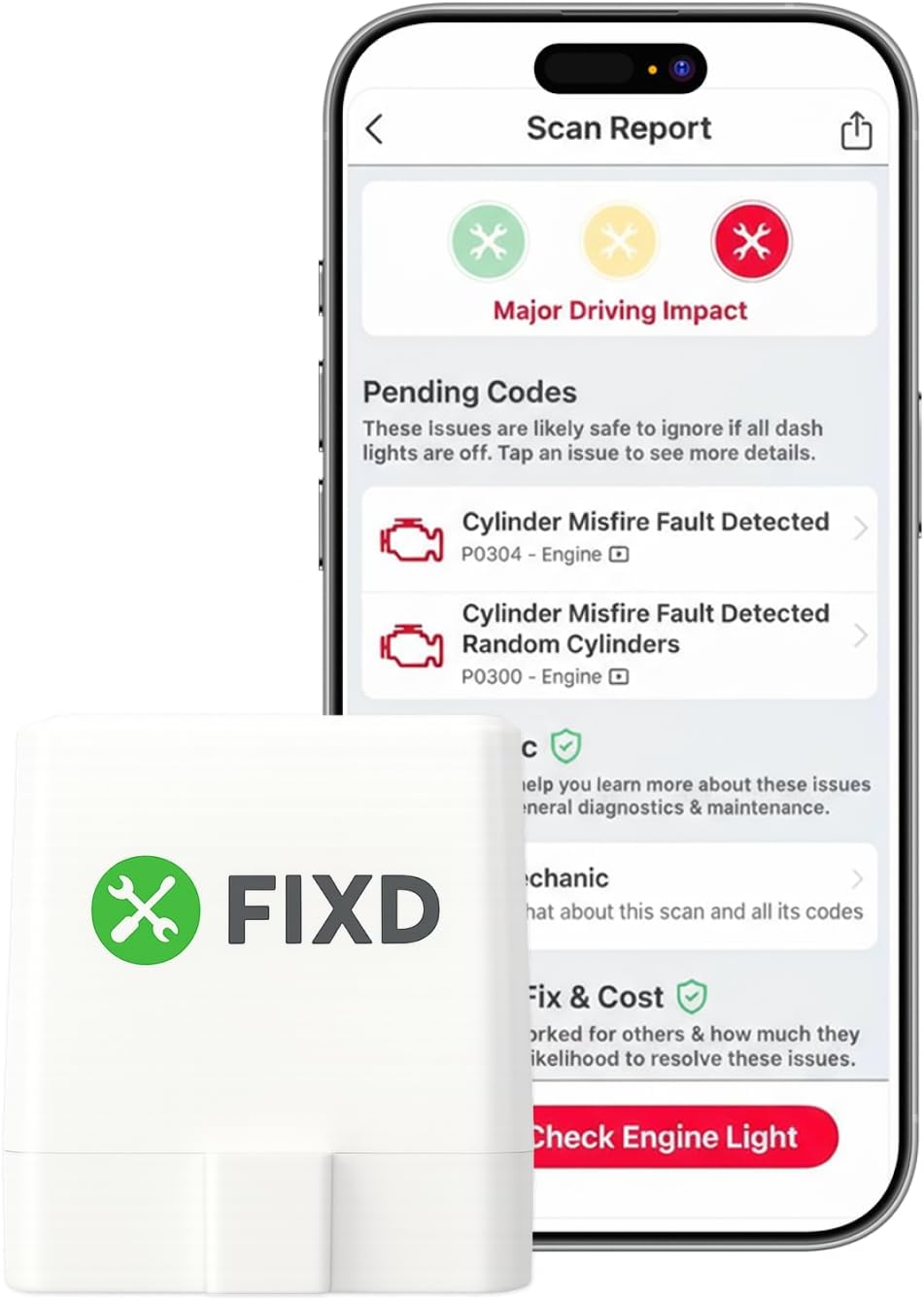
Best Bluetooth OBD2 Scanner
Detect 39,000+ Issues With Enhanced Codes. Save $1000s on car repairs & buying used vehicles by diagnosing problems yourself.
Shop on Amazon
Understanding The Audi EPC Light
The EPC light is part of your Audi’s engine management system. When this light illuminates, it means the onboard diagnostic system has detected an error in your vehicle’s electronic power control systems. Unlike a check engine light, which relates to emissions, the EPC light focuses on your car’s performance and driveability.
Your Audi uses dozens of sensors and electronic components to manage throttle response, fuel delivery, and transmission shifts. When any of these systems fail or behave unexpectedly, the EPC light activates. The light may appear steady or flicker, depending on the severity of the problem.
Some drivers notice the EPC light alongside other warning signs, rough idling, difficulty starting, reduced acceleration, or transmission hesitation. Other times, your car seems to drive normally, but the light remains on. Either way, it’s important to take action. The EPC light means your Audi’s computer has logged a fault code, and a diagnostic scan can reveal exactly what’s wrong.
Ignoring the EPC light can lead to more expensive repairs. A small issue might worsen over time, affecting fuel efficiency, engine performance, or transmission function. Getting a diagnostic check early often saves you money.
Common Causes Of The EPC Light
Several issues trigger the EPC light, with some more common than others. Understanding these causes helps you know what to expect and what questions to ask your mechanic.
Throttle Body Issues
The throttle body controls how much air enters your engine. When your engine management system detects a problem with the throttle body position or operation, the EPC light turns on. Carbon buildup inside the throttle body is the most frequent culprit. Over time, dirt and fuel residue accumulate, causing the throttle body to stick or respond slowly.
Clean air filters help reduce throttle body problems, but eventually, cleaning or replacement becomes necessary. A faulty throttle body sensor also triggers the EPC light. When this sensor malfunctions, your Audi’s computer can’t accurately measure throttle position, causing the system to activate the warning light.
Throttle body replacement costs between $300 and $800, depending on your Audi model. A simple cleaning might cost $150 to $300. If the issue is just a sensor, replacement typically runs $200 to $400.
Accelerator Pedal Problems
Your accelerator pedal contains multiple sensors that send signals to the engine management computer. When these sensors malfunction or disconnect, the EPC light activates. Sometimes the issue is mechanical, the pedal becomes stuck or doesn’t return to its resting position.
A broken accelerator pedal sensor is one of the most common causes of the EPC light in Audis. When this sensor fails, your car’s computer can’t detect how hard you’re pressing the pedal, so it triggers the warning light as a safety measure. You might notice that acceleration feels delayed or unresponsive.
Replacing an accelerator pedal assembly costs between $400 and $600. If just the sensor needs replacement, expect to pay $150 to $300. Some Audi models have had accelerator pedal issues covered under recalls, so check your vehicle’s history.
Engine Sensor Failures
Your Audi contains numerous engine sensors that monitor fuel mixture, ignition timing, and engine temperature. When any of these sensors fail, the EPC light illuminates. Common sensors that cause EPC light issues include the mass airflow sensor, oxygen sensor, and throttle position sensor.
Sensor failures can happen gradually or suddenly. A failing sensor might send intermittent signals, causing the EPC light to flicker on and off. Once a sensor completely fails, the light stays on until you address the problem.
You might notice poor fuel economy, rough running, or lack of power when a sensor fails. Engine sensors are relatively affordable to replace, usually costing $100 to $400 depending on the specific sensor. The diagnostic fee to identify which sensor is failing typically costs $75 to $150.
Faulty Mass Air Flow Sensor
The mass airflow (MAF) sensor measures the amount of air entering your engine. This information helps your fuel injection system deliver the correct fuel amount. When the MAF sensor becomes dirty or fails, your engine runs too lean or too rich, triggering the EPC light.
Dirt and carbon deposits are the main culprits. Your air filter prevents large particles from reaching the MAF sensor, but tiny particles can still accumulate. A dirty MAF sensor doesn’t necessarily fail, it just provides inaccurate readings. Cleaning sometimes resolves the issue without full replacement.
A MAF sensor cleaning costs $75 to $150. If replacement is needed, expect to pay $200 to $400. Many independent mechanics can clean or replace the MAF sensor quickly, often taking less than an hour of labor.
Electrical And Wiring Issues
Electrical problems account for a significant percentage of EPC light cases. Your Audi’s engine management system relies on consistent electrical power and clean signal transmission through wiring and connectors.
Battery And Connection Problems
A weak or dying battery can trigger the EPC light. When your battery voltage drops, the engine management computer may not function correctly, causing it to light the EPC warning. Corroded battery terminals reduce electrical flow, preventing proper sensor communication.
Check your battery terminals first. If you see white, blue, or green corrosion around the battery posts, clean them with a wire brush. A simple cleaning might eliminate the EPC light. If your battery is over three years old, consider having it tested. Battery replacement costs $100 to $200, making it one of the cheapest fixes for the EPC light.
Alternator problems can also cause electrical issues. A failing alternator struggles to maintain proper charging voltage, starving your electrical system. Your engine management computer may activate the EPC light in response. Alternator replacement is more expensive, typically costing $400 to $800.
Corroded Or Damaged Connectors
Connectors throughout your engine bay can corrode or become damaged, breaking the electrical signal path to your sensors. When a connector loses contact, the engine management system interprets this as a sensor failure and lights the EPC warning.
Moisture and salt are the main causes of connector corrosion. If you live in an area with harsh winters or near the ocean, your connectors face higher risk. Damaged connectors might result from accidental bumping during maintenance or from vibration over time.
Inspecting visible connectors yourself is possible, though sometimes problem connectors hide behind other engine components. A mechanic with a diagnostic scanner can pinpoint which connector is causing the issue. Cleaning corroded connectors costs $50 to $150. Replacing damaged connectors typically costs $100 to $300.
Transmission And Clutch Related Causes
The EPC light can also illuminate due to transmission or clutch problems. Your Audi’s engine management system monitors transmission operation and alerts you when it detects issues.
Low transmission fluid is one cause. When your transmission runs low on fluid, sensors detect abnormal pressure or temperature, triggering the EPC light. Transmission fluid leaks should be addressed immediately, driving without proper fluid causes transmission damage.
Manual transmission cars sometimes experience clutch-related EPC light issues. A worn clutch disc or faulty clutch switch can trigger the warning. The clutch switch tells your engine management system when the clutch pedal is depressed, allowing the engine to start. A faulty switch might prevent proper signal transmission.
Automatic transmission problems like solenoid failures or internal sensor malfunctions also trigger the EPC light. Transmission issues are typically more expensive to repair than engine problems. Transmission fluid servicing costs $150 to $300. Clutch replacement runs $800 to $1,200. Transmission solenoid replacement costs $300 to $600.
If you notice transmission slipping, delayed shifts, or harsh engagement alongside the EPC light, have your vehicle inspected immediately. Transmission problems worsen quickly if ignored.
Diagnosing Your Audi EPC Light
Diagnosing the EPC light requires a diagnostic scanner that reads fault codes from your Audi’s computer. Without a scanner, you’re essentially guessing at the problem. Professional mechanics use specialized scanners that connect to your car’s onboard diagnostic port.
A diagnostic scan reveals the specific fault code that triggered the EPC light. For example, a P0101 code points to mass airflow sensor issues, while a P0171 code indicates a too-lean fuel condition. These codes narrow down the problem significantly, saving time and money.
You can purchase a basic OBD2 scanner for $30 to $100, which reads generic fault codes. But, Audi-specific scanners provide more detailed information. Many auto parts stores offer free diagnostic scanning as a service. If your local store doesn’t, expect to pay $75 to $150 at an independent mechanic.
Don’t ignore intermittent EPC lights. If the light turns on occasionally and then goes off, the problem often worsens before it becomes permanent. A fault code remains stored in your computer even after the light turns off, so a mechanic can still retrieve the code and identify the issue.
Here’s what a typical diagnostic process looks like:
- Connect scanner to your Audi’s diagnostic port
- Read and document fault codes
- Research what each code indicates
- Perform visual inspection of related components
- Test sensors and connections with a multimeter
- Review repair options and costs
Before spending money on repairs, ensure your gas cap is tight. A loose gas cap can trigger various warning lights, including the EPC light in some cases. This simple fix has saved many Audi owners unnecessary repair costs.
Steps To Resolve The Issue
Once you’ve identified the problem causing your EPC light, you can plan the appropriate repair. The solution depends entirely on the underlying cause.
For throttle body issues, you might start with cleaning before considering replacement. Many independent mechanics can clean the throttle body in about an hour. If cleaning doesn’t resolve the issue, sensor or throttle body replacement becomes necessary.
Sensor replacement is relatively straightforward for many Audi models. An experienced mechanic can replace most sensors in under two hours. Ordering the correct sensor matters, using the wrong part wastes money and prolongs the repair.
Electrical issues like corroded connectors often require only cleaning. Terminal cleaning products and a wire brush can fix these problems for minimal cost. For damaged connectors, replacement is necessary, and your mechanic can usually source OEM parts quickly.
Transmission fluid servicing is straightforward. Your Audi needs specific transmission fluid, never use generic alternatives. Top-ups or complete fluid changes depend on your vehicle’s condition and mileage.
When To Seek Professional Help
Some EPC light issues you can address yourself, while others require professional expertise. Attempt DIY repairs only if you have mechanical experience and proper tools.
Seek professional help if you notice transmission slipping, rough shifting, or difficulty starting. These symptoms indicate serious problems requiring specialized diagnostic equipment. Never ignore warning signs that affect your vehicle’s safety.
Professional mechanics have access to factory diagnostic software and can reprogram components if needed. For transmission issues, clutch problems, or complex sensor failures, professional service is recommended. The cost of professional help is worth avoiding bigger problems.
Choose a mechanic familiar with Audi vehicles. Audi-specific shops often have better diagnostic tools and more experience with common problems like EPC light issues. Ask about warranties on parts and labor before agreeing to repairs.
Frequently Asked Questions
What causes an Audi EPC light to turn on?
An Audi EPC light turns on when the engine management system detects problems with the throttle body, accelerator pedal, engine sensors, transmission, or electrical connections. The light alerts you to performance or driveability issues that need attention.
How much does it cost to fix an Audi EPC light issue?
Repair costs vary by cause: throttle body cleaning ($150–$300), sensor replacement ($100–$400), battery replacement ($100–$200), connector cleaning ($50–$150), or transmission service ($150–$300). Diagnostic scanning typically costs $75–$150.
Can a loose gas cap trigger the EPC light on an Audi?
Yes, a loose gas cap can trigger various warning lights, including the EPC light in some cases. Before spending money on repairs, ensure your gas cap is tight. This simple fix has saved many Audi owners unnecessary repair costs.
What is the difference between the EPC light and the check engine light?
The EPC light focuses on your car’s electronic power control systems and driveability, while the check engine light relates to emissions. The EPC light alerts you to issues with throttle response, transmission, and sensors affecting performance.
How do you diagnose an Audi EPC light issue?
Diagnosing requires a diagnostic scanner that reads fault codes from your Audi’s computer. Connect the scanner to the diagnostic port, read and document fault codes, then perform visual inspection and sensor testing to identify the exact problem.
Is it safe to drive with the Audi EPC light on?
While the EPC light doesn’t always indicate a catastrophic problem, you should address it promptly. Ignoring it can lead to more expensive repairs. Seek professional help immediately if you notice transmission slipping, rough shifting, or difficulty starting alongside the light.
Read More: