
Your check engine light just turned on, and now a cryptic five-character code stares back at you. Don’t panic, you’re about to decode it.
A fault codes list is a structured index of Diagnostic Trouble Codes (DTCs) that your vehicle’s onboard computer stores whenever it detects a malfunction in the powertrain, body, chassis, or network communication systems. Each code follows the SAE J2012 standard format, a single letter prefix (P, B, C, or U) followed by four digits, and points you directly to the affected circuit, sensor, or module. Understanding this list lets you separate a $5 gas cap fix from a $2,000 catalytic converter replacement before you ever visit a shop.
This guide breaks down every major fault code category, lists the most common DTCs you’ll encounter in 2026, and walks you through retrieval, diagnosis, and resolution, step by step.
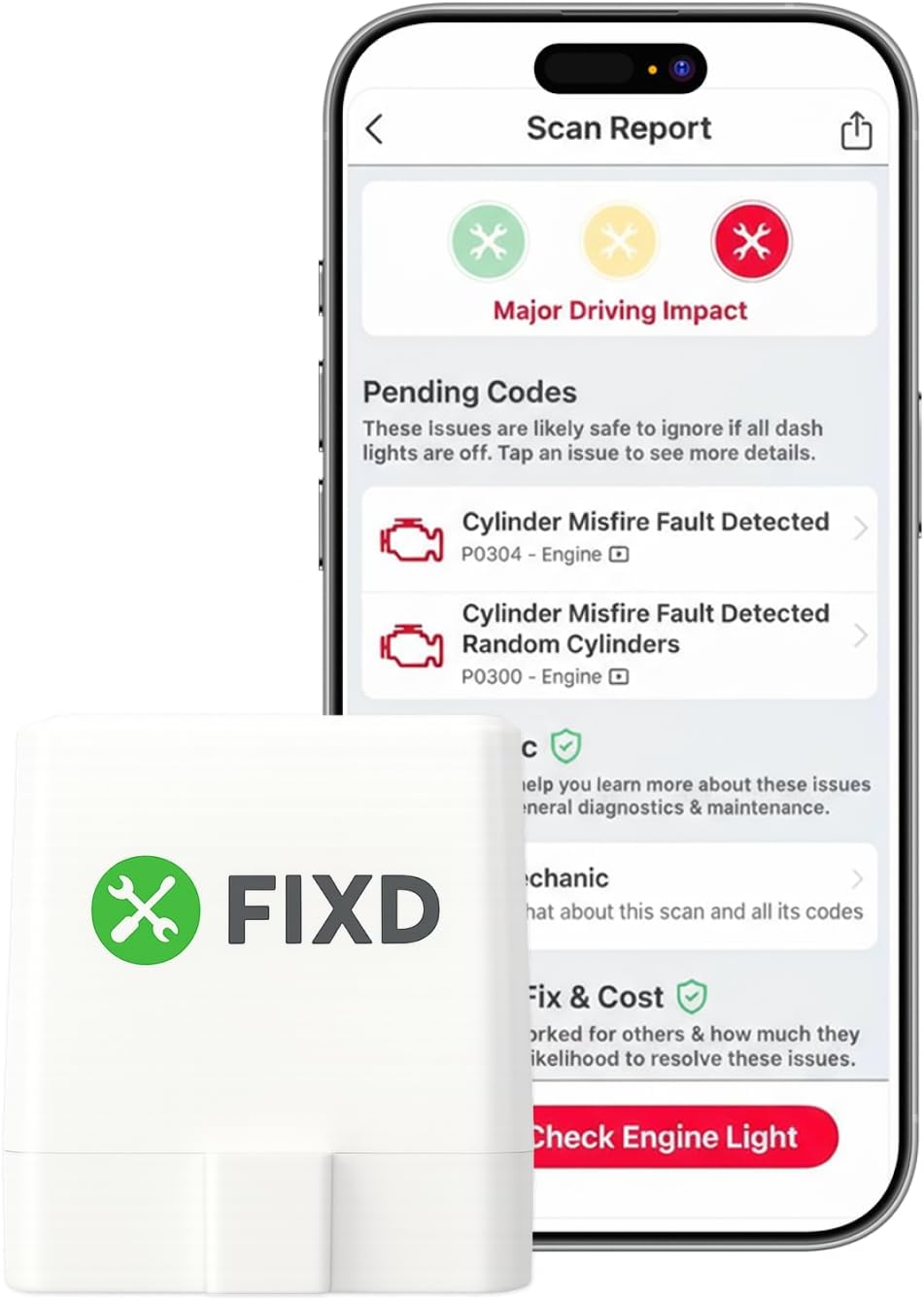
Best Bluetooth OBD2 Scanner
Detect 39,000+ Issues With Enhanced Codes. Save $1000s on car repairs & buying used vehicles by diagnosing problems yourself.
Shop on Amazon
Key Takeaways
- A fault codes list decodes Diagnostic Trouble Codes (DTCs) stored by your vehicle’s onboard computer, helping you distinguish between a $5 fix and a $2,000 repair before visiting a shop.
- Understanding the SAE J2012 standard format—one letter prefix (P, B, C, or U) followed by four digits—allows you to identify the affected system and subsystem before performing expensive parts replacements.
- The most common fault codes in 2026 are P0420 (catalytic converter efficiency), P0300 series (engine misfires), and U-codes (network communication failures), which account for nearly 11% of all diagnostic events.
- Always retrieve freeze frame data and inspect wiring connectors first; many fault codes are triggered by corroded pins or chafed wires rather than failing sensors or modules.
- A flashing check engine light indicates active catalytic converter damage risk, while permanent codes only clear automatically after the fault is confirmed resolved across multiple drive cycles.
Modern vehicles generate fault codes across dozens of electronic control units. Your car’s OBD-II port, standard on every US vehicle since 1996, gives you direct access to these codes using a basic scan tool. Whether you’re a weekend DIYer or a professional technician, reading these codes correctly saves time, money, and unnecessary parts swaps.
According to the National Institute for Automotive Service Excellence (ASE), proper DTC interpretation remains the single most important first step in any diagnostic workflow. Skipping it leads to what shop veterans call “parts-cannon guessing”, throwing expensive components at a problem that might only need a wiring repair or software reset.
For a solid visual walkthrough of how OBD-II codes work, watch this helpful explainer:
Understanding Fault Code Types
Generic vs Manufacturer-Specific Codes
Every DTC starts with a letter and four digits. The second character tells you whether the code is generic (SAE-standard) or manufacturer-specific. A “0” in the second position (like P0420) means any OBD-II scanner can read and interpret it universally. A “1” in that position (like P1131) signals a manufacturer-specific code that requires brand documentation or a factory-level scan tool to decode accurately.
Generic codes cover roughly 80% of the faults you’ll encounter. Manufacturer-specific codes handle proprietary systems, think Ford’s FAOSC strategy or Toyota’s VVT-i oil control circuits. When your scan tool returns a P1xxx code, check your vehicle’s factory service manual or a reliable OBD2 DTC lookup chart for the exact definition.
Powertrain, Body, Chassis, and Network Categories
The first letter of every code identifies the affected system:
| Prefix | System | Example Code | Common Trigger |
|---|---|---|---|
| P | Powertrain | P0300 | Random engine misfire |
| B | Body | B0081 | Airbag sensor circuit fault |
| C | Chassis | C0035 | Wheel speed sensor failure |
| U | Network | U0100 | Lost communication with ECM |
P-codes are the most frequent. B-codes cover airbags, lighting, and climate control. C-codes handle ABS and stability control. U-codes flag CAN-bus communication failures between modules, a growing concern in 2026 vehicles packed with ADAS radar modules and EV high-voltage controllers.
How Trouble Codes Are Structured
After the prefix letter and generic/specific indicator, the remaining three digits narrow down the fault. The third digit identifies the subsystem (fuel, ignition, emissions, transmission), while the final two digits pinpoint the specific fault condition. For example, P0171 breaks down as: P = Powertrain, 0 = Generic, 1 = Fuel/Air subsystem, 71 = System Too Lean (Bank 1). Learning this structure lets you pre-diagnose a code before you even plug in your scanner.
Common Trouble Codes and Their Meanings
Engine Misfire and Ignition-Related Codes
P0300 through P0312 indicate engine misfires. P0300 means random/multiple cylinder misfires, while P0301–P0312 identify the specific cylinder. A flashing check engine light during a misfire means catalytic converter damage is imminent, pull over safely. Start your troubleshooting protocol by inspecting spark plugs, ignition coils, and plug wires. Use freeze frame data to check engine RPM and coolant temperature at the moment the misfire occurred.
“Had P0302 on my 2024 Civic. Swapped coil from cylinder 2 to cylinder 4. Code followed the coil. $35 fix instead of $800 at the dealer.” via r/MechanicAdvice
Fuel and Air Mixture: Lean and Rich Conditions
P0171 and P0174 signal lean conditions (too much air, not enough fuel) on Bank 1 and Bank 2 respectively. P0172 and P0175 mean rich conditions. Common culprits include vacuum leaks, dirty mass airflow (MAF) sensors, faulty oxygen sensor voltage readings, and clogged fuel injectors. You can test your oxygen sensor voltage using a digital multimeter, a healthy sensor oscillates between 0.1V and 0.9V.
Emission Control and EVAP System Codes
P0420 is one of the most searched fault codes worldwide, it indicates catalytic converter efficiency below threshold. But don’t rush to replace the cat. A failing downstream O2 sensor or exhaust leak can trigger P0420 falsely. P0440, P0441, and P0455 relate to your EVAP system. A loose gas cap triggers P0455 (large leak detected) surprisingly often. Tighten your cap, clear the code, and drive 50 miles before assuming worse.
Camshaft, Crankshaft, and Timing Issues
P0010–P0024 cover camshaft position actuator circuits. P0335 and P0340 flag crankshaft and camshaft position sensor failures. Symptoms include hard starting, stalling, and rough idle. These sensors degrade over time due to heat exposure. Check circuit wiring harness connections first, a corroded connector mimics a dead sensor perfectly.
Sensor and Component Faults
Air, Temperature, and Pressure Sensor Codes
P0100–P0104 cover the MAF sensor circuit. P0110–P0114 flag intake air temperature (IAT) issues. P0105–P0109 address the MAP (manifold absolute pressure) sensor. Symptoms of a faulty engine sensor circuit, whether open or short, include erratic idle, poor fuel economy, and black exhaust smoke. Always inspect the connector pins and wiring before replacing the sensor itself.
Fuel System Sensors and Regulators
P0190–P0194 relate to fuel rail pressure sensors. P0230–P0233 address fuel pump circuits. If you get a fuel pressure code, measure actual rail pressure with a gauge before condemning the pump. A restricted fuel filter or pinched supply line causes identical symptoms. For reliable diagnostics, the BLUEDRIVER Bluetooth Pro OBD2 Scanner reads live fuel system PIDs directly on your phone.

Valve and Solenoid Control Issues
P0401 (EGR insufficient flow) and P0443–P0449 (EVAP purge/vent solenoid circuits) appear frequently. Solenoid failures often stem from carbon buildup or corroded electrical connectors rather than internal mechanical failure. Test solenoid resistance with a multimeter before replacement, most should read between 20–40 ohms.
Additional Engine and Emission Components
P0420 and P0430 (catalyst efficiency codes) deserve repeated mention because they generate the most confusion. Modern scan tools like the LAUNCH CRP123X OBD2 Scanner let you graph both upstream and downstream O2 sensor waveforms simultaneously, making it easy to confirm whether your catalytic converter is truly failing or if a sensor is lying to the PCM.

For software-side diagnostics, especially when tracking intermittent electrical wiring harness grounds across multiple modules, Autel MaxiSys subscription-based diagnostic software provides module-level topology mapping and guided fault tracing that saves hours of manual testing.
Reading, Diagnosing, and Resolving Trouble Codes
How to Retrieve DTC Codes Safely
Locate your OBD-II port, usually under the dashboard on the driver’s side. Plug in your scanner with the ignition on but the engine off. Select “Read Codes” and document every stored and pending code. Always record freeze frame data parameters: they capture the exact operating conditions during the failure event. If you don’t own a scanner, some vehicles let you read codes through the dashboard by cycling the ignition key, but this method is limited to specific makes.
Basic Steps for Troubleshooting
Follow this diagnostic hierarchy every time:
- Read all codes across every module, not just the engine
- Check freeze frame data for RPM, coolant temp, vehicle speed, and fuel trim at the time of failure
- Inspect wiring and connectors at the suspect component first
- Test sensor values with a multimeter or live PID data stream
- Clear codes and test drive to confirm the fault returns before replacing parts
- Check for Technical Service Bulletins (TSBs) matching your code and vehicle
This sequence prevents the costly mistake of replacing a perfectly good sensor when the real problem is a chafed wire or corroded ground.
When to Replace vs When to Repair
Replace sensors that fail electrical resistance or voltage output tests. Repair wiring when you find corrosion, broken pins, or damaged insulation. For PCM failure codes, always verify the power and ground supply circuits to the module before condemning the PCM itself, a bad ground at the firewall can make a $1,200 module appear dead. EV battery pack high-voltage isolation fault codes require specialized PPE and training: don’t attempt those without proper HV certification.
“U0100 had me chasing ghosts for weeks. Turned out to be a single corroded pin in the CAN-bus harness connector behind the glovebox.” via r/CarRepair
Preventing Future Trouble Codes
Keep up with scheduled maintenance, fresh spark plugs, clean air filters, and tight gas caps eliminate a surprising number of recurring codes. Inspect wiring harnesses annually for rodent damage and corrosion, especially in northern climates. Accept OTA software updates promptly: manufacturers frequently patch calibration errors that generate false DTCs. And invest in a quality scan tool so you can catch pending codes before they escalate to stored faults and a permanent check engine light.
Data Insights and Analysis
According to CarMD’s 2025 Vehicle Health Index, the catalytic converter (P0420) remained the most common check engine light trigger for the sixth consecutive year, accounting for roughly 6.6% of all repairs. Misfire codes (P0300 series) followed closely, appearing in approximately 4.1% of diagnostic events. Meanwhile, U-code network communication faults rose 18% year-over-year as vehicle electronic architecture grew more complex with ADAS and EV integration.
Expert Note: "Most intermittent fault codes aren't caused by failing components, they're caused by thermal expansion in connector housings and micro-corrosion on terminal pins. A connector that tests fine on a cold morning can lose contact at operating temperature. Always perform wiggle tests and thermal cycling before condemning a sensor or module."
Frequently Asked Questions
What is a fault codes list and why does my vehicle use it?
A fault codes list is a structured index of Diagnostic Trouble Codes (DTCs) that your vehicle’s onboard computer stores when it detects a malfunction in the powertrain, body, chassis, or network systems. Understanding this list helps you distinguish between minor fixes and major repairs before visiting a shop, potentially saving thousands of dollars.
How are fault codes structured and what does each part mean?
Every fault code follows the SAE J2012 standard format: a single letter prefix (P, B, C, or U) followed by four digits. The second digit indicates if it’s generic (0) or manufacturer-specific (1). Subsequent digits identify the subsystem and specific fault condition. For example, P0171 breaks down as Powertrain, Generic, Fuel/Air subsystem, System Too Lean.
What does the first letter in a fault code tell you?
The first letter identifies the affected system: P = Powertrain (engine/transmission), B = Body (airbags/lighting), C = Chassis (ABS/stability control), and U = Network (CAN-bus communication failures). P-codes are most frequent, appearing in roughly 80% of diagnostic events.
Is P0420 always a failing catalytic converter?
Not necessarily. P0420 indicates catalytic converter efficiency below threshold, but a faulty downstream oxygen sensor or exhaust leak can trigger it falsely. Always test your oxygen sensor voltage and check for exhaust leaks before replacing the catalytic converter, which is the most common check engine light trigger.
What’s the difference between a flashing and steady check engine light?
A flashing check engine light indicates an active, severe misfire that can damage your catalytic converter immediately. A steady light signals a stored code that requires diagnosis but is less urgent. Pull over safely if the light flashes and get the vehicle scanned right away.
Can I clear fault codes myself without visiting a mechanic?
You can clear stored codes using a basic OBD-II scanner, but permanent codes (Mode $0A) only erase automatically after the monitoring system confirms the fault no longer exists across multiple drive cycles. Clearing codes without fixing the underlying issue causes them to return, wasting time and money.
Read More:
- Freightliner Fault Codes List (Every SPN, FMI, and MID Code)
- BH 33 Code Freightliner (Troubleshooting & Repair Guide)
- JCB Fault Codes List (Master Guide to Decoding DTCs, and Flash Codes)
- ENG 0 Code Freightliner (What It Means and How to Find the Fault)
- ECU 128 Code Freightliner (The Complete Engine Fault Guide)