
You slide into your Lexus, turn the key, and that dreaded amber light glows on your dashboard, the Check Engine Light. Your heart sinks. Your luxury driving experience just turned into a diagnostic puzzle.
The Lexus Check Engine Light illuminates when your vehicle’s onboard diagnostic system (OBD-II) detects a malfunction in the emission control system, engine management, or hybrid powertrain. It ranges from a loose gas cap to serious misfires, oxygen sensor failures, or catalytic converter issues. A solid light indicates a non-critical fault you can drive with temporarily: a flashing light signals an active misfire requiring immediate attention to prevent catalytic damage.
This guide walks you through diagnosis, common codes, fixes, and when to visit your Lexus technician. You’ll learn to read fault codes, understand VSC interactions, and protect your investment.
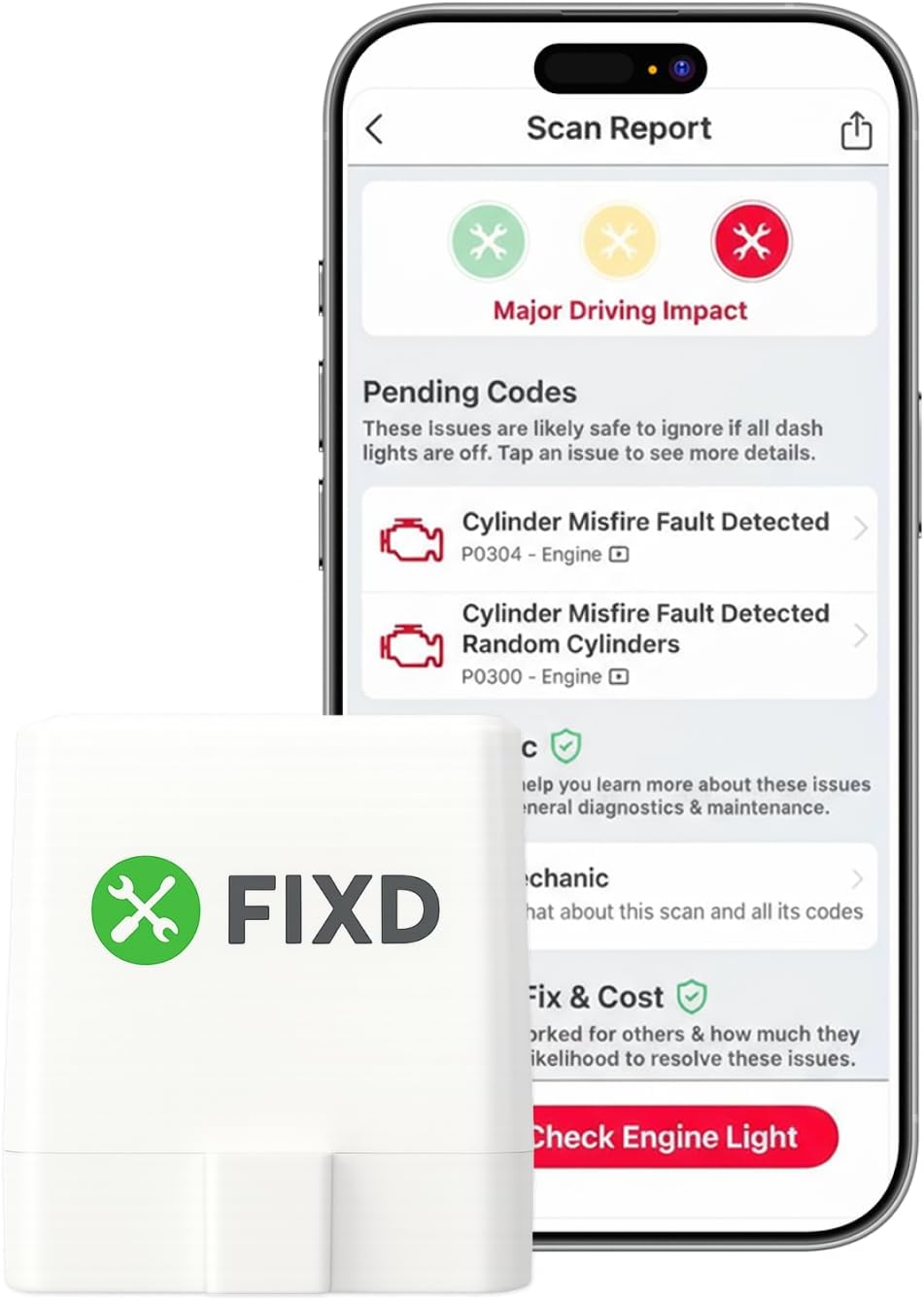
Best Bluetooth OBD2 Scanner
Detect 39,000+ Issues With Enhanced Codes. Save $1000s on car repairs & buying used vehicles by diagnosing problems yourself.
Shop on Amazon
Key Takeaways
- A Lexus Check Engine Light signals your onboard diagnostic system detected a fault—solid amber means safe limited driving, while flashing red indicates active misfires requiring immediate towing to prevent catalytic converter damage.
- Common minor issues like loose gas caps (P0440), dirty MAF sensors (P0171/P0174), and worn oxygen sensors trigger the Check Engine Light and cost $15–$350 to fix, while serious problems like catalytic converter failure can exceed $2,500.
- Use an OBD-II scanner to read diagnostic trouble codes (DTCs) from your Lexus’s diagnostic port, then research each code before erasing it—clearing codes without fixing the root cause brings the light back within 20–100 miles.
- Never drive with a flashing Check Engine Light, as active misfires can superheat and destroy your catalytic converter; pull over safely and arrange towing immediately.
- Prevent future Check Engine Light warnings through regular maintenance: replace spark plugs every 60,000–120,000 miles, clean MAF sensors every 30,000 miles, use Top Tier gasoline, and check your gas cap seal annually.
- DIY code reading and minor repairs save money for owners, but seek a certified Lexus technician for flashing lights, multiple misfires, hybrid system codes, or persistent catalytic converter issues beyond your expertise.
What Does the Check Engine Light Mean in Your Lexus?
Your Lexus Check Engine Light serves as your onboard computer’s messenger. When sensors detect values outside normal operating parameters, air-fuel ratios, ignition timing, emission levels, the Engine Control Module (ECM) stores a diagnostic trouble code (DTC) and triggers the warning.
Lexus vehicles feature two alert states. A solid amber light means the system logged a fault but the engine remains safe for limited driving. A flashing Check Engine Light indicates active cylinder misfires that can overheat and destroy your catalytic converter, pull over safely and arrange towing.
Many Lexus owners see “Check VSC” or “TRAC OFF” warnings appear simultaneously. That’s your Vehicle Stability Control and Traction Control systems entering limp mode because the ECM can’t trust sensor data during an engine fault. These safety systems reactivate once you fix the root cause and clear codes.
Why Your Lexus Check Engine Light Turns On
Minor Issues That Trigger the Light
The most common culprit? A loose or worn gas cap. Your EVAP system maintains sealed fuel vapor pressure. When the cap seal fails or you forget to tighten it after refueling, the ECM logs P0440 or P0456 (small EVAP leak). Twist the cap until it clicks three times.
Contaminated or failed mass air flow (MAF) sensors trigger P0171 or P0174 (system too lean). Oil vapors, dirt, and aging degrade the delicate hot-wire element. A simple MAF sensor cleaner restores accurate airflow readings in minutes.

Air-fuel ratio sensors (upstream oxygen sensors) wear out every 80,000–100,000 miles. These generate P0130–P0167 codes. Replacement costs $150–$350 per sensor at independent shops.
Serious Problems Requiring Immediate Attention
Flashing Check Engine Lights always mean misfires, P0300 (random), P0301–P0308 (specific cylinders). Ignition coils, spark plugs, or fuel injectors fail. Continued driving melts your catalytic converter (a $1,200–$2,500 repair).
P0420 or P0430 codes signal catalytic converter efficiency below threshold. Your cat may be poisoned by oil consumption, coolant leaks, or simply aged beyond 150,000 miles. Lexus hybrid models also see inverter cooling system faults (P0A93) that shut down the hybrid battery.
VVT-i (Variable Valve Timing) oil control valve failures produce P0010, P0011, P0020, or P0021. Sludge or electrical faults prevent proper cam phasing, causing rough idle and power loss.
How to Diagnose Your Lexus Check Engine Light
Using an OBD-II Scanner to Read Diagnostic Codes
You need an OBD-II scanner to read stored fault codes. Locate the 16-pin diagnostic port under your dashboard, driver’s side, near the steering column. Plug in your BlueDriver Bluetooth OBD-II scanner and pair it with your smartphone.

Turn your ignition to ON (don’t start the engine). Launch the app and select “Read Codes.” The scanner displays DTCs like “P0171 – System Too Lean (Bank 1).” Note all codes, sometimes one fault cascades into multiple warnings.
Don’t erase codes yet. Research each DTC using Lexus technical service bulletins or forums like ClubLexus. Cross-reference symptoms: rough idle, reduced MPG, hesitation. That pattern reveals whether you’re chasing a sensor or a mechanical failure.
Advanced scanners show live data: short-term and long-term fuel trims, oxygen sensor voltages, coolant temps. If STFT exceeds ±10%, your ECM compensates for a vacuum leak or sensor drift.
Common Lexus Check Engine Light Codes and What They Mean
Here’s a breakdown of frequent Lexus DTCs:
| Code | Description | Typical Cause | Estimated Repair Cost |
|---|---|---|---|
| P0171/P0174 | System Too Lean (Bank 1/2) | Vacuum leak, dirty MAF, fuel pressure | $100–$600 |
| P0300–P0308 | Cylinder Misfire Detected | Spark plugs, ignition coils, injectors | $150–$800 |
| P0420/P0430 | Catalyst Efficiency Below Threshold | Failed catalytic converter, O₂ sensors | $400–$2,500 |
| P0440/P0456 | EVAP System Leak | Loose gas cap, purge valve, charcoal canister | $20–$400 |
| P0010/P0011 | VVT-i System Malfunction | Oil control valve, timing solenoid | $200–$500 |
| P0A93 | Hybrid Inverter Cooling System | Low coolant, pump failure (hybrid only) | $500–$1,800 |
P0171 often appears alongside P0174 on V6 or V8 models, both banks run lean. Check intake manifold gaskets and PCV valve hoses for cracks.
Can You Drive With the Check Engine Light On?
A solid Check Engine Light allows limited driving to a service facility. Monitor your dashboard for additional warnings (temperature, oil pressure). Avoid aggressive acceleration or towing.
Never drive with a flashing light. Active misfires dump unburned fuel into the exhaust, igniting inside the catalytic converter. Temps exceed 1,400°F, warping the substrate. Pull over, shut down, and call for a tow.
“Drove my RX 350 for two weeks with the light on (P0456). Turned out to be the gas cap. Dealer wanted $180 for diagnosis: I fixed it for $15.” via ClubLexus
If your Lexus enters limp mode (reduced power, VSC disabled), drive gently to your mechanic. The ECM limits throttle and RPM to prevent engine damage.
How to Reset Your Lexus Check Engine Light
Only reset codes after you’ve repaired the underlying issue. Simply clearing the light without fixing the fault brings it back within 20–100 miles.
Using your OBD-II scanner, select “Clear Codes” or “Erase DTCs.” The Check Engine Light, VSC, and TRAC warnings extinguish immediately. Turn off the ignition, wait 30 seconds, restart, and confirm the light stays off.
Alternatively, disconnect your 12V battery negative terminal for 15 minutes. This erases all ECM adaptations, idle speeds, fuel trims, transmission shift points. Your Lexus relearns these parameters over the next 50 miles. Expect slightly rough idle during the first few drive cycles.
Lexus hybrids require extra caution. Always consult your owner’s manual before disconnecting the 12V battery: some models need specific shutdown procedures to protect the high-voltage system.
Preventing Future Check Engine Light Issues in Your Lexus
Preventive maintenance protects your investment. Replace spark plugs every 60,000 miles (iridium) or 120,000 miles (platinum). Use OEM or equivalent quality to avoid misfires.
- Clean your MAF sensor every 30,000 miles with specialized cleaner, never use carburetor spray, which damages the element.
- Inspect air filters every oil change: a clogged filter triggers lean codes.
- Use Top Tier gasoline to prevent carbon buildup on intake valves (especially direct-injection models).
- Change engine oil per Lexus intervals, sludge kills VVT-i actuators.
- Check your gas cap seal annually: replace if cracked ($15–$30).
Lexus hybrid owners should flush inverter coolant every 100,000 miles using pink Super Long Life Coolant. Overheating inverters trigger P0A93 and limp mode.
Schedule a professional diagnostic scan annually, even without warning lights. Pending codes (not yet active) reveal early sensor drift before failures occur.
When to Take Your Lexus to a Mechanic
DIY fixes handle gas caps, MAF cleaning, and code reading. But some repairs demand Lexus-trained technicians.
Visit your dealer or certified shop if you encounter:
- Flashing Check Engine Light (immediate towing required).
- Multiple misfires across cylinders (possible head gasket, valve issues).
- P0420/P0430 with no improvement after oxygen sensor replacement.
- Hybrid system codes (P0A93, P3000–P3099).
- Transmission or drivetrain integration codes.
Independent Lexus specialists cost 30–50% less than dealerships for repairs outside warranty. RepairPal provides fair-price estimates.
“My IS 350’s P0010 turned out to be a $12 VVT-i filter screen clogged with sludge. The dealer quoted me $450 for a new solenoid. Always get a second opinion.” via ClubLexus Forums
Your Lexus deserves precision care. Don’t ignore warning lights, early diagnosis prevents expensive failures and preserves your luxury driving experience.
Frequently Asked Questions
What does the Lexus Check Engine Light mean?
The Check Engine Light illuminates when your vehicle’s Engine Control Module detects a malfunction in the emission control system, engine management, or hybrid powertrain. A solid light indicates a non-critical fault you can drive with temporarily; a flashing light signals active misfires requiring immediate attention to prevent catalytic converter damage.
Why is my Lexus Check Engine Light flashing?
A flashing Check Engine Light indicates active cylinder misfires (P0300–P0308 codes), typically caused by failing spark plugs, ignition coils, or fuel injectors. Continued driving can damage your catalytic converter. Pull over safely and arrange towing immediately to prevent a $1,200–$2,500 repair.
Can I drive my Lexus with the Check Engine Light on?
A solid Check Engine Light allows limited driving to a service facility, but monitor for additional warnings and avoid aggressive acceleration. Never drive with a flashing light—active misfires dump unburned fuel into the exhaust, igniting inside the catalytic converter and causing severe damage.
How do I read Lexus Check Engine Light diagnostic codes?
Locate the 16-pin OBD-II diagnostic port under your dashboard near the steering column. Plug in a Bluetooth OBD-II scanner, pair it with your smartphone, turn ignition to ON, and launch the app to read stored diagnostic trouble codes (DTCs). Research each code using Lexus technical bulletins or forums to identify the root cause.
What is the most common reason for Check Engine Light in a Lexus?
A loose or worn gas cap is the most frequent culprit, triggering P0440 or P0456 EVAP leak codes. Your EVAP system maintains sealed fuel vapor pressure. Simply tighten the cap until it clicks three times. Other common causes include dirty MAF sensors, oxygen sensor wear, and vacuum leaks.
How much does it cost to fix a Lexus Check Engine Light issue?
Repair costs vary widely: a gas cap fix costs $15–$30, MAF sensor cleaning is $100–$300, oxygen sensor replacement is $150–$350, and catalytic converter failure runs $1,200–$2,500. Hybrid inverter cooling system repairs cost $500–$1,800. Get a diagnostic scan first to identify the exact issue before committing to repairs.
Read More:
- Lexus Check Engine Light Reset After Repairs (Complete Guide)
- Lexus RX 350 Check Engine Light (Common Causes & Quick Fixes)
- Lexus IS250 Check Engine Light (Common Causes & Fixes)