
That dreaded amber glow appears right when you press the gas pedal. Your check engine light illuminates during acceleration, sometimes flashing when you merge onto highways or climb hills. The engine stumbles, hesitates, or feels like it’s holding back power.
When your check engine light comes on specifically during acceleration, the engine computer detects problems that only show up under load, most commonly ignition coil breakdown under high cylinder pressure, fuel pump pressure drop during heavy demand, boost leaks in turbocharged systems, clogged fuel filters starving the engine, oxygen sensor failures misreading rich/lean conditions, or knock sensors detecting detonation. These faults trigger codes only when the engine works hard, making the light appear during acceleration, hill climbing, or passing.
This guide walks you through the physics behind load-dependent engine faults and the diagnostic steps that pinpoint the exact cause.
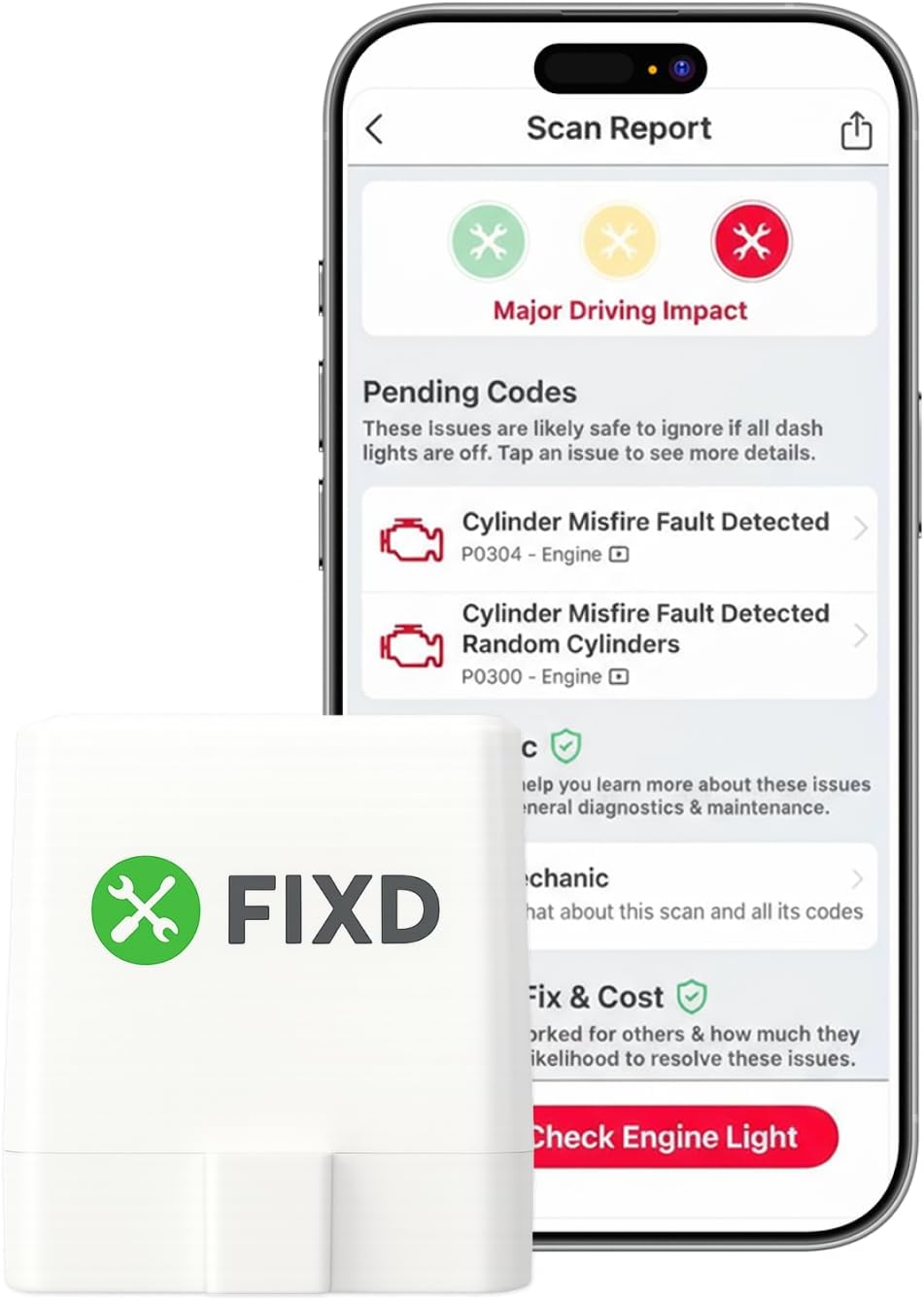
Best Bluetooth OBD2 Scanner
Detect 39,000+ Issues With Enhanced Codes. Save $1000s on car repairs & buying used vehicles by diagnosing problems yourself.
Shop on Amazon
Key Takeaways
- A check engine light when accelerating typically signals load-dependent faults such as ignition coil breakdown, fuel pump failure, boost leaks, or oxygen sensor degradation that only appear under high cylinder pressure and engine load.
- Using an OBD-II scanner to monitor live data—including fuel trim values, MAF sensor readings, and oxygen sensor voltage—is essential for diagnosing acceleration-specific issues before visiting a mechanic.
- Flashing check engine lights demand immediate professional attention to prevent catalytic converter damage, while solid lights permit driving but require prompt diagnosis for codes like P0171 (system too lean) or P0420 (catalyst efficiency).
- The most common and affordable fixes for check engine light during acceleration include replacing oxygen sensors ($110–$250), cleaning MAF sensors ($105–$350), and swapping ignition coils ($100–$270), compared to catalytic converter replacement ($500–$2,500).
- Preventive maintenance such as replacing fuel filters every 30,000–40,000 miles, inspecting turbocharged intake hoses at each oil change, and proactively replacing oxygen sensors at 80,000–100,000 miles prevents future acceleration-related check engine light issues.
Why Your Check Engine Light Comes On During Acceleration
Your check engine light doesn’t appear randomly. The powertrain control module monitors dozens of sensors continuously, but certain faults only reveal themselves when cylinder pressures spike, fuel demand surges, or boost builds, conditions that happen during acceleration.
Under light throttle or idle, weak components often function adequately. But when you press the accelerator, the following changes occur simultaneously: fuel delivery demand triples or quadruples, ignition coil dwell time shortens while spark energy requirements rise, cylinder pressures double, turbocharger boost builds from zero to 15+ psi, and oxygen sensors must track rapid air-fuel ratio changes. Any weak link in this chain triggers a code.
How Your Engine’s Acceleration System Works
When you press the gas pedal, the throttle body opens and allows more air into the intake manifold. The mass airflow sensor measures this incoming air volume and sends voltage signals to the engine computer. The computer calculates fuel injection duration based on that airflow reading, targeting a stoichiometric air-fuel ratio of 14.7:1 for gasoline engines.
Simultaneously, the ignition system fires spark plugs at precisely timed intervals. Under acceleration, cylinder pressures climb from 150 psi at idle to 800+ psi at wide-open throttle. Ignition coils must generate 20,000–50,000 volts to bridge the spark plug gap against this pressure. Weak coils fail at this critical moment.
Turbocharged engines add another layer. The turbocharger compressor spools up, building boost pressure that forces extra air into cylinders. Every rubber hose, clamp, and gasket in the intake tract must seal against 15–25 psi. Small cracks or loose clamps that don’t leak at idle become major boost leaks under acceleration, leaning out the air-fuel mixture and triggering oxygen sensor fault codes.
Most Common Causes of Check Engine Light When Accelerating
Five failure modes account for nearly 80% of acceleration-specific check engine lights. Each has distinct symptoms and diagnostic signatures.
Oxygen Sensor Failure
Oxygen sensors measure exhaust gas composition and report voltage between 0.1V (lean) and 0.9V (rich) to the engine computer. During acceleration, the sensor must respond within milliseconds as fuel delivery increases. Aged sensors develop slow response times, they can’t track rapid changes. The computer detects this lag and sets P0130–P0167 codes.
You’ll notice hesitation during tip-in acceleration and poor fuel economy. The engine runs rich because the computer can’t correct fuel trim fast enough. Replacing the upstream oxygen sensor (located before the catalytic converter) typically resolves the issue. Expect resistance around 8 ohms at room temperature on the heater circuit.
Mass Airflow Sensor Issues
The mass airflow sensor (MAF) sits between the air filter and throttle body. Contamination from oil-soaked aftermarket air filters coats the sensing wire, causing false low readings. When you accelerate, the sensor under-reports airflow. The computer injects too little fuel, creating a dangerous lean condition.
You’ll experience stumbling, bucking, and loss of power under load. Common codes include P0171 (system too lean bank 1) and P0101 (MAF circuit range/performance). Cleaning the MAF sensor with specialized electronics cleaner often fixes the problem. Never use carburetor cleaner, it leaves residue.
“My CEL flashed only when accelerating hard on the freeway. Turned out to be a cracked intercooler hose, couldn’t see it until I pressurized the system. Lost 6 psi of boost.” via r/MechanicAdvice
Faulty Catalytic Converter
Catalytic converters contain honeycomb substrates coated with platinum, palladium, and rhodium. Over time, this substrate breaks down and restricts exhaust flow. At idle, backpressure stays manageable. During acceleration, exhaust volume quintuples and backpressure spikes, choking the engine.
You’ll notice power loss above 3,000 RPM, overheating, and sometimes a rotten egg smell. The downstream oxygen sensor detects insufficient catalyst efficiency, triggering P0420 or P0430 codes. Test backpressure with a gauge in the upstream O2 sensor bung, anything above 3 psi at 2,500 RPM indicates restriction.
Ignition System Problems
Ignition coils generate spark energy through electromagnetic induction. As coils age, internal insulation breaks down. They produce adequate spark at low cylinder pressures but fail when combustion chamber pressures spike during acceleration. This causes cylinder misfires that shake the engine and flash the check engine light.
P0300 codes indicate random misfires, while P0301–P0308 point to specific cylinders. Swap suspected coils between cylinders, if the misfire code follows the coil, you’ve found the culprit. Also inspect spark plug gaps. Factory spec is typically 0.028–0.032 inches: worn plugs gap out to 0.045+ inches and require more voltage than weak coils can deliver.
How to Diagnose the Problem Yourself
Load-dependent faults require load-based testing. Scanning codes at idle reveals stored codes but doesn’t reproduce the failure.
Start with a visual inspection:
- Inspect all intake boots, intercooler hoses, and vacuum lines for cracks, splits, or loose clamps
- Check spark plug wires for carbon tracking (white/gray lines indicating internal breakdown)
- Look for oil residue around the MAF sensor housing
- Examine exhaust manifolds for cracks that lean out oxygen sensor readings
Perform a fuel pressure test under load. Install a mechanical fuel pressure gauge on the test port (usually on the fuel rail). Baseline pressure should match spec, typically 40–60 psi for port injection, 50–70 psi for direct injection. Then drive the vehicle and monitor pressure during acceleration. Pressure drop exceeding 5 psi indicates fuel pump weakness or clogged filters.
Using an OBD-II Scanner to Read Error Codes
You need an OBD-II scanner that displays live data, not just code readers. The ANCEL AD310 Enhanced OBD II Vehicle Code Reader provides real-time sensor data and freeze frame information.
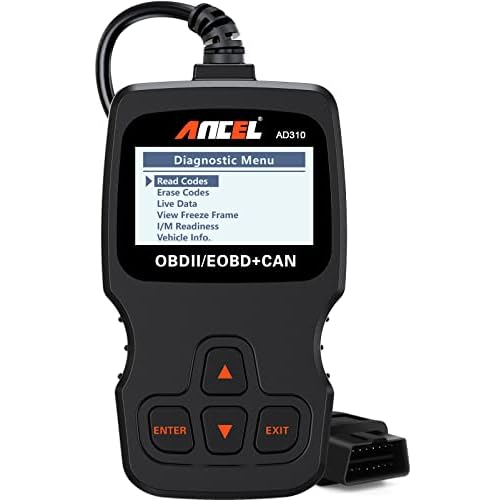
Plug the scanner into the OBD-II port (usually under the driver-side dash). Turn the ignition to “on” without starting the engine. Navigate to “Read Codes” and document all stored and pending codes. Write down the freeze frame data, it shows exact conditions when the code set.
Key parameters to monitor during a test drive:
- Short-term fuel trim (STFT) and long-term fuel trim (LTFT), values beyond ±10% indicate air leaks or sensor faults
- MAF sensor readings, should increase proportionally with RPM (3–5 grams/second at idle, 15–25 g/s at 2,500 RPM)
- Oxygen sensor voltage, should toggle rapidly between 0.1V and 0.9V at operating temperature
- Ignition timing advance, should progress smoothly without sudden retardation
Perform a cylinder contribution test if misfires are suspected. Many advanced scanners can disable individual fuel injectors while monitoring RPM drop. A weak cylinder shows less RPM change when disabled.
“Check engine light flashed under WOT but went solid at cruise. Scanner showed P0300 random misfire plus knock sensor code. Fixed with new coil pack and premium fuel.” via BobIsTheOilGuy Forums
When to Take Your Car to a Mechanic
A flashing check engine light demands immediate professional attention. This indicates active cylinder misfires severe enough to damage the catalytic converter. Continuing to drive dumps unburned fuel into the exhaust, where it ignites inside the converter and melts the substrate. Pull over safely and arrange towing.
Solid check engine lights permit driving, but certain codes require prompt diagnosis:
- P0420/P0430 (catalyst efficiency), drive gently: converter damage worsens quickly
- P0171/P0174 (system too lean), risk of detonation and engine damage under load
- P0300-series (misfire codes), continued operation damages ignition components and converters
- P0087 (fuel rail pressure too low), potential fuel pump failure: risk of stalling in traffic
Professional shops have equipment unavailable to DIYers. Oscilloscopes reveal ignition coil primary and secondary waveforms, exposing internal coil failures invisible to multimeters. Smoke machines pressurize intake systems to 1 psi, making boost leaks visible. Four-gas exhaust analyzers measure actual hydrocarbon, CO, CO2, and NOx levels, oxygen sensors can fail while exhaust remains in spec.
Turbocharged engines experiencing check engine lights under boost need dyno testing. Shops can load the engine on a dynamometer while monitoring boost pressure, air-fuel ratios, and ignition timing. This reveals boost leaks, fuel delivery inadequacies, and knock events that only occur at specific loads.
If you lack mechanical experience or tools, professional diagnosis costs $100–150 but saves hundreds in misdiagnosed parts. The BlueDriver Bluetooth Pro OBD2 Scanner bridges the gap for motivated DIYers, it provides manufacturer-specific codes and repair reports.

Repair Costs and What to Expect
Repair costs vary dramatically by fault type. Here’s a realistic breakdown:
| Component | Parts Cost | Labor Cost | Total |
|---|---|---|---|
| Oxygen Sensor (upstream) | $60–$150 | $50–$100 | $110–$250 |
| Mass Airflow Sensor | $80–$300 | $25–$50 | $105–$350 |
| Ignition Coil (single) | $40–$120 | $60–$150 | $100–$270 |
| Fuel Pump (in-tank) | $150–$400 | $200–$500 | $350–$900 |
| Catalytic Converter | $400–$2,200 | $100–$300 | $500–$2,500 |
| Turbo Intercooler Hose | $40–$150 | $75–$150 | $115–$300 |
Multiple failed coils often accompany aged spark plugs. Replace all coils and plugs simultaneously on engines with individual coil-on-plug setups, labor overlaps, preventing return visits. Premium iridium plugs cost $8–15 each but last 100,000 miles.
Catalytic converter replacement represents the most expensive repair. Aftermarket converters cost less but may not meet emissions standards in California or northeastern states. OEM converters carry higher material costs due to precious metal content.
Fuel pump replacement requires dropping the fuel tank on most vehicles, explaining high labor costs. Some vehicles provide access panels under rear seats, reducing labor to one hour. Check service information before authorizing work.
Boost leak repairs often cost less than diagnostic time. A split intercooler hose costs $40 and takes 15 minutes to replace. The diagnostic process, pressurizing systems and tracing leaks, accounts for most shop time.
Preventing Future Check Engine Light Issues
Preventive maintenance keeps load-dependent faults from developing. Follow these practices:
Fuel System Maintenance
- Replace fuel filters every 30,000–40,000 miles (or per manufacturer schedule)
- Use top-tier detergent gasoline from major brands: detergents prevent injector deposits
- Add fuel system cleaner every 5,000 miles on direct-injection engines prone to intake valve coking
- Replace fuel pumps preemptively at 120,000+ miles on high-mileage vehicles
Ignition System Care
- Replace spark plugs at manufacturer intervals (30,000–100,000 miles depending on plug type)
- Inspect ignition coils during plug replacement: replace any showing carbon tracking or oil contamination
- Use OEM or equivalent-quality coils: cheap aftermarket units fail prematurely under high cylinder pressure
- Apply dielectric grease to coil boots to prevent moisture intrusion and carbon tracking
Intake and Boost System
- Inspect intercooler hoses, boots, and clamps every oil change on turbocharged vehicles
- Replace rubber components showing cracks, hardening, or oil saturation
- Clean or replace air filters every 15,000–30,000 miles: never over-oil performance filters
- Check PCV valve operation annually: stuck valves pressurize crankcases and blow out gaskets
Sensor Longevity
- Replace oxygen sensors preventively at 80,000–100,000 miles: response time degrades before outright failure
- Clean MAF sensors during air filter replacement using electronics-safe cleaner
- Protect sensors from contamination by using quality air filters and avoiding oil-soaked filter media
Frequently Asked Questions
Why does my check engine light come on only during acceleration?
Your check engine light appears during acceleration because the engine computer detects faults that only occur under high load. When you accelerate, cylinder pressures spike, fuel demand surges, and turbo boost builds—conditions that expose weak components like ignition coils, failing oxygen sensors, or boost leaks that function adequately at idle.
What are the most common causes of check engine light when accelerating?
The five most common causes account for 80% of cases: oxygen sensor failure (poor response to rapid air-fuel changes), mass airflow sensor contamination (lean conditions), faulty catalytic converters (exhaust flow restriction), ignition system problems (coil breakdown under pressure), and fuel pump weakness (pressure drop during heavy demand).
How do I diagnose a check engine light during acceleration?
Start with visual inspections of intake hoses, spark plug wires, and clamps for damage. Use an OBD-II scanner to read freeze frame data showing exact failure conditions. Monitor live parameters: fuel trim values, MAF sensor readings, oxygen sensor voltage, and ignition timing during a test drive to pinpoint the faulty component.
Is a flashing check engine light during acceleration dangerous?
Yes—a flashing check engine light indicates active cylinder misfires damaging your catalytic converter. Unburned fuel enters the exhaust and ignites inside the converter, melting the substrate. Pull over safely immediately and arrange towing. Do not continue driving, as converter damage worsens rapidly.
Can I drive with a solid check engine light that appears during acceleration?
Driving is possible with a solid light, but certain codes require prompt diagnosis. P0420 (catalyst efficiency), P0171 (system too lean), P0300-series (misfire), and P0087 (fuel rail pressure low) codes risk engine damage or stalling. Drive gently until diagnosed to minimize further damage.
What’s the typical cost to repair a check engine light from acceleration issues?
Repair costs range widely: oxygen sensor replacement ($110–$250), MAF sensor ($105–$350), ignition coil ($100–$270), fuel pump ($350–$900), and catalytic converter ($500–$2,500). Professional diagnosis typically costs $100–$150 but prevents costly misdiagnosed repairs and saves money overall.
Read More:
- Check Engine Light Flashing (Emergency Steps to Save Your Engine)
- Check Engine Light Stays On (Causes and Here’s the Workshop Fix Guide)
- Check Engine Light Came On Then Went Off (Causes Explained)
- Check Engine Light After Starting Car (Means and What to Do)
- Check Engine Light Keeps Coming On and Off (What It Really Means)