
You’re driving your BMW 330i, enjoying the smooth acceleration and precise handling, when suddenly the check engine light glows yellow on your dashboard. Your heart sinks. Is it something catastrophic, or just a minor glitch?
The BMW 330i check engine light typically signals emissions system issues, sensor failures, or engine misfires, ranging from a loose gas cap (a $2 fix) to failing oxygen sensors, faulty ignition coils, or clogged catalytic converters that can cost hundreds to repair. A solid yellow light usually means you can drive cautiously to a shop, but a flashing light demands you pull over immediately to prevent severe engine or catalytic converter damage.
Understanding what triggered the warning, how to read the diagnostic trouble codes, and when to act quickly can save you hundreds of dollars and hours of anxiety. Let’s walk through the most common culprits, diagnostic steps, and reset methods specific to E46, E90, F30, and G20 BMW 330i models with N52, N20, and B48 engines.
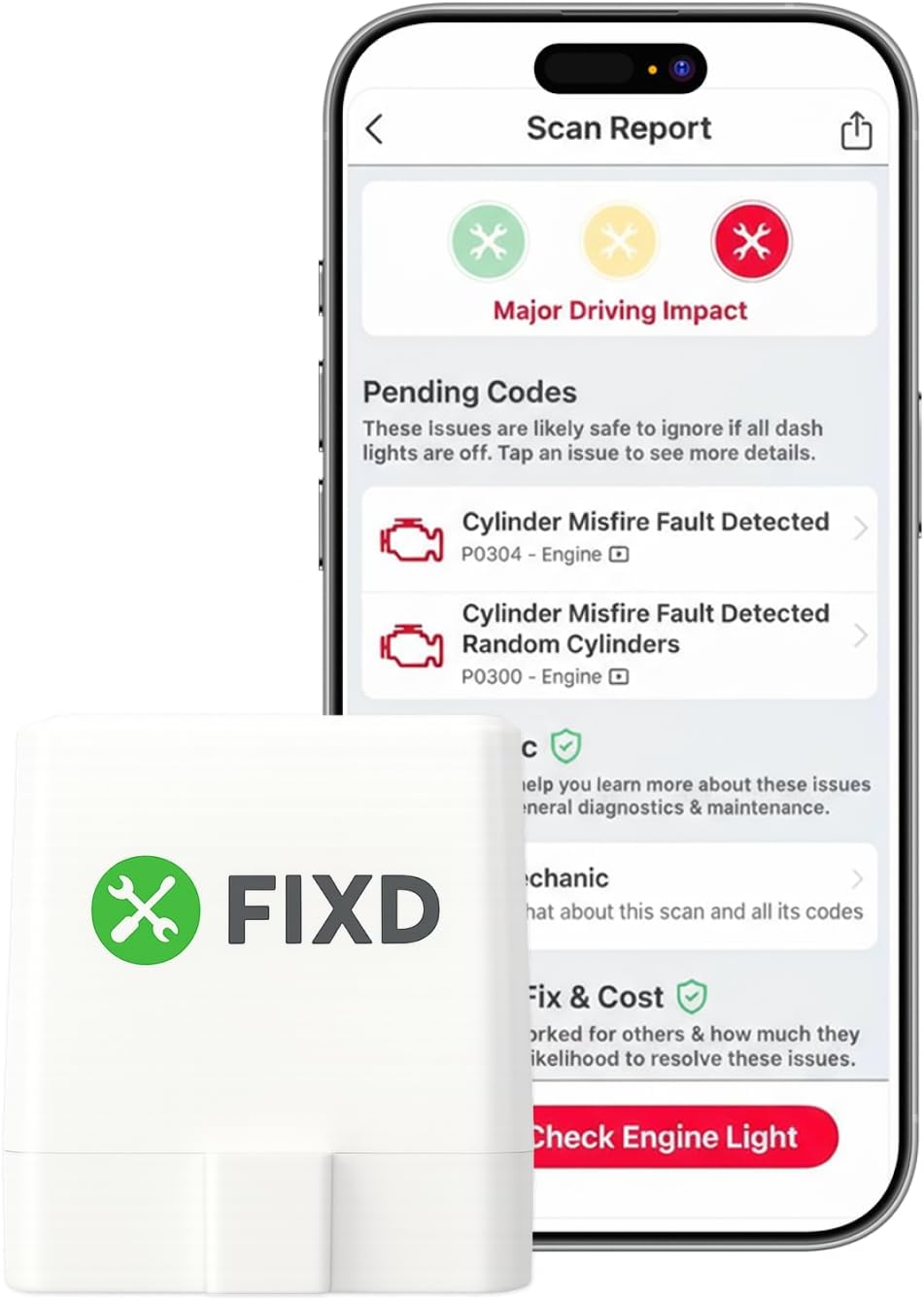
Best Bluetooth OBD2 Scanner
Detect 39,000+ Issues With Enhanced Codes. Save $1000s on car repairs & buying used vehicles by diagnosing problems yourself.
Shop on Amazon
Key Takeaways
- A BMW 330i check engine light can indicate anything from a loose gas cap ($2 fix) to failing oxygen sensors or catalytic converters ($800–2,000 repair), so diagnosing the specific trouble code is essential before spending money on parts.
- A flashing check engine light demands immediate action—pull over safely and arrange a tow to prevent catalytic converter damage, while a solid yellow light allows cautious driving to a repair shop.
- Use a basic OBD-II Bluetooth scanner ($50–300) to pull diagnostic codes and read freeze-frame data yourself, then cross-reference codes on BMW forums like BimmerForums or Bimmerpost for real-world solutions from other owners.
- Common causes like oxygen sensor failures, ignition coil cracks, MAF sensor dirt, vacuum leaks, and EVAP system issues are often DIY-fixable in 20–45 minutes with basic tools, saving hundreds in labor costs.
- After repairs, clear codes with your scanner and drive 20–100 miles through varied conditions to confirm the fix; if the light returns, you’ve likely missed the root cause or discovered a secondary fault requiring professional diagnosis.
- Prevent future check engine warnings by following BMW service intervals (oil every 7,500–10,000 miles, spark plugs/coils at 30,000–60,000 miles), inspecting rubber vacuum lines regularly, and using top-tier gasoline to reduce carbon buildup.
Common Causes of Warning Illumination
Loose Gas Cap and Evap System Leaks
One of the most common, and cheapest, triggers for your check engine light is a loose, damaged, or missing gas cap. When the fuel filler cap doesn’t seal properly, your BMW’s evaporative emission control (EVAP) system detects a vapor leak, triggering codes like P0440, P0441, or P0455. You might have just filled up at the pump and forgotten to twist the cap until it clicks three times.
Before you panic, pop your fuel door and check the cap. Look for cracks in the rubber seal or a broken tether. If it feels loose, tighten it firmly and drive for 20–50 miles. The light often clears on its own after a few drive cycles. If the cap is damaged, grab a replacement OEM gas cap from Amazon for around $15–25.

Smaller EVAP leaks can also stem from cracked hoses, a faulty purge valve, or a weak charcoal canister. These parts are tucked under the car near the fuel tank, so a quick visual inspection on a lift can reveal split rubber lines or corroded clamps.
“My E90 330i threw a P0442 code. Turned out the EVAP purge valve was stuck open. Replaced it myself in 30 minutes and cleared the code, no dealership needed.” via BimmerForums
Oxygen Sensor and Catalytic Converter Faults
Oxygen (O2) sensors monitor exhaust gases and help your engine control unit (ECU) maintain the ideal air-fuel ratio. BMW 330i models typically have two to four O2 sensors, one or two upstream (before the catalytic converter) and one or two downstream (after the cat). When an O2 sensor fails, you’ll see codes like P0420 (catalyst efficiency below threshold), P0171 (system too lean), or P0172 (system too rich).
Symptoms include rough idle, poor fuel economy, sluggish acceleration, and sometimes a sulfur smell from the exhaust. O2 sensors usually last 60,000–100,000 miles, but oil leaks, carbon buildup, or contaminated fuel can shorten their lifespan. Replacing a sensor yourself is straightforward with a 22mm oxygen sensor socket and takes about 20–40 minutes per sensor.
If you ignore a bad O2 sensor, the ECU can’t adjust fuel trim properly, which can damage the catalytic converter over time. A failing cat triggers P0420 or P0430 and costs $800–2,000 to replace at a shop. Catch the O2 sensor early, and you’ll spend $50–150 for a quality aftermarket unit instead.
Spark Plug, Ignition Coil, and Engine Misfire Issues
Engine misfires are a leading cause of check engine lights in BMW 330i models, especially on the turbocharged N20 and B48 engines. When combustion fails in one or more cylinders, the ECU logs codes like P0300 (random misfire), P0301–P0306 (cylinder-specific misfire), or P0316 (misfire detected on startup). You’ll feel rough idling, hesitation under load, reduced power, and sometimes a noticeable shaking or vibration.
Ignition coils on BMW inline-six and four-cylinder engines are known weak points. They crack internally due to heat cycling, causing weak spark or no spark at all. Spark plugs (especially if they’re past 30,000–50,000 miles) can foul with carbon or gap incorrectly, preventing proper ignition.
Replacing coils and plugs is a straightforward DIY job. You’ll need a 5mm Allen key, a 10mm socket, and about 45 minutes. Consider a set of OEM-quality ignition coils from Amazon and NGK or Bosch spark plugs. Swap all coils and plugs together to avoid repeat failures.

MAF Sensor and Vacuum Leak Effects
The mass airflow (MAF) sensor measures incoming air volume and tells the ECU how much fuel to inject. A dirty or failing MAF triggers codes like P0101, P0102, or P0171/P0174 (lean condition). Symptoms include hesitation, stalling at idle, poor throttle response, and black smoke from the exhaust.
MAF sensors sit in the intake boot between the air filter and throttle body. They can get coated with oil from aftermarket oiled air filters or dust from a torn intake boot. Try cleaning the sensor element with MAF-specific cleaner spray (never touch the delicate platinum wires). If cleaning doesn’t help, replacement costs $80–200.
Vacuum leaks (split hoses, cracked intake boots, leaky PCV valves) let unmetered air into the engine, confusing the MAF and triggering lean codes. Inspect rubber hoses and boots for cracks, especially around the valve cover and intake manifold. A smoke test at a shop can pinpoint hidden leaks quickly.
“Had a torn intake boot on my F30 330i. The car ran like garbage and threw P0171. $40 boot from FCP Euro fixed it instantly.” via r/BmwTech
How to Diagnose the Problem
Understanding BMW-Specific DTCs
Diagnostic trouble codes (DTCs) are your roadmap to the root cause. BMW uses standardized OBD-II codes (P-codes) plus manufacturer-specific codes that provide deeper insight. For example, P0420 means catalyst efficiency is low, but doesn’t tell you if the cat itself is bad or if an upstream O2 sensor is reporting inaccurate data.
Common BMW 330i codes include:
- P0300–P0306: Engine misfire (random or cylinder-specific)
- P0171/P0174: System too lean (vacuum leak, MAF, or fuel pressure)
- P0420/P0430: Catalytic converter efficiency below threshold
- P0440–P0455: EVAP system leak (gas cap, purge valve, hoses)
- P0101/P0102: MAF sensor circuit range/performance
Knowing the code is step one. Cross-reference it with BMW-specific forums like Bimmerpost or BimmerForums to see real-world fixes from other 330i owners.
Using an OBD-II Scanner Correctly
You don’t need a $3,000 dealer-level scan tool. A basic Bluetooth OBD-II adapter paired with a smartphone app like Carly for BMW, BimmerLink, or Torque Pro will pull codes, read live data, and clear the light. Plug the scanner into the OBD-II port (located under the driver’s side dash, near the hood release) with the ignition on but engine off.
Read both pending and stored codes. Pending codes haven’t triggered the light yet but indicate an intermittent issue. Stored codes have triggered the MIL. Note the freeze-frame data, engine RPM, coolant temp, load, and fuel trim when the fault occurred, which helps isolate the conditions that caused the problem.
After repairs, clear the codes and take a test drive. If the light stays off after 20–50 miles and a few cold starts, you’ve likely fixed it. If it returns immediately, you either missed the root cause or there’s a secondary fault.
Recognizing Warning Light Patterns
A solid yellow check engine light means the system detected a fault but the car is still drivable. You can cautiously drive to a nearby shop or home, but don’t ignore it for weeks, minor issues can cascade into expensive failures.
A flashing yellow light signals an active misfire that’s dumping unburned fuel into the exhaust, which can melt the catalytic converter in minutes. Pull over safely, turn off the engine, and arrange a tow. Continuing to drive risks $1,500+ in cat damage.
Some BMW models enter limp mode (reduced power, limited RPM) when the ECU detects a severe fault like a turbo overboost, transmission issue, or critical sensor failure. The car will feel sluggish and might cap speed at 30–40 mph. Limp mode protects the engine but requires immediate diagnosis.
Role of the Engine Control Unit
The engine control unit (ECU or DME in BMW-speak) is the brain that monitors dozens of sensors, adjusts fuel and ignition timing, and logs faults. It runs continuous self-tests and compares sensor readings to expected ranges. When a value falls outside spec for a set number of drive cycles, it lights the MIL and stores a code.
The ECU also tracks readiness monitors, self-tests for emissions systems like the catalytic converter, EVAP, and O2 sensors. After clearing codes, these monitors reset and must complete before your car will pass an emissions inspection. Driving 50–100 miles in varied conditions (city, highway, idle) helps monitors set faster.
Safely Resetting the Indicator
Resetting With an OBD-II Scanner
The most reliable reset method is using an OBD-II scanner. After you’ve addressed the underlying issue (tightened the gas cap, replaced a coil, cleaned the MAF), connect the scanner, navigate to “Clear Codes” or “Erase DTCs,” and confirm. The check engine light should turn off immediately.
Don’t clear codes before diagnosing, you’ll lose valuable freeze-frame data and pending codes. Always pull and record the codes first, fix the problem, then clear. If the light returns within a few miles, the repair didn’t solve the issue or there’s a separate fault.
A quality scanner like the FOXWELL NT510 for BMW offers full system diagnostics, coding, and live data beyond basic code readers. It’s a solid investment if you plan to maintain your 330i yourself.
iDrive and Battery Disconnect Methods
BMW’s iDrive system doesn’t offer a built-in “clear check engine light” function, but you can view some fault codes in newer models via the Vehicle Status menu. Navigate to Car > Vehicle Status > Check Control Messages to see active warnings. This won’t clear the light, though.
Disconnecting the battery for 10–15 minutes can reset the ECU and turn off the light, but it’s a blunt tool. You’ll lose radio presets, clock settings, and readiness monitors. The light will return immediately if the fault is still present. Battery disconnects are best reserved for minor glitches after confirmed repairs.
Drive Cycle and Automatic Reset
If you fix the problem but don’t have a scanner, the ECU can clear the light automatically after three consecutive drive cycles without detecting the fault. A drive cycle includes a cold start, city driving, highway cruise, and idle, basically normal daily use.
This process takes 40–100 miles and several days. It’s slower than a scanner reset but confirms the repair is solid. If the light doesn’t clear after a week of normal driving, the issue persists.
What to Do If the Light Returns
A recurring check engine light usually means you addressed a symptom, not the root cause. For example, you replaced an O2 sensor but ignored an exhaust leak causing sensor contamination, or you swapped a coil but didn’t replace worn spark plugs.
Pull codes again and compare them to the original fault. If it’s the same code, dig deeper, check wiring, connectors, vacuum lines, and related components. If it’s a new code, you might have a separate issue. Persistent or multiple codes often point to deeper problems like a vacuum leak, fuel pressure issue, or ECU software glitch that requires professional diagnosis.
Prevention and Proactive Maintenance
Importance of Regular Inspections
Most check engine lights are preventable with routine maintenance. Follow BMW’s service intervals: change engine oil every 7,500–10,000 miles with high-quality synthetic, replace air filters every 15,000–30,000 miles, and swap spark plugs and coils at 30,000–60,000 miles depending on engine type.
Inspect intake boots, vacuum lines, and PCV valves during oil changes. These rubber parts crack over time, especially in hot climates or on high-mileage cars. Catching a split hose early prevents lean codes and rough running.
Use top-tier gasoline (Shell, Chevron, BP) to reduce carbon buildup on intake valves and injectors, especially on direct-injection N20 and B48 engines. Poor-quality fuel can foul sensors and trigger lean/rich codes.
When to Consult a BMW Specialist
Some faults require specialized tools or expertise. If you see codes related to VANOS (variable valve timing), Valvetronic (variable valve lift), turbocharger boost control, or DME internal faults, consult an independent BMW specialist or dealership. These systems involve complex actuators, sensors, and software calibrations.
Persistent lean/rich conditions even though replacing O2 sensors and checking for vacuum leaks might indicate failing fuel injectors, a weak fuel pump, or a clogged fuel filter, issues that need pressure testing and flow bench diagnostics.
If you’re not comfortable working under the hood, don’t guess. A professional diagnostic session costs $100–150 but saves you from throwing parts at the problem. Find a trusted independent BMW shop via the Bimmer Shops directory to avoid dealership markup.
Avoiding Future Check Engine Light Issues
Stay ahead of common BMW 330i weak points:
| Component | Typical Lifespan | Preventive Action |
|---|---|---|
| Ignition coils | 30,000–60,000 mi | Replace all at once with quality parts |
| Spark plugs | 30,000–50,000 mi | Use OEM or NGK: check gap before install |
| O2 sensors | 60,000–100,000 mi | Replace at first sign of sluggish response |
| MAF sensor | 80,000–120,000 mi | Clean yearly: avoid oiled air filters |
| EVAP purge valve | 80,000–100,000 mi | Inspect hoses: replace if sticking |
| Intake boots | 60,000–80,000 mi | Check for cracks: inexpensive insurance |
Keep a simple OBD-II scanner in your glovebox. Early detection of pending codes lets you fix small issues before they trigger the light or cause secondary damage. Regular scans also help you track long-term trends, like slowly rising misfire counts or fuel trim drift, that hint at developing problems.
By staying proactive, you’ll keep your BMW 330i running smoothly, maintain its performance edge, and avoid the anxiety of unexpected dashboard warnings during your daily commute or weekend drives.
Frequently Asked Questions
What are the most common causes of a BMW 330i check engine light?
Common causes include a loose gas cap (triggering EVAP codes), failing oxygen sensors, faulty ignition coils, engine misfires, clogged catalytic converters, MAF sensor issues, and vacuum leaks. A solid yellow light usually allows cautious driving, but a flashing light indicates active misfire and demands immediate attention.
How do I diagnose what triggered my BMW 330i check engine light?
Use an OBD-II Bluetooth scanner (like Carly or BimmerLink) to read diagnostic trouble codes and freeze-frame data. Record both pending and stored codes, then cross-reference them on BMW forums. Common codes include P0300-P0306 (misfire), P0171/P0174 (lean), P0420 (catalyst efficiency), and P0440-P0455 (EVAP leaks).
Can I reset the check engine light myself on a BMW 330i?
Yes, use an OBD-II scanner to clear codes after fixing the underlying issue. Alternatively, the light clears automatically after three drive cycles (40-100 miles) without detecting the fault. Avoid battery disconnects, as they erase readiness monitors and return immediately if the fault persists.
What’s the difference between a solid and flashing check engine light?
A solid yellow light signals a detectable fault but the car is still drivable—drive cautiously to a shop. A flashing light indicates active misfire dumping unburned fuel into the exhaust, risking catalytic converter melt in minutes. Pull over safely and arrange a tow immediately.
How much does it cost to fix a BMW 330i check engine light issue?
Costs vary widely: a loose gas cap is free to tighten, an OEM replacement cap costs $15-25, O2 sensors run $50-150, ignition coils $50-100 each, and catalytic converters $800-2,000. Early diagnosis via scanner ($100-150 at a shop) prevents throwing unnecessary parts at symptoms.
Should I keep driving if my BMW 330i check engine light comes on?
A solid yellow light allows cautious driving to a nearby shop or home, but don’t delay diagnosis or ignore it for weeks. A flashing light is critical—pull over immediately to prevent $1,500+ catalytic converter damage. Use an OBD-II scanner to assess severity based on the diagnostic code.
Read More:
- BMW Check Engine Light (Quick Diagnostic Guide to Fix It Fast)
- BMW X1 Check Engine Light (Means, Cause and Diagnostic Guide)
- BMW X5 Check Engine Light (Means, Quick Fix Guide & Codes)
- BMW X3 Check Engine Light (Means and Fix It Under 30 Minutes)