
You’re driving your BMW X3 when the yellow check engine light suddenly appears on your dashboard. Your heart sinks. Is it safe to drive? Will this cost thousands?
The BMW X3 check engine light illuminates when the vehicle’s onboard computer detects an emissions, sensor, or engine performance issue, ranging from a simple loose gas cap ($0 fix) to a failing oxygen sensor ($150–$400) or ignition coil misfire ($250–$600). A solid yellow light typically allows continued driving to a service center, while a flashing check engine light signals an active misfire demanding immediate shutdown to prevent catalytic converter damage.
Understanding the difference between warning signals and learning to read basic diagnostic trouble codes can save you hundreds in unnecessary dealer diagnostics. This guide walks you through the most common X3 check engine triggers across E83, F25, and G01 generations, simple DIY checks you can perform in your driveway, and exactly when you need professional intervention.
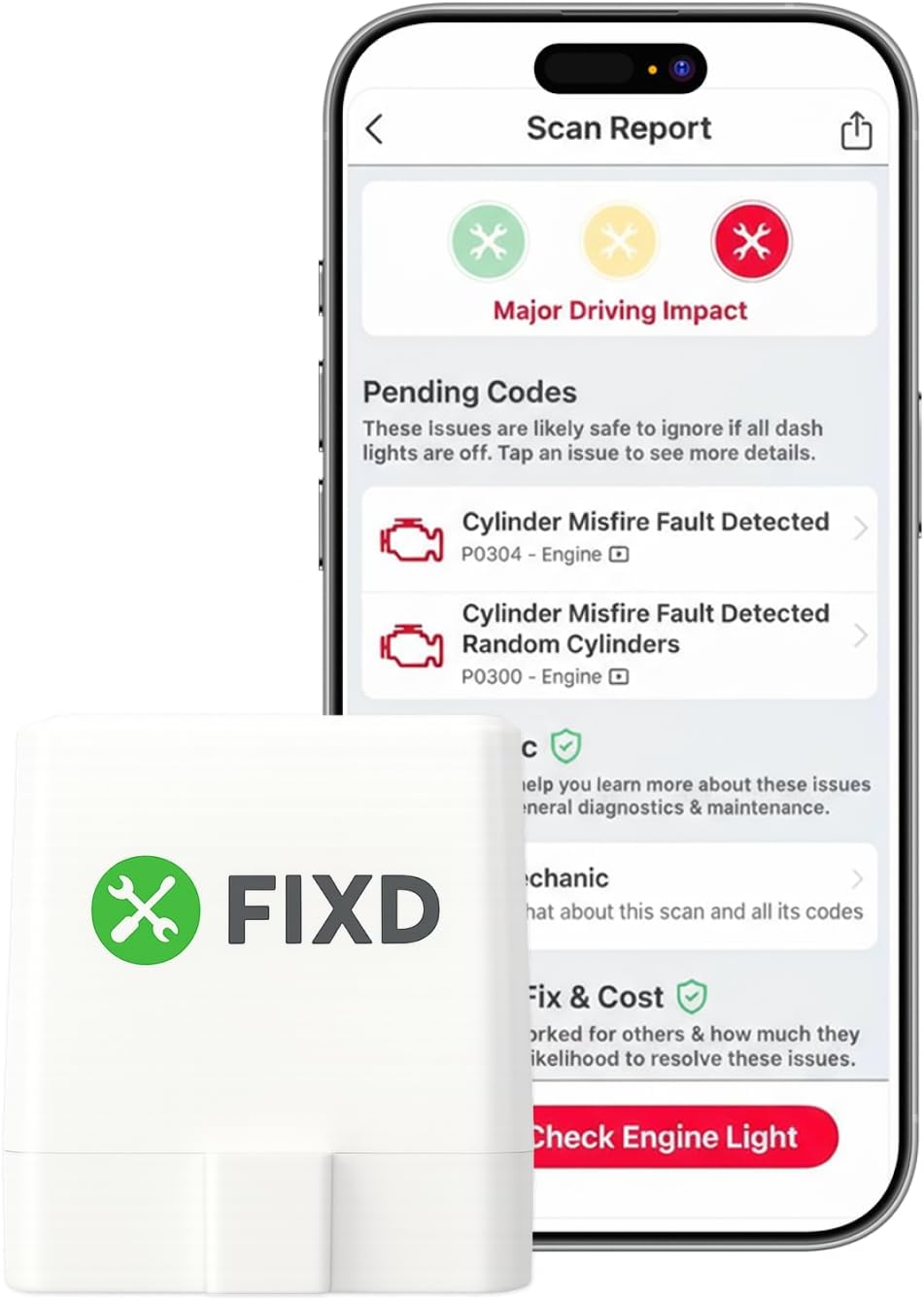
Best Bluetooth OBD2 Scanner
Detect 39,000+ Issues With Enhanced Codes. Save $1000s on car repairs & buying used vehicles by diagnosing problems yourself.
Shop on Amazon
Key Takeaways
- A solid yellow BMW X3 check engine light allows safe driving to a service center, while a flashing light indicates an active misfire requiring immediate shutdown to prevent $1,200–$2,500 catalytic converter damage.
- Common BMW X3 check engine triggers include loose gas caps ($0 fix), dirty MAF sensors ($50–$150), failing oxygen sensors ($150–$400), and ignition coil misfires ($250–$600), with costs varying by component.
- Using a basic OBD-II Bluetooth scanner ($30–$100) lets you read diagnostic trouble codes and freeze-frame data in your driveway, potentially saving $100–$150 on dealer diagnostics.
- Minor DIY fixes like gas cap replacement and MAF sensor cleaning work for simple issues, but serious problems like catalytic converter failure, turbocharger issues, or VANOS faults require professional BMW specialist diagnosis.
- Regular maintenance—synthetic oil every 7,500 miles, air filter replacement every 30,000 miles, quality fuel from Top Tier stations, and monitoring fuel economy drops—prevents check engine lights and extends X3 reliability.
- Never reset a check engine light without fixing the root cause; the code will return immediately, and you risk masking serious damage to your engine or emissions system.
Understanding Warning Light Signals
Solid vs Flashing Check Engine Light
Your BMW X3 uses different warning patterns to communicate urgency. A solid yellow check engine light means the system detected an emissions or performance fault that requires attention soon but doesn’t pose immediate danger. You can drive to your mechanic or home, but don’t ignore it for weeks.
A flashing check engine light is your X3 screaming for help. This pattern indicates an active engine misfire that’s dumping unburned fuel into the exhaust system. The catalytic converter, a $1,200–$2,500 component, can overheat and suffer permanent damage within minutes. If you see flashing, pull over safely, shut down the engine, and call for a tow.
Role of Onboard Diagnostics and Malfunction Indicator Lamp
Every BMW X3 since 1996 includes an OBD-II (On-Board Diagnostics II) system that monitors engine performance, emissions controls, fuel mixture, ignition timing, and dozens of sensors. When any monitored parameter falls outside acceptable ranges, the powertrain control module (PCM) logs a diagnostic trouble code and triggers the malfunction indicator lamp (MIL), your check engine light.
The system runs continuous self-checks while you drive. Some tests require specific conditions: highway speed, cold start, or steady cruise. Once a fault appears twice in succession, the light stays on until you fix the underlying problem and clear the code.
Diagnostic Trouble Codes Explained
Diagnostic trouble codes follow a standardized five-character format. P0300, for example, breaks down as: P (Powertrain), 0 (generic SAE code), 3 (ignition system), 00 (random/multiple cylinder misfire). Codes starting with P0 are universal across all manufacturers, while P1, P2, or P3 codes are BMW-specific.
Common X3 codes include P0171/P0174 (fuel system lean), P0420/P0430 (catalytic converter efficiency), P0300–P0306 (misfire codes), and P0101 (mass airflow sensor range). Each code points to a specific system, but you’ll still need to verify the actual failed component through testing.
Common Causes and Symptoms
Loose or Faulty Gas Cap Issues
A loose, cracked, or missing gas cap is the cheapest check engine light trigger. The X3’s evaporative emission system (EVAP) maintains precise fuel vapor pressure. When the cap doesn’t seal properly, the system detects a leak and logs code P0455 (large EVAP leak) or P0456 (small EVAP leak).
After refueling, make sure the cap clicks three times. Inspect the rubber seal for cracks or debris. If the cap looks worn, replace it with an OEM or high-quality aftermarket version. The light won’t clear immediately, drive through two or three complete drive cycles (cold start to full operating temperature) to allow the system to retest.
Oxygen Sensor and MAF Sensor Problems
Oxygen sensors (O2 sensors) monitor exhaust gas composition before and after the catalytic converter, allowing the PCM to adjust fuel mixture for optimal efficiency. BMW X3 models typically have two to four O2 sensors. When one fails, you’ll see codes like P0130, P0135, P0150, or P0155, often accompanied by rough idle, hesitation, or declining fuel economy.
“My 2015 X3 threw a P0171 code. Turned out the MAF sensor was dirty from oil residue on the air filter. Cleaned it with MAF cleaner spray and the code cleared after 50 miles.” via r/BmwTech
The mass airflow (MAF) sensor measures incoming air volume so the PCM can calculate the correct fuel injection amount. A contaminated or failing MAF triggers codes P0101, P0171, or P0174, causing poor acceleration, stalling, or black exhaust smoke. Cleaning the sensor element with specialized MAF cleaner spray often resolves the issue without replacement.
Catalytic Converter Failures and Signs
The catalytic converter transforms harmful exhaust gases into less toxic compounds. Over time, internal honeycomb substrates can clog or break apart, especially if you’ve ignored misfires or used low-quality fuel. Code P0420 (bank 1) or P0430 (bank 2) signals declining converter efficiency.
Symptoms include reduced power, sulfur smell, rattling noises from the exhaust, and dramatically worse fuel economy. Catalytic converter replacement is expensive, so verify the diagnosis with downstream O2 sensor readings before authorizing the repair. Sometimes a failing upstream O2 sensor falsely triggers a P0420 code.
Spark Plug and Ignition Coil Related Engine Misfires
BMW inline-six and inline-four turbocharged engines are famous for ignition coil failures. The X3’s coil-on-plug design means each cylinder has its own ignition coil, and these wear out every 60,000–100,000 miles. When a coil fails, the spark plug doesn’t fire, causing a misfire (P0300–P0306).
You’ll feel a rough idle, loss of power, or engine shaking. The flashing check engine light appears under acceleration. Replace all coils and spark plugs together using quality OEM or performance ignition coils to prevent repeat failures. Driving with an active misfire destroys your catalytic converter within minutes.

Diagnosis and Professional Intervention
Reading Trouble Codes with an OBD-II Scanner
You don’t need a $5,000 dealer scan tool. A basic OBD-II Bluetooth scanner paired with a smartphone app retrieves codes, displays live sensor data, and clears the light after repairs. Locate the diagnostic port under the driver’s side dash, plug in the scanner, turn the ignition to position II (without starting the engine), and read the codes.

Write down all codes and freeze-frame data, the snapshot of engine conditions when the fault occurred. This information tells you vehicle speed, engine RPM, coolant temperature, and fuel trim values at the moment of failure. Cross-reference codes with BMW-specific forums or the NHTSA vehicle complaints database to see if your X3 generation has known issues.
When to Seek a BMW Technician
Some check engine light issues demand professional diagnosis. If you see codes related to VANOS (variable valve timing), Valvetronic (throttle-less intake), turbocharger boost control, or transmission integration, head to a BMW specialist or independent shop with proper diagnostic software. These systems require advanced scan tools that monitor actuator positions, adaptation values, and proprietary BMW modules.
Flashing check engine lights, limp mode activation (reduced power, transmission stuck in third gear), or multiple simultaneous codes (P0300 plus P0171 plus P0420) suggest cascading failures that need expert isolation. Don’t guess-and-replace expensive parts. A proper diagnosis costs $100–$150 but saves you from thousand-dollar mistakes.
Differentiating Minor and Serious Issues
Minor issues you can tackle yourself: gas cap, dirty MAF sensor, single ignition coil/spark plug replacement, replacing a clearly damaged vacuum hose, or topping off low engine oil (check via iDrive or dipstick). These fixes cost under $100 in parts and require basic hand tools.
Serious issues requiring professional help: catalytic converter replacement, fuel pump or injector problems, turbocharger failures, timing chain stretch, VANOS solenoid malfunctions, or persistent random misfires across multiple cylinders. These repairs involve specialized tools, software coding, and hundreds to thousands in parts and labor.
Resetting and Preventing Check Engine Light Issues
Steps for Safe Check Engine Light Reset
After fixing the underlying issue, you can reset the check engine light three ways. First, use your OBD-II scanner’s “clear codes” function with the ignition on but engine off. Second, disconnect the negative battery terminal for 15 minutes (note: this erases radio presets and requires window re-initialization). Third, simply drive the vehicle through several complete drive cycles, the light clears automatically once the system verifies the repair.
Never reset the light without addressing the root cause. The code will return immediately or within a few drive cycles, and you’ve wasted time. Worse, you might mask a serious problem that’s actively damaging your engine or emissions system.
Ongoing Maintenance Tips
Prevent check engine lights with regular maintenance. Change engine oil every 7,500 miles (or annually) using BMW-approved synthetic oil. Replace the engine air filter every 30,000 miles, cabin filter every 15,000 miles, and spark plugs at the factory-recommended interval (typically 60,000–100,000 miles depending on generation).
“I’ve owned three X3s. The one thing that keeps them reliable? Following the maintenance schedule religiously. Cheap oil changes and skipped services always come back to haunt you with check engine lights.” via Xbimmers Forum
Use quality fuel from Top Tier gas stations, the detergent additives prevent carbon buildup on intake valves and injectors. Avoid extended idling and short trips that never reach full operating temperature, as these conditions accelerate sensor contamination and incomplete combustion.
Improving Fuel Efficiency and Emission System Health
A healthy emissions system delivers better fuel economy and lower repair costs. Run a bottle of fuel system cleaner through your tank every 5,000 miles to dissolve carbon deposits. Check your tire pressure monthly, underinflated tires increase rolling resistance and fuel consumption, indirectly stressing the engine.
Monitor your X3’s fuel economy via the iDrive trip computer. A sudden drop (2–3 MPG or more) often precedes a check engine light by weeks, signaling a developing O2 sensor, MAF sensor, or spark plug issue. Addressing problems early prevents cascading failures and keeps your luxury compact SUV running at peak efficiency.
Frequently Asked Questions
What does a BMW X3 check engine light mean?
The BMW X3 check engine light illuminates when the onboard diagnostic system detects an emissions, sensor, or engine performance issue. These range from a simple loose gas cap to failing oxygen sensors or ignition coils. A solid yellow light allows continued driving; a flashing light signals active misfire and demands immediate shutdown.
Is it safe to drive with a flashing check engine light?
No. A flashing check engine light indicates active engine misfire, which can damage your catalytic converter ($1,200–$2,500) within minutes. Pull over safely, shut down the engine, and call for a tow truck immediately rather than risk permanent damage.
What is the cheapest check engine light fix?
A loose or faulty gas cap is often the cheapest trigger. Ensure it clicks three times after refueling and inspect the seal for cracks. Replacement costs under $20. Drive through a few complete cycles to allow the system to verify the fix before the light clears.
How do I read diagnostic trouble codes on my X3?
Use a basic OBD-II Bluetooth scanner with a smartphone app. Locate the diagnostic port under the driver’s side dash, plug in the scanner with ignition at position II (not running), and read the codes. Write down freeze-frame data showing engine conditions when the fault occurred.
Can I clear a check engine light without fixing the problem?
Technically yes, using an OBD-II scanner or disconnecting the battery, but you shouldn’t. The code will return within a few drive cycles, and you risk masking serious problems actively damaging your engine or emissions system. Always address the root cause first.
What are the most common causes of BMW X3 check engine lights?
Common triggers include loose gas caps, dirty MAF sensors, failing oxygen sensors, ignition coil failures, and catalytic converter deterioration. Ignition coils typically wear out every 60,000–100,000 miles and often fail across multiple cylinders in older X3 models.
Read More:
- BMW Check Engine Light (Quick Diagnostic Guide to Fix It Fast)
- BMW X5 Check Engine Light (Means, Quick Fix Guide & Codes)