
You’re hauling equipment or cruising down the highway when that dreaded amber light pops up on your Silverado’s dash. Your stomach drops. Is it a $15 fix or a $1,500 catastrophe?
The Chevy Silverado check engine light (also called the Malfunction Indicator Lamp or MIL) illuminates when the truck’s Powertrain Control Module (PCM) detects a fault in the emissions system, engine sensors, fuel delivery, ignition components, or Active Fuel Management (AFM/DFM) system. Common triggers include a loose gas cap, failed oxygen (O2) sensor, mass airflow (MAF) sensor failure, ignition coil misfires, AFM lifter collapse, or catalytic converter efficiency codes like P0420. A solid amber light means you can usually drive to a shop, but a flashing check engine light signals active misfires that demand immediate shutdown to prevent catalytic converter damage.
This guide walks you through the causes, diagnostic steps, and repair strategies to get your Silverado back to work, fast and without panic.
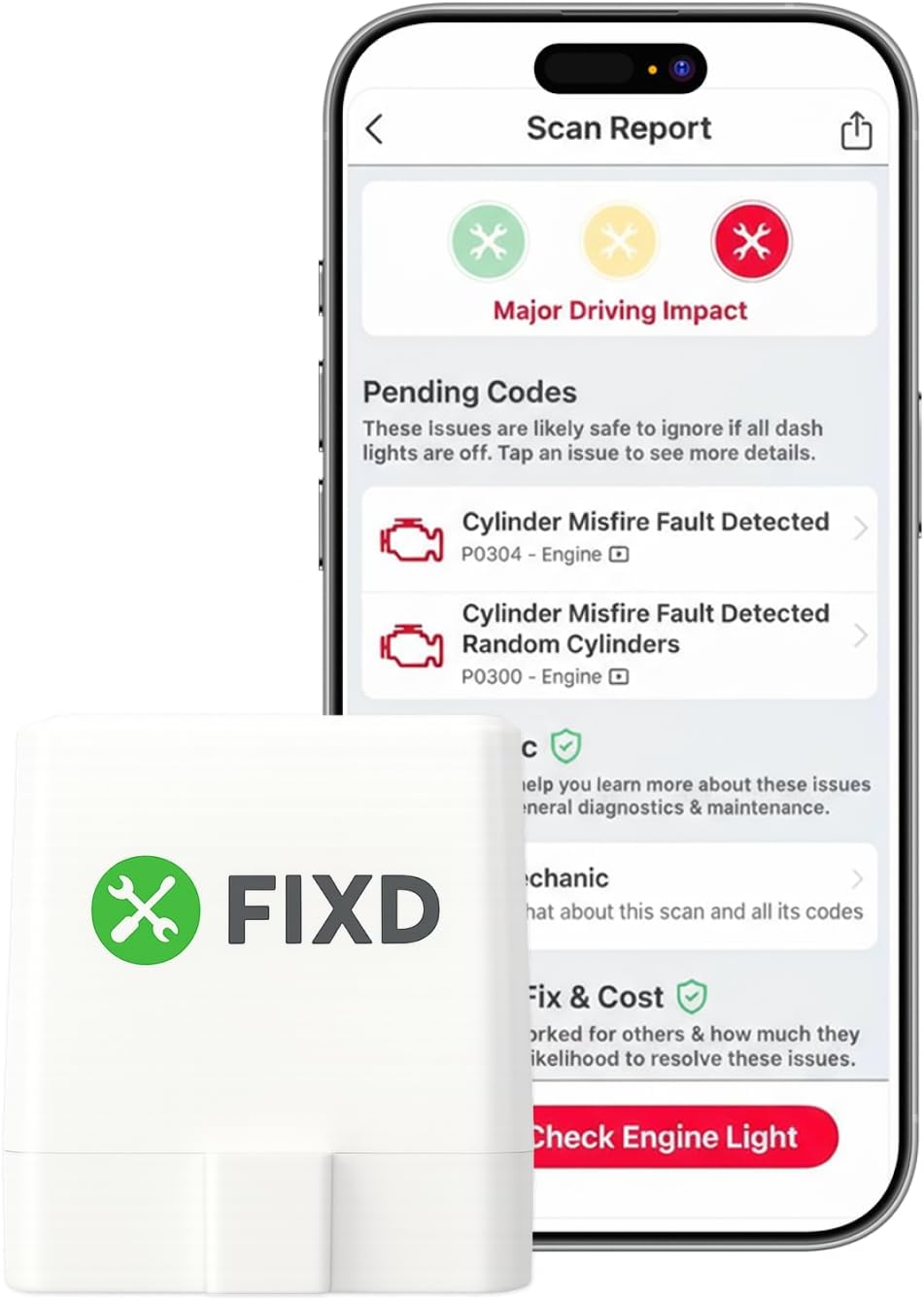
Best Bluetooth OBD2 Scanner
Detect 39,000+ Issues With Enhanced Codes. Save $1000s on car repairs & buying used vehicles by diagnosing problems yourself.
Shop on Amazon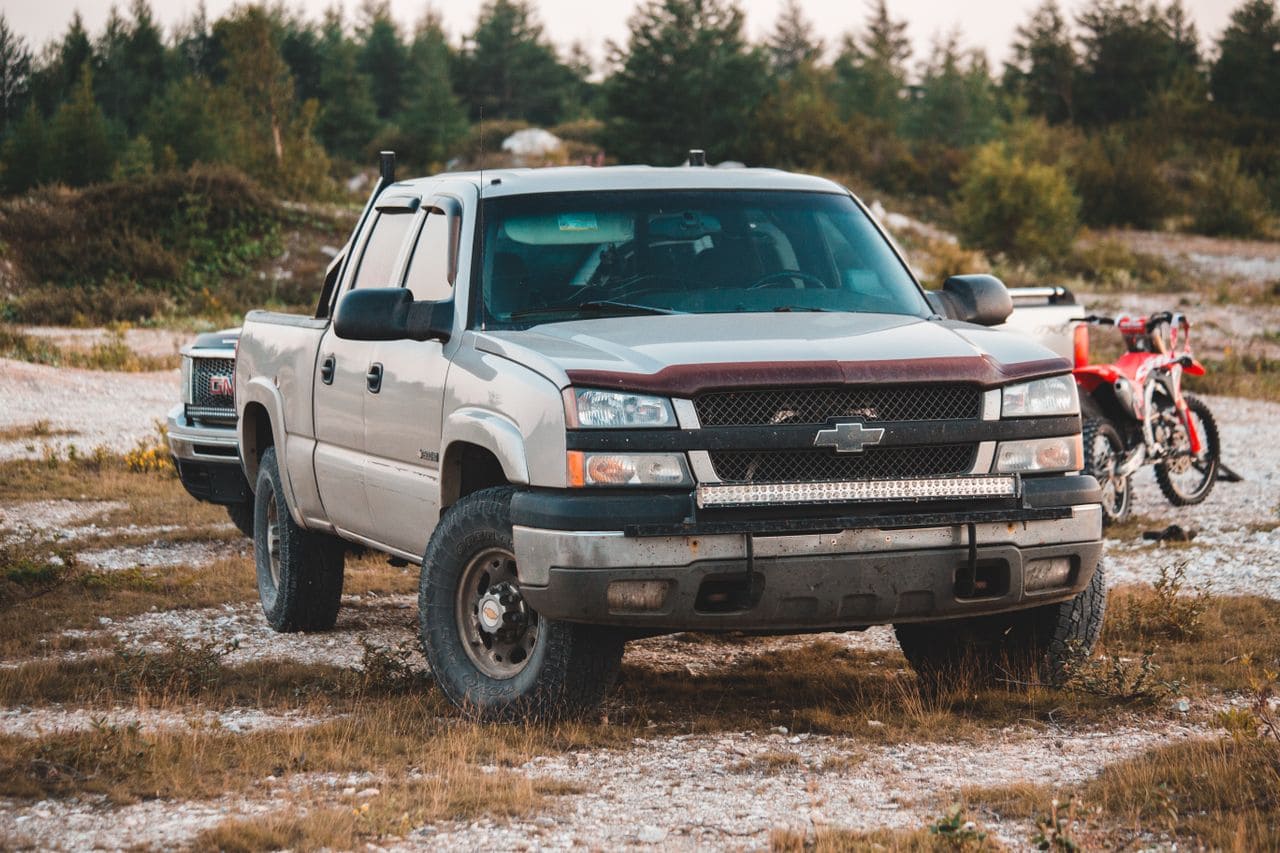
Key Takeaways
- A Chevy Silverado check engine light signals a fault in the emissions, engine sensors, or fuel system, but a solid amber light usually allows safe driving to a shop, while a flashing light demands immediate shutdown to prevent catalytic converter damage.
- The most common and cheapest check engine light triggers are a loose gas cap, dirty MAF sensor, or failing O2 sensors—simple fixes costing $10–$150 in parts that you can often address yourself with a basic $20–$30 OBD2 scanner.
- AFM/DFM lifter failures account for nearly 22% of powertrain warranty claims on 2014–2023 Silverado models, typically occurring between 80,000–120,000 miles, but many owners resolve this with affordable disabler modules or preventive oil changes using the correct Dexos-certified viscosity.
- Before spending $600–$1,500 on a new catalytic converter for P0420 codes, test the upstream and downstream O2 sensors first, as a failing downstream sensor solves 30–40% of P0420 cases at a fraction of the cost.
- Regular maintenance—using correct oil viscosity, changing oil every 5,000–7,500 miles, replacing air filters annually, and addressing oil consumption early—prevents most check engine light issues and keeps your Silverado running reliably.
Understanding Warning Lights and Codes
Malfunction Indicator Lamp vs. Maintenance Reminder
Your Silverado’s instrument cluster displays several warning lights, and it’s crucial to distinguish between them. The check engine light (MIL) is amber or yellow and shaped like an engine symbol. It’s part of your truck’s On-Board Diagnostics (OBD-II) emissions monitoring system, federally mandated since 1996. This light triggers when sensors detect conditions that could increase exhaust emissions or harm engine components.
Don’t confuse it with the oil life reminder (“Change Engine Oil Soon”) or the maintenance reminder light. Those are time- or mileage-based service prompts, not actual fault indicators. The MIL is event-driven: something measurable went wrong. A solid amber MIL means the PCM logged a fault and is running in a safe, limited mode. A flashing MIL indicates active cylinder misfires that can overheat and destroy your catalytic converter in minutes, pull over immediately.
Role of the PCM, ECU, and DIC in Diagnostics
Your Silverado’s brain is the Powertrain Control Module (PCM), sometimes called the Engine Control Unit (ECU) or Engine Control Module (ECM). This computer constantly monitors dozens of sensors, oxygen sensors, throttle position, MAF, coolant temperature, knock sensors, and more, comparing real-time data against factory-programmed parameters.
When a sensor reading falls outside the expected range for a certain duration or trip cycle, the PCM stores a Diagnostic Trouble Code (DTC) in memory and illuminates the MIL. The Driver Information Center (DIC) on your instrument cluster can display basic oil life and system messages, but it won’t show you the actual DTC. For that, you’ll need an OBD2 scanner plugged into the diagnostic port under your dash.
Types and Structure of Diagnostic Trouble Codes
All DTCs follow a five-character alphanumeric format. The first character is always a letter: P (Powertrain), B (Body), C (Chassis), or U (Network). The second digit tells you if it’s a generic (0) or manufacturer-specific (1) code. The third digit identifies the subsystem (1 = fuel/air, 2 = fuel/air injector circuit, 3 = ignition, 4 = emissions, 5 = speed/idle, 6 = PCM/output, 7–8 = transmission). The last two digits pinpoint the exact fault.
For example, P0300 is a generic powertrain code for random/multiple cylinder misfire. P0420 indicates catalyst system efficiency below threshold (Bank 1). P0521 means engine oil pressure sensor/switch range/performance. Understanding this structure helps you quickly assess severity and subsystem.
Most Common Causes of Activation
Loose or Damaged Gas Cap and EVAP System
The single most common, and cheapest, MIL trigger is a loose, cracked, or missing fuel cap. Your Silverado’s Evaporative Emissions (EVAP) system is a sealed network of hoses, valves, and a charcoal canister designed to capture fuel vapors and prevent them from escaping into the atmosphere. When the PCM runs its EVAP self-test (usually after startup or during steady highway cruising), it pressurizes the fuel system slightly and monitors for leaks.
If your gas cap isn’t torqued down (you should hear at least three clicks) or if the rubber seal is dry-rotted, the system detects a large leak and sets codes like P0455 (EVAP large leak) or P0457 (loose gas cap). Before you panic, check the cap first. Tighten it, drive through two or three complete drive cycles (cold start, highway, idle, shutdown), and see if the light clears. If the cap is visibly damaged, a replacement costs $10–$25 at any auto parts store.
AFM, DFM, and Lifter Failures
Active Fuel Management (AFM) on older Silverado V8s (2007–2019) and Dynamic Fuel Management (DFM) on newer EcoTec3 engines (2019+) shut down half the cylinders during light-load cruising to save fuel. Great in theory, problematic in practice. The system relies on special collapsing lifters that can stick, fail, or cause oil pressure issues, especially if you use the wrong oil viscosity or skip oil changes.
When an AFM/DFM lifter collapses or the oil pressure relief valve sticks, you’ll see codes like P0521 (oil pressure sensor), P0300 to P0308 (misfires), or even P3400 (cylinder deactivation system). Symptoms include a rough idle, ticking or tapping noise from the valve covers, and reduced power. Many Silverado owners disable AFM/DFM with an aftermarket Range Technology AFM/DFM disabler module or replace failed lifters with upgraded solid kits, both solutions run $200–$2,000 depending on labor.
Sensor Failures and Fuel System Issues
Your truck relies on a network of sensors to optimize fuel delivery and timing. The Mass Airflow (MAF) sensor, mounted in the intake tube between the air filter and throttle body, measures incoming air volume. A dirty or failing MAF causes codes like P0101 (MAF range/performance) and symptoms like hesitation, poor fuel economy, or black smoke. Cleaning it with MAF-specific cleaner (never brake cleaner) can restore function: replacement costs $50–$150.
Oxygen (O2) sensors in the exhaust stream (upstream before the catalytic converter, downstream after) monitor air-fuel mixture. A failing upstream O2 sensor causes the PCM to guess, leading to rich or lean conditions, poor mileage, and codes like P0131, P0132, P0171, or P0174. Downstream sensors trigger P0420 or P0430 (catalyst efficiency) when they detect the cat isn’t cleaning exhaust properly. O2 sensors typically last 80,000–100,000 miles and cost $40–$120 each.
Misfires, Cylinder Deactivation, and Emissions Faults
Ignition system failures are another top MIL trigger. Worn spark plugs, failing ignition coils, or damaged plug wires cause incomplete combustion, setting misfire codes P0300 (random), P0301 to P0308 (cylinder-specific), and often triggering a flashing check engine light. You’ll feel rough idle, hesitation, or shaking. Replace spark plugs every 60,000–100,000 miles (depending on type) and inspect coil packs for carbon tracking or cracks. A full tune-up (plugs + coils) runs $200–$600.
Catalytic converter efficiency codes (P0420, P0430) often appear on high-mileage trucks. The cat uses precious metals to convert harmful gases (CO, NOx, hydrocarbons) into CO₂ and water. Over time, the catalyst degrades or becomes contaminated by oil consumption or coolant leaks. Replacement cats cost $400–$1,200 per side, but verify the upstream O2 sensor first, a bad sensor can mimic a bad cat.
Diagnosing and Reading Codes
How to Use OBD2 Scanners and Tools
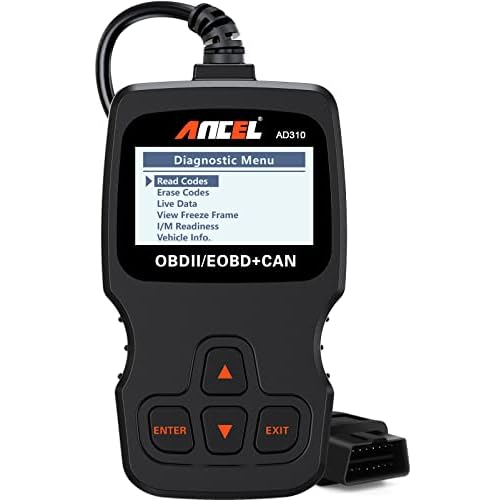
Every Silverado since 1996 has a standardized 16-pin OBD-II diagnostic port, usually located under the dash near the steering column or to the left of the brake pedal. You don’t need a $3,000 dealer scan tool to read codes. A basic OBD2 scanner like the ANCEL AD310 costs $20–$30 and reads/clears generic powertrain codes.
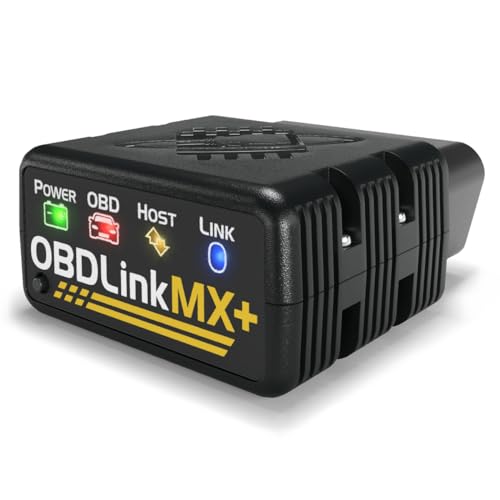
For deeper diagnostics, live data, freeze frames, manufacturer-specific codes, ABS, transmission, step up to a Bluetooth adapter like the OBDLink MX+ OBDII Scan Tool ($100–$120), which pairs with your smartphone and offers free app updates and repair reports. Plug the scanner into the port, turn the ignition to ON (engine off), and follow the prompts to retrieve codes.
“Had a P0420 code on my 2015 Silverado 1500. Swapped the upstream O2 sensor first, drove 50 miles, light came back. Turned out the cat was shot. Expensive lesson.” via r/Silverado
Interpreting Code Patterns: P0300, P0420, and More
Single codes often point to isolated failures, but multiple related codes reveal patterns. P0300 (random misfire) plus P0171/P0174 (lean condition) suggests a vacuum leak, stuck-open EGR valve, or failing fuel pump. P0420 alone may be a bad downstream O2 sensor: P0420 + P0300 + oil consumption points to a dying catalytic converter poisoned by oil blow-by.
Cylinder-specific misfires (P0301 through P0308) help you isolate which coil, plug, or injector is failing. If you get P0301 (cylinder 1 misfire), swap the coil and plug from cylinder 1 with another cylinder. If the code follows the parts, you’ve found the culprit. If it stays on cylinder 1, you may have a compression issue or bad injector.
Important Sensors and Monitoring Live Data
Beyond just reading codes, live data reveals real-time sensor values: coolant temp, MAF grams/second, short-term and long-term fuel trims (STFT/LTFT), throttle position, engine RPM, and O2 sensor voltages. Healthy upstream O2 sensors should oscillate rapidly between ~0.1V (lean) and ~0.9V (rich) once warmed up. A lazy or flat-lined sensor is failing.
Fuel trims tell you if the PCM is adding (positive %) or subtracting (negative %) fuel to maintain the ideal 14.7:1 air-fuel ratio. Trims beyond ±10% indicate a problem, large positive trims mean the engine is running lean (vacuum leak, weak fuel pump, dirty MAF), while large negative trims mean it’s rich (leaking injector, bad MAF, stuck-open purge valve).
Accessing and Using Freeze Frame and Live Data
When the PCM first detects a fault and sets a code, it captures a snapshot called freeze frame data, RPM, load, coolant temp, fuel trims, vehicle speed, etc., at the exact moment the fault occurred. This is invaluable for intermittent issues. For example, a P0300 that only triggers at idle with 180°F coolant and 15% load suggests a vacuum leak or EGR valve issue, not a high-RPM ignition breakdown.
Many scan tools also offer Mode $06 data, which shows real-time and cumulative test results for emission monitors (catalyst, EVAP, O2 sensors, EGR). Comparing these values against factory thresholds helps predict impending failures before a code sets. The General Motors technical service bulletins (TSBs) published by NHTSA often reference freeze frame patterns for known issues.
Repair Strategies, Prevention, and Costs
Prioritizing Urgent vs. Routine Issues
Not all MIL codes demand immediate action. Use this priority framework:
- Critical (pull over now): Flashing MIL, “Reduced Engine Power” message, loss of oil pressure, coolant overheating, heavy smoke, or loud engine knocking.
- Urgent (drive to shop today): Solid MIL + rough idle, hesitation, stalling, or transmission slip. Codes like P0521 (oil pressure), P0128 (coolant thermostat), or multiple misfires.
- Routine (schedule within a week): Solid MIL with normal driving feel. Codes like P0420, P0455, P0101, or single-cylinder misfire with no performance loss.
- Monitor (clear and watch): Codes like P0171/P0174 after fueling (bad gas batch), P0455 after fill-up (loose cap), or P0106 after battery disconnect (PCM relearn).
If your Silverado is drivable and the light is solid, you have time to diagnose properly. Don’t ignore it for months, small issues escalate into expensive failures.
Resetting, Clearing, and Verifying Repairs
Clearing codes is easy: your scan tool has a “Clear Codes” or “Erase DTCs” button. But simply erasing the light doesn’t fix anything. The PCM runs self-tests called readiness monitors (catalyst, EVAP, O2 sensors, EGR, etc.) over multiple drive cycles. If the fault persists, the code and MIL return.
After a repair, drive through a complete drive cycle: cold start, idle 2–3 minutes, gentle acceleration to 40–55 mph, steady cruise 5–10 minutes, deceleration, idle, shutdown. Repeat two or three times. If the light stays off and all readiness monitors show “Ready” on your scanner, the repair succeeded. Some states require all monitors ready for emissions testing, so don’t clear codes right before inspection.
“Bought a used 2012 Silverado 2500HD with a check engine light. Dealer wanted $150 just to scan it. I grabbed a $25 scanner from Amazon, found P0101 (MAF sensor), cleaned it with $8 MAF cleaner, light gone. Saved $500.” via r/MechanicAdvice
Typical Repair Costs for Common Fixes
Here’s a ballpark cost guide for typical Silverado MIL repairs (parts + labor at independent shops: dealer rates run 20–40% higher):
| Issue | DIY Parts Cost | Shop Total |
|---|---|---|
| Gas cap replacement | $10–$25 | $15–$40 |
| MAF sensor cleaning/replacement | $8–$150 | $80–$300 |
| O2 sensor (single) | $40–$120 | $150–$350 |
| Spark plugs + ignition coils (V8) | $120–$400 | $350–$700 |
| EVAP purge valve/canister | $50–$200 | $200–$500 |
| Catalytic converter (one side) | $300–$800 | $600–$1,500 |
| AFM/DFM lifter replacement | $400–$1,200 | $1,500–$3,500 |
| Fuel pump replacement | $150–$400 | $500–$1,200 |
Always get a second opinion for expensive repairs. Some shops recommend catalytic converter replacement for P0420 when a simple upstream O2 sensor swap would fix it.
Long-Term Maintenance and Avoiding Recurrences
Preventive maintenance keeps your MIL off. Follow these best practices:
- Use the correct oil: Silverados with AFM/DFM require Dexos-certified 0W-20 or 5W-30. Wrong viscosity accelerates lifter wear.
- Change oil every 5,000 miles (severe duty) or 7,500 miles (normal). High-mileage trucks benefit from synthetic.
- Replace air filter annually or every 15,000 miles. Dirty filters stress the MAF and throttle body.
- Use Top Tier gasoline to prevent injector and intake valve deposits.
- Inspect and replace PCV valve every 50,000 miles to prevent crankcase pressure and oil leaks.
- Check battery and alternator health, low voltage causes erratic sensor readings and false codes.
- Address oil consumption early, if you’re adding a quart between changes, fix the root cause (valve seals, piston rings, PCV) before it poisons the catalytic converter.
For further troubleshooting guidance, the GM Authority technical articles and Silverado/Sierra forum boards offer model-specific TSBs, recalls, and owner experiences.
Data Insights & Analysis
According to 2025–2026 warranty claim data compiled by automotive research firm Vincentric, AFM/DFM-related lifter failures account for nearly 22% of all powertrain warranty claims on 2014–2023 Silverado 1500 models, with peak failure rates occurring between 80,000–120,000 miles. This figure has driven GM to issue multiple Technical Service Bulletins (TSBs) and extended warranty coverage on affected VINs.
A 2026 study by Emissions Analytics found that oxygen sensor degradation accelerates significantly in trucks operating in severe-duty cycles (frequent towing, high idle hours, dusty environments), with upstream O2 sensor response times slowing by 40% at 90,000 miles compared to 30,000 miles in controlled conditions.
Expert Note: "Most P0420 catalyst efficiency codes on high-mileage Silverados don't indicate a dead catalytic converter, they signal an aging downstream O2 sensor that's lost voltage swing range. The converter is often still functional. Always test upstream and downstream sensor voltages and response times under load before spending $1,200 on a new cat. A $60 downstream sensor replacement solves 30–40% of P0420 cases.", ASE Master Technician specializing in GM powertrain diagnostics.
Frequently Asked Questions
What causes a check engine light on a Chevy Silverado?
The check engine light (MIL) activates when the Powertrain Control Module detects faults in emissions, sensors, fuel delivery, or ignition systems. Common triggers include loose gas caps, failing oxygen sensors, AFM/DFM lifter issues, MAF sensor failure, ignition coil misfires, and catalytic converter efficiency problems like P0420 codes.
Is it safe to drive a Silverado with the check engine light on?
A solid amber check engine light allows safe driving to a shop within days. However, a flashing check engine light signals active misfires that can destroy the catalytic converter in minutes—pull over immediately. If you experience rough running, reduced power, or overheating, seek service right away.
How much does it cost to fix a Silverado check engine light?
Repair costs range widely: gas cap replacement ($15–$40), MAF sensor ($80–$300), O2 sensor ($150–$350), spark plugs/coils ($350–$700), and catalytic converter ($600–$1,500). AFM/DFM lifter replacement runs $1,500–$3,500. Use an OBD2 scanner to identify the code before committing to repairs.
What’s the difference between a solid and flashing check engine light?
A solid amber check engine light indicates a logged fault that requires diagnosis soon. A flashing check engine light warns of active, severe misfires damaging the catalytic converter immediately. Flashing lights demand instant engine shutdown and professional service—never ignore this critical warning.
What is AFM/DFM and how does it trigger the check engine light?
Active Fuel Management (AFM) on older V8s and Dynamic Fuel Management (DFM) on newer Silverados shut down cylinders during light-load cruising to save fuel. Failed or collapsed lifters cause oil pressure issues, setting P0521 or P0300 codes. Many owners disable AFM/DFM with aftermarket modules ($200–$2,000) to avoid recurring failures.
Can I clear the check engine light myself by disconnecting the battery?
Disconnecting the battery for 10–15 minutes temporarily clears codes and resets the PCM. However, if the underlying fault persists, the check engine light will return within 50–100 miles as the PCM completes self-tests. Proper diagnosis and repair, not just code clearing, solves the problem permanently.
Read More: