
If your Ford Escape shudders, slips, or throws a “Transmission Fault Service Now” message, you’re not alone, and you’re not necessarily facing a full rebuild.
Ford Escape transmission problems span multiple generations, from the CD4E automatic in first-gen models to the 6F35, 8F35, and hybrid eCVT units in newer Escapes. The most common failures include torque converter shudder (P0741), shift cable bushing degradation, harsh 2-3 shifting in the 6F35, and solenoid pack failures that trigger limp mode. Many of these issues surface between 60,000 and 100,000 miles. The good news: a significant number of Escape transmission faults trace back to inexpensive components, a worn bushing, a failing transmission range sensor, or a software calibration error, rather than catastrophic internal damage.
This guide breaks down every major Ford Escape transmission problem by model year, walks you through triage steps, and helps you separate a cheap sensor fix from a genuine rebuild situation.
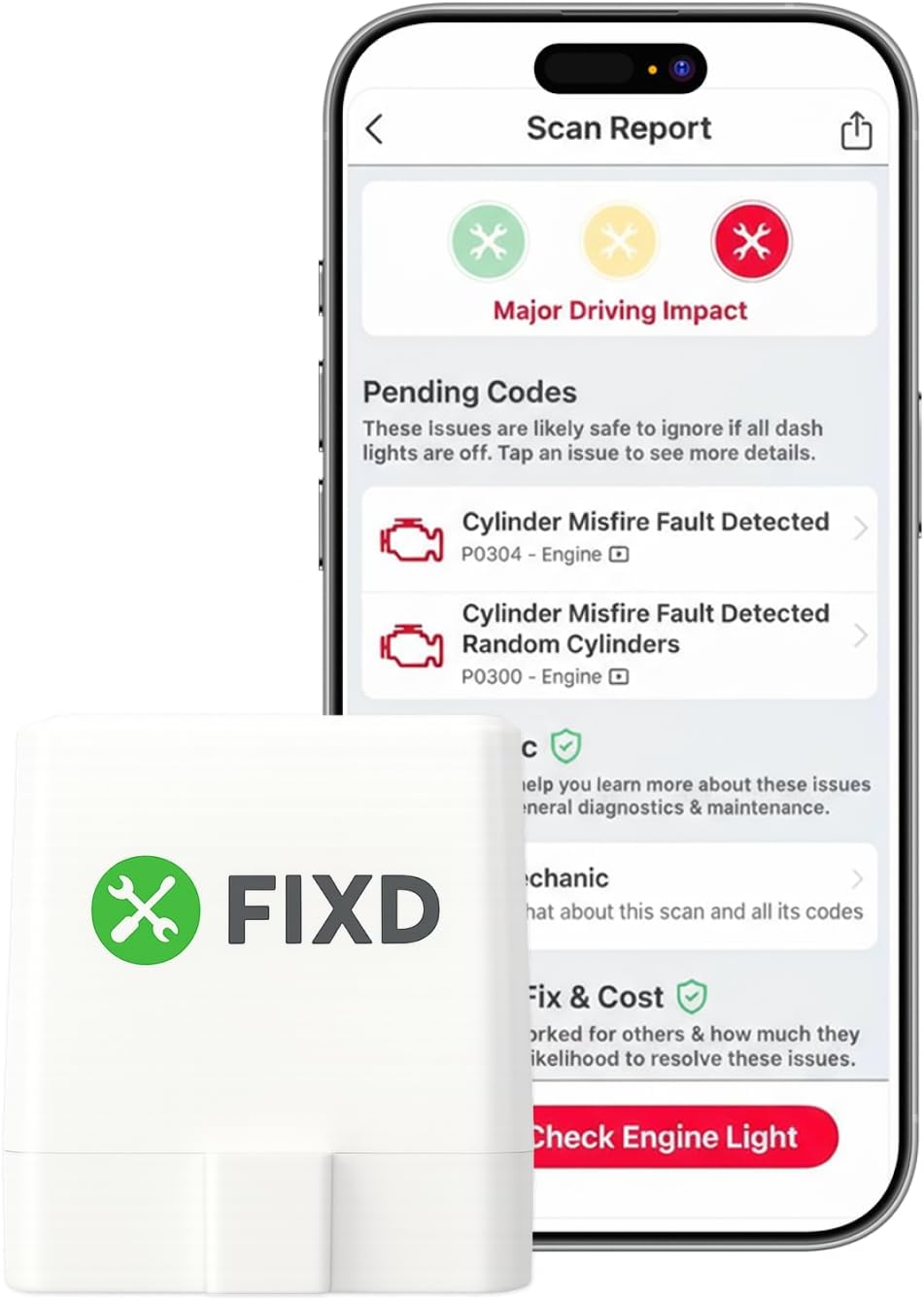
Best Bluetooth OBD2 Scanner
Detect 39,000+ Issues With Enhanced Codes. Save $1000s on car repairs & buying used vehicles by diagnosing problems yourself.
Shop on Amazon
Key Takeaways
- Ford Escape transmission problems vary by generation—CD4E in older models, 6F35 in 2013–2019 units, and 8F35/eCVT in 2020+ Escapes—each with distinct failure modes.
- The 2014 and 2017 Escape model years have the highest complaint density for transmission issues, often traced to valve body leaks or cooling line corrosion rather than catastrophic failure.
- Common warning signs include shudder at 35–50 mph, harsh 2-3 shifting, delayed engagement, and ‘Transmission Fault Service Now’ messages—addressing these early can prevent costly rebuilds.
- Many Ford Escape transmission problems stem from inexpensive fixes like worn shift cable bushings, failing solenoids, or transmission range sensors rather than requiring full rebuilds.
- Before buying a used Escape, check NHTSA recall history, test for torque converter shudder, inspect for transmission fluid leaks, and favor 2022+ models with the updated 8F35 or hybrid eCVT for better reliability.
Common Transmission Issues by Model Year
Generational Transmission Differences
Ford used distinctly different transmissions across Escape generations, and each one has its own failure profile. The 2001–2012 models relied on the CD4E 4-speed automatic, a gearbox shared with the Mazda Tribute that’s notorious for premature torque converter failure and band servo bore wear. Starting in 2013, Ford switched to the 6F35 6-speed, which improved fuel economy but introduced harsh 2-3 shifting complaints and valve body issues. The 2020+ redesign brought the 8F35 8-speed for gas models and the iVCT hybrid eCVT for plug-in and standard hybrid trims. The eCVT is technically a power-split device rather than a traditional transmission, and its failure modes, bearing whine and inverter faults, differ entirely from conventional gearboxes.
Worst Ford Escape Years for Transmission Problems
Based on complaint density filed with NHTSA, the 2014 and 2017 model years stand out as the worst offenders. The 2014 Escape 6F35 accumulates reports of Ford Escape transmission slipping and hesitation, often linked to an internal leak in the valve body that starves clutch packs. The 2017 model carries similar 6F35 issues compounded by transmission cooling line rust, a corrosion problem in northern climates that causes Ford Escape transmission fluid leak red spots on driveways. The 2008 Escape is also problematic: its CD4E suffers from forward clutch drum failures that can leave you stranded.
“My 2014 Escape started slipping at 78k miles. Dealer quoted me for a full rebuild but an independent shop found the valve body was the only problem. Saved me thousands.” via r/fordescape
Factory Recalls and TSBs Impacting Owners
Ford has issued multiple Technical Service Bulletins addressing Escape transmission faults. TSB 19-2346 covers the shift cable bushing failure on 2013–2019 models, a plastic bushing that cracks and disconnects the shift cable from the transmission lever, potentially allowing the vehicle to roll in Park. Ford extended warranty coverage on affected units, though many owners report difficulty getting this repair covered after the original warranty expires. For the 2020+ 8F35, TSB 23-2089 addresses adaptive transmission learning reset procedures to correct harsh shifting after battery disconnections. If your Escape develops Ford Escape 8F35 transmission shifting issues, ask your dealer specifically about this bulletin before agreeing to any internal work.
Warning Signs and Causes of Transmission Problems
Symptoms to Watch For
Your Escape will usually give you warning signs before a full transmission failure. The most common symptom is a shudder or vibration between 35–50 mph, which typically points to torque converter clutch issues. Other red flags include:
- Delayed engagement when shifting from Park to Drive or Reverse
- Harsh or delayed 2-3 upshift (especially in 6F35-equipped models)
- “Transmission Fault Service Now” message on the dashboard
- RPM flare without corresponding acceleration
- Grinding or whining noise from the hybrid eCVT at low speeds
- Vehicle stuck in limp mode (locked in 3rd gear, limited to ~30 mph)
If you notice Ford Escape transmission slipping and hesitation during highway merges, don’t ignore it. That’s often the earliest detectable stage of clutch pack degradation or a failing solenoid.
Key Transmission Fault Codes and Their Meaning
A basic OBD-II scanner can reveal a lot about your Escape’s transmission health. Here are the codes you’ll encounter most often:
| DTC Code | Description | Likely Cause |
|---|---|---|
| P0741 | Torque converter clutch circuit performance | Worn TCC solenoid or converter clutch |
| P0750 | Shift solenoid A malfunction | Failed solenoid or wiring fault |
| P0717 | Turbine/input speed sensor no signal | Sensor failure or harness damage |
| P0706 | Transmission range sensor circuit | Corroded TR sensor or misadjusted linkage |
| P0735 | Gear ratio error (4th gear) | Internal clutch pack wear or low fluid |
The P0741 torque converter clutch circuit performance Escape code deserves special attention. It’s the single most common code on 2013–2019 Escapes and doesn’t always mean you need a new converter, sometimes a solenoid replacement and fresh fluid resolve it.
Factors Behind Transmission Failures
Several root causes drive Ford Escape transmission failures. Inadequate fluid maintenance tops the list: Ford specifies Mercon LV fluid with a change interval many owners skip entirely. Heat damage is the second major killer, particularly in models with corroded transmission cooling lines that restrict flow. Electronic failures, specifically the Transmission Control Module (TCM) losing calibration or developing internal shorts, account for a growing share of problems in 2017+ models. And the shift cable bushing failure is almost universal on 2013–2016 Escapes with over 80,000 miles, turning what should be a precise mechanical linkage into a sloppy, unreliable connection.
Diagnosing and Fixing Ford Escape Transmission Issues
Transmission Fluid Checks and Leaks
Start your diagnosis with the basics. Check your transmission fluid level and condition, healthy Mercon LV should be clear red, not brown or burnt-smelling. Many Ford Escape transmission fluid leak red spots trace back to corroded steel cooling lines that run beneath the vehicle. In rust-belt states, Ford Escape transmission cooling line rust repair is practically a rite of passage. Replace steel lines with aftermarket aluminum or stainless kits to prevent recurring failures. A product like the Dorman 624-405 Transmission Oil Cooler Line is a direct-fit replacement for several Escape model years and eliminates the corrosion issue entirely.

Transmission Replacement vs. Rebuild
This is the big decision. Here’s a quick comparison to help you weigh your options:
| Option | Pros | Cons |
|---|---|---|
| Solenoid/valve body repair | Low cost, fast turnaround | Only fixes specific faults |
| Full rebuild | Addresses all internal wear | Extended downtime, labor-intensive |
| Remanufactured unit | Warranty included, like-new | Higher upfront cost |
| Used/salvage transmission | Lowest cost option | Unknown history, risk of repeat failure |
If your Escape throws P0741 with no hard parts damage, replacing Ford Escape transmission solenoids DIY or through an independent shop is the smartest first move. A full rebuild only makes sense when clutch packs are burned or the pump is scored.
Role of the Control Module and Electronic Failures
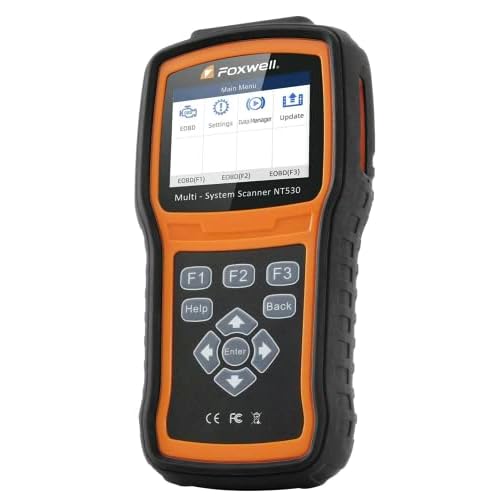
The TCM in 2017+ Escapes is integrated into the Powertrain Control Module (PCM), which means a software glitch can mimic a hard mechanical failure. Ford Escape adaptive transmission learning reset procedures, performed with a Ford IDS or compatible scan tool like the FOXWELL NT510 Elite OBD2 Scanner, can resolve harsh shifting after a battery replacement or PCM reflash. FORScan, a popular third-party diagnostic software, also lets you perform adaptive resets and read enhanced Ford-specific DTCs from a laptop. If you’re troubleshooting Ford Escape limp mode causes, always rule out software before tearing into hardware.
“After my 2020 Escape kept going into limp mode, a FORScan reset of the adaptive tables fixed it completely. Dealer wanted to replace the entire transmission.” via r/FordEscape
Professional Repair vs. Used Transmissions
Used transmissions from salvage yards can be tempting, but they carry serious risk. You’re inheriting someone else’s maintenance neglect. If you go this route, insist on a unit with verified mileage under 60,000 and get a 90-day warranty minimum. Professional rebuilds from ATRA-certified shops remain the gold standard for high-mileage Ford Escape transmission maintenance because they replace all wear items, clutches, bands, seals, and solenoids, in one shot.
Expected Costs, Reliability, and Tips for Buyers
Ford Escape Transmission Repair Cost Estimates
Repair costs vary dramatically depending on the actual failure point. A shift cable bushing replacement runs on the low end, while a complete remanufactured 6F35 installation sits at the high end. Solenoid pack replacements and valve body repairs fall in the middle, far less than a full rebuild. Always get a second opinion if a shop jumps straight to “you need a new transmission” without showing you specific diagnostic evidence. Ford Escape transmission range sensor replacement, for example, is a fraction of a rebuild cost and can eliminate multiple DTCs.
Reliability Comparisons and Longevity
The hybrid eCVT is actually the most reliable Escape transmission currently in production. Because it uses electric motors and a planetary gearset instead of traditional clutch packs, there’s far less internal wear. Ford Escape hybrid eCVT transmission noise symptoms, usually a whine under heavy acceleration, are normal operating sounds, not failure indicators. Among conventional units, the 8F35 in 2022+ models shows improved reliability over the 6F35, partially thanks to updated valve body castings and better fluid routing.
Expert Note: "The 6F35's most overlooked failure mode isn't mechanical, it's thermal. The factory transmission cooler is undersized for towing or sustained hill driving. Fluid temperatures above 240°F accelerate clutch plate glazing exponentially, and most owners never monitor trans temp until it's too late."
Data Insights and Analysis
According to NHTSA complaint data, Ford Escape transmission-related complaints peaked in the 2014 model year with over 900 individual filings, making it one of the most-reported transmission issues in the compact SUV segment. CarComplaints.com ranks the 2014 Escape as a “Beware of the Clunker” vehicle, primarily due to transmission failures. Also, data from RepairPal indicates that Escape models equipped with the 6F35 average significantly more transmission-related shop visits than the segment average through 2025.
Tips When Buying a Used Ford Escape
If you’re shopping for a used Escape, follow these triage steps:
- Pull the NHTSA recall history for the specific VIN, check for open shift cable bushing recalls
- Test drive at 35–50 mph and feel for shudder or vibration (torque converter test)
- Check beneath the vehicle for red fluid stains or corroded cooling lines
- Request transmission fluid condition, if it’s dark or smells burnt, walk away
- Favor 2022+ model years with the updated 8F35 or the hybrid eCVT for better long-term reliability
- Avoid the 2014 and 2017 model years unless the transmission has documented service history
A pre-purchase inspection by a Ford-certified tech who can pull enhanced DTCs with IDS or FORScan is the single best investment you can make before committing to a used Escape.
Frequently Asked Questions
What are the most common Ford Escape transmission problems?
Common Ford Escape transmission problems include torque converter shudder, shift cable bushing degradation, harsh 2-3 shifting in 6F35 models, and solenoid pack failures. These issues typically surface between 60,000 and 100,000 miles and often trace back to inexpensive component failures rather than catastrophic internal damage.
What does a ‘Transmission Fault Service Now’ warning mean on a Ford Escape?
This warning indicates a transmission fault detected by your vehicle’s diagnostic system, often triggered by solenoid failures, torque converter issues, or transmission control module errors. Don’t ignore it—have the vehicle scanned for diagnostic trouble codes (DTCs) to identify the specific problem before costs escalate.
Which Ford Escape model years have the worst transmission issues?
The 2014 and 2017 model years are the worst offenders based on NHTSA complaint data. The 2014 Escape 6F35 suffers from slipping and internal valve body leaks, while 2017 models add transmission cooling line rust problems, especially in northern climates. The 2008 Escape CD4E also experiences forward clutch drum failures.
Can Ford Escape transmission problems be fixed without a complete rebuild?
Yes, many Ford Escape transmission problems are fixable without a full rebuild. Solenoid replacements, valve body repairs, shift cable bushing replacements, and transmission range sensor fixes are far less expensive than rebuilds. Always get diagnostic evidence before agreeing to a complete transmission replacement.
How much does it cost to repair a Ford Escape transmission?
Costs vary widely: shift cable bushing replacement is $200–500, solenoid pack replacements $400–800, valve body repairs $500–1,200, and full remanufactured transmission installations $2,500–4,500. Always obtain a second opinion and diagnostic report before authorizing major transmission work to avoid unnecessary expense.
Is the Ford Escape hybrid eCVT transmission reliable?
Yes, the hybrid eCVT in 2020+ Escapes is the most reliable transmission option currently offered. It uses electric motors and a planetary gearset instead of traditional clutch packs, resulting in far less internal wear and longer-term durability compared to conventional automatic transmissions.
Sources:
- NHTSA Ford Escape Complaints Database
- CarComplaints.com – Ford Escape Transmission Issues
- Reddit r/FordEscape Community
- Ford Owner Support – Recalls and TSBs
- RepairPal – Ford Escape Reliability Ratings
Read More:
- Ford Transmission Problems (Symptoms, Recalls, and What to Do)
- Ford Fusion Transmission Problems (Guide to Shifts, Shudders, & Recalls)
- Ford Explorer Transmission Problems Every Owner Should Know