
If your Ford F-150 shudders at highway speeds, skips gears, or clunks into drive, you’re not imagining things, and you’re definitely not alone.
Ford F-150 transmission problems center on two primary units: the 6R80 six-speed and the 10R80 ten-speed. The 6R80 suffers from lead frame cracking and sudden downshifts, while the 10R80 is plagued by harsh adaptive shifting, CDF drum bushing migration, and torque converter shudder. Both transmissions have been subjects of NHTSA investigations and Ford TSBs, with specific recalls targeting transmission range sensor faults in 2015–2017 models. Knowing the difference between normal adaptive learning behavior and genuine internal damage can save you thousands, or keep you safe on the highway.
This guide breaks down every major failure mode, recall timeline, diagnostic code, and maintenance strategy you need. Whether you’re dealing with a P0741 torque converter clutch code or trying to decide between a rebuild and a replacement, the information below comes from two decades of turning wrenches on these trucks.
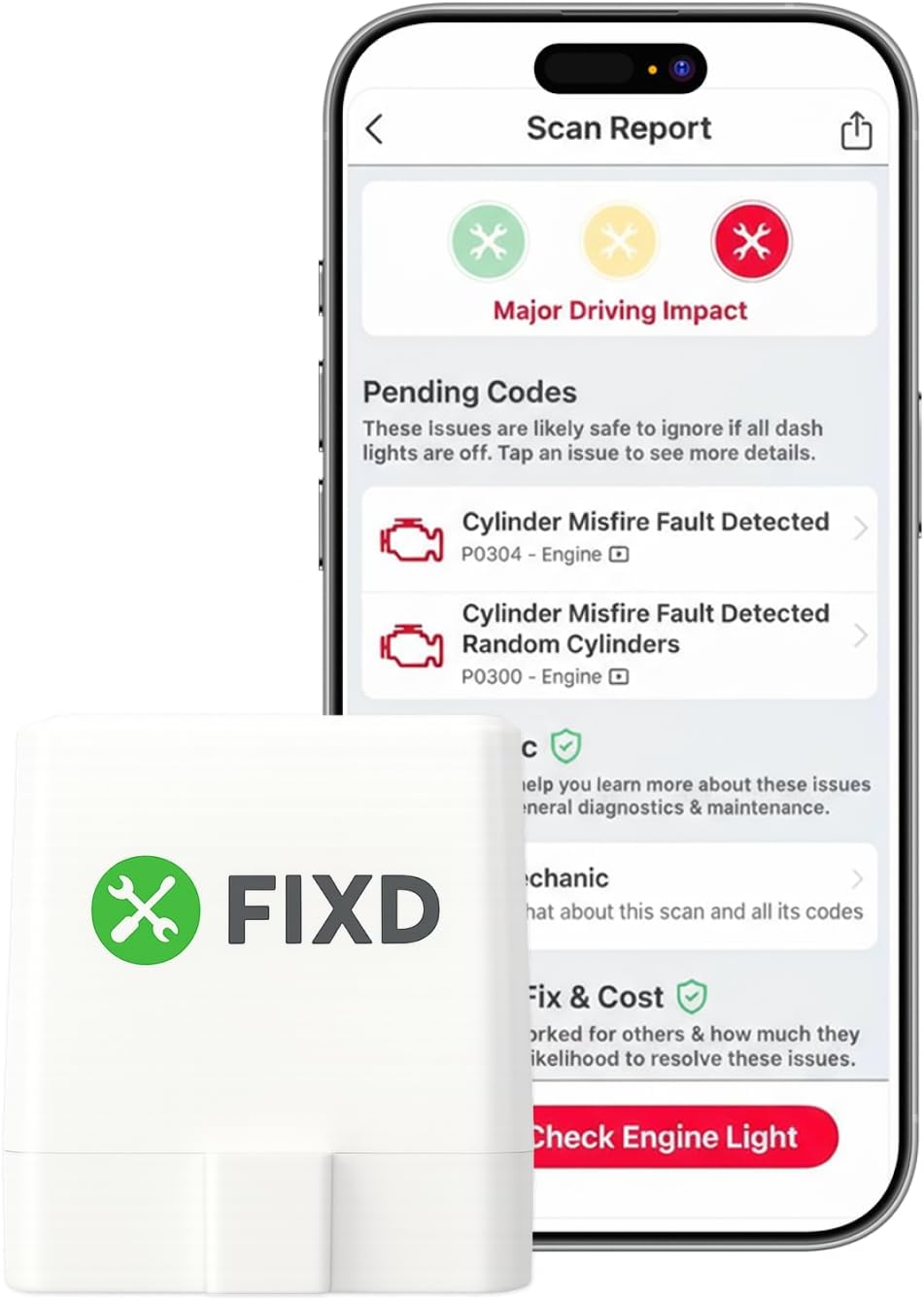
Best Bluetooth OBD2 Scanner
Detect 39,000+ Issues With Enhanced Codes. Save $1000s on car repairs & buying used vehicles by diagnosing problems yourself.
Shop on Amazon
Key Takeaways
- Ford F-150 transmission problems primarily affect the 6R80 six-speed (lead frame cracking, sudden downshifts) and 10R80 ten-speed (harsh shifting, CDF drum bushing migration), with thousands of NHTSA complaints logged against both units.
- The 6R80 recall 18S29 addressed transmission range sensor defects in 1.48 million 2011–2013 F-150s; verify your truck’s recall completion via Ford’s recall lookup page to avoid rollaway risk.
- Distinguish between normal adaptive learning and genuine mechanical failure—if a software reflash doesn’t resolve shuddering or harsh shifts within 500 miles, push for a deeper mechanical inspection from your dealer.
- Change your F-150 transmission fluid every 30,000–50,000 miles with the correct Mercon specification and maintain fluid temperatures below 220°F; add an auxiliary cooler if you tow regularly to prevent CDF drum bushing failure.
- Use FORScan diagnostic software to access dealer-level transmission data (clutch apply pressures, solenoid duty cycles) and identify specific failure codes like P0741 or P0751 before committing to costly rebuilds or replacements.
- A targeted valve body or lead frame replacement is more cost-effective than a full rebuild for early-stage failures, but burnt clutch material or a failed torque converter warrants a remanufactured unit with a 3-year warranty.
Ford’s F-150 has been America’s best-selling truck for over four decades, but its transmission track record is far from perfect. The 6R80 six-speed, used from roughly 2009–2020, introduced a wave of lead frame and valve body failures that caught many owners off guard. Then Ford and GM co-developed the 10R80 ten-speed, which debuted in the 2017 F-150 and brought its own set of headaches, harsh shifts, gear hunting, and the now-infamous CDF drum issue.
Your frustration is valid. Dealers frequently dismiss complaints as “normal adaptive learning,” but there’s a clear line between a transmission recalibrating its shift points and one that’s mechanically failing. This article gives you the technical ammunition to tell the difference.
Major Ford F-150 Transmission Recalls and Investigations
2015–2017 Transmission Range Sensor Fault and Unexpected Downshifts
Ford issued recall 18S29 in 2018 affecting approximately 1.48 million 2011–2013 F-150 trucks equipped with the 6R80 transmission. The root cause was a transmission range sensor (TRS) defect that could cause unexpected downshifts or loss of transmission engagement, increasing rollaway risk. If your truck falls into that VIN range, verify recall completion through the Ford recall lookup page.
Separately, 2015–2017 F-150 owners reported sudden, uncommanded downshifts at highway speeds, a terrifying experience at 70 mph. These incidents prompted additional NHTSA complaints and investigations into both the 6R80 and early 10R80 units.
NHTSA and Ford Response to Transmission Defects
NHTSA’s Office of Defects Investigation (ODI) has logged thousands of complaints related to F-150 transmission behavior. Ford’s response has been a mix of TSBs (Technical Service Bulletins) and software recalibrations rather than hardware recalls for the 10R80. TSB 19-2062, for instance, addressed harsh or delayed shifts in 2017–2019 F-150s with PCM reprogramming.
The problem? Software patches don’t fix worn clutch packs or a migrating CDF drum bushing. If your dealer only offers a reflash and your truck still shudders, push for a deeper mechanical inspection.
6R80 and 10-Speed Recall Timelines and Outcomes
Here’s a quick comparison of recall activity across both transmissions:
| Factor | 6R80 (6-Speed) | 10R80 (10-Speed) |
|---|---|---|
| Major Recall | 18S29 (TRS defect) | No full recall as of 2026 |
| Primary TSBs | Lead frame, valve body | Harsh shift recalibration |
| NHTSA Complaints | 2,000+ logged | 3,500+ logged |
| Typical Fix | Hardware replacement | Software reflash first, then hardware |
The 10R80 has generated more complaints overall, yet Ford has avoided a blanket recall by issuing rolling TSB updates. Keep your VIN handy and check NHTSA’s database regularly.
Specific Transmission Issues by Model Generation
6R80 Transmission Sudden Downshift and Lead Frame Failures
The 6R80’s most common catastrophic failure is the internal lead frame, a flexible circuit board that carries electrical signals to the solenoid pack inside the valve body. When this lead frame cracks (and it will, usually between 80,000–120,000 miles), you’ll experience erratic shifting, limp mode, and codes like P0741 (torque converter clutch circuit performance) or P0751.
If you’re seeing Ford F150 6R80 lead frame replacement symptoms, intermittent harsh shifts, flashing OD light, or random gear selection, the lead frame is your prime suspect. Replacement requires dropping the valve body, which is a labor-intensive job but far cheaper than a full rebuild.
10R80 Ten-Speed Transmission Harsh Shifting and Adaptation Issues
The 10R80 uses clutch-to-clutch shifting with no bands, which means every gear change relies on precise hydraulic timing. When the valve body bores wear or the CDF drum bushing migrates out of position, you get that brutal 3-to-5 gear skip, a “bang” into gear, or the transmission hunting between 8th and 10th on the highway.
“My 2019 F-150 felt like it was slamming through gears from day one. Dealer said it was ‘normal learning.’ At 45k miles the valve body was shot.” via r/f150
Resetting F-150 adaptive transmission shift tables (a “quick learn” reset via a scan tool) can temporarily smooth shifts, but it won’t fix mechanical wear. If the problem returns within 500 miles, you’re looking at internal damage.
Transmission Slipping, Delayed Engagement, and Related Symptoms
Delayed engagement, that 1–2 second pause when you shift from Park to Drive, is one of the earliest warning signs. You might also notice the RPMs flare without corresponding acceleration, which indicates clutch pack slippage. On the 10R80, this often traces back to the D-E clutch assembly or the torque converter itself.
Don’t ignore a transmission that “clunks” into drive. That impact you feel is metal-on-metal contact that’s actively damaging planetary components.
Common Causes and Symptoms of Transmission Problems
Transmission Range Sensor and Sensor-Related Malfunctions
The transmission range sensor tells your PCM what gear position the driver has selected. A failing TRS can cause the truck to start in the wrong gear, refuse to shift, or trigger limp mode. On the 6R80, this was a recall-level defect. On the 10R80, internal speed sensors can also degrade, feeding bad data to the TCM and causing erratic shift behavior.
Common diagnostic codes include P0707, P0708, and P0705, all pointing to TRS circuit issues.
Valve Body and Component Failures
The valve body is the hydraulic brain of your transmission. In both the 6R80 and 10R80, bore wear inside the valve body causes pressure drops that result in soft, flared, or harsh shifts. Ford F150 valve body replacement is one of the most common repairs on high-mileage trucks.
Key symptoms of valve body failure:
- Harsh 1-2 or 3-5 shifts
- Transmission “searching” for gears at steady throttle
- Delayed or no reverse engagement
- Intermittent limp mode with no stored hard codes
- Ford F150 transmission shudder at highway speeds (60–70 mph)
Transmission Fluid Contamination and Change Intervals
Ford specifies Mercon ULV for the 10R80 and Mercon LV for the 6R80. Using the wrong fluid will destroy clutch friction material. Your Ford F150 transmission fluid temperature should stay between 175°F and 220°F under normal driving. Sustained temps above 240°F cook the fluid and accelerate wear exponentially.
For high-mileage F150 transmission maintenance, change your fluid every 30,000–50,000 miles, regardless of what the owner’s manual says about “lifetime” fluid. There’s no such thing. If you tow regularly, consider a Ford F150 auxiliary transmission cooler upgrade to keep temps in check.

Diagnosis, Maintenance, and Repair Solutions
Identifying Ford F-150 Transmission Symptoms
Start with a quality scan tool that reads transmission-specific codes and live data. The FORScan OBD2 adapter paired with FORScan software gives you dealer-level access to Ford’s proprietary transmission parameters, clutch apply pressures, solenoid duty cycles, and adaptive shift tables. This is the single best diagnostic investment you can make.

“FORScan showed my TCC slip was at 150 RPM. Dealer’s generic scanner showed nothing. That data got my warranty claim approved.” via F150Forum.com
When troubleshooting F150 transmission limp mode, always check for both hard codes and pending codes. Limp mode with no codes often points to an internal pressure issue, valve body or pump.
Best Practices for Fluid Changes and Preventive Care
Here’s the maintenance schedule I recommend after 20 years of working on these trucks:
- Every 30,000 miles: Drain-and-fill with correct Mercon spec fluid
- Every 60,000 miles: Drop the pan, replace the filter, and inspect for metallic debris
- Every 100,000 miles: Have a transmission specialist check clutch pack clearances and solenoid performance
Never flush a high-mileage F-150 transmission that has never had a fluid change. A full power flush can dislodge debris and cause immediate clutch failure. Drain-and-fill only.
Repair, Rebuild, and Replacement Options
The rebuild-vs-replace decision depends on what’s actually failed. A valve body swap or lead frame replacement is a targeted, lower-cost repair. But if your shop finds burnt clutch material in the pan, scored planetaries, or a failed torque converter, a full rebuild or remanufactured unit makes more sense.
A quality 10R80 rebuild from a reputable shop addresses the CDF drum bushing migration, upgrades the valve body bore sleeves, and replaces all friction material. A remanufactured unit typically comes with a 3-year warranty, which gives you peace of mind.
Expert Note: "The 10R80's CDF drum bushing failure isn't a design flaw per se, it's a tolerance stack issue. When fluid temps consistently exceed 230°F, thermal expansion pushes that bushing just enough to disrupt clutch apply timing. An auxiliary cooler isn't optional if you tow, it's insurance."
Data Insights and Analysis
According to NHTSA complaint data through early 2026, the 10R80 transmission accounts for over 3,500 filed complaints across the 2017–2024 F-150 lineup, with “harsh shifting” and “gear hunting” representing roughly 60% of all submissions. The 6R80, while older, still generates approximately 150–200 new complaints annually, primarily from trucks in the 100,000–150,000 mile range experiencing lead frame and valve body failures.
CarEdge reported in 2025 that Ford F-150 transmission repair remains one of the top three most expensive non-engine repairs for pickup truck owners, with rebuild labor alone averaging 15–20 hours on the 10R80.
The 10R80 vs 6R80 reliability comparison isn’t straightforward. The 6R80 is a simpler, more predictable unit with well-documented failure points. The 10R80 delivers better fuel economy and smoother cruising, when it’s working correctly, but its complexity means more potential failure modes.
Frequently Asked Questions
What are the most common Ford F-150 transmission problems?
The 6R80 six-speed suffers from lead frame cracking and sudden downshifts, while the 10R80 ten-speed experiences harsh adaptive shifting, CDF drum bushing migration, and torque converter shudder. Both transmissions are prone to valve body failures and sensor malfunctions at higher mileages.
How often should I change my Ford F-150 transmission fluid?
Change transmission fluid every 30,000–50,000 miles regardless of “lifetime fluid” claims. Ford specifies Mercon ULV for the 10R80 and Mercon LV for the 6R80. For towing, consider adding an auxiliary cooler to maintain optimal temperatures between 175°F–220°F.
What does delayed transmission engagement in an F-150 mean?
A 1–2 second pause when shifting from Park to Drive indicates early clutch pack slippage or torque converter issues. If accompanied by RPM flare without acceleration, this suggests internal wear. Address this symptom immediately—clunking into gear causes progressive damage to planetary components.
Is Ford F-150 transmission harsh shifting normal during adaptive learning?
No. While mild adaptation occurs, genuine harsh shifts and gear skipping indicate mechanical failure, not learning behavior. A temporary reset via scan tool might smooth shifts temporarily, but if problems return within 500 miles, internal damage exists and requires mechanical inspection.
What is recall 18S29 for Ford F-150 transmissions?
Recall 18S29 (2018) affected 1.48 million 2011–2013 F-150s with the 6R80 transmission due to transmission range sensor defects causing unexpected downshifts and rollaway risk. Verify completion through Ford’s recall lookup page if your truck falls within that VIN range.
Should I rebuild or replace my Ford F-150 transmission?
Choose rebuild for targeted repairs like valve body swaps or lead frame replacement. If diagnostic inspection reveals burnt clutch material, scored planetaries, or failed torque converter, a remanufactured unit (typically 3-year warranty) is more cost-effective than full rebuild labor on complex 10R80 transmissions.
Sources:
- NHTSA Recalls & Complaints Database
- Ford Owner Recall Information
- r/f150, Reddit Community
- F150Forum.com, Transmission Discussion
- FORScan, Ford Diagnostic Software
Read More:
- Ford Explorer Transmission Problems Every Owner Should Know
- Ford Transmission Problems (Symptoms, Recalls, and What to Do)
- Ford Edge Transmission Problems (How to Diagnose Failures)