
Your GMC Canyon’s check engine light just turned on. You’re wondering whether it’s safe to drive, what caused it, and how much the repair will cost.
Your GMC Canyon check engine light signals detected faults in the emission control system, engine sensors, or powertrain components, stored as diagnostic trouble codes (DTCs) that require an OBD-II scanner to read and pinpoint the specific failure area before you can decide on safe operation or necessary repairs.
This guide walks you through the most common Canyon check engine triggers, oxygen sensors, gas cap leaks, catalytic converters, and MAF sensor failures, then shows you how to read codes, assess severity, and take next steps. Whether you’re driving a 3.6L V6, 2.5L four-cylinder, 2.7L turbo, or 2.8L Duramax diesel, you’ll find practical troubleshooting steps to restore smooth operation.
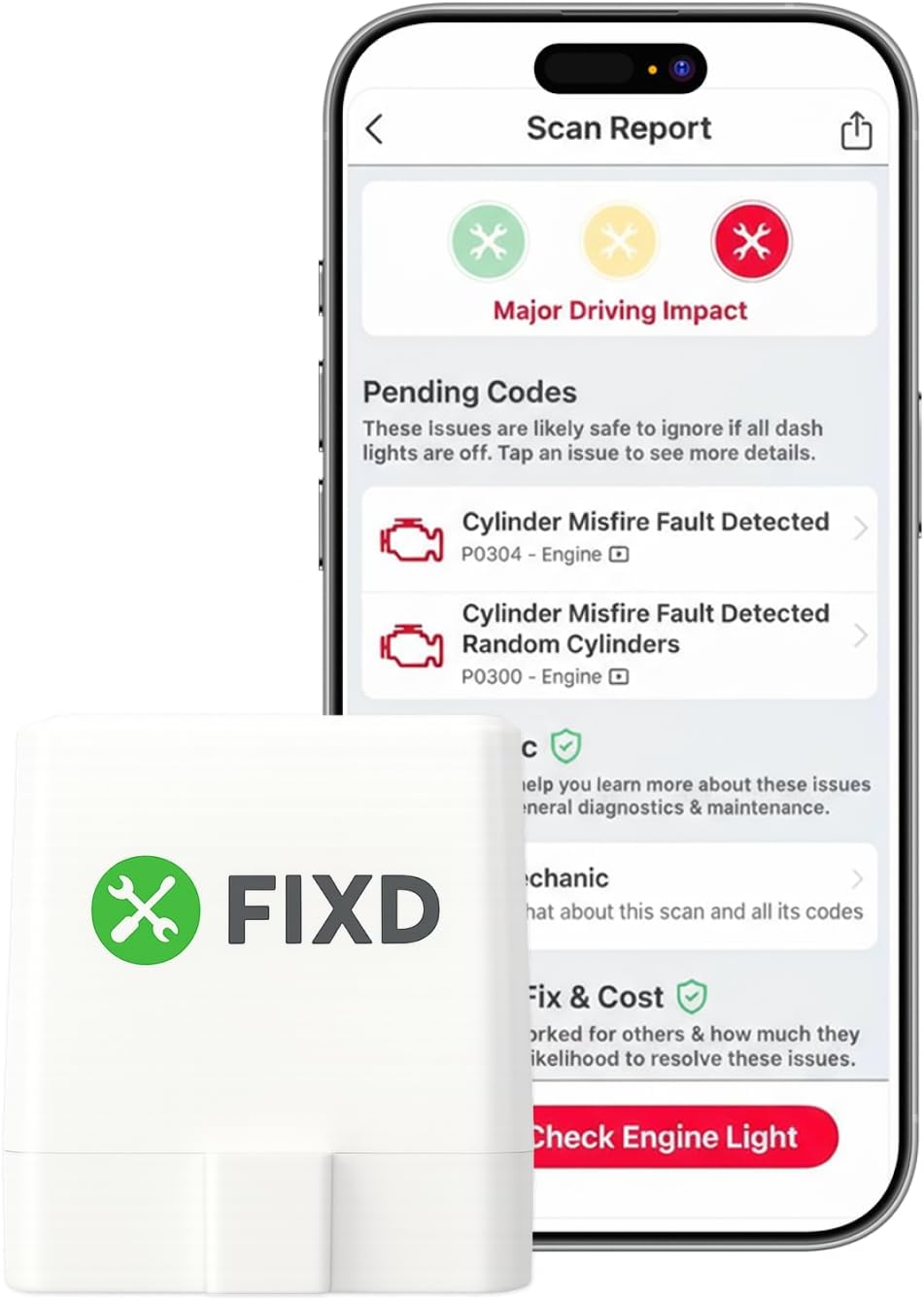
Best Bluetooth OBD2 Scanner
Detect 39,000+ Issues With Enhanced Codes. Save $1000s on car repairs & buying used vehicles by diagnosing problems yourself.
Shop on Amazon
Key Takeaways
- A GMC Canyon check engine light signals faults detected in the emission control system or engine sensors via diagnostic trouble codes (DTCs) that require an OBD-II scanner to read and pinpoint the specific problem.
- The five most common GMC Canyon check engine triggers are loose gas caps ($10–$30 fix), oxygen sensor failures ($150–$400), MAF sensor problems ($80–$200), catalytic converter issues ($800–$2,500), and thermostat malfunctions ($150–$300).
- A steady check engine light allows safe driving to a diagnostic facility, but a flashing light indicates active cylinder misfire and demands immediate shutdown to prevent catalytic converter destruction.
- Invest in your own OBD-II scanner (under $100) to retrieve diagnostic codes yourself rather than relying on dealerships, and always repair the underlying fault before clearing codes to avoid masking recurring issues.
- Year-specific Canyon issues include P0128 thermostat codes on 2015–2016 models, EVAP purge valve failures on 2017–2020 models, and P0299 turbo underboost codes on 2021–2023 models after cold starts in freezing weather.
Check Engine Light Meaning
Your GMC Canyon’s check engine light, officially called the malfunction indicator lamp (MIL), activates when the onboard diagnostics system (OBD-II) detects a problem affecting emissions, fuel efficiency, or engine performance. The system stores a diagnostic trouble code (DTC) in the engine control module (ECM), which you can retrieve using an OBD-II scanner.
A steady amber light indicates a non-critical fault you should address soon. A flashing check engine light signals an active cylinder misfire or severe condition that can damage the catalytic converter, pull over safely and investigate immediately.
The Canyon’s ECM monitors dozens of sensors: oxygen sensors, mass airflow sensors, throttle position sensors, coolant temperature sensors, and knock sensors. When readings fall outside programmed parameters, the ECM logs a code and illuminates the dashboard warning. Some faults trigger reduced engine power mode, limiting throttle response to protect components.
Common Check Engine Causes
Oxygen Sensor Failure
Oxygen sensors measure exhaust gas composition to fine-tune air-fuel ratio. Canyon models use upstream (pre-catalytic converter) and downstream sensors on each bank. Sensor contamination from oil consumption, coolant leaks, or aged fuel triggers codes P0131, P0135, P0151, or P0155.
You’ll notice reduced fuel economy, sometimes two to three MPG, and sluggish throttle response. The 3.6L V6 Canyon often sees Bank 1 Sensor 1 failures around 80,000 miles. Duramax diesel models throw O2 sensor codes less frequently but suffer from soot buildup in diesel particulate filter (DPF) regeneration cycles that confuse sensor readings.
Replacement requires a 22mm oxygen sensor socket and penetrating oil. Heat the bung with a propane torch if the sensor seized. Always use OEM-spec sensors, cheap aftermarket units produce voltage drift and re-trigger the light within weeks.
Loose or Faulty Gas Cap
The evaporative emission (EVAP) system prevents fuel vapors from escaping the tank. A loose, cracked, or missing gas cap allows vapor leaks, triggering codes P0455 (large leak) or P0457 (loose cap). This ranks as the cheapest fix but causes real emissions test failures.
“My 2018 Canyon threw P0455 three times before I realized the rubber seal on my gas cap had torn. Replaced it for $12 and cleared the code.” via GMC-Trucks.com
Inspect the cap’s rubber seal for cracks. Tighten until you hear three clicks. If the code returns, check the filler neck for rust damage or the EVAP canister purge valve for carbon buildup.
Catalytic Converter Issues
Catalytic converters use precious metals to convert hydrocarbons, carbon monoxide, and nitrogen oxides into harmless gases. Prolonged misfires, oil consumption, or coolant ingestion poison the catalyst, reducing efficiency below the ECM’s threshold. You’ll see codes P0420 (Bank 1) or P0430 (Bank 2).
Symptoms include rotten egg smell, reduced power on grades, and failing emissions tests. The 2.5L four-cylinder Canyon shows converter inefficiency around 100,000 miles: the 3.6L V6 lasts longer but fails faster after ignored misfire codes.
Confirm converter failure with an infrared thermometer: measure inlet and outlet temperatures during a test drive. A healthy converter runs 50–100°F hotter at the outlet. Replace both upstream oxygen sensor and converter together to avoid repeat failures.
Mass Airflow Sensor Problems
The MAF sensor measures incoming air mass so the ECM can calculate proper fuel delivery. Dirt, oil residue from over-oiled aftermarket air filters, or failed hot-wire elements trigger codes P0101, P0102, or P0103. Your Canyon will idle rough, hesitate during acceleration, and consume excess fuel.
Remove the sensor (two Torx screws on most Canyon models) and inspect the hot-wire element. Clean it with dedicated MAF sensor cleaner, never carburetor cleaner, which damages the element. Let it air-dry completely before reinstallation.

The 2.7L turbo Canyon shows higher MAF failure rates due to increased airflow velocity stressing the sensor. Always use OEM or high-quality aftermarket filters to prevent contamination.
Reading Trouble Codes
Diagnostic trouble codes translate sensor faults into standardized five-character codes. Locate the OBD-II port under your Canyon’s dashboard, left of the steering column. Plug in a code reader, entry-level models like the BlueDriver Bluetooth scanner cost under $100 and pair with your smartphone.
Turn the ignition to ON (engine off) and launch the scanner app. Select “Read Codes” to retrieve stored DTCs. Write down all codes and their definitions. Pay attention to “pending” codes, faults detected once but not yet confirmed, and “permanent” codes that remain until the ECM verifies the repair through multiple drive cycles.
Common Canyon codes include:
- P0128: Coolant thermostat malfunction (very common on 3.6L V6)
- P0300–P0306: Cylinder misfire codes
- P0171/P0174: System too lean (vacuum leak or failing fuel pump)
- P0442: Small EVAP leak
- P0606: ECM processor fault
Cross-reference codes with the GMC service manual or Canyon owner forums. Some codes require live data analysis, monitoring oxygen sensor voltage, fuel trim percentages, or engine coolant temperature in real time, to isolate intermittent faults.
Immediate Action Steps
First, assess light behavior. A steady light allows continued driving to a safe diagnostic location. A flashing light demands immediate shutdown to prevent catalytic converter damage from raw fuel ignition in the exhaust.
Check obvious issues before scanning codes. Tighten the gas cap and listen for the click. Inspect visible vacuum hoses for cracks or disconnections. Look under the hood for loose electrical connectors on the intake manifold or throttle body.
Scan the code as soon as possible. Many auto parts stores offer free code reading, but invest in your own scanner for ongoing Canyon ownership. Clear the code only after verifying and repairing the fault, erasing codes without fixing the problem wastes diagnostic time and masks patterns.
Monitor performance changes. Does the truck idle rough, hesitate during acceleration, or lose power? Document symptoms before the repair shop visit. Take note of recent maintenance, new air filter, fuel fill-up, or aftermarket modifications, that might correlate with the warning light.
Year-Specific Canyon Issues
2015–2016 models with the 3.6L V6 suffer frequent P0128 thermostat codes due to sticking thermostats that fail to reach 195°F operating temperature. GMC issued a technical service bulletin (TSB 15-06-04-002) addressing this. Expect thermostat housing and coolant temp sensor replacement together.
2017–2020 Canyons show increased EVAP purge valve failures, especially in humid climates. The valve’s internal diaphragm tears, causing P0496 (purge flow high). The valve mounts on the intake manifold: replacement takes 20 minutes.
2021–2023 models with the 2.7L turbo engine occasionally throw P0299 (turbo underboost) after cold starts in freezing weather. This results from slow turbo oil circulation: the code often clears after the engine warms. Persistent codes indicate wastegate actuator failure or boost leak.
“My 2022 Canyon Denali threw P0299 twice last winter. Dealer found a cracked intercooler hose clamp letting boost escape.” via ColoradoFans.com
2024–2026 Canyon models with the updated 2.7L turbo show improved sensor reliability but share the same EVAP system vulnerabilities. Duramax diesel Canyons across all years experience DPF regeneration-related codes (P2463) if driven primarily in short trips under 10 miles.
Driving With Light On
You can drive with a steady check engine light for short distances to reach a diagnostic facility, but don’t ignore it for weeks. Prolonged operation with sensor faults accelerates catalytic converter failure, increases fuel consumption, and may cause secondary damage to ignition components.
Never drive with a flashing check engine light. This indicates active cylinder misfire, unburned fuel entering the exhaust will overheat and destroy the catalytic converter within minutes. Pull over, shut down, and arrange towing.
Some codes trigger reduced engine power mode (colloquially called “limp mode”). The ECM limits throttle opening to 20–30%, preventing highway speeds. This protective measure activates with throttle body faults, severe misfires, or transmission errors. You can creep to a shop but can’t merge safely on highways.
Monitor your Canyon’s behavior. If the light stays steady and performance remains normal, you have time to research the code and schedule repairs. If you notice rough idle, stumbling acceleration, or unusual smells, prioritize immediate diagnosis.
Repair Cost Expectations
Gas cap replacement costs $10–$30 if you source it yourself. Dealerships charge $40–$60 for OEM caps.
Oxygen sensor replacement runs $150–$300 per sensor at independent shops, $250–$400 at dealerships. The 3.6L V6 uses four sensors: prioritize the failed unit first.
MAF sensor cleaning costs nothing if you DIY with $8 cleaner. Replacement sensors run $80–$200 depending on whether you choose OEM or quality aftermarket.
Ignition coil replacement (common on higher-mileage 3.6L engines) costs $80–$150 per coil plus one hour labor. Replace all six coils simultaneously on V6 engines past 100,000 miles to avoid repeat service calls.
Catalytic converter replacement represents the most expensive common repair: $800–$1,600 for aftermarket units, $1,200–$2,500 for OEM converters with labor. California-legal converters add $200–$400.
Thermostat housing assembly (P0128 fix) costs $150–$300 including coolant and labor. This frequently affects 2015–2017 Canyon V6 models.
Resetting the Light
Never reset the check engine light before identifying and repairing the fault. Clearing codes erases valuable diagnostic data, freeze frame snapshots showing engine conditions when the fault occurred, and prevents pattern recognition for intermittent problems.
After completing repairs, use your OBD-II scanner to clear codes. Navigate to “Clear Codes” or “Erase DTCs” in the menu. Confirm the action. The check engine light should extinguish immediately.
Drive the Canyon through a complete drive cycle to verify the repair. The ECM runs self-tests under specific conditions: cold start, idle for two minutes, steady 45 mph cruise, deceleration, and another idle period. If the fault persists, the light returns within 10–50 miles.
Disconnecting the battery clears codes but also erases radio presets, seat memory, and adaptive transmission learning. This method offers no advantage over proper code clearing and creates additional inconvenience. Some Canyon models require throttle body relearning procedures after battery disconnection.
If the light returns immediately after clearing, you have a persistent hard fault or incomplete repair. Re-scan for codes and verify your work. Intermittent codes that return every few weeks indicate marginal components or environmental triggers like extreme temperature swings affecting sensor operation.
Frequently Asked Questions
What does the GMC Canyon check engine light mean?
The check engine light (malfunction indicator lamp) activates when the OBD-II system detects faults in emissions, engine sensors, or powertrain components. A steady amber light indicates a non-critical fault to address soon. A flashing light signals active cylinder misfire requiring immediate shutdown to prevent catalytic converter damage.
What are the most common causes of a GMC Canyon check engine light?
Common triggers include oxygen sensor failure (codes P0131–P0155), loose or faulty gas caps (P0455–P0457), catalytic converter issues (P0420–P0430), mass airflow sensor problems (P0101–P0103), and thermostat malfunctions (P0128), particularly on 2015–2017 models with the 3.6L V6 engine.
How do I read diagnostic trouble codes on my GMC Canyon?
Locate the OBD-II port under the dashboard left of the steering column. Plug in a code reader or smartphone-enabled scanner (under $100 for entry-level models). Turn ignition to ON, select ‘Read Codes,’ and note all stored and pending DTCs. Cross-reference codes with the owner’s manual or Canyon forums to identify the specific fault.
Is it safe to drive my GMC Canyon with the check engine light on?
A steady check engine light allows driving to a diagnostic facility, but don’t ignore it for weeks as it accelerates catalytic converter failure and increases fuel consumption. Never drive with a flashing light—pull over immediately and arrange towing. Some faults trigger ‘limp mode,’ limiting throttle to 20–30% and preventing highway speeds.
How much does it cost to fix a GMC Canyon check engine light?
Costs vary: gas caps ($10–$60), oxygen sensors ($150–$400 each), MAF sensor replacement ($80–$200), ignition coils ($80–$150 per coil), thermostat housing ($150–$300), and catalytic converters ($800–$2,500). Diagnosis at dealerships typically costs $100–$150, while many auto parts stores offer free code reading.
Why does my 2022 GMC Canyon throw a P0299 code in cold weather?
P0299 (turbo underboost) on 2021–2023 models with the 2.7L turbo engine results from slow turbo oil circulation during cold starts. The code often clears after the engine warms. Persistent codes indicate a cracked intercooler hose or wastegate actuator failure that requires immediate inspection and repair.
Read More:
- GMC Check Engine Light Reset (Here’s the Proven Methods)
- GMC Check Engine Light Flashing Then Stops (Critical Diagnostic Guide)