
You climb into your Civic, Accord, or CR-V, turn the key, and there it is: the dreaded amber glow on your dashboard. Your Honda check engine light has appeared out of nowhere, and now you’re wondering if it’s a $20 gas cap fix or a $2,000 engine disaster.
The Honda check engine light activates when the on-board diagnostics (OBD-II) system detects a fault in the engine, emissions, or drivetrain components, ranging from a loose fuel cap (EVAP leak codes P0455/P1457) to failing oxygen sensors, ignition misfires, VTEC oil pressure faults (P1259/P2646), catalytic converter inefficiency (P0420), or MAF sensor contamination (P0171). A steady light permits cautious driving to a service point, but a flashing light signals active misfires that can destroy the catalytic converter and requires immediate shutdown.
This guide walks you through the exact checks a Honda diagnostic specialist performs in the shop, so you can assess danger, pull codes with an OBD-II scanner, and decide whether to fix it yourself or visit a qualified mechanic.
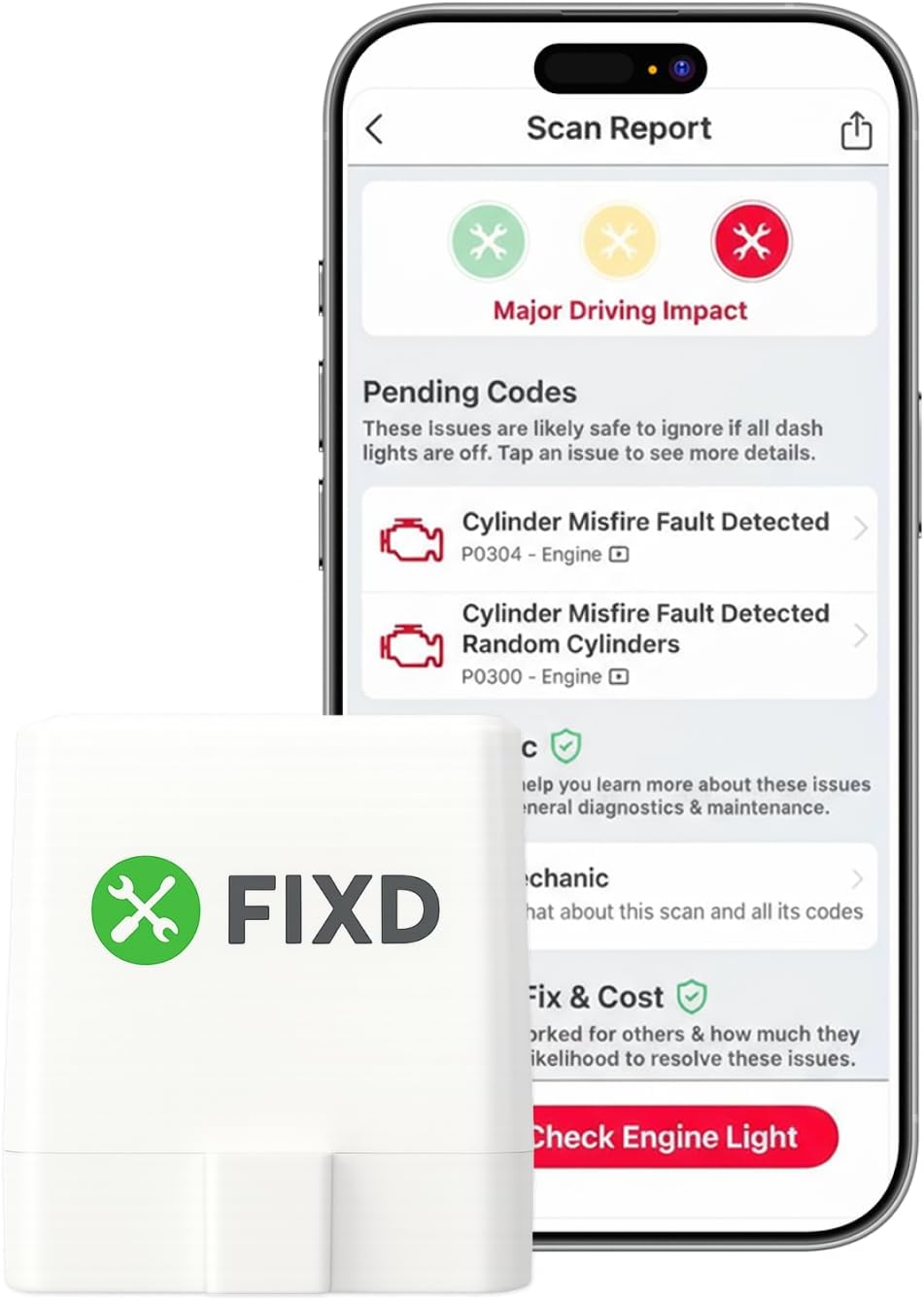
Best Bluetooth OBD2 Scanner
Detect 39,000+ Issues With Enhanced Codes. Save $1000s on car repairs & buying used vehicles by diagnosing problems yourself.
Shop on Amazon
Key Takeaways
- A steady Honda check engine light allows safe driving to a repair facility, but a flashing light signals active misfires and requires immediate shutdown to prevent catalytic converter damage.
- Always scan and record OBD-II diagnostic trouble codes before clearing them, as this preserves freeze-frame data critical for accurate diagnosis and prevents mechanics from wasting time on guesswork.
- The most common Honda check engine light triggers include loose fuel caps (P0455), oxygen sensor drift (P0171), misfire codes (P0300–P0306), and VTEC oil pressure faults (P1259/P2646) that often resolve with simple oil or screen cleaning.
- Regular maintenance—oil changes every 5,000 miles, air filter replacement every 15,000–30,000 miles, and 60,000–100,000 mile spark plug service—prevents most check engine light codes from appearing.
- A diagnostic trouble code identifies the faulty system but not always the broken part; for example, P0171 lean codes can stem from a dirty MAF sensor, vacuum leak, or cracked intake boot, requiring freeze-frame data and visual inspection to confirm the root cause.
What the Warning Light Is Telling You
Steady vs. Flashing Light
A steady yellow check engine light means the OBD-II system logged a fault code but hasn’t detected an active, severe condition. You can drive carefully to a repair facility, avoid highway merges, towing, or aggressive acceleration. A flashing light, but, signals active cylinder misfires (codes P0300–P0306) that pump raw fuel into the exhaust, overheat the catalytic converter, and risk immediate damage. Pull over, shut down, and arrange a tow.
When It Is Safe to Drive and When to Stop
With a solid light and normal engine behavior, no smoke, no rough idle, no loss of power, you may continue to an auto parts store or service center within five to ten miles. If you notice severe vibration, overheating, loss of oil pressure, or the engine enters limp mode (reduced throttle response), stop immediately. Driving in limp mode protects internal components but confirms the ECU has limited power to prevent further damage.
Symptoms That Require Immediate Attention
Watch for white or blue smoke from the tailpipe (coolant or oil burning), a strong sulfur or rotten-egg smell (catalyst overheating), oil-pressure warning lights, or coolant-temperature spikes. These symptoms override the check engine light severity and demand an immediate shutdown. A flashing light combined with any of these issues guarantees expensive repairs if you keep rolling.
First Steps to Take Before Booking Service
Check the Fuel Cap and EVAP Seal
The simplest culprit: a loose, cracked, or missing fuel cap. Honda EVAP systems monitor vapor-seal integrity: even a quarter-turn loose cap triggers P0455 (large leak) or P1457 (EVAP canister leak). Remove the cap, inspect the rubber O-ring for cracks or dirt, clean it, and twist until you hear three clicks. Drive through two to three complete warm-up cycles (cold start to full operating temperature). If the fault was minor, the light clears automatically.
Scan and Record the Trouble Codes
Before you reset anything, plug in an OBD-II scanner, a basic Bluetooth adapter paired with a smartphone app costs under $50 and retrieves live DTCs. Write down all “P” codes (powertrain), freeze-frame data (RPM, load, coolant temp at fault occurrence), and pending codes. This snapshot tells you and your mechanic exactly what triggered the light, preventing unnecessary part-swapping guesswork.

“Had a P0420 pop up on my ’18 Accord. Gas cap was fine, but scanner showed cat efficiency below threshold. Replaced the downstream O2 sensor, light stayed off for 300 miles.” via r/Honda
Avoid Clearing Codes Before Diagnosis
Many drivers disconnect the battery or use the scanner’s “clear codes” function before recording data. This erases freeze-frame snapshots and pending faults, forcing the mechanic to wait for the code to reappear, or worse, masking an intermittent fault that only shows under specific conditions (cold start, highway speed, high load). Always document codes first, then clear only after confirming the repair.
Common Causes and Their Warning Signs
Air-Fuel and Sensor Faults
Oxygen sensors (upstream and downstream) monitor exhaust gas composition: when they drift out of range, the ECU can’t trim fuel delivery correctly. You’ll see codes P0131–P0138 (O2 sensor circuit/range) or P0171 (system too lean), often paired with hesitation, poor fuel economy, or rough idle. A dirty mass airflow sensor (MAF) also leans the mixture, triggering P0101 or P0171. Clean the MAF element with approved electronics cleaner, never touch the hot-wire element with your fingers.

Misfires and Ignition Problems
Codes P0300 (random misfire), P0301–P0306 (cylinder-specific), or P1399 (random misfire) point to fouled spark plugs, failing ignition coils, or low compression. Symptoms include rough idle, vibration at stop lights, and the dreaded flashing check engine light.
Inspect plugs for oil fouling (worn valve seals), carbon buildup (rich fuel mixture), or electrode erosion. Coils can crack internally and arc under load: swap suspect coils between cylinders and re-scan, if the code follows the coil, replace it.
Emissions and Exhaust Faults
P0420 and P0430 (catalyst efficiency below threshold) are the most common long-term Honda codes. The downstream O2 sensor mirrors the upstream reading when the catalyst can’t convert enough hydrocarbons, CO, and NOx. Before replacing a $1,200 catalytic converter, verify upstream O2 sensors, exhaust leaks ahead of the cat, and proper fuel trim. A failing cat also emits a sulfur smell and reduces power under load.
Fuel, Vacuum, and EGR Problems
P1457 (EVAP canister leak), P2646 (VTEC oil pressure switch fault), and P0401 (EGR insufficient flow) often appear on higher-mileage Hondas. The VTEC code can stem from low engine oil, a clogged oil-pressure screen, or a failed solenoid. Check your dipstick, VTEC systems need clean, full oil to operate. EGR codes usually mean carbon buildup in the valve or passages: cleaning the EGR valve and intake ports restores flow and clears the code.
Understanding Codes, Repairs, and Prevention
Common Honda DTCs and What They Indicate
| Code | System | Typical Cause | Severity |
|---|---|---|---|
| P0455 | EVAP | Loose or missing gas cap | Low |
| P0420 | Catalyst | Converter efficiency low, O2 sensor drift | Medium |
| P0300 | Ignition | Random misfire, plugs, coils, compression | High (flashing) |
| P1259 | VTEC | Low oil pressure, clogged screen, solenoid | Medium |
| P0171 | Fuel/Air | System too lean, MAF, vacuum leak, injector | Medium |
| P2646 | VTEC | Oil pressure switch circuit fault | Medium |
Why a Code Does Not Automatically Identify the Failed Part
A code tells you which sensor or system reported a fault, not always which component broke. P0171 (lean) could be a dirty MAF, a vacuum leak at the intake manifold gasket, a failing fuel pump, or even a cracked air intake tube. P0420 might be the catalyst, but it could also be an upstream O2 sensor sending bad data or an exhaust leak skewing readings. Use freeze-frame data, live sensor graphs, and visual inspection to confirm the root cause before ordering parts.
“Got P0171 on my CR-V. Replaced MAF, no change. Found a tiny crack in the intake boot between the airbox and throttle body. $12 part, light cleared immediately.” via r/MechanicAdvice
When to See a Honda Service Center or Qualified Mechanic
If you see multiple codes, intermittent faults that won’t stay logged, or symptoms like hard starts and stalling, a professional scan tool and oscilloscope diagnosis may be necessary. Honda dealers have access to the Honda Diagnostic System (HDS), which reads manufacturer-specific codes, performs bi-directional controls (command VTEC solenoids, EVAP purge valves), and runs active tests. Independent shops equipped with advanced scanners and Honda training can perform the same diagnostics at lower labor rates.
Maintenance That Helps Prevent Repeat Warnings
- Oil changes every 5,000 miles (or per Maintenance Minder) keep VTEC solenoids and screens clean.
- Air filter replacement every 15,000–30,000 miles prevents MAF contamination.
- Spark plug service every 60,000–100,000 miles (iridium) stops misfire codes.
- Fuel system cleaning with Top Tier gasoline and periodic injector cleaner reduces carbon buildup.
- Inspect vacuum hoses and intake boots annually for cracks that cause lean codes.
Expert Note: According to Honda service bulletins, VTEC oil-pressure codes (P1259/P2646) on higher-mileage K-series and L-series engines often trace to metal debris clogging the oil-pressure switch filter screen, not a failed solenoid. Removing the screen, cleaning it with brake cleaner, and refilling with fresh 0W-20 oil resolves the fault without parts replacement. This simple procedure can save $300–$500 in unnecessary solenoid or switch swaps.
Frequently Asked Questions
What does a steady Honda check engine light mean, and is it safe to drive?
A steady check engine light indicates the OBD-II system logged a fault code but hasn’t detected an active severe condition. You can drive cautiously to a service center within 5–10 miles, avoiding highway merges and aggressive acceleration. Stop immediately if you notice severe vibration, overheating, or loss of power.
What’s the difference between a steady and flashing Honda check engine light?
A steady light permits careful driving to a repair facility; a flashing light signals active cylinder misfires (codes P0300–P0306) pumping raw fuel into the exhaust and overheating the catalytic converter. Pull over immediately and arrange a tow—continued driving risks severe engine damage.
Can a loose gas cap trigger the Honda check engine light?
Yes, a loose, cracked, or missing fuel cap is the simplest culprit. Honda EVAP systems monitor vapor-seal integrity: even a slightly loose cap triggers P0455 (large leak) or P1457 (canister leak). Clean the cap’s O-ring, tighten until three clicks, and drive through 2–3 warm-up cycles to clear the light.
What does the P0420 code mean on a Honda, and should I replace the catalytic converter?
P0420 indicates catalyst efficiency below threshold—typically caused by a failing downstream O2 sensor, exhaust leak, or inefficient converter. Before replacing the $1,200+ catalytic converter, verify upstream O2 sensors, check for exhaust leaks, and confirm proper fuel trim with a professional scan.
How much does it cost to fix a Honda check engine light issue?
Costs range from $0 (fuel cap tightening) to $2,000+ depending on the fault. Common repairs: O2 sensor ($150–$400), spark plugs ($100–$300), ignition coil ($100–$250), catalytic converter ($800–$2,000), or VTEC solenoid ($200–$500). Accurate diagnosis via OBD-II scanning prevents unnecessary part replacements.
Why should I avoid clearing check engine codes before a mechanic diagnosis?
Clearing codes erases freeze-frame data (RPM, load, coolant temp at fault occurrence) and pending faults, preventing mechanics from diagnosing intermittent issues. Always document codes first with an OBD-II scanner, then clear only after confirming the repair to ensure accurate troubleshooting and avoid masking root causes.