
When your check engine light starts flashing while you’re driving, your heart probably drops. That rapid blinking isn’t the same as a steady glow, it’s your car screaming for help.
A blinking check engine light means your engine is experiencing an active, severe misfire right now. Raw, unburned fuel is dumping into your exhaust system, where it can overheat and permanently destroy your catalytic converter, a repair that can easily cost $1,500 to $3,000. This is not a “check it when you get home” warning. It’s an emergency signal that demands immediate action to prevent catastrophic damage to your engine and emissions system.
This guide will walk you through exactly what’s happening under your hood, the most common causes of a flashing CEL, and the critical steps you need to take right now to protect your vehicle and your wallet.
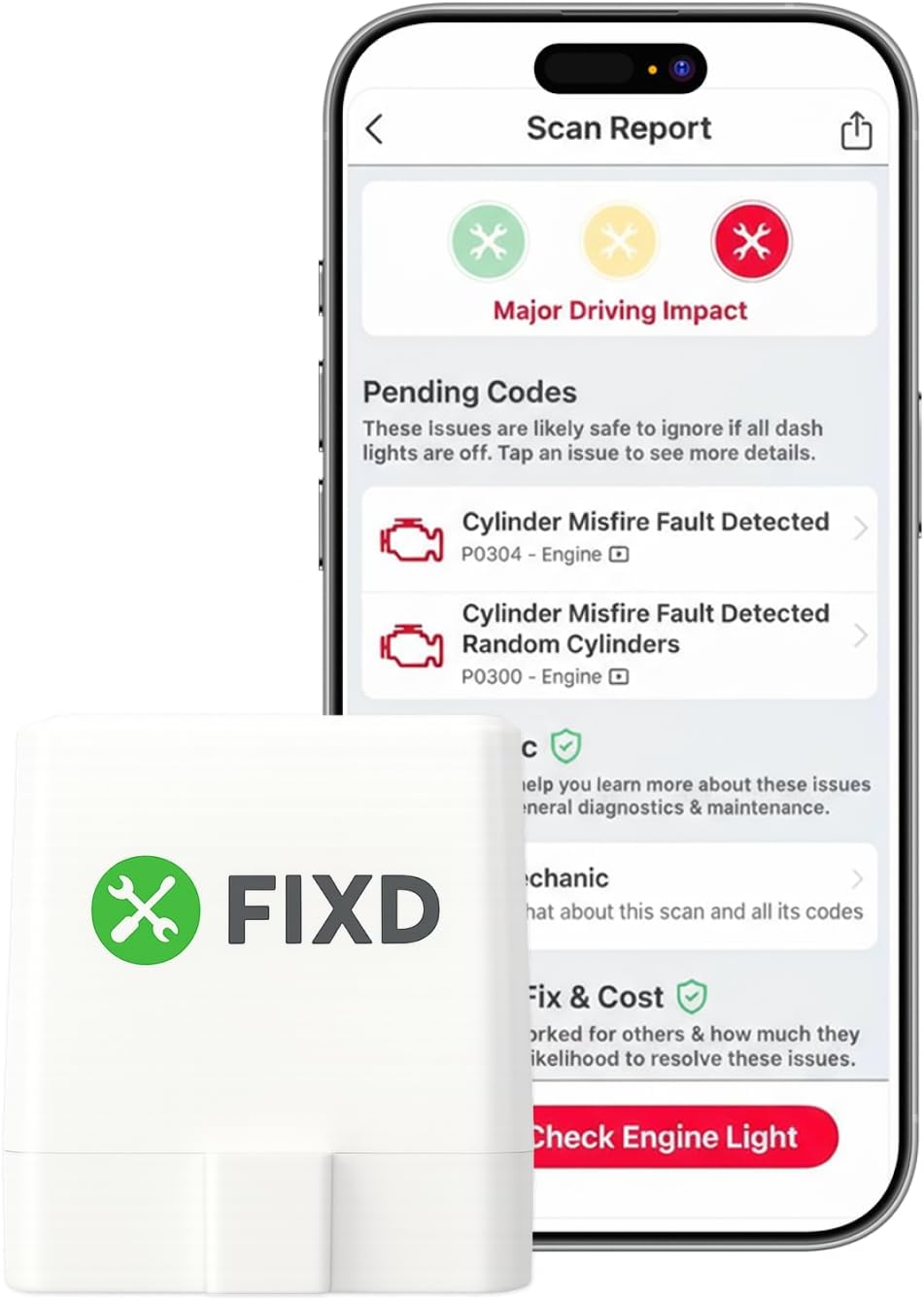
Best Bluetooth OBD2 Scanner
Detect 39,000+ Issues With Enhanced Codes. Save $1000s on car repairs & buying used vehicles by diagnosing problems yourself.
Shop on Amazon
Key Takeaways
- A blinking check engine light signals an active, severe engine misfire and demands immediate action—not a steady glow that can wait until you reach a shop.
- Continuing to drive with a blinking check engine light risks catastrophic catalytic converter damage (costing $1,500–$3,000) from raw fuel igniting in the exhaust at temperatures above 1,400°F.
- The most common causes of a blinking check engine light are ignition system failures (coils and spark plugs, accounting for 38% of repairs), fuel delivery problems, or internal engine issues like worn piston rings or blown head gaskets.
- Pull over immediately, let your engine cool, and use an OBD-II scanner ($20–$50) to retrieve diagnostic trouble codes—starting with simple fixes like spark plug replacement before pursuing expensive major repairs.
- Preventative maintenance including timely spark plug and ignition coil replacement, quality fuel use, and addressing steady check engine lights early can prevent misfires and protect your engine and emissions system.
What a Blinking Check Engine Light Means
Key Differences Between Steady and Flashing Lights
A steady check engine light indicates a stored diagnostic trouble code, something your car’s computer has detected that’s outside normal parameters. It could be a loose gas cap, a failing oxygen sensor, or dozens of other issues. You can usually drive safely to a shop for diagnosis.
A flashing or blinking check engine light is an entirely different animal. According to the Society of Automotive Engineers (SAE) J2012 standard, a blinking malfunction indicator lamp (MIL) specifically warns of active catalyst-damaging misfires. Your engine is missing combustion events in one or more cylinders right now.
When combustion fails, unburned fuel shoots straight into the exhaust. Your catalytic converter isn’t designed to handle raw gasoline, it’s built to process burned exhaust gases. The chemical reaction from unburned fuel can spike converter temperatures above 1,400°F, melting the ceramic honeycomb inside and causing total failure.
Why You Must Act Immediately
Every second you continue driving with a blinking check engine light, you’re gambling with expensive components. The catalytic converter sits directly in your exhaust stream, and it’s already running hot under normal conditions, usually around 800-900°F during highway driving.
When raw fuel enters this superheated environment, it ignites inside the converter itself. This isn’t controlled combustion like in your cylinders. It’s an uncontrolled chemical reaction that generates extreme heat. Within minutes, the substrate inside can begin to degrade. Within a few miles of hard driving, it can melt completely.
“My CEL started flashing on the highway. Kept driving 20 miles home. Next day, car had zero power and sounded like a cement mixer. Converter was completely clogged. $2,400 repair.” via r/MechanicAdvice
Beyond the converter, continued misfires can damage spark plugs, ignition coils, and even crack your exhaust manifold from thermal shock. The longer you ignore the warning, the more systems you put at risk.
Dangers of Ignoring a Blinking Warning
Ignoring a flashing check engine light doesn’t just risk one expensive part, it creates a cascade of failures. A clogged or melted catalytic converter creates massive backpressure in your exhaust system. Your engine has to work harder to push exhaust out, which reduces power, kills fuel economy, and can eventually damage valves and piston rings.
You’ll also fail any emissions inspection. Most states require a functional catalyst to pass inspection and renew your registration. A destroyed converter means you’re off the road until it’s replaced, and aftermarket converters for some vehicles (especially trucks and SUVs) now cost $2,000-$4,000 due to precious metal prices in 2026.
Worse, if the misfire is caused by a mechanical issue like a burnt valve or blown head gasket, continued driving can lead to complete engine failure. Coolant leaking into cylinders can hydraulic-lock your engine. A badly misfiring cylinder can damage the piston and cylinder wall. What started as a $200 spark plug issue can turn into a $6,000 engine rebuild.
Primary Causes of a Blinking Check Engine Light
Engine Misfire and Cylinder Issues
The root cause of nearly every flashing check engine light is an engine misfire, one or more cylinders failing to fire properly. Your OBD-II system monitors crankshaft rotation speed hundreds of times per second. When a cylinder misfires, the crankshaft momentarily slows because that power stroke didn’t happen.
Misfire codes are specific. P0300 indicates a random/multiple cylinder misfire. P0301 through P0308 (or higher on V10/V12 engines) pinpoint the exact cylinder. If you see P0304, cylinder 4 is the problem. If you have multiple codes like P0301 and P0303, cylinders 1 and 3 are both misfiring.
Common mechanical causes include low compression from worn piston rings, a burnt or bent valve, or a blown head gasket allowing coolant or oil into the combustion chamber. These are serious internal engine problems that require professional diagnosis and often major repair.
Ignition System Failures
Ignition system failures are the most common cause of sudden-onset misfires, especially on higher-mileage vehicles. Your ignition coil generates the high-voltage spark (20,000-50,000 volts) needed to ignite the air-fuel mixture. When a coil fails, that cylinder goes dark.
Modern engines use coil-on-plug (COP) designs, one coil per cylinder sitting directly on the spark plug. These coils run hot and eventually break down. On many vehicles, coils start failing around 80,000-120,000 miles. When one goes, others often follow within months.
Spark plugs wear out too. Electrodes erode, gaps widen, and insulators crack. Most manufacturers recommend replacement every 60,000-100,000 miles, but harsh conditions (short trips, low-quality fuel, oil consumption) accelerate wear. A severely fouled or damaged plug simply won’t fire reliably.
For quality replacement coils and plugs, I recommend this Bosch Ignition Coil Set on Amazon, which includes OEM-quality coils engineered to exact specifications for reliable spark delivery.

Fuel System and Delivery Problems
Fuel delivery issues can also trigger severe misfires. If a fuel injector is clogged, stuck closed, or electrically failed, that cylinder receives no fuel. No fuel means no combustion, even if the spark is perfect.
Leaking injectors are equally dangerous. An injector stuck open floods the cylinder with raw fuel, washing oil off the cylinder walls and potentially hydro-locking the engine. You’ll often smell raw gasoline from the exhaust and see black smoke.
Fuel pressure problems affect all cylinders but can cause rough running and intermittent misfires. A failing fuel pump, clogged fuel filter, or bad fuel pressure regulator can starve the engine under load, triggering multiple misfire codes (P0300) along with a flashing light.
Sensor and Emissions Control Faults
While less common, certain sensor failures can cause or contribute to misfires. The crankshaft position sensor and camshaft position sensor tell the engine computer exactly when to fire each cylinder. If these signals are wrong or missing, ignition timing goes haywire and misfires result.
Mass airflow (MAF) sensor contamination or failure can cause the engine to run extremely lean or rich, leading to misfires under certain conditions. Similarly, a malfunctioning EGR (exhaust gas recirculation) valve stuck open can dilute the air-fuel mixture with inert exhaust gases, preventing proper combustion.
Vacuum leaks, cracked hoses, failed intake gaskets, or leaking brake boosters, introduce unmetered air into the engine, leaning out the mixture and causing rough running and misfires, especially at idle.
Diagnosis and Immediate Safety Steps
What to Do When the Light Starts Blinking
The moment your check engine light starts flashing, reduce your speed and avoid hard acceleration. Don’t panic, but don’t ignore it either. If you’re on the highway, safely move to the right lane and find the nearest exit.
Pull over to a safe location, a parking lot, gas station, or wide shoulder, and turn off the engine. Let it sit for a few minutes to cool down. Continuing to drive, especially under load (uphill, towing, high speed), exponentially increases the risk of converter damage.
Check for obvious issues: is the engine shaking violently? Do you smell gasoline? Is there visible smoke? Listen for unusual noises, loud ticking, knocking, or hissing could indicate serious mechanical failure. If the car is undriveable or you suspect major damage, call for a tow. It’s cheaper than a new engine.
“Flashing CEL on my Civic, pulled over immediately. Turned out to be a bad ignition coil. Towed it home, replaced coil myself for $85. Saved my cat converter.” via r/Honda
Using OBD-II Scanners for Trouble Codes
Your first diagnostic tool is an OBD-II scanner. Every car sold in the US since 1996 has an OBD-II port, usually located under the dashboard near the steering column. A basic code reader costs $20-$50 and plugs directly into this port.
With the ignition on (engine off), the scanner retrieves diagnostic trouble codes (DTCs) stored in your car’s computer. You’ll see codes like P0300 (random misfire), P0301 (cylinder 1 misfire), P0351 (ignition coil A primary/secondary circuit), or P0171 (system too lean).
For reliable code reading and live data monitoring, I recommend the ANCEL AD310 OBD-II Scanner on Amazon. It’s affordable, works on all 1996+ vehicles, and clearly displays both codes and their descriptions.
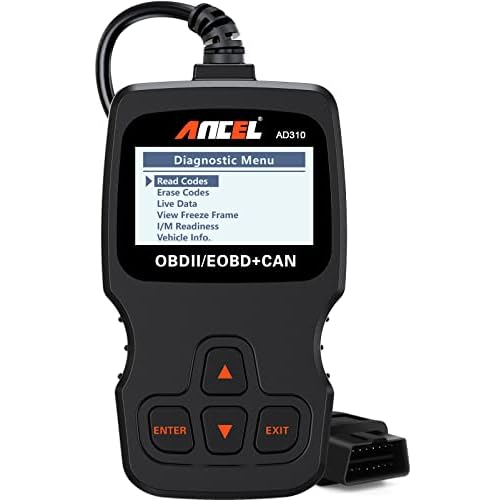
Write down all codes before clearing them. Multiple codes often point to a single root cause, for example, P0301, P0351, and P0401 together might indicate a failed coil on cylinder 1 that’s also affecting emissions readings.
Common Diagnostic Procedures
Once you have the codes, start with the simplest fixes. If you have a specific cylinder misfire code (P030X), pull that spark plug and inspect it. A fouled, oil-soaked, or physically damaged plug is obvious. Replace it and see if the misfire clears.
Swap the ignition coil from the misfiring cylinder with one from a good cylinder. Clear the codes and test drive. If the misfire moves to the other cylinder, you’ve confirmed a bad coil. If it stays on the original cylinder, the problem is deeper, possibly a bad injector, valve issue, or compression problem.
A compression test or leak-down test reveals internal engine problems. Low compression on one cylinder points to worn rings, a burnt valve, or head gasket failure. These tests require special tools but are often available as loaner tools from auto parts stores.
For more detailed troubleshooting, the NAPA Auto Parts misfire diagnosis guide and AA1Car’s engine misfire troubleshooting offer excellent step-by-step procedures.
Effective Fixes and Preventative Maintenance
Common Repairs for Underlying Issues
Spark plug replacement is straightforward on most engines. Use the exact plug type specified in your owner’s manual, don’t “upgrade” to exotic plugs unless you know what you’re doing. Gap them to spec, apply a tiny bit of anti-seize to the threads (but not the electrode end), and torque them properly. Over-tightening can crack the plug or strip threads.
Ignition coil replacement is equally simple on coil-on-plug systems. Disconnect the electrical connector, remove the mounting bolt, pull the old coil, and install the new one. Some techs recommend replacing all coils at once if the car has high mileage, preventing repeated failures.
Fuel injector cleaning or replacement requires more care. Professional ultrasonic cleaning can restore clogged injectors, but severely damaged injectors must be replaced. Always use quality fuel with detergent additives to keep injectors clean, top-tier gasoline brands include additives that meet stricter standards.
Replacement Parts and Professional Help
Always use OEM (original equipment manufacturer) or high-quality aftermarket parts. Cheap ignition coils, spark plugs, or sensors often fail prematurely and can cause more problems than they solve. Brands like Bosch, Denso, NGK, and Delphi are trusted in the industry.
If the misfire is caused by low compression, burnt valves, or head gasket failure, you’re looking at major engine work, valve jobs, head resurfacing, or even complete engine rebuilds. These repairs require specialized tools and expertise. Get quotes from multiple reputable shops and ask for detailed explanations of what’s wrong and what they’ll do to fix it.
For complex diagnostics, visit an ASE-certified technician who has the training and equipment to pinpoint difficult-to-find issues. Many independent shops offer diagnostic services for $100-$150 that can save you from throwing parts at the problem.
Preventing Future Blinking Warnings
Preventative maintenance is your best defense against sudden misfires. Follow your manufacturer’s recommended service intervals for spark plugs, ignition coils, and fuel filters. Don’t wait until something breaks, replace wear items proactively.
Use quality fuel and avoid consistently running your tank below 1/4 full, which can starve the fuel pump and introduce sediment into the system. Add a quality fuel system cleaner every 5,000-10,000 miles to prevent injector deposits.
Address check engine lights promptly, even steady ones. A stored code for a failing oxygen sensor or minor vacuum leak won’t cause a flashing light today, but it can mask or contribute to bigger problems tomorrow. Keep your emissions system healthy, and it will warn you early when something goes wrong.
Data Insights & Analysis
According to 2025 data from CarMD’s Vehicle Health Index, ignition system failures (coils and spark plugs) account for 38% of all check engine light-related repairs, with average repair costs of $390. Catalytic converter replacements, often resulting from ignored misfires, cost an average of $2,250 and have increased 22% since 2024 due to rising rhodium and palladium prices.
User data from OBD-II telemetry aggregators shows a 34% spike in P0300-series misfire codes during winter months (December-February 2026), correlating with cold-start conditions that stress aging ignition components. Misfire frequency increases dramatically in vehicles over 100,000 miles that haven’t had ignition system maintenance.
Expert Note: "The catalytic converter doesn't fail from heat alone, it fails from thermal shock. When raw fuel ignites inside the converter, localized temperatures can spike to 1,600°F in seconds while surrounding areas remain at 900°F. This differential causes the ceramic substrate to crack and crumble. Once that happens, backpressure skyrockets and power drops. The damage is permanent and irreversible."
For a visual walkthrough of diagnosing a blinking check engine light, check out this helpful video:
Your blinking check engine light is your car’s last-ditch warning before catastrophic damage. Respect it, diagnose it quickly, and fix the root cause. Your engine, and your wallet, will thank you.
Frequently Asked Questions
What does a blinking check engine light mean?
A blinking check engine light indicates an active, severe engine misfire happening right now. This is different from a steady light, which signals stored diagnostic codes. A flashing light means raw fuel is entering your exhaust, risking catalytic converter damage (costing $1,500–$3,000) and requires immediate action.
How long can I drive with a flashing check engine light?
You should not continue driving with a blinking check engine light. Every mile driven risks permanent catalytic converter damage from unburned fuel igniting at temperatures exceeding 1,400°F. Pull over immediately, let the engine cool, and tow the vehicle if drivability is compromised or if you hear unusual noises.
What are the most common causes of a blinking check engine light?
The primary causes are ignition system failures (coils and spark plugs, accounting for 38% of cases), fuel delivery problems, engine misfire from low compression or burnt valves, and sensor faults affecting combustion timing. A basic OBD-II scanner can retrieve diagnostic codes identifying the exact issue.
Can I drive my car to a mechanic with a flashing check engine light?
Only if the mechanic is very close and you can drive slowly without hard acceleration. A blinking light signals immediate catalytic converter danger. If you experience rough idling, loss of power, or unusual noises, pull over and call a tow truck instead to avoid catastrophic engine damage.
How much does it cost to fix a blinking check engine light?
Costs vary widely by cause. Spark plugs or ignition coils cost $85–$500. Fuel injector cleaning runs $300–$600. However, ignoring the warning can lead to catalytic converter replacement ($2,250 average) or engine rebuild costs exceeding $6,000. Early diagnosis saves money.
What’s the difference between a steady and blinking check engine light?
A steady check engine light indicates a stored diagnostic code from a non-emergency issue like a loose gas cap or failing sensor—usually safe to drive to a shop. A blinking light warns of active catalyst-damaging misfires happening now and requires immediate attention to prevent severe engine and emissions system damage.
Read More:
- Jeep Check Engine Light (Here’s the Quick Diagnostic Guide)
- Jeep Cherokee Check Engine Light (Means and How to Fix It Fast)
- Jeep Patriot Check Engine Light (Means, Triggers and Error Codes)
- Jeep Check Engine Light Flashing Then Stops (Means Explained)
- Jeep Check Engine Light Reset (Here’s he Complete Guide)