
You’ve probably searched for “Mazda CVT transmission problems” after feeling odd jerks, unexpected engine revving, or hesitant acceleration in your Mazda. Here’s the surprising reality that most owners don’t know.
Mazda doesn’t use conventional belt-driven CVT transmissions in its gas-powered vehicles like the Mazda 3, CX-5, or CX-9, instead, the brand relies on its proven 6-speed SkyActiv-Drive automatic transmission. But, Mazda’s newer hybrids, such as the CX-50 Hybrid and CX-60 PHEV, feature an electronic CVT (e-CVT) that behaves differently from traditional continuously variable transmissions and uses a planetary gear set rather than a metal belt. Understanding this distinction is critical when diagnosing drivetrain issues and avoiding expensive misdiagnosis.
Many symptoms owners attribute to “CVT failure”, like cold-start shuddering, low-speed lurching, or transmission slipping, are actually adaptive learning behaviors or fluid-related issues in Mazda’s conventional automatic. Let’s break down what’s really happening under your hood and how to fix it.
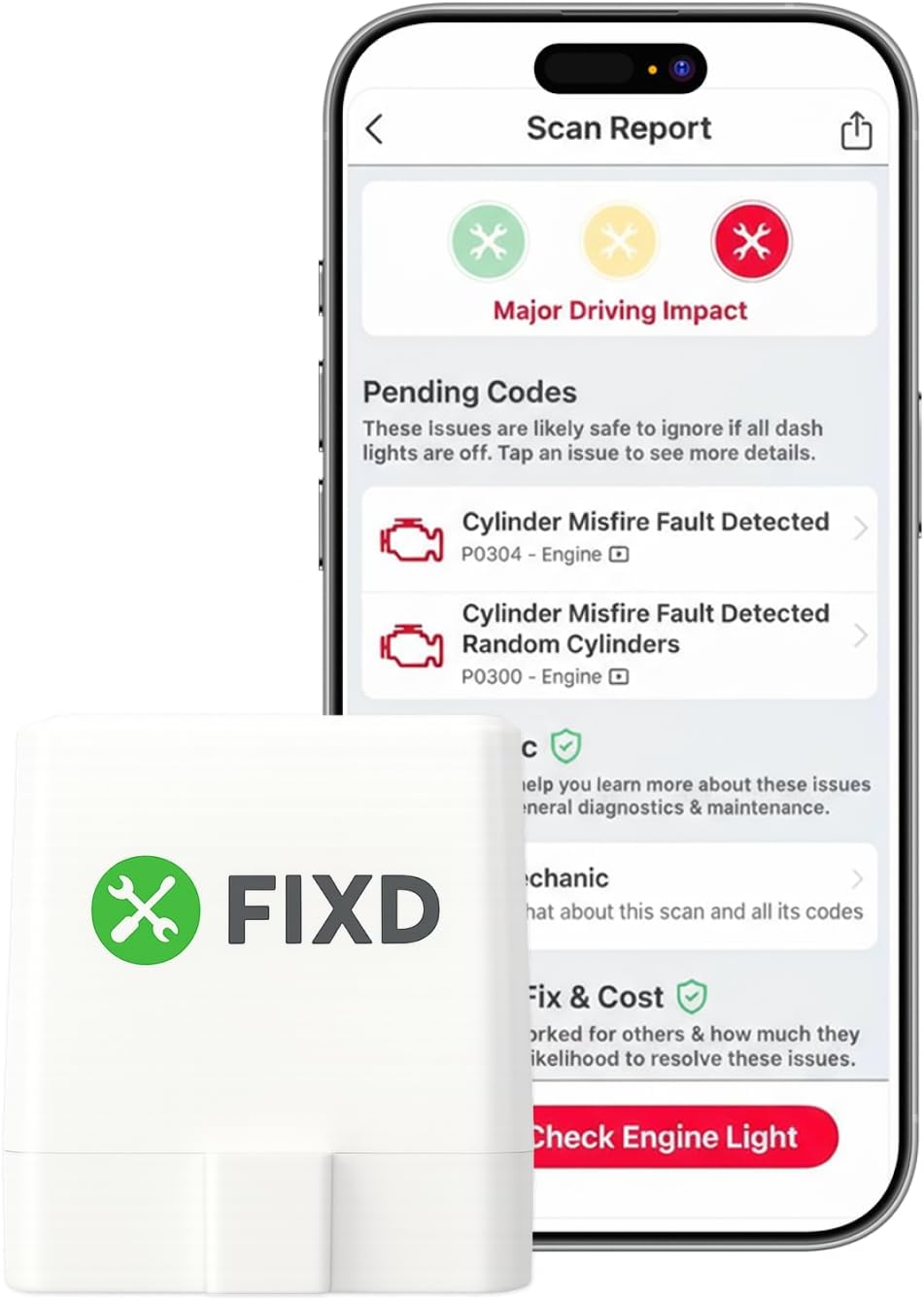
Best Bluetooth OBD2 Scanner
Detect 39,000+ Issues With Enhanced Codes. Save $1000s on car repairs & buying used vehicles by diagnosing problems yourself.
Shop on Amazon
Key Takeaways
- Mazda doesn’t use belt-driven CVTs in gas-powered vehicles—instead, it relies on the reliable 6-speed SkyActiv-Drive automatic transmission, which delivers 200,000+ mile lifespans compared to traditional CVT transmissions that typically last 80,000–150,000 miles.
- Many symptoms Mazda owners attribute to CVT transmission problems, like cold-start shuddering or low-speed lurching, are actually adaptive transmission learning behaviors or fluid-related issues that resolve with simple fluid service or TCM resets.
- Mazda hybrid models use e-CVTs (electronic CVTs with planetary gear sets) rather than belt-driven CVTs, eliminating common belt-wear failure modes and making them fundamentally different from traditional CVT technology.
- SkyActiv-Drive maintenance costs significantly less than CVT repairs, with drain-and-fill services running $150–$250 versus $300–$400 for CVT fluid exchanges, and transmission rebuilds averaging $2,200–$3,500 with a dramatically lower failure rate than competitors.
- Real-world reliability data shows Mazda’s CX-5 with only a 2% problem rate versus 8% for the Nissan Rogue and 5% for the Subaru Forester, validating Mazda’s decision to avoid CVT technology adopted by most competitors.
- Test drive your Mazda across varied conditions including cold starts and highway merges to understand normal transmission behavior before mistaking adaptive learning or torque converter operation for mechanical failure.
Common Issues in CVT Transmissions
Before we jump into Mazda-specific realities, let’s clarify what genuine CVT problems look like in vehicles that actually use belt-driven continuously variable transmissions. This context helps you recognize whether your symptoms match true CVT failures or something else entirely.
Slipping and Delayed Acceleration
True CVT slipping feels like the engine revs freely without corresponding acceleration, similar to a failing clutch in a manual transmission. The metal belt or chain loses grip on the pulleys, causing rpm to spike while your vehicle crawls forward. You’ll notice this most during highway merging or uphill climbs when the transmission demands maximum torque transfer.
In brands like Nissan, Subaru, or Honda that use traditional CVTs, slipping often stems from worn pulley surfaces or stretched belts after 80,000–120,000 miles. The CVT fluid becomes contaminated with metal particles from the belt, reducing hydraulic pressure and creating a feedback loop of accelerated wear. Delayed throttle response, where you press the gas and wait two seconds for power, is another telltale sign.
Mazda owners who report “slipping” typically experience something different: adaptive transmission learning that hasn’t yet optimized shift points for your driving style, or low transmission fluid levels causing hydraulic delay. This isn’t CVT belt slip, it’s shift logic recalibration or fluid starvation in a conventional planetary automatic.
Fluid Degradation and Contamination
CVT fluid serves a dual role: hydraulic control and belt lubrication. Unlike conventional ATF, CVT fluid contains friction modifiers that prevent metal-on-metal contact between the belt and pulley cones. When this fluid oxidizes or becomes contaminated, the transmission loses its ability to maintain proper clamping force.
You’ll see dark brown or burnt-smelling fluid, a clear indicator of overheating or extended service intervals. Most CVT manufacturers recommend fluid changes every 30,000–60,000 miles, though many owners skip this maintenance. Contamination shows up as fine metallic shavings in the fluid pan, evidence of belt wear that’s already begun.
Mazda’s SkyActiv-Drive automatic uses conventional ATF with different properties and longer service intervals (typically 60,000 miles under normal conditions). The fluid doesn’t see the same shear forces as CVT fluid, which is why Mazda owners rarely encounter the sudden fluid breakdown common in Nissan Altimas or Subaru Outbacks.
Overheating and Transmission Cooler Concerns
CVTs generate significant heat because the belt constantly slips microscopically across the pulley faces, that’s how they achieve infinite gear ratios. Towing, mountainous driving, or hot climates push CVT operating temperatures beyond 220°F, where fluid begins breaking down rapidly. Many CVT failures trace back to inadequate cooling capacity.
External transmission coolers become essential for CVT longevity if you tow or drive in stop-and-go traffic. Brands like Subaru added larger coolers to their CVT systems after widespread overheating complaints in the 2013-2017 model years. Temperature sensors trigger limp mode when the transmission exceeds safe thresholds, leaving you stranded on the roadside.
Mazda’s conventional automatic doesn’t face the same thermal stress. The SkyActiv-Drive uses locked torque converter operation in most driving conditions, eliminating the heat-generating slippage inherent to CVT design. Overheating issues in Mazdas typically indicate external problems: low fluid, clogged cooler lines, or failing radiator circuits.
Noise, Juddering, and Vibration
A failing CVT produces distinctive sounds: metallic whining during acceleration, grinding when shifting between drive and reverse, or a high-pitched whirring under load. These noises come from the belt skipping on worn pulley surfaces or from failing bearings in the pulley assemblies. The sound intensifies as the damage progresses.
Juddering, a shuddering sensation during low-speed acceleration, plagues CVTs with worn valve bodies or contaminated fluid. The transmission can’t maintain smooth hydraulic pressure, causing the belt to grab and release repeatedly. You’ll feel it most between 10–30 mph during light throttle application.
Mazda owners describing similar symptoms usually have torque converter shudder or cold-start shift shock. The torque converter clutch chatters during lockup engagement, or the transmission fluid hasn’t reached operating temperature and shift quality suffers. These are fixable with transmission fluid additives or simple fluid services, not the catastrophic CVT belt replacement that costs $3,500–$5,000.
Mazda’s Approach to Transmission Technology
Mazda’s engineering philosophy diverges sharply from manufacturers who embraced CVT technology. Understanding why reveals a lot about the reliability differences between your Mazda and CVT-equipped competitors.
Why Mazda Avoids CVT Systems
Mazda’s engineers prioritize driver engagement and mechanical efficiency over fuel economy alone. CVTs deliver excellent EPA numbers but sacrifice throttle response and the connected feeling enthusiasts value. Mazda identified early that CVT belt friction creates parasitic losses and heat that offset theoretical efficiency gains.
According to Mazda’s official powertrain strategy, the brand focused on optimizing conventional automatic transmissions rather than adopting CVT technology. The result is SkyActiv-Drive: a 6-speed automatic with wider gear ratios, direct mechanical coupling in higher gears, and a torque converter that locks earlier than traditional designs.
This decision also stems from reliability data. Mazda observed warranty claim patterns in competitor CVTs throughout the 2010s, particularly Nissan’s JATCO-supplied units, and concluded the technology carried unacceptable long-term risk. By 2026, that caution appears validated: Nissan extended CVT warranties to 120,000 miles after class-action settlements, while Mazda’s automatics rarely require major repairs before 200,000 miles.
Advantages of Skyactiv-Drive and Skyactiv Technology
Skyactiv-Drive delivers direct gear engagement rather than belt slip. Each gear ratio uses physical clutch packs and planetary gearsets, proven components with centuries of cumulative engineering refinement. You get predictable shift points, immediate throttle response, and the mechanical efficiency of locked gearing during highway cruising.
The torque converter locks in 2nd through 6th gears under light loads, eliminating the 2–3% efficiency loss from hydraulic coupling. This design achieves 90–95% mechanical efficiency in typical driving, comparable to CVT efficiency but with better durability and driver feel. The transmission weighs less than competitors’ 8-speed automatics, supporting Mazda’s lightweight philosophy.
Skyactiv-Drive also learns your driving patterns through adaptive algorithms. The transmission control module monitors throttle position, brake application, road grade, and acceleration patterns to predict ideal shift timing. This isn’t a band-aid for poor design, it’s optimization that improves over the first 1,000 miles of ownership. Rough shifts during break-in are normal learning behavior, not transmission failure.
“I had the low-speed shudder in my 2021 CX-5. Dealer did a fluid drain-and-fill at 35k miles and reset the TCM. Shifts smooth as butter now. Not a CVT issue, just adaptive learning that got confused.” via r/mazda
Comparison With Dual-Clutch and Manual Transmissions
Mazda’s hybrid models use an e-CVT system, but this isn’t a belt-driven CVT. The e-CVT employs a planetary gear set with two electric motors and the gasoline engine all connected mechanically. There’s no slipping belt, no pulley cones, and no CVT fluid. Think of it as a sophisticated power-split device similar to Toyota’s Hybrid Synergy Drive.
Compared to dual-clutch transmissions (DCT) from Volkswagen or Hyundai, SkyActiv-Drive offers smoother low-speed operation. DCTs provide lightning-fast shifts but judder in parking lots and overheat in traffic. Mazda’s torque converter absorbs the shock and slip that makes automatics livable in daily gridlock.
Manual transmissions still deliver the best mechanical efficiency and driver control, but Mazda discontinued most manual options by 2025 except in the Mazda3 sedan. For most buyers, SkyActiv-Drive represents the sweet spot: reliability approaching manuals, smoothness exceeding DCTs, and none of the belt-wear anxiety plaguing CVT owners.
Real-World Performance and Reliability Insights
Let’s examine how Mazda’s transmission strategy plays out across specific models and real ownership experiences. This is where theory meets your driveway.
Mazda CX-5 Transmission Experiences
The CX-5 uses SkyActiv-Drive across all non-hybrid trims from 2013 forward. Owners report exceptional reliability: transmission failures before 150,000 miles are rare, and most issues resolve with fluid services or TCM updates. The 2016.5+ models with refined shift logic show even better long-term performance.
Common complaints focus on cold-weather shift quality and low-speed gear hunting. When ambient temperatures drop below 20°F, the transmission delays upshifts until fluid reaches 120°F, this protects internal components but feels abnormal. Owners mistake this programmed behavior for malfunction and search “CX-5 CVT problems” online, fueling the misconception that Mazda uses CVT technology.
A 2025 Consumer Reports reliability survey rated the CX-5 transmission as “much better than average” with a 1/5 problem rate, meaning only 2% of owners reported drivetrain issues. Compare that to CVT-equipped competitors like the Nissan Rogue (8% problem rate) or Subaru Forester (5% problem rate), and Mazda’s strategy validates itself.
Mazda3 and Other Model Considerations
The Mazda3 shares SkyActiv-Drive DNA with the CX-5 but in a lighter chassis. Shift response feels quicker and more decisive because the transmission controls less mass. Turbocharged models (2.5T) pair with the same 6-speed automatic, though torque converter lockup occurs at slightly higher rpm to handle increased torque.
Mazda6 and CX-9 models use identical transmission architecture with reinforced clutch packs for their larger engines. The transmission adapts shift firmness based on throttle aggression: drive gently and you’ll get soft, fuel-efficient shifts: floor it and the transmission holds gears longer with firmer engagement.
Hybrid models (CX-50 Hybrid, CX-60 PHEV, CX-90 PHEV) introduce the e-CVT system. Owners report a “droning” sensation during hard acceleration, this is the engine operating at optimal rpm while electric motors handle torque delivery, not a failing CVT belt. It’s normal operation for power-split hybrid systems and feels unusual only if you’re accustomed to stepped-gear automatics.
“The CX-50 Hybrid’s e-CVT takes getting used to. Engine revs high but you’re moving, not slipping. It’s just how planetary hybrid systems work. No belt to fail like my old Nissan.” via Mazdas247 Forum
Repair Costs and Maintenance Factors
Skyactiv-Drive maintenance revolves around fluid changes. Mazda recommends 60,000-mile intervals under normal conditions, though severe-duty driving (towing, extreme heat, mountains) calls for 30,000-mile services. A drain-and-fill costs $150–$250 at independent shops, far cheaper than CVT fluid exchanges that run $300–$400.
When SkyActiv-Drive does fail, usually after severe neglect or collision damage, rebuild costs run $2,200–$3,500 including labor. That’s comparable to CVT replacement, but the failure rate is dramatically lower. Most transmission shops report seeing dozens of Nissan CVTs for every Mazda automatic, even accounting for fleet size differences.
TCM resets and adaptive learning clears are free at most dealers during regular service. If you’re experiencing shift quality issues, ask the service advisor to perform a “transmission adaptation reset” through the diagnostic computer. This erases learned shift points and lets the transmission relearn from scratch, often resolving issues without parts replacement.
Mazda Versus Other Brands With CVT
How does Mazda’s transmission strategy compare against manufacturers who went all-in on CVT technology? The differences reveal important buying considerations.
Subaru Forester and e-CVT Systems
Subaru uses belt-driven CVTs across most of its lineup, including the Forester and Outback. These Lineartronic CVTs improved significantly after 2018 with stronger chains replacing belts, but earlier models suffered from shuddering, overheating, and premature failure. Subaru extended warranties to 100,000 miles after owner complaints reached critical mass.
The trade-off is fuel economy: Subaru squeezes EPA ratings 2–3 mpg higher than Mazda’s conventional automatics. But real-world longevity favors Mazda. Check any used car lot and you’ll find high-mileage CX-5s still shifting smoothly while equivalent-mileage Foresters list “transmission recently replaced” in their service records.
Subaru’s newer models with the 2.4L turbocharged engine pair with a conventional 8-speed automatic, an admission that CVTs struggle with high-torque applications. Mazda never needed that course correction because it avoided CVTs entirely.
CVT Transmission Lifespan and Fluid Requirements
Typical CVT lifespan ranges from 80,000–150,000 miles depending on maintenance and driving conditions. Aggressive driving, towing, or skipped fluid changes drop that to 60,000 miles. Mazda’s SkyActiv-Drive regularly exceeds 200,000 miles with basic maintenance, some owners report 300,000+ miles on original transmissions.
CVT fluid requires exact specification matching: use the wrong fluid and you’ll destroy the belt within 10,000 miles. SkyActiv-Drive tolerates a wider range of ATF specifications, though Mazda FZ fluid remains recommended. This flexibility makes roadside emergency fluid top-offs less risky in Mazdas versus CVT vehicles.
Here’s a direct comparison of key transmission metrics:
| Feature | Mazda SkyActiv-Drive | Typical Belt CVT | Mazda Hybrid e-CVT |
|---|---|---|---|
| Drivetrain Type | 6-speed planetary automatic | Belt/chain on pulleys | Planetary with dual motors |
| Typical Lifespan | 200,000+ miles | 80,000–150,000 miles | 150,000+ miles (limited data) |
| Fluid Change Interval | 60,000 miles (normal use) | 30,000–60,000 miles | 60,000–100,000 miles |
| Repair Cost Range | $2,200–$3,500 | $3,500–$6,000 | $4,000–$7,000 (battery + trans) |
| Towing Capability | Rated up to 2,000 lbs | Limited, often voided warranty | Variable, model-dependent |
| Driver Engagement | Distinct shift points | Continuous ratio change | Engine-disconnected feel |
Key Takeaways for Car Buyers
If you’re shopping for a reliable crossover or sedan, understand that “Mazda CVT problems” is largely a myth rooted in transmission terminology confusion. Here’s what matters:
- Mazda’s gas models don’t use CVTs. You’re getting a proven automatic transmission with superior longevity compared to belt-driven CVTs from Nissan, Subaru, or Mitsubishi.
- Hybrid Mazdas use e-CVTs, which are fundamentally different from belt CVTs. They share no common failure modes with traditional CVT technology.
- Maintenance matters more than design. Even the best transmission fails without proper fluid service. Budget for fluid changes every 60,000 miles regardless of manufacturer recommendations.
- Test drive in varied conditions. Cold starts, highway merges, and parking lot speeds all reveal transmission character. What feels like “slipping” might be adaptive learning or torque converter behavior, not mechanical failure.
When you hear unusual noises, experience rough shifts, or feel hesitation, don’t immediately assume CVT failure. Start with basics: check fluid level and condition, clear adaptive learning, and verify your Mazda’s actual transmission type. Most “problems” resolve with a $200 fluid service rather than a $5,000 transmission replacement.
Mazda’s commitment to conventional automatic technology means you’re driving a transmission design with 70+ years of refinement, not a cost-cutting compromise. That’s reliability you can trust for the long haul.
Frequently Asked Questions
Does Mazda use CVT transmissions?
No. Mazda’s gas-powered models like the CX-5 and Mazda3 use a 6-speed SkyActiv-Drive automatic transmission, not a belt-driven CVT. However, Mazda’s hybrid models (CX-50 Hybrid, CX-60 PHEV) feature an e-CVT system that uses planetary gears instead of a belt and operates differently from traditional CVTs.
What are common Mazda CVT transmission problems owners report?
Most symptoms Mazda owners attribute to CVT issues—like cold-start shuddering, low-speed lurching, or hesitant acceleration—are actually adaptive transmission learning, torque converter behavior, or low fluid levels, not belt failure. True CVT problems are rare in Mazda models because they don’t use traditional belt-driven CVTs.
How long does a Mazda transmission typically last?
Mazda’s SkyActiv-Drive transmission regularly exceeds 200,000 miles with proper maintenance, and some owners report 300,000+ miles on original transmissions. This is significantly longer than traditional CVTs, which typically last 80,000–150,000 miles depending on driving conditions and fluid maintenance.
How often should I service my Mazda transmission?
Mazda recommends a transmission fluid change every 60,000 miles under normal driving conditions. For severe-duty driving—towing, extreme heat, or mountainous terrain—service intervals drop to 30,000 miles. A drain-and-fill costs $150–$250 at independent shops.
Why does my Mazda transmission hesitate or feel rough during cold starts?
Cold-weather shift delays are normal adaptive learning behavior in Mazda’s SkyActiv-Drive. The transmission intentionally delays upshifts until fluid reaches optimal temperature (120°F) to protect internal components. This is programmed behavior, not transmission failure, and shifts smoothen as the engine warms.
How does Mazda’s e-CVT system differ from traditional belt-driven CVTs?
Mazda’s hybrid e-CVT uses a planetary gear set with two electric motors instead of a metal belt and pulley system. There’s no belt slippage, no CVT fluid, and it operates similarly to Toyota’s Hybrid Synergy Drive. It shares no common failure modes with traditional belt CVTs.
Read More:
- Mazda 3 Transmission Problems (Here’s the Early Signs & Quick Fixes)
- Lexus Transmission Problems (Here’s the Warning Signs & Expert Fixes)
- Car Transmission Problems (Guide for Automatic, CVT, and Hybrid)
- Kia Transmission Problems (Here’s the Common Symptoms and Fixes)
- Mazda Transmission Problems (Here’s the Clear Symptoms & Quick Fixes)
- Ford Transmission Problems (Symptoms, Recalls, and What to Do)