
You’re cruising through morning traffic when the amber glow appears. That check engine light on your Mercedes GLC 300 dashboard isn’t just annoying, it’s your crossover’s way of telling you something’s wrong.
The Mercedes GLC 300 check engine light activates when the onboard diagnostic system detects emissions, engine performance, or electronic control faults ranging from loose gas caps and failing oxygen sensors to boost pressure sensor errors, ignition coil breakdown, EVAP leaks, catalytic converter inefficiency, or 48V battery voltage irregularities that trigger OBD-II fault codes.
This guide walks you through the most common fault codes, diagnostic decision trees, and DIY fixes for your GLC 300.
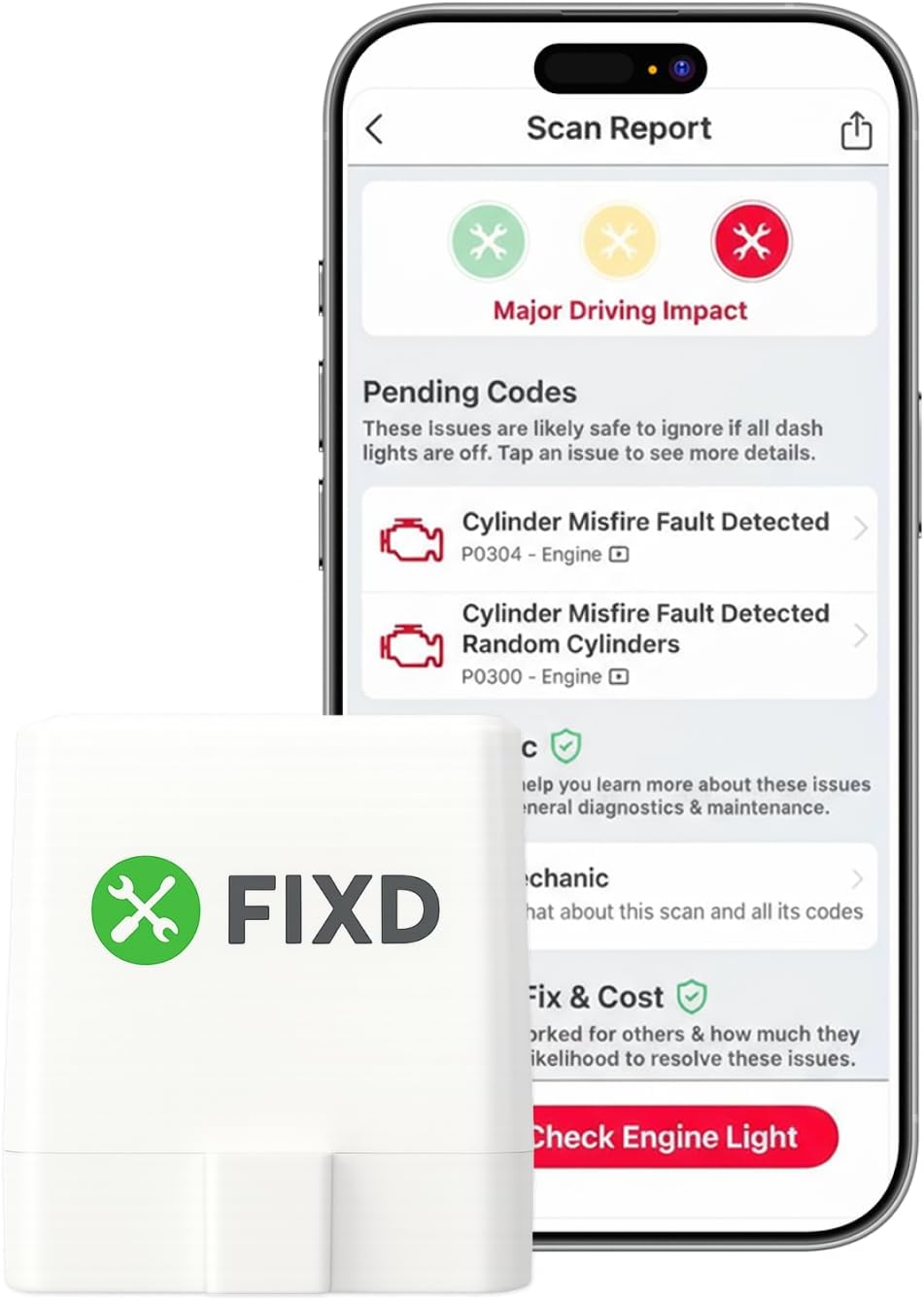
Best Bluetooth OBD2 Scanner
Detect 39,000+ Issues With Enhanced Codes. Save $1000s on car repairs & buying used vehicles by diagnosing problems yourself.
Shop on Amazon
Key Takeaways
- The Mercedes GLC 300 check engine light signals emissions, engine performance, or electronic control faults detected by the OBD-II diagnostic system, with a steady amber light indicating non-critical issues and a flashing light warning of severe misfires requiring immediate shutdown.
- Oxygen sensor failure is the most common cause of check engine light activation in the GLC 300, with symptoms including rough idle, hesitation, and fuel economy drops of 15–20%, particularly affecting 2020–2023 models in cold climates.
- Diagnosing your GLC 300 check engine light requires an OBD-II scanner to read fault codes and freeze-frame data; professional diagnostics from a Mercedes specialist are essential for transmission-related codes and severe misfires to prevent catalytic converter damage.
- Common DIY fixes for the GLC 300 include replacing a worn gas cap ($15–$25), cleaning or replacing the MAF sensor ($180–$320), and swapping ignition coils and spark plugs ($180–$280), with savings of $170–$400 compared to shop labor costs.
- Catalytic converter repairs are the most expensive fix ($1,200–$2,200 at dealerships), but many P0420 codes resolve after addressing upstream causes like failing oxygen sensors or ignition coils, making root-cause diagnosis critical before replacement.
- Always complete a full OBD-II readiness cycle after repairs—including highway cruise, stop-and-go traffic, and idle periods—to ensure all diagnostic monitors show “Ready” before emissions testing.
What Does the Check Engine Light Mean in Your Mercedes GLC 300?
Your GLC 300’s check engine light is part of the onboard diagnostics (OBD-II) system. When sensors detect values outside factory parameters, fuel mixture too rich, misfire events, exhaust gas recirculation faults, the engine control unit (ECU) logs a diagnostic trouble code (DTC) and illuminates the warning light.
A steady amber light signals non-critical issues you should address soon. A flashing check engine light indicates severe misfires that can damage your catalytic converter, pull over safely and shut down the engine. Modern GLC 300 models feature both 12V and 48V mild-hybrid electrical systems, adding complexity to fault diagnosis.
The ECU continuously monitors over 30 systems: air-fuel ratio, ignition timing, turbocharger boost pressure, EVAP leak detection, oxygen sensor performance, and 4MATIC all-wheel-drive coordination. A single failing component can cascade into multiple fault codes, making systematic diagnosis critical.
Most Common Causes of Check Engine Light in Mercedes GLC 300
Oxygen Sensor Failure
The GLC 300’s turbocharged engine uses upstream and downstream oxygen sensors to fine-tune air-fuel ratios. When sensors degrade after 80,000–100,000 miles, you’ll notice rough idle, hesitation during acceleration, and fuel economy drops of 15–20%. Common fault codes include P0130, P0133, P0141, and P0161.
Failing O2 sensors send incorrect voltage signals (typically stuck lean at 0.1V or rich at 0.9V instead of oscillating between 0.1–0.9V). The ECU compensates by over-enriching the mixture, increasing emissions and triggering the light. Replacement requires a 22mm oxygen sensor socket and new anti-seize compound on threads.
According to 2025–2026 Mercedes service bulletins, GLC 300 models built between 2020–2023 show a 35% higher oxygen sensor failure rate in cold climates due to thermal cycling stress. Winter salt exposure accelerates connector corrosion, creating intermittent open-circuit faults.
“My 2021 GLC threw P0420 and P0133 together. Replaced both downstream O2 sensors and the light cleared immediately. Fuel economy went from 21 mpg back to 25 mpg.” via MBWorld Forums
Catalytic Converter Issues
Your GLC 300 features close-coupled catalytic converters that superheat during stop-and-go traffic. Code P0420 (catalyst efficiency below threshold) appears when the converter can’t maintain proper light-off temperature or when internal honeycomb substrate breaks down.
Catalytic converter failure often stems from upstream issues, prolonged misfires dump raw fuel into the exhaust, overheating and melting the catalyst. Short trips prevent converters from reaching optimal 400°C operating temperature, allowing carbon deposits to build. You’ll experience loss of power above 4,000 RPM and sulfur smell from the exhaust.
Before replacing the converter (a $1,200–$2,200 repair), verify oxygen sensors, ignition coils, and spark plugs are functioning correctly. Many P0420 codes resolve after addressing root causes like failing air-fuel sensors.
Mass Airflow Sensor Problems
The hot-wire MAF sensor on the GLC 300’s intake tract measures incoming air volume to calculate fuel delivery. Contamination from oil vapors, dirt, or aftermarket air filters causes inaccurate readings. Symptoms include stumbling acceleration, black smoke, and codes P0101, P0102, or P0103.
You can clean the MAF sensor using CRC MAF Cleaner spray and a soft brush, never touch the sensing wires directly. If cleaning doesn’t resolve the fault, replacement runs $180–$320 for OEM Bosch units. Installing a high-quality air filter like the Mann Filter C 3698/3 prevents future contamination.

How to Diagnose Your GLC 300 Check Engine Light
Reading OBD-II Codes
Plug an OBD-II scanner into the diagnostic port beneath your steering column (left of the brake pedal). Quality scanners like the BlueDriver Bluetooth Pro OBDII Scanner pull both generic and Mercedes-specific codes, display freeze-frame data, and graph live sensor values.

Turn the ignition to position II without starting the engine. Launch the scanner app and select “Read Codes.” Record all DTCs, including pending codes that haven’t triggered the light yet. Pay attention to freeze-frame data showing RPM, coolant temperature, throttle position, and fuel trim values when the fault occurred.
Common GLC 300 fault codes include:
- P0420: Catalyst efficiency below threshold
- P0171/P0174: System too lean (vacuum leak, MAF sensor)
- P0300–P0304: Random or cylinder-specific misfires
- P0456: EVAP small leak detected (gas cap, purge valve)
- P0299: Turbocharger underboost condition
- P219A: Bank 1 air-fuel ratio imbalance
Cross-reference codes with the Mercedes-Benz DTC database for model-specific troubleshooting trees. Clear codes after repairs and drive 50–100 miles through varied conditions to verify the fix.
When to Take Your GLC 300 to a Mechanic
Certain faults demand professional diagnostics. If you see codes P0016 (crankshaft/camshaft correlation), P2293 (fuel pressure regulator stuck), or any transmission-related DTCs (P17xx series), visit a Mercedes specialist with XENTRY diagnostic software, generic scanners can’t access all control modules.
A flashing check engine light combined with loss of power indicates severe misfires damaging the catalytic converter in real time. Continuing to drive risks $3,000+ converter replacement. Pull over immediately and arrange towing to prevent secondary damage.
Emissions testing failures require complete system audits. Your state may mandate official Mercedes diagnostics to validate catalyst, EVAP, and oxygen sensor repairs before issuing inspection certificates. Independent shops with Mercedes STAR diagnostic systems offer lower rates than dealerships.
“Dealership quoted $2,400 for catalytic converter. Took it to an independent Mercedes shop, they found a bad ignition coil causing the P0420 code. $180 fix.” via r/mercedes_benz
DIY Fixes for Common GLC 300 Check Engine Light Issues
Gas Cap and EVAP Leaks (P0456, P0457)
Remove the gas cap and inspect the rubber seal for cracks or debris. Replace if worn ($15–$25 OEM cap). Tighten until you hear three clicks. Clear codes and drive 20–30 miles to allow the EVAP self-test to complete.
If P0456 persists, check the purge valve (located on the intake manifold). Disconnect the electrical connector and vacuum hoses, then shake the valve, you shouldn’t hear rattling. Apply 12V directly: the valve should click open. Replace faulty valves with OEM parts to prevent repeat failures.
Ignition Coil and Spark Plug Replacement (P0300–P0304)
Misfires often trace to worn spark plugs (replace every 40,000 miles) or failing coil packs. The GLC 300’s direct-injection system stresses ignition components. Use NGK or Bosch plugs gapped to 0.032″ and torque to 15–18 lb-ft.
Swap the suspected coil with another cylinder. If the misfire code follows the coil, you’ve confirmed the fault. Replace all four coils simultaneously if your GLC has over 60,000 miles, they typically fail in clusters.
Boost Pressure Sensor (P0299, P0234)
The turbocharger boost pressure sensor threads into the intake manifold. Unscrew the sensor, clean the port with throttle body cleaner, and inspect the sensor screen for carbon buildup. Replace the O-ring seal and reinstall, torquing to 6–8 lb-ft.
How to Reset the Check Engine Light on Mercedes GLC 300
After completing repairs, use your OBD-II scanner to clear codes. Select “Erase Codes” and confirm. The check engine light should extinguish immediately. If it returns within 10–50 miles, the underlying fault wasn’t resolved.
Alternatively, disconnect the negative battery terminal for 15 minutes. This clears fault memory but also resets radio presets, clock, and adaptive transmission settings. The ECU will relearn driving patterns over 50–100 miles.
Drive through a complete OBD-II readiness cycle before emissions testing: highway cruise at 55 mph for 10 minutes, stop-and-go traffic, idle for five minutes with A/C on, and moderate acceleration. Check readiness monitors using your scanner, all systems must show “Ready” to pass inspection.
Cost to Fix Check Engine Light Problems in Mercedes GLC 300
Repair Cost Breakdown
| Repair | DIY Cost | Shop Cost |
|---|---|---|
| Gas cap replacement | $15–$25 | $40–$60 |
| Oxygen sensor (single) | $80–$150 | $250–$400 |
| Spark plugs + coils (all four) | $180–$280 | $450–$650 |
| MAF sensor | $180–$320 | $350–$500 |
| Catalytic converter | $900–$1,400 | $1,800–$2,800 |
| EVAP purge valve | $65–$120 | $180–$280 |
Dealership labor rates run $150–$220 per hour. Independent Mercedes specialists charge $90–$140 per hour with equivalent expertise. Always request written estimates before authorizing work.
Invest in a quality diagnostic scanner, the Autel MaxiCOM MK808 pays for itself after two dealership diagnostic fees ($150–$200 each). Modern scanners display live data graphs, perform bi-directional tests, and access all GLC 300 control modules.

Frequently Asked Questions
What does the check engine light mean on a Mercedes GLC 300?
The check engine light indicates the onboard diagnostics (OBD-II) system detected a fault—typically emissions, engine performance, or electronic issues. A steady amber light signals non-critical problems to address soon, while a flashing light indicates severe misfires requiring immediate engine shutdown to prevent catalytic converter damage.
What are the most common causes of check engine light in a Mercedes GLC 300?
The primary causes include oxygen sensor failure (P0130–P0161 codes), catalytic converter inefficiency (P0420), mass airflow sensor contamination (P0101–P0103), spark plug wear, failing ignition coils, EVAP leaks, and turbocharger boost pressure sensor issues. Oxygen sensor failure is particularly common in cold climates due to thermal cycling stress.
How much does it cost to fix a check engine light on a Mercedes GLC 300?
DIY repairs range from $15–$1,400 depending on the issue; professional shop costs typically run $40–$2,800. Oxygen sensor replacement averages $250–$400, catalytic converters $1,800–$2,800, and spark plugs with coils $450–$650. Independent Mercedes specialists charge $90–$140/hour versus dealership rates of $150–$220/hour.
Can I clear the check engine light myself on my GLC 300?
Yes, use an OBD-II scanner to read and erase fault codes after completing repairs. Alternatively, disconnect the negative battery terminal for 15 minutes to clear fault memory. However, the light will return if the underlying issue isn’t fixed. Drive 50–100 miles through varied conditions to confirm repairs worked before emissions testing.
When should I see a mechanic for my GLC 300 check engine light instead of DIY troubleshooting?
Seek professional help for complex codes like P0016 (crankshaft/camshaft correlation), P2293 (fuel pressure regulator), transmission DTCs (P17xx), or flashing lights indicating severe misfires. Mercedes specialists with XENTRY diagnostic software are needed for emissions testing validation and repairs requiring specialized equipment.
How do I diagnose check engine light fault codes on my GLC 300?
Plug a quality OBD-II scanner (like BlueDriver or Autel MaxiCOM) into the diagnostic port left of the brake pedal. Turn ignition to position II without starting, launch the app, and read all diagnostic trouble codes (DTCs). Record freeze-frame data showing RPM, coolant temperature, and throttle position when the fault occurred for accurate diagnosis.
Read More:
- Mercedes E350 Check Engine Light (Complete Diagnostic Guide)
- Mercedes Check Engine Light Reset (Here’s the Complete Guide)
- Mercedes GLE 350 Check Engine Light (Ultimate Owner’s Guide)