
Your Nissan Murano’s check engine light just turned on, and you’re wondering whether it’s safe to keep driving or if you need immediate repairs. That amber glow on your dashboard can signal anything from a loose gas cap to serious engine trouble.
When your Nissan Murano check engine light illuminates, the onboard diagnostic system has detected a fault in the engine, emissions, or transmission system. The light remains solid for non-critical issues like sensor failures or EVAP leaks, while a blinking light indicates active engine misfires that demand immediate attention to prevent catalytic converter damage.
This guide walks you through the diagnostic process, common fault codes specific to Murano’s VQ-series engine and CVT transmission, and practical repair steps. You’ll learn how to read OBD2 codes, identify whether symptoms like rough idle or hesitation match specific sensor failures, and reset the system safely after repairs.
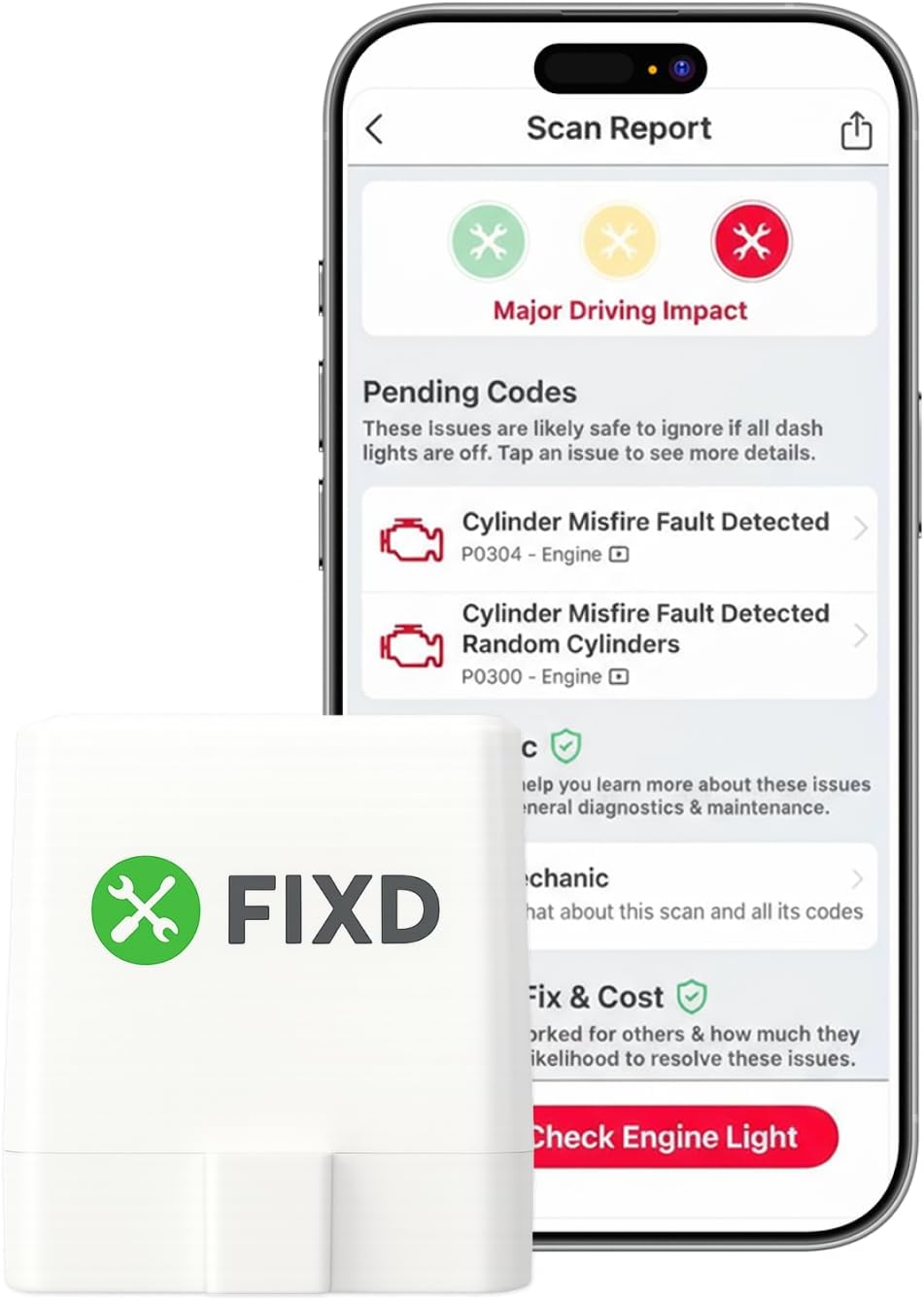
Best Bluetooth OBD2 Scanner
Detect 39,000+ Issues With Enhanced Codes. Save $1000s on car repairs & buying used vehicles by diagnosing problems yourself.
Shop on Amazon
Key Takeaways
- A solid Nissan Murano check engine light indicates non-critical issues like sensor failures or EVAP leaks, while a blinking light signals active misfires requiring immediate attention to prevent catalytic converter damage.
- Oxygen sensor failure, catalytic converter degradation, and mass airflow sensor contamination are the most common causes of check engine light in Nissan Murano models across all generations.
- Use an OBD2 scanner to read diagnostic trouble codes at the port beneath the steering column, noting that repair should always precede clearing codes to prevent emissions test failure.
- Avoid driving with a blinking check engine light—stop within 1-2 miles to prevent catastrophic catalytic converter damage costing $1,200–$2,500.
- After repairs, reset the check engine light by disconnecting the negative battery cable for 15 minutes or using an OBD2 scanner’s clear function, then complete drive cycles to restore emissions readiness monitors.
- Common Nissan Murano check engine repairs range from $150–$350 for oxygen sensors to $1,200–$2,500 for catalytic converters, with independent shops typically charging $100–$140 per hour versus dealer rates of $140–$180.
What Does the Nissan Murano Check Engine Light Mean?
The check engine light serves as your Murano’s primary alert for emissions, powertrain, and engine management issues. Your vehicle’s ECU continuously monitors dozens of sensors, from oxygen sensors in the exhaust to cam position sensors in the VQ35DE or VQ35DD engine.
When sensor readings fall outside programmed parameters, the ECU stores a diagnostic trouble code (DTC) and triggers the warning light. Solid illumination indicates a stored fault that doesn’t pose immediate risk, such as a small EVAP leak or aging oxygen sensor. A blinking check engine light signals active misfires, meaning unburned fuel is entering the exhaust system and threatening catalytic converter damage.
Your Murano also displays supplementary warnings. The CVT warning light may appear alongside the check engine light when transmission fluid temperature exceeds safe levels or speed sensor circuits malfunction. The SLIP indicator can illuminate during torque converter control issues. Multiple lights often share a root cause, a failing crankshaft position sensor can trigger both check engine and traction control warnings.
Common Causes of Check Engine Light in Nissan Murano
Oxygen Sensor Failure
Oxygen sensors measure exhaust gas composition to optimize fuel mixture. Nissan Muranos use upstream (pre-catalyst) and downstream (post-catalyst) O2 sensors on each bank. Codes P0130-P0167 indicate sensor circuit faults, while P0420 and P0430 flag catalytic efficiency below threshold, often caused by failing downstream sensors misreporting catalyst performance.
First-generation Muranos (2003-2007) commonly develop P0147 and P0153 codes between 90,000-120,000 miles. You’ll notice decreased fuel economy before the light appears. Rough idle at cold start and hesitation during acceleration accompany sensor degradation. The ECU enters open-loop mode when sensors fail, ignoring real-time feedback and defaulting to pre-programmed fuel maps.
“My 2010 Murano threw P0420 at 95k miles. Dealer wanted $1,200 for cats, but replacing the downstream O2 sensors cleared it permanently.” via MuranoForum.com
Replacement requires heating the exhaust manifold with a torch to prevent seized threads from snapping. Use anti-seize compound on new sensor threads and OEM or equivalent NTK/Denso units, universal sensors often fail within 12 months.
Faulty Catalytic Converter
Catalytic converters reduce NOx, CO, and hydrocarbon emissions through ceramic honeycomb substrates coated with platinum-group metals. Internal substrate fracture or coating deterioration reduces conversion efficiency below the EPA-mandated 95% threshold, triggering P0420 (Bank 1) or P0430 (Bank 2).
Second-generation Muranos (2009-2014) experienced catalytic failures around 80,000-110,000 miles, particularly in cold-climate states where road salt accelerates heat shield corrosion. You’ll smell sulfur (rotten eggs) when the converter overheats from excessive unburned fuel caused by misfires or rich-running conditions. Acceleration becomes sluggish as exhaust backpressure builds from clogged substrate passages.
Verify converter failure before replacement by checking upstream versus downstream O2 sensor voltages. Healthy converters show minimal voltage fluctuation downstream (0.6-0.7V steady), while failed units mirror upstream sensor oscillations. Backpressure testing requires threading a gauge into the upstream O2 sensor port, readings above 3 PSI at 2,500 RPM confirm blockage.
Mass Airflow Sensor Issues
The MAF sensor measures intake air volume using heated platinum wires. Contamination from oil vapors, dirt, or aftermarket air filters creates P0101 (MAF range/performance) or P0171/P0174 (system too lean) codes. Your Murano calculates fuel delivery based on MAF readings, dirty sensors underreport airflow, causing the ECU to inject insufficient fuel.
Symptoms include stumbling during acceleration, surging at highway speeds, and stalling at idle when the AC engages. Third-generation Muranos (2015-2024) with CVT transmissions experience hesitation during kickdown when MAF sensors fail because the ECU can’t accurately calculate load for ratio changes.
Clean the sensor using CRC Mass Air Flow Sensor Cleaner and a soft brush. Remove the sensor from the intake tube, spray the platinum wires (don’t touch them), and allow 10 minutes to dry.
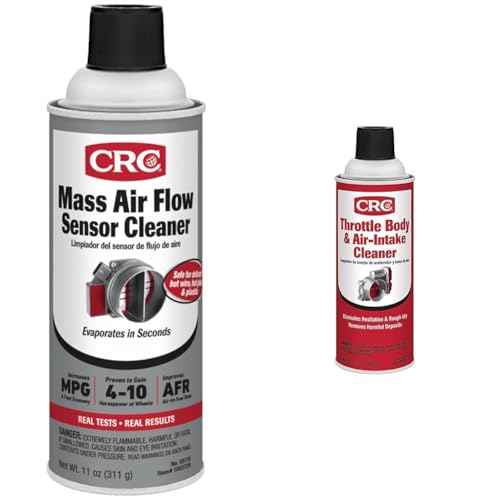
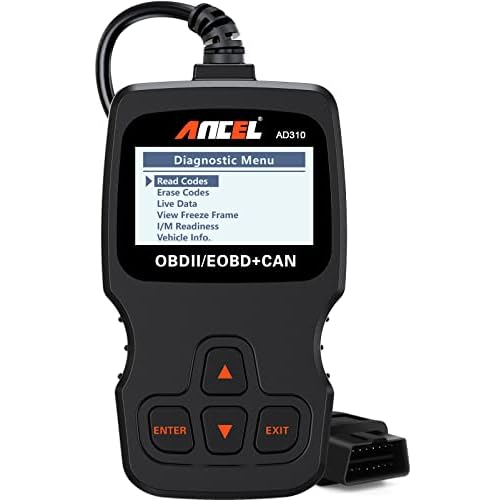
Replacement becomes necessary when cleaning doesn’t restore proper fuel trims, confirmed by monitoring short-term and long-term fuel trim values exceeding ±10% at idle using an OBD2 scanner.
Loose or Damaged Gas Cap
The EVAP system prevents fuel vapor emissions through sealed tanks and charcoal canisters. A loose, cracked, or missing gas cap creates P0455 (large EVAP leak) or P0457 (loose cap) codes. The ECU runs leak tests by pressurizing the fuel system during specific drive cycles, any pressure loss triggers the warning light.
First-generation Muranos use single-click caps that frequently crack around the seal groove after 5-7 years of UV exposure. You’ll hear hissing when removing the cap if pressure hasn’t equalized. Inspect the rubber seal for compression marks and cracks. Tighten until you hear three distinct clicks.
P0442 (small EVAP leak) and P0446 (vent control malfunction) codes indicate purge valve or vent solenoid failures rather than cap issues. These require smoke testing to locate, shops inject mineral oil smoke into the EVAP system and trace vapor escape points.
How to Read Nissan Murano Check Engine Light Codes
Reading diagnostic trouble codes requires an OBD2 scanner connected to the port beneath the steering column, left of the brake pedal. Turn the ignition to ON without starting the engine, then access the scanner’s “Read Codes” function. The display shows alphanumeric codes starting with P (powertrain), B (body), C (chassis), or U (network).
Powertrain codes follow a five-character format. P0420 breaks down as: P (powertrain), 0 (generic SAE code), 4 (emission control), 20 (catalyst efficiency Bank 1). Manufacturer-specific codes begin with P1, Nissan uses P1273 for fuel pump control and P1610 for immobilizer communication errors.
Write down all stored codes and pending codes. Pending codes haven’t triggered the check engine light yet but indicate intermittent faults. Clear codes only after repairs, erasing them without fixing the root cause resets readiness monitors, preventing emissions test completion. Most states require all monitors showing “Ready” status except EVAP and catalyst on recent resets.
Common Nissan Murano DTCs by System:
| Code Range | System | Typical Issue |
|---|---|---|
| P0010-P0024 | VVT System | Cam position actuator solenoid |
| P0171-P0175 | Fuel Trim | MAF sensor, vacuum leak, injector |
| P0300-P0306 | Misfire | Ignition coil, spark plug, injector |
| P0420-P0430 | Catalyst | O2 sensor, catalytic converter |
| P0717-P0731 | CVT Trans | Speed sensor, valve body, fluid |
“Got P0335 crankshaft sensor code on my 2013 Murano. Started with no-start conditions when hot, then stalling at red lights.” via r/Nissan
Advanced scanners display live data streams, monitor parameters like oxygen sensor voltages (0.1-0.9V oscillating), fuel trims (-10% to +10%), and coolant temperature. Freeze frame data captures sensor readings when the fault occurred, helping diagnose intermittent issues.
What to Do When Your Nissan Murano Check Engine Light Comes On
First, assess symptom severity. A solid light with normal engine operation allows time for diagnostic scanning and repair scheduling. Blinking lights demand immediate shutdown to prevent catalytic converter damage from raw fuel ignition in the exhaust.
Check obvious causes before visiting a shop. Tighten your gas cap and drive through two complete drive cycles (cold start, highway cruise, city driving, cool down). The ECU may clear EVAP codes automatically if the cap was loose. Inspect air intake components for disconnected vacuum lines or cracked intake boots that cause air leaks.
Scan for codes using a basic OBD2 reader or visit auto parts stores offering free scanning. Research codes specific to your Murano generation, first-gen models suffer cam sensor failures, while third-gen CVT units develop speed sensor faults. Prioritize misfires (P03xx codes) and lean conditions (P0171/P0174) over low-priority evaporative codes.
Schedule professional diagnosis for complex faults. Shops use factory-level scanners accessing Nissan-specific data streams and bi-directional controls. They perform fuel pressure tests (should hold 51 PSI), compression tests (150-165 PSI per cylinder), and smoke tests for leak detection. Get written estimates before authorizing repairs exceeding $500.
Model-Specific Check Engine Light Problems by Generation
First Generation (2003-2007): VQ35DE engines develop camshaft position sensor failures causing P0340 and P0345 codes around 100,000 miles. Symptoms include extended cranking, random stalling, and rough idle. Mass airflow sensors fail between 80,000-120,000 miles, creating P0101 codes. EVAP purge valves stick open, producing P0443 codes and rough idle from unmetered air entering the intake manifold.
Second Generation (2009-2014): CVT transmission speed sensors trigger P0720 and P0725 codes between 70,000-90,000 miles. You’ll experience harsh shifting, delayed engagement, and check engine light with CVT warning light. Catalytic converters degrade prematurely in Z51 models (AWD) due to richer fuel maps. Oxygen sensor heater circuits fail, causing P0135 and P0155 codes during cold starts below 32°F.
Third Generation (2015-2024): VQ35DD direct-injection engines show carbon buildup on intake valves by 60,000 miles, causing misfires (P0300-P0306) that require walnut shell blasting. CVT step logic control valves stick, producing P17F0 codes and judder during low-speed acceleration. Mass airflow sensors become contaminated faster due to smaller wire elements, cleaning or replacement needed every 50,000 miles in dusty environments.
Hybrid models (2016-2017) experience unique faults: P0A0F (hybrid battery deterioration), P0A7F (hybrid battery cooling system), and P1A15 (motor electronics coolant pump). Battery replacements cost $3,000-$5,000 through Nissan, while third-party rebuilds run $1,500-$2,200.
Can You Drive Your Nissan Murano With the Check Engine Light On?
Driving safety depends on fault severity and accompanying symptoms. Solid check engine lights without performance changes allow continued driving to a repair facility within 50-100 miles. Monitor for new symptoms, if the light begins blinking or the vehicle develops rough running, stop immediately.
Blinking check engine lights indicate active misfires dumping raw fuel into the exhaust. Catalytic converters reach 1,400°F during normal operation: unburned fuel ignites and raises temperatures to 2,000°F, melting the ceramic substrate. Stop driving within 1-2 miles and tow to a shop. Continuing risks $1,200-$2,500 converter replacement on top of ignition coil or spark plug repairs.
Certain codes allow extended driving. P0455 (large EVAP leak) and P0457 (loose cap) affect only emissions, not drivability. P0420/P0430 catalyst codes indicate efficiency decline, you can drive several hundred miles while sourcing parts. P0171/P0174 lean codes require prompt attention because lean conditions cause valve damage.
Avoid driving when these symptoms accompany the light:
- Loss of power or limp mode (transmission locks to 3rd gear)
- Overheating (coolant temperature exceeds 220°F)
- Severe vibration or knocking sounds
- Smoke from exhaust (blue indicates oil burning, white suggests coolant)
- Transmission slipping or delayed engagement
Schedule repairs within one week for solid lights to prevent secondary damage. Failed oxygen sensors force rich operation, contaminating catalytic converters. Leaking vacuum lines cause lean conditions, increasing combustion temperatures and risking valve seat damage.
How to Reset the Check Engine Light on a Nissan Murano
Never reset the check engine light without diagnosing and repairing the underlying fault. Clearing codes without repairs creates a false “ready” state that fails emissions testing and allows progressive damage.
After completing repairs, disconnect the negative battery cable for 15 minutes to drain ECU capacitors and clear stored codes. This resets all adaptive learning, idle speed, fuel trims, and transmission shift points. The ECU relearns parameters during the first 50-100 miles of driving.
Alternatively, use an OBD2 scanner’s “Clear Codes” function. This preserves adaptive learning while erasing fault codes and resetting readiness monitors. Most states require emissions testing after monitor completion, this takes 50-200 miles of varied driving including highway speeds, city stops, and overnight cold soaks.
Drive cycles for monitor completion:
- Catalyst Monitor: Highway cruise at 55 mph for 5+ minutes, maintain steady throttle
- EVAP Monitor: Fill tank 15-85% full, drive 10+ minutes including idle periods
- O2 Sensor Monitor: Mixed city/highway driving, multiple decel/accel events
- Misfire Monitor: Smooth acceleration to 45 mph, coast to stop
If the light returns within 10-50 miles, the repair didn’t address the root cause or additional faults exist. Recheck vacuum connections, sensor harness integrity, and connector pins for corrosion. Some faults require multiple drive cycles to trigger, monitor pending codes to catch intermittent issues.
Repair Costs for Common Nissan Murano Check Engine Light Issues
Oxygen Sensor Replacement: $150-$350 per sensor including labor. Upstream sensors require 1.0 hours, downstream sensors 0.8 hours. OEM NTK sensors cost $90-$140, aftermarket units $45-$80. Most failures require replacing both sensors on the affected bank.
Catalytic Converter Replacement: $1,200-$2,500 depending on AWD versus FWD configuration. AWD models use four converters (two per bank), FWD uses two. Direct-fit converters cost $600-$1,100 each, universal units $200-$400 but require welding and may fail emissions. Labor runs 3-5 hours.
Mass Airflow Sensor: $180-$320 installed. OEM sensors cost $140-$220, cleaning attempts save $60-$120 if successful. Replacement takes 0.3 hours, accessible from above without removing intake components.
Ignition Coil and Spark Plugs: $280-$450 for all six cylinders. Coils cost $35-$65 each, OEM NGK iridium plugs $8-$12 each. Labor runs 1.5-2.0 hours for coil and plug replacement. Replace all six coils if one fails above 100,000 miles, remaining coils fail within 10,000 miles.
Camshaft Position Sensor: $180-$280 installed. Sensors cost $55-$95, labor 1.0-1.5 hours. Bank 2 (passenger side) sensor requires intake plenum removal on some model years, increasing labor to 2.5 hours and total cost to $380-$450.
CVT Speed Sensor: $220-$380 including fluid top-off. Sensors cost $80-$140, installation requires 1.5 hours and draining partial transmission fluid. Refill with Nissan NS-2 or NS-3 CVT fluid only, aftermarket fluids void transmission warranty.
Independent shops charge $100-$140 per hour versus $140-$180 at dealers. Get three estimates for repairs exceeding $600. Many shops offer free diagnostics with repair commitment.
Frequently Asked Questions
What does the Nissan Murano check engine light mean?
The check engine light indicates your Murano’s onboard diagnostic system detected a fault in the engine, emissions, or transmission. A solid light signals non-critical issues like sensor failures or EVAP leaks, while a blinking light indicates active engine misfires requiring immediate attention to prevent catalytic converter damage.
Is it safe to drive with the check engine light on in a Nissan Murano?
Solid check engine lights without performance issues allow continued driving to a repair facility. However, if the light blinks, indicating active misfires, stop within 1-2 miles and tow your Murano to prevent $1,200-$2,500 catalytic converter damage from overheating caused by unburned fuel ignition.
What are the most common causes of check engine light in a Nissan Murano?
Common Nissan Murano check engine light causes include oxygen sensor failure (codes P0130-P0167), catalytic converter degradation (P0420/P0430), mass airflow sensor contamination (P0101), loose gas caps (P0455/P0457), and misfire-related issues. Generation-specific problems include cam sensor failures in first-gen models and CVT speed sensor faults in newer Muranos.
How do I read Nissan Murano check engine light codes?
Connect an OBD2 scanner to the diagnostic port beneath your steering column (left of brake pedal). Turn ignition to ON without starting, then access the ‘Read Codes’ function. Codes follow formats like P0420 (powertrain, generic, emission control, catalyst efficiency), helping identify the specific fault system and issue severity.
How much does it cost to fix a check engine light on a Nissan Murano?
Repair costs vary by issue: oxygen sensors ($150-$350), catalytic converters ($1,200-$2,500), mass airflow sensors ($180-$320), ignition coils ($280-$450 for all six), and CVT speed sensors ($220-$380). Independent shops charge $100-$140/hour versus dealers at $140-$180/hour. Always get multiple estimates for repairs exceeding $600.
Can I reset the check engine light myself on my Nissan Murano?
You can reset the check engine light by disconnecting the negative battery cable for 15 minutes or using an OBD2 scanner’s ‘Clear Codes’ function. However, only reset after diagnosing and repairing the underlying fault—clearing codes without repairs fails emissions tests and allows progressive engine damage.
Read More:
- Nissan Sentra Check Engine Light (Ultimate Repair Guide)
- Nissan Check Engine Light (Means, Master Diagnostic Guide)
- Nissan Versa Check Engine Light (Complete Diagnostic Guide)
- Nissan Pathfinder Check Engine Light (Ultimate Fix Guide)
- Nissan Kicks Check Engine Light (Quick Diagnostic Guide)