
If your Honda shudders between 20–40 mph, you’re not imagining things. That judder is the most reported CVT complaint across Civic, CR-V, and Accord models heading into 2026.
Honda CVT transmission problems most often stem from degraded HCF-2 transmission fluid losing its friction-modifier additives, which causes torque converter shudder and low-speed judder. In high-mileage vehicles (80,000+ miles), worn push-belt and pulley surfaces compound the issue, leading to slipping, hesitation, and eventually limp mode. The fix ranges from a straightforward fluid exchange at 30,000-mile intervals to TCM software recalibration, but ignoring early symptoms almost always leads to full transmission failure.
This guide breaks down exactly what’s happening inside your Honda’s CVT, which symptoms signal a cheap fix versus terminal wear, and the specific maintenance steps that keep these transmissions running past 150,000 miles.
Best Bluetooth OBD2 Scanner
Detect 39,000+ Issues With Enhanced Codes. Save $1000s on car repairs & buying used vehicles by diagnosing problems yourself.
Shop on Amazon
Key Takeaways
- Shuddering between 20–40 mph is the most common Honda CVT transmission problem, caused by degraded HCF-2 fluid losing friction-modifier additives, but a fluid exchange at 30,000-mile intervals typically resolves it immediately.
- Honda CVT transmissions require genuine HCF-2 fluid every 30,000 miles—not the 60,000–100,000-mile intervals of traditional automatics—because the belt-and-pulley system is extremely sensitive to fluid condition.
- Delayed engagement, slipping, and the “rubber band effect” (engine revving without proportional acceleration) signal progressive wear stages that range from cheap fixes like solenoid updates to costly transmission replacement if ignored.
- CVT failure follows a predictable progression from light shudder to complete loss of drive, but catching problems at Stage 1 (shudder) means a fluid change often fixes everything, while Stage 3 (belt slipping) typically requires full transmission replacement.
- Installing an auxiliary CVT transmission cooler, warming the vehicle before cold-weather driving, and avoiding sustained wide-open throttle from stops can extend transmission life well past 150,000 miles.
- Limp mode activation and a flashing “D” light indicate the TCM has detected a fault; safely pulling over, shutting off the engine for 60 seconds, and restarting may clear it, but you should drive immediately to a dealer for diagnostic scanning.
Honda’s Continuously Variable Transmission, branded under the Earth Dreams Technology umbrella, replaced traditional automatics across most of the lineup starting around 2014. The design delivers impressive fuel economy, but it introduced a new failure mode that traditional gearboxes didn’t have: extreme sensitivity to fluid condition.
Your CVT doesn’t shift gears. It uses a steel push-belt riding between two variable-diameter pulleys, and that belt-to-pulley contact depends entirely on clean, additive-rich HCF-2 fluid. When that fluid degrades, problems cascade fast. According to CarComplaints.com, transmission issues remain among the top-reported problems for Honda Civic and CR-V models through the 2018–2024 model years.
Understanding how this system works, and where it fails, gives you the diagnostic edge to catch problems early.
Understanding Honda’s CVT Technology
How Continuously Variable Transmissions Work
Unlike a conventional automatic with fixed gear sets, your Honda CVT uses two cone-shaped pulleys connected by a steel push-belt. One pulley connects to the engine, the other to the wheels. By varying each pulley’s effective diameter, the CVT creates an infinite number of “gear ratios” without ever shifting. This is why acceleration feels smooth but sometimes “droney”, the engine holds a fixed RPM while the belt ratio changes.
A torque converter (or start clutch in newer models) manages the initial engagement from a stop. Honda’s system also includes a TCM (Transmission Control Module) that continuously adjusts pulley clamping pressure based on throttle input, vehicle speed, and fluid temperature.
Key Components: Belt, Pulleys, and Fluid
Three components define your CVT’s health:
- Steel push-belt: A chain of hundreds of metal elements that transmit torque between pulleys. Wear here is irreversible.
- Variable pulleys: Hydraulically actuated cones that must maintain precise clamping force. Scoring on pulley faces causes belt slip.
- HCF-2 fluid: Honda’s proprietary CVT fluid contains friction modifiers critical for belt grip and thermal management. Generic CVT fluid lacks these specific additives and can accelerate wear.
The difference between Honda HCF-2 and generic CVT fluid isn’t marketing, it’s chemistry. HCF-2 maintains a specific friction coefficient that the TCM’s programming expects. Substituting aftermarket fluid changes that coefficient, often triggering judder or erratic ratio changes.
Differences Between CVT and Automatic Transmission
| Feature | Honda CVT | Traditional Automatic |
|---|---|---|
| Gear ratios | Infinite (stepless) | Fixed (6–10 speeds) |
| Fuel economy | Higher | Lower |
| Fluid type | HCF-2 (proprietary) | ATF (various) |
| Common failure | Belt slip, judder | Clutch pack wear |
| Fluid sensitivity | Extremely high | Moderate |
| Typical service interval | 30,000 miles | 60,000–100,000 miles |
The biggest takeaway: your CVT demands more frequent fluid service than the automatic it replaced.
Most Common CVT Problems in Honda Vehicles
Shuddering, Juddering, and Vibration
The most widespread Honda CVT complaint is a shudder felt between 20–40 mph under light throttle. This Honda CVT judder during acceleration mimics driving over rumble strips. It’s caused by depleted friction modifiers in the HCF-2 fluid allowing micro-slip at the torque converter lockup clutch.
Honda Accord CVT vibration under light load follows the same pattern. In most cases, a complete fluid drain-and-fill (not a flush) with genuine HCF-2 resolves the shudder immediately. If the judder returns within 5,000 miles after fresh fluid, you’re likely looking at worn clutch material inside the torque converter, a more serious repair.
“Changed my CVT fluid at 45k miles on my 2019 CR-V and the shudder disappeared completely. Should have done it at 30k like the forums said.” via r/crv
Delayed Engagement and Hesitation
Honda CR-V CVT hesitation from a stop is the second most common complaint. You press the accelerator and the vehicle pauses for 1–2 seconds before moving. This symptom points to either a worn start clutch (in models using one instead of a torque converter) or low line pressure from a failing pressure control solenoid.
A stored P0796 pressure control solenoid C performance code confirms the solenoid diagnosis. A TCM software update can sometimes recalibrate engagement timing and resolve mild hesitation without hardware replacement.
Transmission Slipping and the Rubber Band Effect
The “rubber band effect” describes RPMs climbing while vehicle speed lags, the engine revs but you don’t accelerate proportionally. This is textbook belt slippage. In high-mileage Civic and CR-V models (100,000+ miles), polished or scored pulley surfaces can no longer grip the push-belt adequately.
Troubleshooting Honda Civic CVT belt slippage starts with checking fluid condition and level. Dark, burnt-smelling fluid confirms thermal damage. If fluid is clean and full but slipping persists, internal pulley wear is the likely culprit, and that typically means transmission replacement.
Unusual Noises and Warning Lights
A high-pitched CVT whining noise that changes with vehicle speed (not engine RPM) usually indicates bearing wear inside the transmission case. A whine that tracks with engine RPM more likely points to the pump or fluid starvation.
When your dashboard displays the amber wrench icon alongside transmission warning indicators, the TCM has detected a fault and may enter limp mode. Honda CVT limp mode recovery steps in 2026 involve pulling over safely, shutting off the engine for 60 seconds, then restarting. If limp mode clears, drive directly to your dealer for a diagnostic scan. If it doesn’t clear, you need a tow.
“Got the flashing D light on my 2020 Civic at 87k miles. Dealer said the CVT was toast. Wish I’d changed the fluid more often.” via r/Honda
Maintenance, Recalls, and Model-Specific Issues
Transmission Fluid Change and Interval Guidelines
Honda’s maintenance minder system uses sub-code 3 to indicate CVT fluid service. But, the minder can sometimes delay this alert past the optimal window, especially in stop-and-go driving or hot climates. The consensus among Honda technicians is a firm 30,000-mile HCF-2 service interval regardless of what the minder displays.
To reset Honda transmission maintenance minder 3 after service, press and hold the trip button while turning the ignition to “on” (without starting), then cycle through the sub-indicators until code 3 appears and hold until it resets.
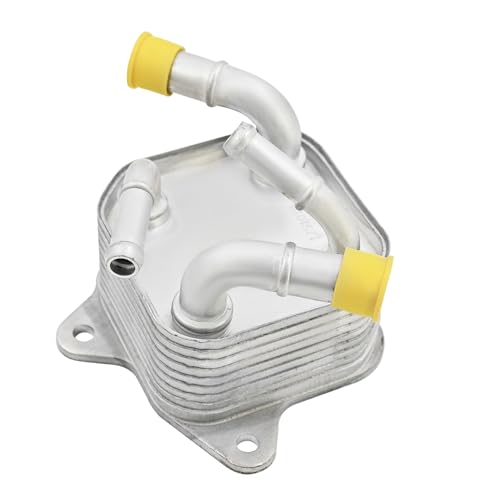
For owners who tow or drive in mountainous terrain, Honda CVT transmission overheating during mountain driving is a real risk. Installing an auxiliary CVT transmission cooler can drop fluid temps by 20–30°F and dramatically extend fluid life.
Model Recalls and TSBs Affecting Honda CVTs
Honda has issued multiple Technical Service Bulletins (TSBs) addressing CVT judder and software calibration. The 2026 Honda CVT transmission software update addresses adaptive shift logic recalibration and improved torque converter lockup behavior. Your dealer can check for open TSBs by VIN. According to the NHTSA complaints database, transmission-related complaints remain a leading category for Honda models equipped with CVTs.
Clearing Honda CVT adaptive shift logic memory is part of any proper TCM update and resets the transmission’s learned driving behavior. This is not something you should do repeatedly, it’s a one-time recalibration after service.
Hybrid eCVT Concerns and Fixes
Honda’s hybrid eCVT (used in CR-V Hybrid and Accord Hybrid) operates differently, it uses electric motors instead of a belt and pulleys. These systems are generally more reliable but can develop motor-generator bearing noise or inverter faults. The fix is almost always dealer-level.
How to Address Transmission Fluid Leaks
CVT fluid leaks commonly occur at the half-shaft seals or the cooler line fittings. Even a small leak is critical because the CVT operates with tight fluid tolerances. Check your driveway for green-tinted fluid (HCF-2’s characteristic color). A quality OBD2 scanner like the LAUNCH helps you monitor transmission fluid temperature and catch thermal issues before they cause damage.

Here’s a helpful video walkthrough on Honda CVT fluid change procedure:
Honda CVT Reliability and Prevention Strategies
Factors Affecting Honda CVT Longevity
Three factors determine how long your Honda CVT lasts: fluid maintenance discipline, thermal management, and driving style. The Honda 1.5T oil dilution issue, where fuel contaminates engine oil in cold-climate short trips, indirectly affects CVT reliability by raising engine operating temperatures, which in turn heats the transmission through the shared cooling circuit.
Aggressive driving from stoplights, sustained high-speed highway cruising at 80+ mph, and towing near capacity all accelerate CVT wear. But by far, the single biggest killer is neglected fluid.
Signs and Consequences of CVT Failure
Terminal CVT failure follows a predictable progression:
- Stage 1: Light shudder at 20–40 mph (fluid degradation)
- Stage 2: Delayed engagement from stops (start clutch or solenoid wear)
- Stage 3: Rubber-band slipping under acceleration (belt/pulley damage)
- Stage 4: Limp mode activation and flashing “D” light (TCM protection mode)
- Stage 5: Complete loss of drive
Catching problems at Stage 1 means a fluid change fixes everything. By Stage 3, you’re typically looking at CVT replacement.
Data Insights and Analysis
According to Consumer Reports’ 2025 reliability survey, Honda CVT-equipped models show transmission trouble rates roughly 15–20% higher than their traditional automatic counterparts from the same era. The NHTSA logged over 3,000 transmission-related complaints for 2016–2022 Honda Civics alone.
Expert Note: "CVT belt slip isn't primarily a mechanical failure, it's a tribological one. The push-belt relies on a micro-thin boundary layer of friction modifier between steel elements and pulley faces. Once that additive package depletes below a critical threshold, metal-on-metal contact initiates a wear cycle that no amount of fresh fluid can reverse. This is why the 30,000-mile interval matters more than any other single maintenance item on these vehicles."
Best Practices for Owners to Avoid Problems
- Change HCF-2 fluid every 30,000 miles, don’t wait for the maintenance minder
- Use only genuine Honda HCF-2. The difference between Honda HCF-2 and generic CVT fluid is not trivial
- Warm the vehicle for 60 seconds before driving in cold weather
- Avoid sustained wide-open throttle from stops
- Install an auxiliary cooler if you tow or live in hot climates
- Address any shudder immediately, it’s the cheapest stage to fix
- Keep up with engine oil changes on 1.5T models to prevent oil dilution and thermal stress
Your Honda CVT can last well past 200,000 miles with proper care. The owners who lose transmissions at 80,000 miles almost universally skipped fluid service, assuming the CVT was “sealed for life.” It isn’t.
Frequently Asked Questions
What causes Honda CVT transmission shudder and judder?
Honda CVT shudder between 20–40 mph is caused by degraded HCF-2 transmission fluid losing its friction-modifier additives. This allows micro-slip at the torque converter lockup clutch. A complete fluid drain-and-fill with genuine HCF-2 typically resolves the issue immediately if caught early.
How often should I change my Honda CVT transmission fluid?
Change HCF-2 fluid every 30,000 miles, regardless of what the maintenance minder displays. This aggressive interval is critical because CVTs are extremely sensitive to fluid condition. Skipping this service is the leading cause of premature Honda CVT failure.
Can I use generic CVT fluid instead of Honda HCF-2?
No. Honda HCF-2 is proprietary and contains specific friction modifiers that the TCM expects. Generic CVT fluid lacks these additives and can trigger judder, erratic ratio changes, and accelerated wear. Always use genuine Honda HCF-2 for optimal performance and longevity.
What does the ‘rubber band effect’ mean in Honda CVTs?
The rubber band effect describes RPMs climbing while vehicle speed lags—the engine revs but acceleration doesn’t match. This is textbook belt slippage caused by worn or scored pulley surfaces. In high-mileage vehicles, this typically signals internal wear requiring transmission replacement.
What is Honda CVT limp mode and how do I fix it?
Limp mode activates when the TCM detects a fault (amber wrench icon). Pull over safely, shut off the engine for 60 seconds, then restart. If it clears, drive to your dealer for a diagnostic scan. If it doesn’t clear, the vehicle needs a tow. Limp mode protects against further damage.
How long can a Honda CVT transmission last with proper maintenance?
With proper care—regular 30,000-mile HCF-2 changes, thermal management, and controlled driving—Honda CVTs can last well past 200,000 miles. Owners who lose transmissions at 80,000 miles typically skipped fluid service, incorrectly assuming the CVT was sealed for life.