
Your JCB just threw a cryptic code on the dash, and the clock is ticking. Whether it’s a blinking “D” light, an E001 engine warning, or a P0087 fuel rail pressure alert, you need answers fast.
Every JCB fault code corresponds to a specific control module failure, sensor error, or system protection trigger that your machine’s ECU has logged. JCB diagnostic trouble codes (DTCs) follow alphanumeric prefixes, “E” codes for engine warnings, “L” codes for load management and hydraulic lift indicators, and standard OBD-II/J2012 powertrain codes like P0087 or P0193, which you can decode using the machine’s built-in flash code system, JCB LiveLink telematics, or ServiceMaster diagnostic software. Understanding these codes lets you determine whether you’re dealing with a minor sensor glitch you can clear in the field or a critical rail pressure drop that demands immediate shutdown.
This guide breaks down the most common JCB fault codes for backhoe loaders, excavators, and telehandlers, gives you field-tested troubleshooting steps, and tells you exactly when to call in professional service.
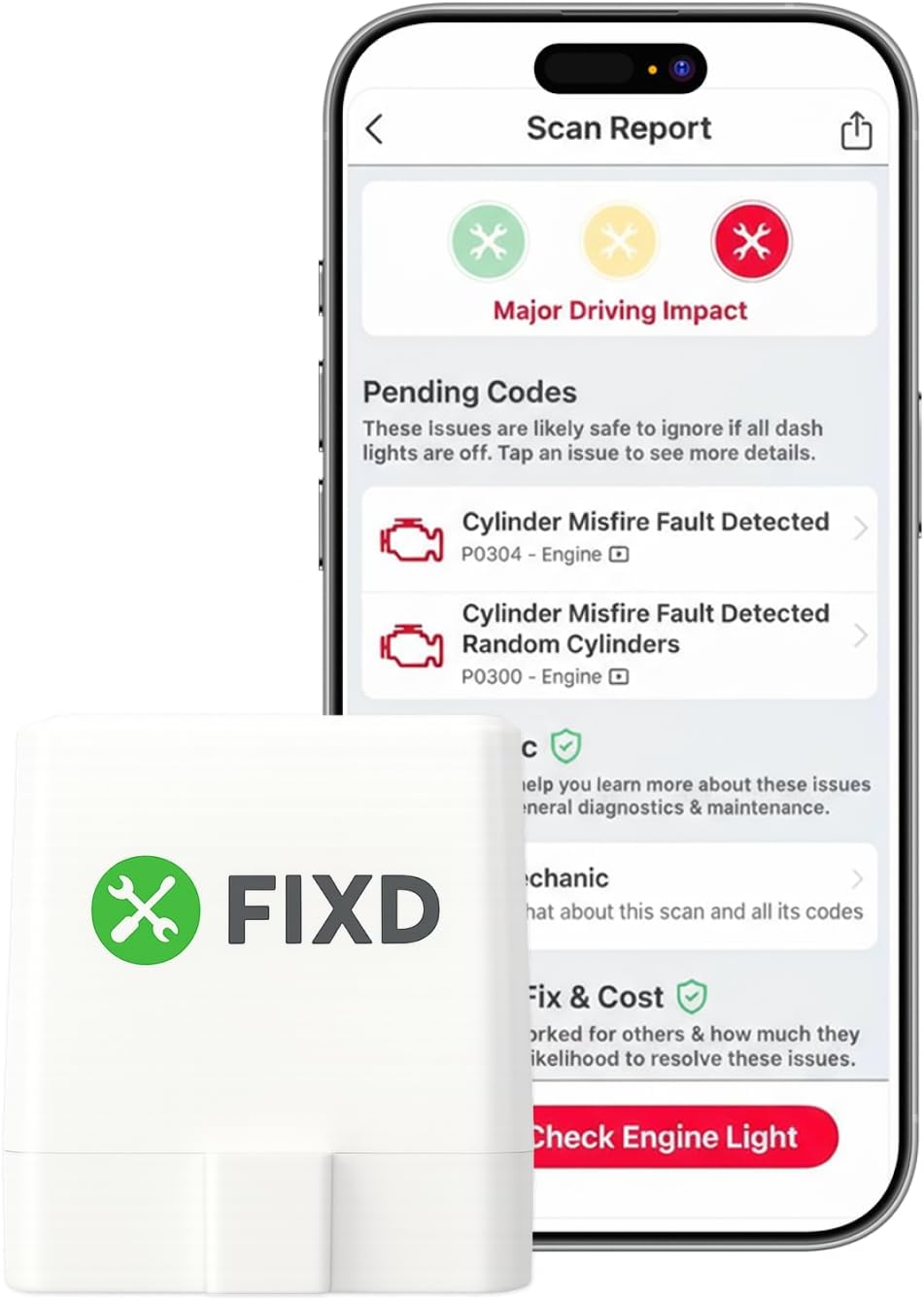
Best Bluetooth OBD2 Scanner
Detect 39,000+ Issues With Enhanced Codes. Save $1000s on car repairs & buying used vehicles by diagnosing problems yourself.
Shop on Amazon
Key Takeaways
- JCB fault codes follow a standardized structure with E-prefix (engine), L-prefix (load management), P-prefix (powertrain), and U-prefix (CAN-bus) codes that help you quickly identify the system affected and severity level.
- P0087 fuel rail pressure too low is the most dangerous common fault code on EcoMAX engines; shut down immediately and check fuel filters and supply lines to prevent injector and pump damage.
- Gradual power loss with rising temperatures usually indicates fuel delivery or turbo issues, while sudden shutdown with hard codes typically signals electrical faults, sensor failures, or CAN-bus communication breakdowns.
- Sensor, connector, and relay faults can often be diagnosed and fixed in the field with a multimeter and wiring diagrams, but internal engine parameters like injector programming and DPF regeneration require dealer-level ServiceMaster diagnostic software.
- Fuel system-related JCB fault codes account for 34% of all engine DTCs globally, and electrical connector/harness faults represent 22%, making regular terminal inspection and weatherproofing essential preventive maintenance.
- Use basic diagnostic tools like the Autel MaxiCOM MK908P or ANCEL HD3300 scanner for J1939-compatible code reading, or JCB LiveLink telematics for remote fleet monitoring to catch issues before extended downtime occurs.
JCB machines, from the legendary 3CX backhoe to JS series excavators and 540-140 telehandlers, rely on multiple electronic control units to manage engine performance, hydraulic flow, transmission behavior, and Tier 4 Final/Stage V emissions compliance. When something goes wrong, these ECUs generate fault codes that flash on your instrument cluster or log silently in the machine’s memory.
The problem? Most operators see a number like “E001” or “P0087” and have zero context for what it means. You don’t know if it’s safe to keep running or if you’re about to grenade a common-rail fuel system. This guide gives you that context. We’ll cover code structure, the most critical engine and hydraulic fault codes, and practical reset procedures you can execute without waiting for a dealer truck.
“Had a flashing code on my 3CX and couldn’t find the meaning anywhere in the operator’s manual. Ended up being a simple temp sensor connector that came loose.” via r/HeavyEquipment
That experience is incredibly common. Let’s make sure you never feel stranded by a cryptic fault code again.
Understanding JCB Diagnostic Trouble Codes
What Are Diagnostic Trouble Codes (DTCs)?
Diagnostic trouble codes are standardized alphanumeric identifiers that your JCB’s electronic control modules generate when a sensor reading falls outside its programmed parameters. Every JCB running an EcoMAX or Dieselmax engine uses a Delphi/JCB engine ECU that monitors fuel pressure, exhaust gas recirculation, boost pressure, and dozens of other inputs in real time.
When the ECU detects an anomaly, say, fuel rail pressure dropping below the minimum threshold, it logs a DTC, triggers a warning on the instrument cluster, and may activate a protective response like active torque reduction (limp mode). The code stays stored even after the symptom disappears, which is why you sometimes see “phantom” codes that don’t match current machine behavior.
JCB uses both proprietary codes (E-prefix engine codes, L-prefix load management codes) and standard SAE J2012 powertrain codes (P-prefix). Knowing which system you’re dealing with is the first step in any diagnosis.
How JCB Flash Codes Work
Older JCB machines and some current models display fault codes through a flashing LED or “liveled” warning light on the instrument cluster. The system flashes a sequence of long and short pulses that correspond to a two- or three-digit code number. For example, two long flashes followed by three short flashes typically indicates code 23.
On newer machines with digital displays, the code appears directly as an alphanumeric string. The blinking “D” light on the cluster, a question many operators ask about, usually indicates a transmission control unit (TCU) fault or a drivetrain protection mode activation on JCB 3CX and 4CX backhoes. You should stop the machine safely and check the code before continuing operation.
Code Structure and Interpretation
JCB fault codes follow a predictable structure:
- E-prefix codes (e.g., E001, E042): Engine ECU faults including fuel system, turbo, EGR, and emissions errors
- L-prefix codes: Load management and hydraulic lift arm indicator errors, common on telehandlers
- P-prefix codes (e.g., P0087, P0193): Standard OBD-II powertrain DTCs used across JCB EcoMAX engines
- U-prefix codes: CAN-bus communication failures between control modules
- Failure Type Byte (FTB/FMI): A modifier digit appended to the main code indicating the failure mode, short to ground, short to battery, signal out of range high/low, etc.
For instance, P0087 with FMI 1 means “fuel rail pressure too low, general electrical failure,” while P0087 with FMI 4 means “voltage below normal.” The FMI changes your troubleshooting path entirely.
| Code Prefix | System | Example | Typical Machine |
|---|---|---|---|
| E | Engine ECU | E001 – Engine overspeed | 3CX, JS220, 540-140 |
| L | Load management | L012 – Boom angle sensor | Telehandlers |
| P | Powertrain (SAE) | P0087 – Fuel rail low | All EcoMAX engines |
| U | CAN-bus comms | U0100 – Lost ECU comms | All models |
Common Engine Fault Codes and Their Symptoms
Fuel Rail Pressure Related Fault Codes
P0087 (fuel rail pressure too low) is one of the most frequently triggered codes on JCB EcoMAX engines, and it’s also one of the most dangerous to ignore. This code fires when the high-pressure fuel pump can’t maintain the required rail pressure, typically around 1,600 bar at full load. Common causes include a failing fuel pressure regulator, contaminated fuel, restricted fuel filters, or air leaks in the low-pressure supply lines.
If you see P0087 alongside active torque reduction, shut down immediately. Running with critically low rail pressure can damage injectors and the high-pressure pump. Check your fuel filter first, then inspect the fuel lines from tank to pump for cracks or loose fittings.
Injector and Sensor Code Meanings
P0193 indicates the fuel rail pressure sensor circuit is reading high. This often points to a wiring issue, a chafed harness shorting to the frame, rather than an actual pressure problem. E001 on JCB engines typically flags an engine overspeed or critical RPM deviation. On Stage V machines, you’ll also encounter EGR actuator error codes that trigger when the exhaust gas recirculation valve sticks due to carbon buildup.
Grid heater relay circuit faults (short to battery) appear on JCB loaders and backhoes operating in cold climates. Check the relay connections at the intake manifold and test the relay with a multimeter before replacing.
Symptoms of Engine Faults
You’ll notice these symptoms before or alongside engine DTCs:
- Sudden power drop and “limp home mode” activation
- Black smoke under load with reduced throttle response
- Engine refusing to start or cranking excessively
- Fluctuating RPM at idle
- Amber or red warning LEDs flashing on the instrument cluster
The key diagnostic question is always: did the symptom appear gradually or suddenly? Gradual power loss with rising exhaust temperatures usually points to a fuel delivery or turbo issue. A sudden shutdown with a hard code typically means an electrical fault, sensor failure, harness short, or CAN-bus dropout.
Hydraulic, Transmission, and Sensor Fault Codes
JCB 3CX transmission control unit fault codes often involve solenoid valve errors, torque converter lockup failures, or speed sensor malfunctions. The blinking “D” light with a stored TCU code usually means the transmission has entered a protective mode. A JCB telescopic handler boom angle sensor out-of-range code (commonly an L-prefix) means the potentiometer in the boom has drifted or failed, recalibration through ServiceMaster may resolve it without parts replacement.
Hydraulic System Fault Codes
Transmission and Oil Temperature Codes
Hydraulic oil temperature codes are common on JCB excavators and backhoes working in hot environments or running low on hydraulic fluid. When the oil temperature exceeds the programmed threshold (typically around 100°C / 212°F), the ECU logs a fault and may reduce hydraulic pump output to protect internal components.
Check your hydraulic oil level first. Then inspect the oil cooler for blockages, mud, debris, and bent fins are the usual suspects. A failing hydraulic oil temperature sensor can also generate phantom codes. Test the sensor resistance with a multimeter against the spec in your service manual. On JS series excavators, hydraulic lock switch open circuit codes fire when the safety lockout lever sensor loses its signal, usually a damaged connector or broken wire at the lever itself.
“Spent two hours chasing a hydraulic fault code on my JS130. Turned out the oil cooler fan relay had corroded terminals. Cleaned it up and the code cleared on the next start cycle.” via r/heavyequipment
Air and Coolant Temperature Sensor Codes
Coolant temperature sensor faults and intake air temperature sensor codes are straightforward to diagnose. Both sensors are two-wire thermistors, check for corroded connectors, broken pins, or wiring damage from vibration. On Tier 4 Final and Stage V JCB engines, intake air temperature data feeds directly into the emissions control strategy. A faulty sensor can cause the DPF regeneration cycle to malfunction, triggering secondary emissions fault codes.
For any electrical system wiring harness short investigation, start at the connector closest to the sensor and work back toward the ECU. Use a wiring diagram from your JCB service manual and check continuity at each junction. CAN-bus communication failure codes (U-prefix) on JCB machines often trace back to a single damaged connector in the engine harness, so don’t overlook physical inspection.
Troubleshooting, Reset Procedures, and Service Resources
Manual Reset and Clearing Fault Codes
Some JCB fault codes clear automatically after three successful start cycles without the fault recurring. For persistent codes, you can attempt a manual reset by disconnecting the battery for 30 seconds, then reconnecting. This works for non-critical sensor codes but won’t clear hard faults logged in the engine ECU’s permanent memory.
To properly clear JCB error codes without ServiceMaster software, you’ll need a J1939 CAN-bus compatible diagnostic tool. The Autel MaxiCOM MK908P supports JCB protocols and lets you read, decode, and clear DTCs from the engine ECU, transmission TCU, and hydraulic controllers. For basic code reading, an ANCEL HD3300 Heavy Duty Truck Scanner covers most J1939 standard codes at a lower investment.

For fleet managers running multiple JCB machines, JCB LiveLink telematics provides remote fault code monitoring and alerts directly to your phone or desktop, a valuable SaaS tool for catching issues before they cause downtime.
Field Diagnostics vs Dealer Service
Here’s a practical rule: if the fault code involves a sensor, connector, or relay, you can likely diagnose and fix it in the field with a multimeter, wiring diagrams, and basic hand tools. If the code involves internal engine parameters (injector trim codes, high-pressure pump calibration, DPF forced regeneration), you’ll almost certainly need ServiceMaster or an equivalent dealer-level diagnostic laptop.
CAN-bus communication failure symptoms on JCB machines include multiple unrelated fault codes appearing simultaneously, gauges reading zero or max, and intermittent electrical behavior. These typically trace to a single damaged wire or connector rather than multiple failed components.
When to Seek Professional JCB Service
Call an authorized JCB technician when you encounter any of these situations:
- Active torque reduction that won’t clear after addressing the logged fault code
- Stage V emissions codes involving DPF soot loading above 90% or SCR catalyst efficiency below threshold
- Internal engine codes requiring injector programming or ECU reflashing
- Transmission codes accompanied by abnormal noises, slipping, or overheating
Expert Note: “Most JCB limp-mode activations in the field stem from fuel quality issues or wiring faults, not catastrophic engine failure. But running in limp mode for extended periods can overstress the turbocharger and exhaust aftertreatment system, turning a simple fix into a major repair.”
Data Insights and Analysis
According to JCB’s 2025 LiveLink fleet analytics data, fuel system-related fault codes (P0087, P0193, and associated FMI variants) account for approximately 34% of all engine DTCs logged across their global equipment fleet. Electrical connector and harness faults represent another 22% of all service calls, reinforcing the importance of regular terminal inspection and weatherproofing.
Industry data from the Association of Equipment Manufacturers (AEM) indicates that unplanned equipment downtime costs construction operations an average of 3–5 hours per incident in 2025, with diagnostic delays being the primary contributor. Having a JCB fault codes reference and a basic diagnostic scanner on-site cuts that response time significantly.
Frequently Asked Questions
What does a P0087 JCB fault code mean and how serious is it?
P0087 indicates fuel rail pressure is too low, typically below 1,600 bar at full load. This is a critical code requiring immediate shutdown as continued operation can damage injectors and the high-pressure pump. Check your fuel filter, inspect fuel lines for cracks or loose fittings, and verify fuel quality.
What does the blinking ‘D’ light mean on a JCB 3CX?
A blinking ‘D’ light indicates a transmission control unit (TCU) fault or drivetrain protection mode activation. Stop the machine safely and check the stored fault code before resuming operation. The transmission may enter limp mode to prevent damage.
How do JCB fault code prefixes differ (E, L, P, U codes)?
E-prefix codes indicate engine ECU faults; L-prefix codes flag load management and hydraulic systems; P-prefix codes are standard OBD-II powertrain DTCs; U-prefix codes signify CAN-bus communication failures between control modules. Each prefix guides your troubleshooting approach.
Can I clear a JCB fault code myself without dealer software?
Basic sensor codes may clear after three successful start cycles. For persistent codes, disconnect the battery for 30 seconds. However, properly clearing DTCs from the engine ECU requires a J1939 CAN-bus diagnostic tool like the Autel MaxiCOM MK908P or equivalent dealer-level equipment.
What are the most common causes of JCB hydraulic oil temperature fault codes?
Common causes include low hydraulic fluid levels, blocked or dirty oil coolers with bent fins, failing hydraulic temperature sensors with corroded connectors, and high ambient temperatures. Check fluid level first, then inspect the cooler for debris and test sensor resistance with a multimeter.
When should I seek professional JCB service for a fault code instead of fixing it myself?
Call an authorized technician for active torque reduction that won’t clear, Stage V emissions codes above DPF soot loading thresholds, internal engine codes requiring injector programming, and transmission codes accompanied by abnormal noises or slipping. Field diagnostics work for sensor and connector issues only.
Read More:
- Freightliner Fault Codes List (Every SPN, FMI, and MID Code)
- ENG 0 Code Freightliner (What It Means and How to Find the Fault)
- BH 33 Code Freightliner (Troubleshooting & Repair Guide)
- ECU 128 Code Freightliner (The Complete Engine Fault Guide)