
Your Honda Ridgeline’s transmission shouldn’t feel like you’re driving over rumble strips at 40 MPH. If it does, you’re not alone, and you’re not imagining it.
Honda Ridgeline transmission problems range from torque converter clutch judder and delayed gear engagement to harsh downshifts and stored trouble codes like P0741. The most common culprits include degraded ATF fluid, failing shift solenoids, and software calibration gaps in both the 6-speed and 9-speed automatic transmissions. Many of these issues are covered under technical service bulletins or extended warranty programs, meaning a full transmission replacement is often avoidable if you catch symptoms early and follow the correct diagnostic steps.
This guide walks you through every major symptom, root cause, and fix, organized by generation and transmission type, so you can stop guessing and start solving the problem.
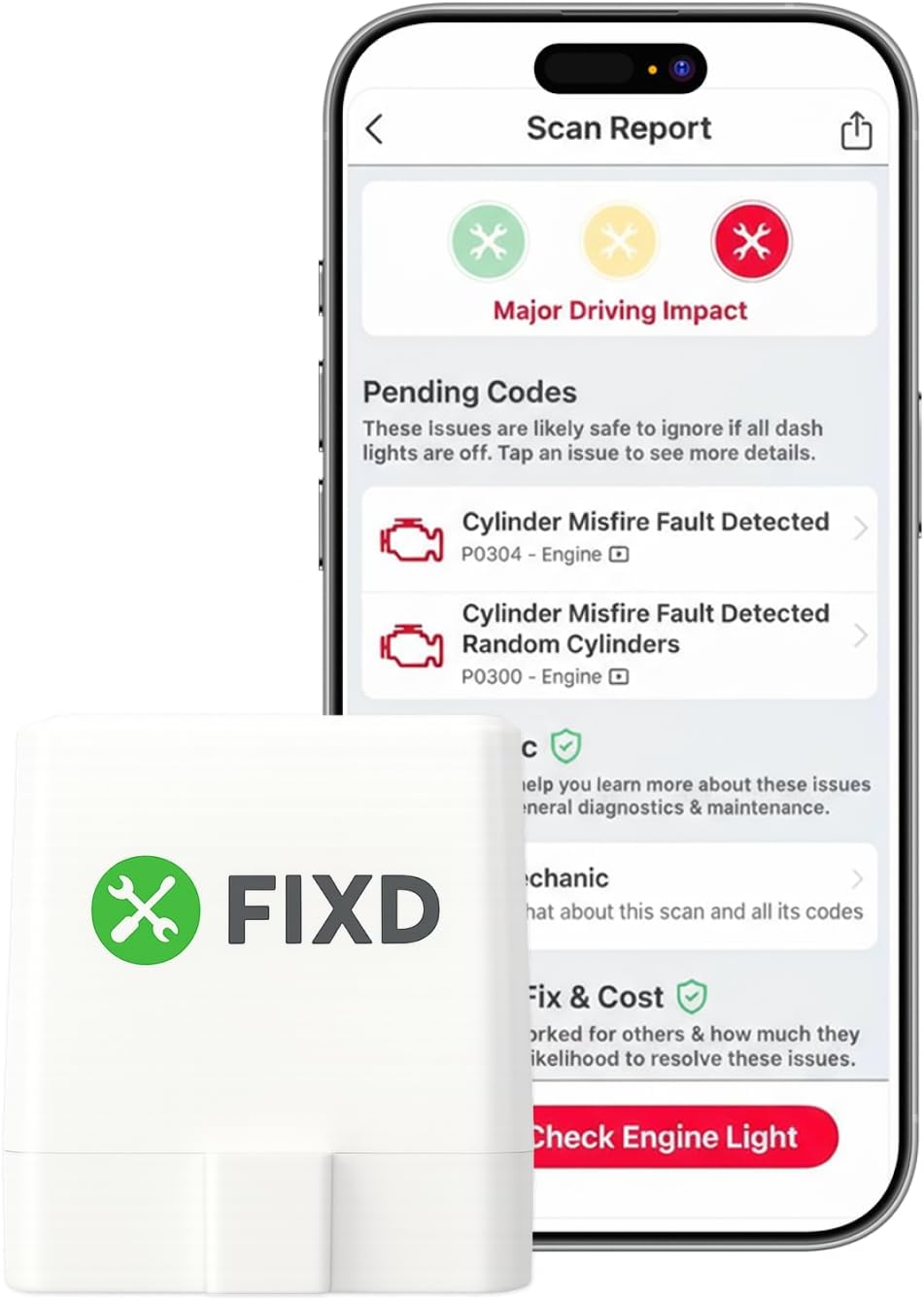
Best Bluetooth OBD2 Scanner
Detect 39,000+ Issues With Enhanced Codes. Save $1000s on car repairs & buying used vehicles by diagnosing problems yourself.
Shop on Amazon
Key Takeaways
- Honda Ridgeline transmission problems like torque converter judder and delayed shifting are often caused by degraded ATF fluid and failing solenoids, but many are covered under technical service bulletins or extended warranty programs that can avoid full replacement.
- The 2017 and 2018 model years experience the highest density of transmission complaints, while 2019+ models benefited from software updates and revised fluid specifications that significantly reduced issues.
- A triple drain-and-fill procedure using genuine Honda ATF-DW1 (6-speed) or ATF 3.1 (9-speed) resolves torque converter judder in most cases when performed early, restoring the friction modifier properties the transmission clutch needs.
- Regular transmission fluid checks every 15,000 miles and early detection of trouble codes like P0741 through OBD-II scanning are critical preventive measures that catch problems before costly internal damage occurs.
- An auxiliary transmission cooler paired with more frequent fluid changes every 20,000–25,000 miles is essential for owners who tow, as thermal breakdown of ATF is the primary cause of Honda Ridgeline transmission failures.
Common Transmission Symptoms in the Honda Ridgeline
Before you throw parts at the problem, you need to identify exactly what your Ridgeline is doing wrong. These are the symptoms that show up most frequently across all model years.
Slipping Gears and Gear Slippage
Gear slippage in the Ridgeline typically presents as a sudden RPM surge, your tachometer bounces up 500–1,000 RPM while the truck fails to accelerate proportionally. You’ll notice this most under moderate throttle between 25 and 50 MPH. In second-generation models with the 6-speed automatic, this often traces back to worn clutch packs or degraded transmission fluid that’s lost its friction modifier properties. Don’t confuse this with VCM-related engine surging, which happens at steady cruise speeds and ties to cylinder deactivation rather than transmission behavior.
Delayed Shifting and Engagement
If you shift from Park to Drive and wait two or three seconds before the truck “catches,” you’re experiencing delayed engagement. This is especially common in cold starts on 2017–2020 Ridgelines. The root cause is often low line pressure from a sticking pressure control solenoid or simply fluid that’s too thick from thermal breakdown. A healthy transmission should engage within one second.
Warning Lights and Diagnostic Codes
The check engine light paired with a flashing “D” on your dash is the Ridgeline’s way of telling you something specific went wrong. Pull codes with an OBD-II scanner immediately. The P0741 trouble code, torque converter clutch circuit performance, is the single most reported code on second-gen Ridgelines. You may also see P0751 (shift solenoid A) or P0871 (overdrive clutch pressure). Write down freeze frame data: it tells you the exact conditions when the fault occurred.
Unusual Noises and Driving Feel
A low-frequency shudder between 20 and 60 MPH that feels exactly like driving over highway rumble strips is the hallmark torque converter judder. It’s distinct from tire vibration because it disappears when you lift off the throttle completely. You might also hear a whine during deceleration, which can indicate pump cavitation from low fluid levels. Any metallic clunking during downshifts when braking suggests worn accumulator pistons or internal hardware fatigue.
Frequent Causes and Types of Transmission Issues
Knowing what causes these symptoms helps you avoid unnecessary repairs and zero in on the actual failure.
Transmission Fluid Leaks and Low Levels
Second-generation Ridgelines don’t have a traditional dipstick, which makes checking automatic transmission fluid level without a dipstick a common frustration. You need to use the inspection plug on the bottom of the transmission case with the fluid at operating temperature (approximately 90–100°F). Leaks commonly develop at the half-shaft seals and the transmission cooler line fittings. Even a half-quart deficit can cause erratic shifting and elevated fluid temperatures.
Torque Converter and Clutch Malfunctions
The torque converter clutch (TCC) judder is the single most discussed Honda Ridgeline transmission problem online. It occurs when the TCC lockup clutch engages and slips microscopically, creating that vibration. Honda issued TSB 17-025 specifically to address this in 2017–2019 models. The prescribed fix involves a triple drain-and-fill using genuine Honda ATF-DW1 fluid and, in some cases, a PCM software update to adjust TCC engagement logic.
“Did 3 drain and fills with DW1 and the shudder went away completely. 45k miles later it’s still smooth. Don’t let the dealer tell you it needs a new torque converter first.” via RidgelineOwnersClub Forums
Sensor and Solenoid Failures
High-pressure shift solenoids and transmission pressure switches control every gear change your Ridgeline makes. When a solenoid sticks or a pressure switch fails, you get harsh shifts, delayed engagement, or limp mode. The 6-speed automatic uses linear solenoids that degrade as fluid contaminates their screens. Replacing these solenoids is a fraction of a full rebuild and can resolve shifting delays and gear slipping entirely.
Impact of Inadequate Maintenance
Honda’s official “severe use” maintenance schedule calls for transmission fluid changes every 25,000 miles if you tow. Most owners follow the normal schedule (every 60,000 miles) and wonder why problems appear at 80,000. Under intermittent high-heat towing loads, ATF breaks down faster. The fluid’s friction modifiers deplete, and the result is exactly that judder and harsh shifting you’re experiencing. Consistent fluid maintenance is the cheapest insurance against a major failure.
Problematic Model Years and Technical Bulletins
Not every Ridgeline year carries equal risk. Here’s what you need to know before buying used or diagnosing your current truck.
Honda Ridgeline Years to Avoid
The 2017 and 2018 model years carry the highest complaint density for transmission problems, according to data compiled by CarComplaints.com. The first-generation 2006 models also had early 5-speed automatic issues, though these were largely resolved by 2008. If you’re shopping for a used Ridgeline, the 2019+ models benefited from software updates and revised fluid specifications that reduced judder complaints significantly.
Known Issues With 6-Speed and 9-Speed Transmissions
Here’s a quick comparison of the two primary transmission architectures in second-generation Ridgelines:
| Feature | 6-Speed Automatic (2017–2021) | ZF 9-Speed Automatic (2022+) |
|---|---|---|
| Common Complaint | TCC judder, harsh 3-4 shift | Rough low-speed shifting, hunting gears |
| Primary Fix | Triple drain-and-fill, PCM update | Software calibration, adaptive relearn |
| Fluid Type | Honda ATF-DW1 | Honda ATF 3.1 |
| TSB Coverage | TSB 17-025, 18-065 | TSB 23-007 |
| Extended Warranty | Yes (select VINs, 8yr/150k) | Case-by-case |
The Honda Ridgeline 9-speed transmission rough shifting fix usually starts with a software update for the transmission control module, followed by a driving relearn procedure. The ZF 9-speed is a fundamentally different unit and requires ATF 3.1, never substitute DW1.
Notable TSBs and Recalls
TSB 17-025 remains the most referenced bulletin for torque converter judder on 2017–2019 models. Honda also extended transmission warranty coverage to 8 years or 150,000 miles for specific VINs affected by TCC shudder. Check your VIN through Honda’s owner portal to see if your truck qualifies. For 9-speed models, TSB 23-007 addresses adaptive shift logic concerns and requires a dealer-performed PCM flash.
“Called Honda corporate after the dealer denied warranty. They approved the repair under the extended coverage. Always escalate if you’re within the 8yr/150k window.” via r/hondaridgeline
Preventive Measures and Repair Solutions
Catching transmission issues early saves you from the most expensive outcome. Here’s your action plan.
Routine Inspections and Fluid Checks
Follow this checklist every 15,000 miles (or every 10,000 if you tow):
- Check fluid level via the inspection plug at operating temperature
- Inspect half-shaft seals and cooler lines for leaks
- Scan for stored and pending DTCs with an OBD-II scanner
- Monitor transmission temperature on your MID (anything above 220°F under load is a warning)
- Change i-VTM4 rear differential fluid every 30,000 miles
For DIY fluid checks, the FOXWELL NT510 OBD2 Scanner reads Honda-specific transmission codes and displays live data including transmission fluid temperature, essential for catching overheating before it causes permanent damage.

Addressing Minor Transmission Problems Early
A triple drain-and-fill procedure replaces roughly 70–80% of total fluid volume and is far more effective than a single drain. Use only genuine Honda ATF-DW1 for 6-speed models or ATF 3.1 for 9-speed models. Drive 50–100 miles between each drain cycle to allow old and new fluid to mix. This procedure alone resolves torque converter judder in a majority of cases when performed before clutch material physically wears away. A software update for the Honda Ridgeline transmission control module should be performed at the dealer during the same visit.
Transmission Replacement and Aftermarket Upgrades
Full transmission replacement is the last resort. Before approving that work, confirm the shop has performed a full solenoid test, verified line pressures, and checked for TSB applicability. For VCM-related vibration that you’ve been misdiagnosing as a transmission issue, an aftermarket S-VCM Controller disables cylinder deactivation and eliminates the engine-mount-related shudder that mimics drivetrain problems.

Aftermarket Cooling and Maintenance Tips
If you tow regularly, even light loads like jet skis or utility trailers, an auxiliary transmission cooler is the single best upgrade you can make. Mount it in front of the AC condenser for maximum airflow. Keep fluid temperatures below 200°F during sustained towing, and increase your Honda Ridgeline transmission fluid change interval to every 20,000–25,000 miles under these conditions. Pair this with fresh i-VTM4 rear differential fluid to protect the entire drivetrain.
Data Insights and Analysis
According to NHTSA complaint data through early 2026, transmission-related complaints represent approximately 35% of all powertrain issues filed for 2017–2020 Honda Ridgeline models, with the torque converter shudder accounting for the largest single category. CarComplaints data shows the 2017 Ridgeline carries roughly 3x more transmission complaints than the 2019 model, reflecting the impact of Honda’s mid-cycle software and fluid specification changes.
Expert Note: "Torque converter judder doesn't originate from mechanical wear in most early-stage cases. It's a friction coefficient mismatch, the ATF's friction modifier package depletes under thermal cycling, and the TCC lockup clutch can no longer maintain a stable engagement. That's why a triple fluid exchange with fresh DW1 works: you're restoring the chemical properties the clutch needs, not replacing hardware. But once you see metallic debris on the drain plug, the window for a fluid-only fix has closed."
For a visual walkthrough of the triple drain-and-fill process on a second-gen Ridgeline, this video is one of the clearest available:
Frequently Asked Questions
What are the most common Honda Ridgeline transmission problems?
The most common Honda Ridgeline transmission problems include torque converter clutch judder, delayed gear engagement, harsh downshifts, and slipping gears. These issues often stem from degraded ATF fluid, failing shift solenoids, or software calibration gaps in 6-speed and 9-speed automatic transmissions. Early diagnosis can help avoid expensive full transmission replacement.
How do I fix torque converter shudder on my Honda Ridgeline?
The most effective fix for Honda Ridgeline torque converter shudder is a triple drain-and-fill procedure using genuine Honda ATF-DW1 fluid, paired with a PCM software update. This procedure replaces 70–80% of transmission fluid and restores the friction modifier properties the TCC lockup clutch needs. Drive 50–100 miles between drains for optimal results.
What model years of Honda Ridgeline have the worst transmission issues?
The 2017 and 2018 Honda Ridgeline model years carry the highest complaint density for transmission problems, with 2017 showing roughly 3x more complaints than 2019 models. The 2019+ models benefited from software updates and revised fluid specifications that reduced issues significantly. First-generation 2006 models also had early problems, largely resolved by 2008.
Can low transmission fluid cause Honda Ridgeline transmission problems?
Yes. Low transmission fluid is a primary cause of slipping gears, delayed shifting, and harsh downshifts on Honda Ridgelines. Second-gen models lack a traditional dipstick, so check fluid level using the inspection plug at operating temperature (90–100°F). Even a half-quart deficit causes erratic shifting and elevated fluid temperatures, leading to accelerated fluid breakdown.
Is my Honda Ridgeline transmission covered under warranty for transmission problems?
Honda extended transmission warranty coverage to 8 years or 150,000 miles for specific VINs affected by torque converter shudder. Check your VIN through Honda’s owner portal to confirm eligibility. Many transmission issues are also covered under technical service bulletins (TSB 17-025, 18-065, 23-007), and escalating with Honda corporate can help if dealer approval is denied.
What should I do if my Honda Ridgeline transmission is slipping or hunting gears?
First, scan for diagnostic trouble codes with an OBD-II scanner and note the freeze frame data. Check transmission fluid level, condition, and temperature. Schedule a dealer visit to test shift solenoids, verify line pressures, and perform any applicable TSB service. Avoid driving in severe conditions until diagnosed, as continued slipping accelerates internal wear and can necessitate full transmission replacement.
Read More:
- Car Transmission Problems (Guide for Automatic, CVT, and Hybrid)
- Honda CVT Transmission Problems (Here’s the Master Fixes)
- Honda Pilot Transmission Problems (The Complete Diagnostic Guide)
- Honda Odyssey Transmission Problems (Every Model Year’s Worst Failures)
- Honda CR-V Transmission Problems (Diagnosing Shudder, and Failure)
- Honda HR-V Transmission Problems (Guide to CVT Shudder, and Fixes)