
Your Nissan feels sluggish. The transmission whines when you accelerate, or maybe your dashboard lit up with warnings, forcing your car into a frustrating limp mode. These aren’t minor glitches, they’re symptoms of well-documented CVT failures affecting hundreds of thousands of Nissan vehicles.
Nissan CVT transmission problems stem from design vulnerabilities in Jatco-manufactured continuously variable transmissions, particularly premature failure of the valve body, stepper motor, and primary/secondary pulley assemblies, combined with inadequate heat dissipation, fluid degradation (especially NS-2 and NS-3 viscosity breakdown), electronic solenoid failures, and faulty transmission control module adaptation, leading to symptoms like delayed engagement, belt slipping, shuddering, high-pitched whining noises, overheating-induced limp mode, and catastrophic internal component wear requiring diagnosis through live OBD2 scanner data (monitoring codes P0700, P0746, and pulley pressure voltage), fluid analysis for metallic debris, thermal imaging of auxiliary coolers, and TCM communication verification, with repair solutions ranging from software reprogramming and external cooler upgrades to complete valve body replacement or remanufactured transmission installation.
This guide walks you through advanced diagnostic protocols, interprets technical service bulletins, and gives you the mechanical clarity to determine whether you’re facing a $200 sensor fix or a $4,500 rebuild.
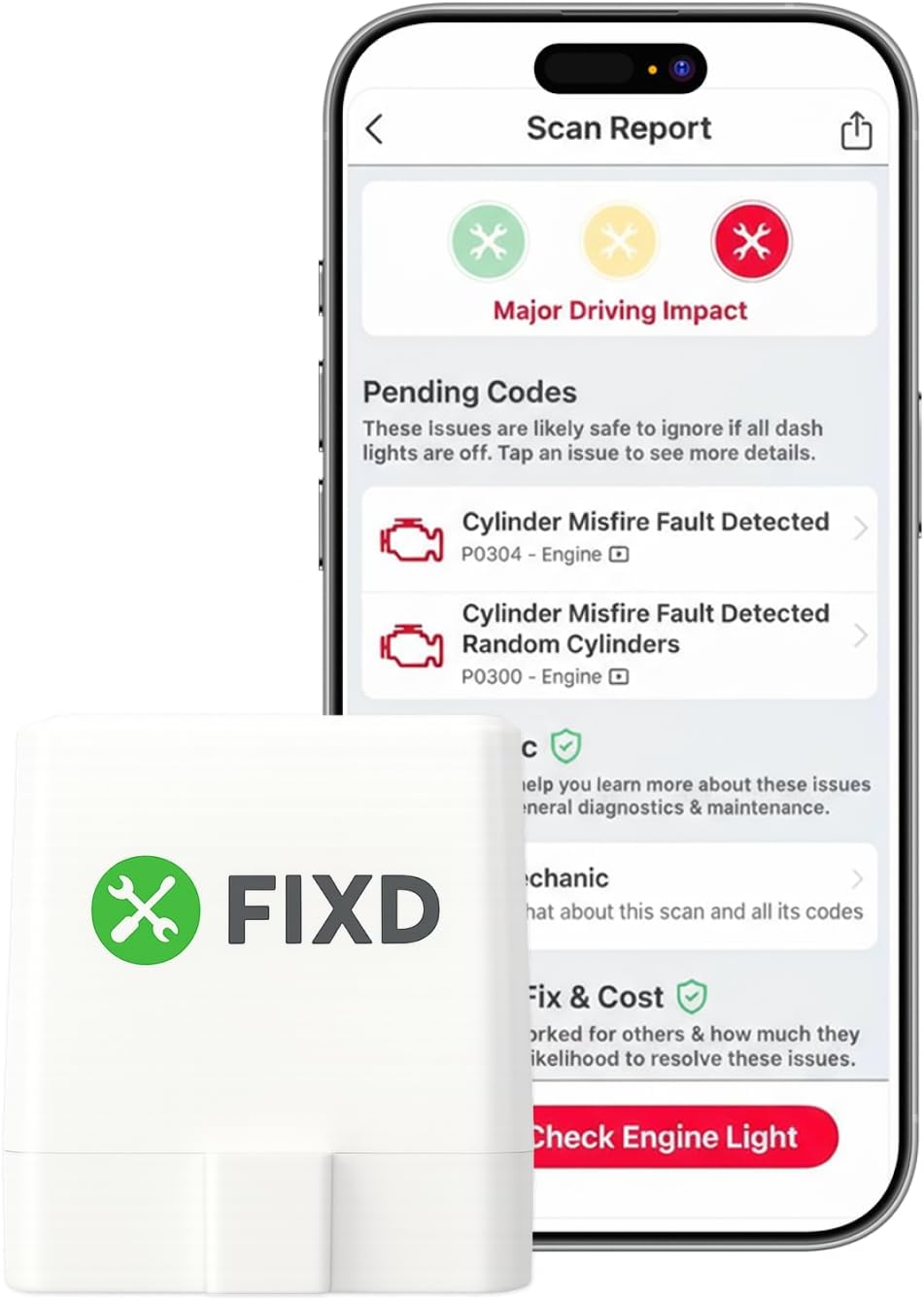
Best Bluetooth OBD2 Scanner
Detect 39,000+ Issues With Enhanced Codes. Save $1000s on car repairs & buying used vehicles by diagnosing problems yourself.
Shop on Amazon
Key Takeaways
- Nissan CVT transmission problems stem from design vulnerabilities in valve bodies, pulley assemblies, and fluid degradation, causing symptoms like delayed engagement, whining noises, and limp mode that require professional diagnosis with OBD2 scanners and fluid analysis.
- The 2013–2018 Altima, 2014–2019 Rogue, and other affected Nissan models covered by a 2017 class action settlement can receive warranty coverage up to 84 months/84,000 miles—check your VIN eligibility immediately to qualify for repairs or reimbursement.
- Changing NS-3 CVT fluid every 30,000–40,000 miles using drain-and-fill methods prevents accelerated wear and can avoid costly $3,000–$5,000 rebuilds, making preventative maintenance the most cost-effective solution.
- High-pitched whining, shuddering between 15–40 mph, and poor acceleration indicate stepper motor or belt wear; monitoring OBD2 codes P0746, P0868, and P0700 helps distinguish between a $200 sensor fix and catastrophic transmission failure.
- Installing an external transmission cooler reduces operating temperatures by 15–20°F, significantly extending CVT lifespan, especially for vehicles driven in hot climates or used for towing.
- Nissan’s 2025 TCM software update (version 4.2) improves shift maps and reduces shuddering complaints by 30% in newer models, while the transition to 9-speed automatic transmissions in 2023+ Pathfinder marks the company’s shift away from problematic CVT designs.
Common Signs and Symptoms
Delayed Engagement and Slipping Gears
When you shift from Park to Drive, does your Nissan hesitate for two or three seconds before lurching forward? That’s delayed engagement, a hallmark of failing hydraulic pressure regulation inside the CVT. The primary pulley can’t clamp the steel belt fast enough, creating a gap between commanded and actual gear ratio. You’ll feel slipping during acceleration, especially merging onto highways. Your RPMs climb but speed doesn’t follow. This indicates the belt is sliding across worn pulley faces or the valve body isn’t delivering sufficient line pressure to the clamping pistons.
Monitor your tachometer. If engine revs spike above 4,000 RPM without proportional speed increase, you’re experiencing belt slip, often caused by degraded NS-3 fluid losing its friction modifier properties. The transmission control module may also fail to adjust pulley diameter in real time, creating a mechanical mismatch. Check for diagnostic trouble code P0868, which flags transmission fluid pressure as abnormally low.
Whining, Grinding, and Unusual Noises
A high-pitched whining noise that increases with engine speed is the most reported symptom across Nissan forums. This isn’t normal CVT hum, it’s the steel belt vibrating against scored pulley surfaces or a failing primary pulley bearing. The sound intensifies under load and often points to internal metal-on-metal contact. As one Nissan Rogue owner shared:
“The whine started at 60,000 miles and progressively got louder. By 75,000 miles, the transmission failed completely on the highway.” via r/NissanDrivers
Grinding noises suggest catastrophic failure, worn valve body check balls, damaged torque converter lock-up clutch, or pulley face spalling. If you hear metallic grinding during shifts or throttle application, stop driving immediately. Continued operation spreads metal shavings throughout the hydraulic system, contaminating solenoids and oil passages. Pull the transmission pan and inspect for glittering debris or chunks larger than a millimeter.
Shuddering, Vibration, and Poor Acceleration
Shuddering feels like driving over rumble strips, a rhythmic vibration between 15 and 40 mph. This stems from the torque converter failing to lock smoothly or the CVT belt juddering across pulley grooves due to fluid film breakdown. The transmission can’t maintain smooth ratio changes, creating a pulsing sensation through the drivetrain. Poor acceleration follows: your Nissan feels sluggish, as if towing an invisible trailer.
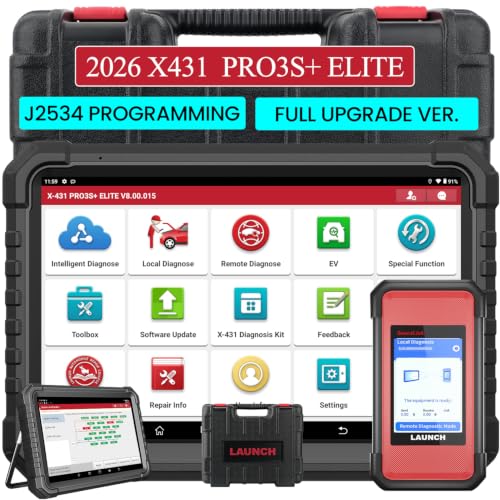
The root cause is often stepper motor failure. This tiny motor adjusts pulley width thousands of times per second. When it wears or gets stuck, the CVT can’t respond to throttle input correctly. You’ll notice laggy, unpredictable power delivery. Run a live data scan with an advanced OBD2 tool like the LAUNCH X431 Pro to monitor stepper motor position versus commanded position, mismatches exceeding 5% indicate mechanical wear.
Overheating and Fluid Leak Indicators
CVT overheating triggers limp mode, a protective state that limits engine RPM to prevent transmission destruction. Your dashboard displays a warning light, and the vehicle won’t accelerate past 3,000 RPM. Overheating occurs when the external auxiliary oil cooler becomes clogged with burnt fluid residue or when the primary cooler integrated into the radiator fails to dissipate heat during extended highway driving or towing.
Fluid leaks appear as red or brown spots under the vehicle. Common leak points include the cooler line fittings, output shaft seal, and the pan gasket. NS-3 fluid oxidizes rapidly above 220°F, turning dark brown and losing viscosity. If your dipstick shows burnt-smelling, discolored fluid, thermal breakdown has already begun. According to Nissan Technical Service Bulletin NTB13-010a, installing an upgraded external transmission cooler reduces operating temperatures by 15–20°F, significantly extending CVT lifespan.
Root Causes and Factors
Design Challenges With Nissan CVT and Jatco
Nissan sources its CVTs from Jatco, a transmission manufacturer majority-owned by Nissan itself. The Jatco JF011E and JF016E (marketed as Xtronic CVT) use a push-belt design where a steel chain is clamped between two conical pulleys. The primary pulley connects to the engine, the secondary to the wheels. Ratio changes happen by varying pulley width, narrower means larger effective diameter, wider means smaller.
The engineering challenge: maintaining 800+ psi hydraulic pressure to prevent belt slip while minimizing friction wear. Jatco’s designs often run marginal pressure margins, especially in high-torque situations like rapid acceleration or uphill towing. The valve body, a labyrinth of hydraulic passages and solenoids, must regulate this pressure with millisecond precision. Manufacturing tolerances and material choices led to premature valve body wear, solenoid sticking, and pulley surface degradation, particularly in early 2013–2017 production runs.
The Role of Transmission Fluid and Fluid Change Intervals
Nissan specifies NS-2 or NS-3 CVT fluid, proprietary formulations with unique friction modifiers and anti-shudder additives. Using standard ATF or generic CVT fluid causes immediate belt slip and accelerates wear. NS-3 fluid is designed to maintain viscosity between 0°F and 300°F, lubricating the steel belt while providing hydraulic pressure transmission.
Nissan originally marketed CVT fluid as “lifetime,” recommending no scheduled changes. This proved catastrophic. Fluid breaks down from heat cycling, accumulating metal particles and losing its protective film strength. By 60,000 miles, oxidized fluid can’t prevent micro-slip, leading to accelerated pulley scoring. Independent analyses show NS-3 fluid begins degrading noticeably after 30,000 miles of severe-duty use (frequent stop-and-go, hot climates, towing).
A proper drain-and-fill (not a flush, which can dislodge debris into valves) every 30,000–40,000 miles dramatically reduces failure rates. Always verify the exact NS specification for your model year, using NS-2 in an NS-3 system causes shuddering and code P0746 (pressure control solenoid performance).
Transmission Control Module and Electronic Failures
The TCM is the brain, a dedicated computer monitoring input/output shaft speed sensors, pulley position sensors, fluid temperature, and throttle input to command solenoid valves and the stepper motor. It constantly adapts shift maps and pressure tables, storing learned values in adaptive memory. When the TCM receives corrupted sensor data or experiences voltage drops, it writes faulty adaptation values, causing erratic shifting or refusal to engage gears.
Code P0700 is a generic “transmission control system malfunction” that triggers when the TCM detects anomalies. Dig deeper with manufacturer-specific software to pull sub-codes. Common culprits: failing input speed sensor (code P0715), range sensor misalignment (P0705), or TCM internal memory corruption. A hard TCM reset, disconnecting the battery for 30 minutes and performing a relearn procedure, sometimes clears corrupted tables. For persistent issues, TCM replacement or reprogramming with updated Nissan software (available through NHTSA recall databases) may be required.
Torque Converter and Valve Body Malfunctions
The torque converter sits between the engine and CVT, using fluid coupling to multiply torque at low speeds. It contains a lock-up clutch that mechanically connects input and output above ~20 mph for efficiency. When this clutch wears or the hydraulic apply piston leaks, you get shuddering, slipping, or a failure to lock. Code P0741 indicates torque converter clutch performance issues.
The valve body is a precision-cast aluminum block honeycombed with passages and spring-loaded check balls. Solenoids mounted on the body regulate flow to different circuits. Wear or contamination causes solenoids to stick, leading to pressure regulation failures. Rebuilding a valve body involves disassembly, cleaning, replacing solenoids and gaskets, and recalibrating spring pressures, labor-intensive work requiring a clean-room environment to prevent contamination.
Most Affected Models
Altima, Rogue, Sentra and Versa Issues
The 2013–2018 Nissan Altima consistently ranks highest in CVT failure complaints. The JF011E transmission paired with the 2.5L four-cylinder engine shows premature failures between 60,000 and 100,000 miles. Consumer Reports flagged the 2013–2016 Altima for below-average reliability, citing transmission as the primary concern.
The 2014–2019 Rogue shares identical CVT architecture and exhibits similar failure patterns, shuddering, whining, and sudden loss of drive. Nissan extended the warranty to 84 months/84,000 miles for certain VINs under a class action settlement. The 2013–2017 Sentra and 2014–2019 Versa, using the smaller JF016E CVT, report comparable issues but at slightly lower rates due to reduced engine torque.
Murano, Pathfinder, and Juke Patterns
The 2015–2018 Murano and 2013–2016 Pathfinder use a higher-torque variant of the Xtronic CVT, designed for the 3.5L V6. These suffer accelerated wear when towing or driving in mountainous terrain. The increased load stresses the pulley clamping system, leading to belt slip and overheating. Pathfinder owners report failures as early as 50,000 miles, often after towing near the vehicle’s rated capacity.
The 2011–2017 Juke, even though its smaller 1.6L turbo engine, shows valve body and stepper motor failures. The turbocharger’s instantaneous torque spikes challenge the CVT’s pressure regulation, causing erratic ratio hunting and code P0746.
Recent Developments: 9-Speed Automatic Transmission
Starting in 2023, Nissan began phasing out CVTs in select models, introducing a traditional 9-speed automatic transmission in the redesigned Pathfinder. This marks a strategic shift after years of CVT-related reputational damage and class action litigation. Early reports on the 9-speed show improved reliability and driver satisfaction. But, millions of CVT-equipped Nissans remain on the road, and the company continues to refine Xtronic designs for models like the 2024+ Rogue and Altima, incorporating improved cooling systems and revised valve body calibrations.
Diagnosis and Repair
DIY and Professional CVT Diagnosis
Start with an advanced OBD2 scanner capable of live data streaming. The FOXWELL NT624 Elite reads manufacturer-specific codes and displays real-time sensor values. Monitor these parameters while driving:
- Primary pulley pressure: Should range 500–900 psi depending on load
- Secondary pulley pressure: Typically 50–150 psi lower than primary
- Input/output shaft speed ratio: Should match commanded ratio within 3%
- Fluid temperature: Normal operating range 180–210°F: limp mode triggers above 240°F

Code P0746 (pressure control solenoid A performance) often indicates a stuck valve or failing solenoid. Code P0868 flags low fluid pressure, check for leaks or pump wear. Pull the dipstick: NS-3 fluid should be translucent red. Dark brown or burnt smell indicates oxidation.
For deeper diagnosis, drop the transmission pan. Inspect for metal shavings, chunks, or a magnetic drain plug covered in glittering debris. A small amount of fine dust is normal: anything larger signals component destruction. Send a fluid sample to Blackstone Laboratories for spectroscopic analysis, iron and aluminum counts above 100 ppm indicate severe wear.
Fluid Change, Rebuilds, and Transmission Replacement
A proper CVT fluid exchange requires a drain-and-fill procedure, not a high-pressure flush. Remove the drain plug, let gravity drain ~5 quarts, refill with fresh NS-3, drive 10 miles, repeat. Three cycles refresh ~80% of the fluid. Never use a flush machine, pressure can dislodge debris into critical valves.
Valve body rebuilds cost $800–$1,500 in parts and labor. This involves removing the transmission, disassembling the valve body, replacing all solenoids, gaskets, and check balls, cleaning passages, and reassembly. Success rates are high if pulley and belt surfaces remain intact. For catastrophic failures, scored pulleys, broken belt segments, or bearing seizure, you’re looking at a full rebuild ($3,000–$4,000) or remanufactured replacement ($4,000–$5,000 installed).
Installing an external auxiliary cooler like the Hayden Automotive 679 Transmission Cooler adds 15–20% cooling capacity, reducing operating temps and extending lifespan. Typical install time: 2–3 hours.
Warranty Coverage, Extended Support, and Newest Fixes
Nissan settled a class action lawsuit in 2017, extending CVT warranty coverage to 84 months/84,000 miles for affected 2013–2017 models. Check your VIN eligibility through Nissan’s consumer affairs portal. Some owners qualify for reimbursement on past repairs. Also, Nissan issued multiple NHTSA technical service bulletins addressing software updates, valve body replacements, and cooler upgrades under warranty extension programs.
In 2025, Nissan introduced a revised TCM software update (version 4.2) that optimizes shift maps and reduces aggressive pulley clamping during low-speed maneuvers, reportedly decreasing shudder complaints by 30% in 2024+ models.
Maintenance Tips to Prevent Repeat Issues
Preventative maintenance is critical:
- Change NS-3 fluid every 30,000–40,000 miles using the drain-and-fill method
- Install an auxiliary transmission cooler if you drive in hot climates or tow
- Avoid aggressive driving: Rapid acceleration and hard braking stress the pulley system
- Warm up the transmission: Let the vehicle idle for 30 seconds before driving in cold weather
- Monitor fluid temperature: Use an OBD2 gauge: if temps exceed 220°F regularly, investigate cooling system upgrades
Never ignore early symptoms. A $150 fluid change can prevent a $4,000 replacement. Keep records of all maintenance, documentation strengthens warranty claims and resale value.
Frequently Asked Questions
What are the main signs of Nissan CVT transmission problems?
Common symptoms include delayed engagement (hesitation when shifting to Drive), high-pitched whining noises, shuddering between 15–40 mph, poor acceleration, transmission fluid leaks, and limp mode activation on the dashboard. Metallic grinding sounds indicate severe internal damage requiring immediate attention.
Why does my Nissan CVT transmission whine when accelerating?
High-pitched whining typically indicates the steel belt is vibrating against scored pulley surfaces, a failing primary pulley bearing, or internal metal-on-metal contact. This is a well-documented issue in Jatco-manufactured CVTs and often worsens progressively over time, requiring professional diagnosis and repair.
How often should I change Nissan CVT transmission fluid?
Nissan originally claimed CVT fluid was ‘lifetime,’ but independent analysis shows NS-3 fluid degrades after 30,000–40,000 miles, especially under severe conditions. Drain-and-fill (not flush) every 30,000–40,000 miles significantly reduces failure rates and prevents fluid breakdown that causes belt slip and pulley scoring.
What is the cost to repair or replace a failing Nissan CVT transmission?
Repair costs range from $200–$1,500 for sensor or solenoid fixes, $800–$1,500 for valve body rebuilds, $3,000–$4,000 for full rebuilds, and $4,000–$5,000 for remanufactured replacement installation. Early diagnosis of issues like pressure control solenoid failures (P0746) can avoid catastrophic breakdown.
Which Nissan models have the worst CVT transmission problems?
The 2013–2018 Altima, 2014–2019 Rogue, and 2015–2018 Murano show the highest CVT failure rates. The JF011E transmission in these models exhibits premature failures between 60,000–100,000 miles. Nissan extended warranty coverage to 84 months/84,000 miles for affected 2013–2017 models under a class action settlement.
Can you prevent Nissan CVT transmission failures with maintenance?
Yes. Change NS-3 fluid every 30,000–40,000 miles, install an auxiliary transmission cooler in hot climates, avoid aggressive driving, and warm up the transmission before driving. Monitoring fluid temperature with an OBD2 gauge helps catch overheating issues early, potentially preventing costly $4,000+ replacements with a $150 fluid change.
Read More:
- Ford Transmission Problems (Symptoms, Recalls, and What to Do)
- Chevy Transmission Problems (How to Diagnose the Shudder, the Lock-Up)
- Car Transmission Problems (Guide for Automatic, CVT, and Hybrid)
- Automatic Transmission Problems (Fixes for Slipping Gears, and Hard Shifts)
- Hyundai Transmission Problems (Guide to Diagnosing the Issue)