This post contains affiliate links. Purchases may earn me a commission at no extra cost to you.
Your transmission just slipped, shuddered, or threw a warning light, and now you’re wondering how bad it really is. You’re not alone.
Automatic transmission problems range from simple fluid issues and faulty solenoids to severe internal clutch pack failure. The key to avoiding a catastrophic breakdown is early diagnosis: check your fluid condition first, scan for OBD-II codes like P0700, and then determine whether you need a low-cost sensor swap, a fluid service, or a full rebuild. Most transmission warning signs, slipping gears, hard shifts, delayed engagement, start as minor problems that escalate fast when ignored.
This guide walks you through every major symptom, root cause, and fix for automatic transmission problems in 2026, including issues specific to modern 8, 9, and 10-speed units found in today’s SUVs and trucks.
Early diagnosis of automatic transmission problems through fluid checks and OBD-II scanning can prevent costly rebuilds by identifying issues like slipping, hard shifts, or solenoid failures before they escalate.
Modern 8, 9, and 10-speed transmissions require regular ATF fluid changes every 30,000–60,000 miles using the drain-and-fill method to prevent degradation and internal component wear.
Common automatic transmission warning signs include slipping gears, delayed engagement, transmission warning lights (P0700 code), and unusual noises—each pointing to specific root causes from fluid issues to solenoid or valve body problems.
A structured diagnostic approach starting with fluid inspection, leak checks, and professional line pressure testing saves thousands of dollars by pinpointing whether you need a targeted solenoid repair or a full transmission rebuild.
Preventative maintenance such as installing an auxiliary cooler, scanning for soft codes quarterly, and avoiding aggressive cold starts protects transmission life and addresses the thermal management weakness in modern SUVs and trucks.
Key Warning Signs of Automatic Transmission Trouble
Catching automatic transmission problems early can mean the difference between a minor repair and a total rebuild. Here are the symptoms you should never ignore.
Slipping Gears and Shifting Problems
If your engine revs spike but your vehicle barely accelerates, you’re experiencing symptoms of transmission slipping when accelerating. This feels like the transmission “falls out” of gear momentarily, then catches again with a jolt. In modern high-gear-count units (8-speed and 10-speed), slipping often starts subtly, you might notice the tachometer climbing 200–400 RPM higher than usual during a normal highway merge.
Slipping can also present as the transmission hunting for gears at highway speeds. Your vehicle may cycle between gears repeatedly, unable to settle. This is especially common in 2024–2026 SUVs with aggressive torque converter lockup strategies designed for fuel economy.
Delayed Engagement and Rough Shifting
An automatic transmission delay going into drive or reverse is one of the earliest red flags. You shift from Park to Drive and count one, two, sometimes three full seconds before the car responds. That hesitation means internal pressure isn’t building fast enough, often due to low fluid, a worn valve body, or a failing solenoid.
Automatic transmission hard shifting from 1st to 2nd is another telltale sign. The shift feels like a hard slam rather than a smooth transition. Some owners describe it as the car being “kicked from behind.” This symptom frequently points to solenoid problems or adaptive learning values that need resetting.
Transmission Warning Lights and Dashboard Alerts
A P0700 transmission control system malfunction code is the generic gateway code that tells you something is wrong in the transmission control module. It rarely appears alone, your scanner will usually find companion codes (P0750–P0770 for solenoid issues, P0740 for torque converter lockup clutch shudder symptoms). Don’t panic at P0700 by itself, but don’t ignore it either.
Modern vehicles may also trigger “Limp Mode,” which locks your transmission into a single gear (usually 3rd or 5th) to protect internal components. A transmission limp mode reset procedure in 2026 vehicles often involves clearing codes, performing an adaptive learning reset, and addressing the underlying fault, not just cycling the ignition.
Unusual Noises and Clunking
Grinding, whining, or clunking sounds during shifts suggest mechanical wear. A buzzing or humming noise that changes with vehicle speed (not engine speed) often points to a failing output shaft bearing or worn planetary gear set. Clunking specifically during the 1-2 or 2-3 shift can indicate damaged clutch drums or broken return springs inside the transmission.
Root Causes and Types of Transmission Problems
Understanding why your transmission fails helps you make smarter repair decisions. Most automatic transmission problems fall into three categories.
Transmission Fluid Issues
Fluid is the lifeblood of your automatic transmission. It acts as a hydraulic medium, lubricant, and coolant simultaneously. A burning smell from transmission fluid troubleshooting starts with a visual check: healthy ATF is bright red or pink. Dark brown or black fluid with a burnt odor means the fluid has oxidized, and your clutch material is likely degrading.
Causes of transmission overheating in stop-and-go traffic are directly tied to fluid health. When ATF overheats past 220°F, it begins breaking down exponentially. Modern SUVs with integrated transmission coolers are especially vulnerable, their thermal management systems struggle under towing loads or prolonged city driving. The debate around transmission fluid flush vs. drain and fill in 2026 remains settled among experienced technicians: a drain and fill (replacing 30–40% of the fluid at a time) is safer for high-mileage vehicles. High-pressure flushes can dislodge debris and push it into valve body passages.
Mechanical Failures and Internal Components
Inside the transmission, clutch packs, bands, and planetary gear sets do the heavy lifting. Worn clutch packs cause slipping. Broken bands cause loss of specific gears. A failing torque converter lockup clutch produces a distinctive shudder between 35–50 mph that many owners mistake for an engine misfire.
Signs of a failing transmission valve body include erratic shifting, flared shifts (RPMs rise between gears), and garage shifts that feel harsh. The valve body acts as the “brain” directing hydraulic pressure, and low transmission line pressure causes and fixes often trace back to worn valve body bores or stuck spool valves.
Electronic and Control System Defects
Automatic transmission solenoid failure symptoms include stuck shifts, failure to shift into certain gears, and limp mode activation. Solenoids are electro-hydraulic valves controlled by the TCM. They wear out over time, and contaminated fluid accelerates their failure dramatically.
“Replaced both shift solenoids on my ’22 Explorer 10-speed and the hard 1-2 shift is completely gone. Total parts cost was under $80. Don’t let a shop talk you into a rebuild before checking solenoids first.” via r/MechanicAdvice
Resetting transmission adaptive learning values in 2026 vehicles is often necessary after any solenoid replacement or fluid service. The TCM “learns” your driving patterns and shift points over time. After a repair, stale adaptive data can cause the same hard shifting you just fixed.
Identifying and Diagnosing Transmission Issues
A structured diagnostic approach saves you from throwing money at the wrong repair. Start simple, then escalate.
Transmission Fluid Checks and Inspection
Many 2024–2026 vehicles have sealed transmissions with no dipstick. Knowing how to check transmission fluid level without a dipstick requires accessing the fill plug on the transmission pan (with the vehicle level, engine running, and fluid at operating temperature). If fluid drips out steadily when you remove the check plug, the level is correct.
Here’s a quick fluid condition guide:
Fluid Color
Smell
Condition
Action Needed
Bright red/pink
Sweet
Healthy
No action
Light brown
Slight odor
Aging
Schedule drain and fill
Dark brown
Burnt
Degraded
Drain and fill immediately
Black with particles
Strong burnt
Failed
Internal inspection required
For a reliable at-home fluid check, the OEMTOOLS Fluid Evacuator lets you sample and extract fluid through the dipstick tube or fill port without a full drain.
OEMTOOLS 24937 Pneumatic/Manual Fluid Extractor, 1.5 Gallon (6L) Oil Extractor Pump, For Coolant, Transmission, and Power Steering Fluid, 2 Dipstick...
Checking transmission cooler lines for leaks and clogs is a critical step many owners skip. Look for wet spots along the metal cooler lines running from the transmission to the radiator. Rubber-to-metal connection points are the most common leak locations. A slow leak can drop your fluid level just enough to cause intermittent slipping without triggering a warning light.
Transmission pan gaskets and axle seals are also common leak sources. Red fluid drips under the center or front of your vehicle are a dead giveaway.
When to Seek Professional Transmission Troubleshooting
If you’ve checked your fluid (level and condition are fine), cleared codes, and the problem persists, you likely need a professional line pressure test. This test measures actual hydraulic pressure inside the transmission and pinpoints whether the issue is a pump, valve body, or internal seal failure.
“Got a line pressure test done and it showed 40 PSI low on the reverse circuit. Turned out to be a worn boost valve in the valve body, not the whole trans. Saved me thousands.” via r/Cartalk
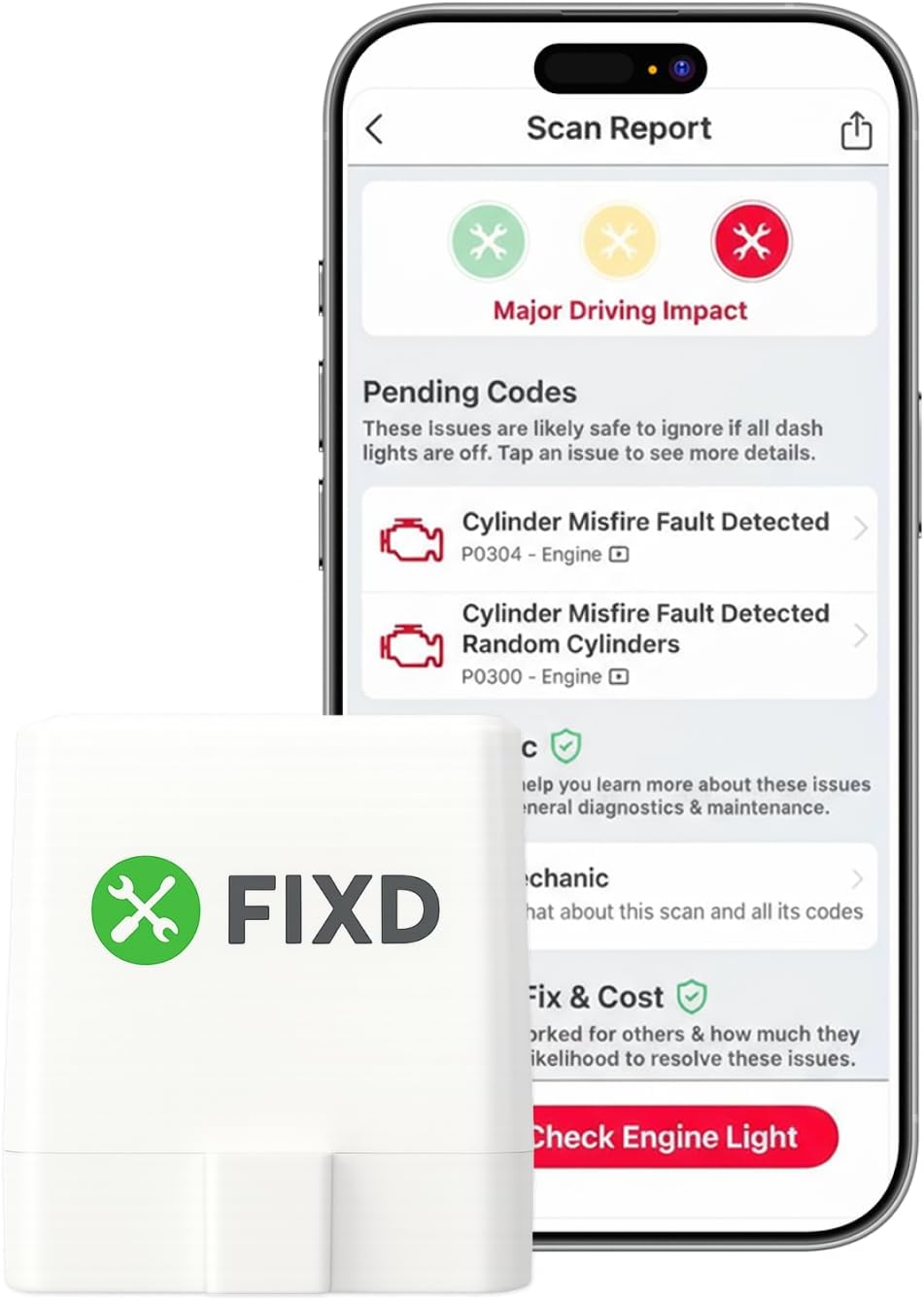
A quality BlueDriver Bluetooth OBD2 Scanner gives you enhanced transmission codes and live data on shift solenoid performance, well beyond what basic code readers offer.
BlueDriver Bluetooth Pro OBDII Scan Tool for iPhone & Android - No Subscription Fee - OBD2 Car Scanner and Code Reader - Diagnose Check Engine, ABS, SRS,...
Once you’ve diagnosed the problem, you need to decide on the right fix. Here’s how each option stacks up.
Repair and Rebuild Options
A transmission rebuild involves disassembling the entire unit, inspecting every component, and replacing worn parts (clutch packs, seals, bands, solenoids). It’s the most cost-effective route when internal damage is moderate. A rebuild typically addresses the root cause rather than masking symptoms.
For solenoid or valve body issues specifically, a targeted repair can fix automatic transmission problems without pulling the entire unit. Many valve bodies can be serviced in-vehicle on popular models like the Ford 10R80 and GM 10L80.
Transmission Replacement and Remanufactured Solutions
A remanufactured transmission comes fully rebuilt to OEM specs with updated components that address known failure points. This is often the better choice for high-mileage vehicles where multiple systems have degraded simultaneously.
Option
What’s Included
Best For
Targeted repair
Solenoid/valve body only
Single-symptom issues
Full rebuild
All internals replaced
Moderate internal wear
Remanufactured unit
Factory-spec rebuild + updates
Severe or multiple failures
Used transmission
Salvage yard pull
Budget-only situations
How to Prevent Transmission Problems
Prevention is always cheaper than repair. Follow these steps to maximize transmission life:
Change ATF every 30,000–60,000 miles using drain-and-fill method. Don’t trust “lifetime fluid” claims, they mean lifetime of the warranty, not the vehicle.
Install an auxiliary transmission cooler if you tow, haul, or drive in hot climates. Thermal management is the #1 weakness in 2024–2026 SUVs.
Check cooler lines annually for leaks, corrosion, and clogs.
Scan for soft codes quarterly with an OBD-II scanner. Catching a P0700 or solenoid code early can prevent cascade failures.
Avoid aggressive driving from cold starts. Let the transmission warm up for 30–60 seconds before hard acceleration.
A 2025 report from Consumer Reports noted that transmission problems remain the most expensive non-engine repair category, with automatic transmission complaints accounting for a significant share of owner-reported reliability issues across multiple brands.
Expert Note: "Modern 8, 9, and 10-speed transmissions fail not because they're poorly built, they fail because their tighter clutch pack clearances and thinner fluid films leave zero margin for delayed maintenance. A fluid service at 50,000 miles is non-negotiable for these units. By 80,000 miles with original fluid, you're gambling with internal component life."
Frequently Asked Questions
What are the main warning signs of automatic transmission problems?
Key warning signs include slipping gears (engine revs but vehicle barely accelerates), delayed engagement (hesitation when shifting into Drive), hard shifting with a jarring sensation, transmission warning lights like P0700, unusual grinding or clunking noises, and transmission hunting between gears at highway speeds.
What causes automatic transmission slipping and how do I fix it?
Transmission slipping typically results from low or degraded fluid, failing solenoids, worn clutch packs, or valve body issues. Start by checking fluid condition and level; dark, burnt-smelling fluid needs immediate replacement. If fluid is fine, scan for OBD-II codes (P0750–P0770) to identify solenoid failures, which may cost under $100 to repair.
How often should I change my transmission fluid?
Change automatic transmission fluid every 30,000–60,000 miles using a drain-and-fill method, not a high-pressure flush on high-mileage vehicles. Modern 8, 9, and 10-speed transmissions require this maintenance; ignoring it risks exponential wear past 80,000 miles due to thinner fluid films and tight clutch clearances.
Can I drive with a slipping transmission?
You can limp to a repair shop, but continued driving accelerates internal damage exponentially. Every mile on a slipping transmission generates excess heat and metal debris that damages clutch packs, valve bodies, and other internal components irreversibly.
What is a transmission limp mode and how do I reset it?
Limp mode locks your transmission into a single gear (usually 3rd or 5th) to protect internal components when the TCM detects a fault. Resetting involves clearing OBD-II codes, performing an adaptive learning reset through a scan tool, and addressing the underlying fault—simply cycling the ignition won’t fix it on 2026 vehicles.
Is a transmission flush safe or should I do a drain and fill instead?
High-pressure flushes on high-mileage vehicles risk pushing debris into valve body passages. A safer approach is repeated drain-and-fill services (replacing 30–40% of fluid at a time) performed two or three times over 5,000-mile intervals, especially for vehicles exceeding 80,000 miles.
Disclaimer: This content is provided for educational and informational purposes only. Equipment symptoms, repairs, and diagnostic procedures may vary by make, model, year, and condition. Always consult a qualified technician, your equipment’s service manual, and verified manufacturer recalls or service bulletins before performing repairs. GearFixes.com assumes no liability for damages resulting from the use of information on this site.