
If your Chevy feels like it’s rolling over a rumble strip at 45 mph, you’re not imagining things, and you’re far from alone.
Chevy transmission problems span three major failure patterns across the 6L80/90, 8L90, and 10L80 platforms. “The Shudder” is a torque converter clutch issue caused by fluid breakdown in the 8L90, producing a vibration between 40–60 mph. “The Lock-Up” is a far more dangerous 10L80 control valve failure that can lock your rear wheels during a downshift, and it’s the subject of a 2024 NHTSA recall (24V-750) affecting over 44,000 GM full-size SUVs. Both conditions require different diagnostic and repair paths, and confusing one for the other can be costly, or dangerous.
Whether you drive a Silverado, Tahoe, Suburban, or Colorado, GM’s automatic transmissions from 2014 onward share a common thread: widespread owner complaints about shuddering, harsh shifts, and sudden limp mode events. The 6L80 earned a reputation for torque converter clutch failures. The 8L90 became synonymous with “the shudder.” And the 10L80 introduced a new category of risk, rear wheel lock-up during highway downshifts.
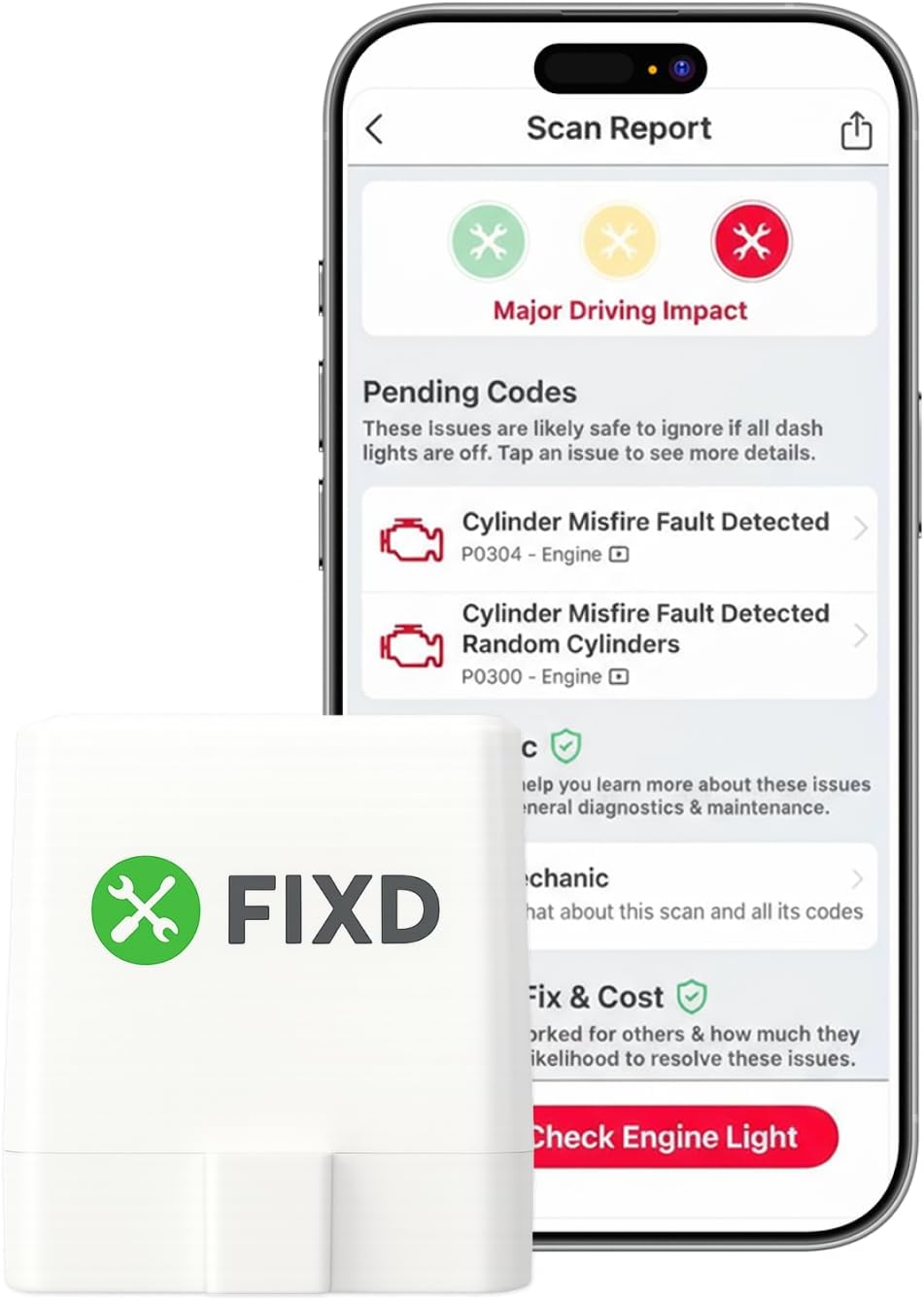
Best Bluetooth OBD2 Scanner
Detect 39,000+ Issues With Enhanced Codes. Save $1000s on car repairs & buying used vehicles by diagnosing problems yourself.
Shop on AmazonThis guide breaks down the specific symptoms, root causes, diagnostic steps, and the latest recall and TSB updates you need to act on in 2026. You’ll learn how to triage your transmission issue, what fault codes to watch for (P0700, P0741, and others), and when a fluid flush can save you versus when you need a rebuild.
Key Takeaways
- Chevy transmission problems fall into three major failure patterns: torque converter clutch shudder in the 8L90 (40–60 mph vibration), rear-wheel lock-up in the 10L80 (2024 NHTSA recall 24V-750), and slipping in the 6L80, each requiring different diagnostic and repair approaches.
- A vibration or shudder at highway speeds often signals fluid breakdown or torque converter wear, detectable through P0741 fault codes, and may require a full fluid exchange and converter replacement rather than a flush alone.
- The 10L80 rear-wheel lock-up defect can force an unintended rear-axle engagement during downshifts, affecting over 44,000 2021–2024 Tahoe and Suburban models and requiring immediate TCM software recalibration.
- Use only GM-approved Mobil 1 Synthetic LV ATF HP Dexron HP fluid and change transmission fluid every 45,000 miles under normal conditions and every 30,000 miles when towing; degraded fluid accelerates all Chevy transmission problems exponentially.
- Deploy an OBD-II scanner to monitor transmission control module data (TCC slip rate, line pressure, solenoid status) and check your VIN at NHTSA’s recall lookup to confirm eligibility for free software updates or torque converter replacements under active coverage.
- Install an auxiliary transmission cooler if you tow, keep fluid temperature below 220°F, and monitor for fault codes like P0700, P0741, and P2723 to prevent fluid breakdown and catch internal failures before they cause limp mode or safety-critical rear-wheel lock-up events.
Signs and Symptoms of Transmission Issues
Slipping Gears and Shuddering
The most reported Chevy transmission symptom is a shudder between 40 and 60 mph, particularly in 8L90-equipped trucks and SUVs (2015–2020 Silverado, Tahoe, Suburban). Owners describe it as driving over a textured road surface when the pavement is perfectly smooth. This happens when the torque converter clutch applies and the degraded transmission fluid can’t maintain a consistent friction coefficient.
“Feels like I’m driving on a washboard road at 45 mph. Dealer flushed the fluid and it came back within 6 months.” via r/Silverado
Gear slipping, where the engine revs climb but the vehicle doesn’t accelerate, often points to worn clutch packs or a failing torque converter in the 6L80. Don’t ignore it. Slipping under load accelerates internal damage.
Harsh or Delayed Shifting
If your Silverado or Tahoe delivers a jarring downshift from 8th to 7th gear, that’s a hallmark 10L80 transmission harsh downshift complaint. Cold-start hesitation is another common report, the transmission seems to “hunt” for the right gear during the first few minutes of driving. This Chevy Silverado transmission hesitation on cold start usually improves once the fluid warms up, but it signals that adaptive shift tables may need a reset or that the fluid has degraded.
Warning Lights and Dashboard Alerts
A “Reduced Propulsion” message on your Tahoe or Suburban dash means the Transmission Control Module (TCM) has detected a fault and forced the vehicle into limp mode. This Chevy Tahoe reduced propulsion message limp mode event often accompanies a check engine light and stores P0700 (general transmission fault) or P0741 (torque converter clutch circuit performance). The “Shift to Park” false message is another electrical gremlin, often traced to a worn shift-position sensor rather than the transmission itself.
Noises and Grinding from the Transmission
Whining during acceleration can indicate low fluid or a failing pump. A metallic grinding noise during shifts often means internal hard parts, gears, bearings, or the valve body, are damaged. If you hear a clunk when shifting from Park to Drive, inspect your transmission mount first. But persistent grinding under load in a Colorado or Silverado typically means internal wear that a fluid change won’t fix.
Common Causes and Component Failures
Low or Contaminated Transmission Fluid
GM specifies Mobil 1 Synthetic LV ATF HP (or equivalent Dexron HP) for the 8L90 and 10L80. When this fluid breaks down, it loses the friction modifiers that keep the torque converter clutch from chattering. A proper Mobil 1 Synthetic LV ATF HP fluid flush procedure involves a full drain-and-fill cycle (not just a pan drop), replacing approximately 11 quarts, and resetting the adaptive shift tables through the TCM.
Torque Converter and Clutch Failures
The 6L80 torque converter clutch failure is one of the most documented issues across GM forums. Symptoms include shudder at light throttle, a stored P0741 code, and eventual lockup failure. GM released TSB 21-NA-152 to address the torque converter shudder with a fluid change and updated converter specifications. In many cases, the torque converter itself needs replacement, a fluid flush alone won’t resolve a mechanically worn clutch surface.
Sensor and Solenoid Malfunctions
Transmission solenoids control fluid pressure to each clutch pack. A stuck or failing solenoid produces erratic shifts, flares between gears, or a complete refusal to shift. The 8L90 uses pressure control solenoids that are sensitive to contaminated fluid. AFM (Active Fuel Management) compounds the problem, the constant cylinder deactivation changes torque loads and accelerates solenoid wear on affected V8 models.
Valve Body and Internal Wear
Symptoms of failing Chevy transmission control valve issues include delayed engagement, bump shifts, and loss of specific gears. The 10L80’s valve body is particularly complex, with multiple check balls and control valves. When internal bores wear, they allow pressure cross-leaks that cause harsh or unpredictable shifts. In the worst cases, specifically the rear wheel lock-up defect, a sticking control valve can force an unintended gear engagement during a downshift, locking the rear axle.
| Issue | Affected Transmission | Primary Symptom | Root Cause |
|---|---|---|---|
| The Shudder | 8L90 | Vibration at 40–60 mph | Fluid breakdown / TCC wear |
| The Lock-Up | 10L80 | Rear wheels lock during downshift | Control valve failure |
| TCC Failure | 6L80 | Shudder at light throttle, P0741 | Torque converter clutch wear |
| Cold-Start Hesitation | 8L90 / 10L80 | Hunting for gears on startup | Degraded fluid / shift table drift |
Diagnostic Strategies and Service Procedures
Transmission Control Module and PCM Diagnostics
The TCM in 2019+ Silverados and Tahoes can receive over-the-air (OTA) software updates through GM’s connected services. The latest 2025–2026 TCM calibration updates include improved torque converter slip monitoring and early-warning flags for abnormal valve body pressure drops. If your vehicle supports OTA, check for pending updates in your myChevrolet app. Vehicles without OTA capability need a dealer flash.
OBD-II Scanner and Trouble Codes
A basic OBD-II scanner reads P0700 and P0741 transmission fault codes Chevy trucks commonly store, but you need a GM-compatible scanner (like the LAUNCH CRP129E OBD2 Scanner) to access transmission-specific data: TCC slip rate, line pressure, and solenoid status. Key codes to watch:

- P0700 – General transmission fault (gateway code: deeper diagnosis required)
- P0741 – TCC circuit performance / stuck off
- P0751 / P0756 – Shift solenoid performance codes
- P0717 – Turbine speed sensor no signal
- P2723 – Pressure control solenoid E stuck off (common in 8L90 shudder cases)
For fleet owners managing multiple trucks, a subscription-based diagnostic platform like AutoEnginuity ScanTool gives you GM-level bidirectional control to command solenoid tests and reset adaptive tables without a dealer visit.
Transmission Fluid and Filter Inspection
Pull the dipstick (if equipped) or check the fluid level through the fill plug with the transmission at operating temperature. Healthy Dexron HP fluid is clear red. Dark brown or black fluid with a burnt smell means the friction modifiers are depleted. On the 8L90, GM recommends a full fluid exchange, not a simple drain, every 45,000 miles under severe-duty use.
Technical Service Bulletins and Dealer Solutions
GM has issued multiple TSBs addressing Chevy transmission problems. TSB 21-NA-152 covers torque converter shudder in 8-speed trucks and prescribes a fluid flush with updated Mobil 1 Synthetic LV ATF HP. For the 10L80, a 2024 NHTSA recall (24V-750) addresses the rear wheel lock-up risk with a TCM software update and, in some cases, valve body replacement. Check your VIN at NHTSA’s recall lookup page to confirm whether your vehicle is affected.
Prevention, Maintenance, and Recall Updates
Routine Fluid Changes and Leak Prevention
Don’t follow the “lifetime fluid” myth. Change your transmission fluid every 45,000 miles under normal conditions and every 30,000 miles if you tow, haul, or drive in extreme heat. Use only GM-approved Dexron HP fluid. A quality external transmission filter like the Magnefine Inline Magnetic Transmission Filter adds a secondary filtration layer that catches metallic debris before it reaches your valve body and solenoids.

Cooling and Overheating Management
Transmission fluid temperature above 220°F accelerates fluid breakdown exponentially. If you tow with your Silverado or Suburban, an auxiliary transmission cooler is not optional, it’s essential. Monitor fluid temps with your OBD-II scanner. Overheating is the single fastest way to trigger the shudder in an 8L90 or accelerate valve body wear in the 10L80.
Latest Recalls and Software Updates
The GM 10-speed transmission rear wheel lock-up recall (NHTSA Campaign 24V-750) covers approximately 44,000 units of 2021–2024 Chevrolet Tahoe, Suburban, and GMC Yukon models. The fix involves a TCM software recalibration that adds monitoring logic for abnormal pressure drops in the valve body. If the system detects a potential lock-up condition, it commands a controlled torque reduction instead of allowing an uncontrolled rear-axle engagement.
“Got the recall letter last month. Dealer reprogrammed the TCM and said the new software monitors valve body pressure in real time. Shifts feel slightly different but nothing dramatic.” via r/Tahoe
Special Coverage for Chevy Silverado Owners
GM has extended special coverage (warranty extension) on certain 2017–2020 Silverado 1500 models for torque converter shudder under Special Coverage Adjustment 18320. This covers the torque converter replacement and fluid flush at no charge for up to 7 years or 100,000 miles from the original in-service date. Check with your dealer to confirm eligibility, this coverage doesn’t require a recall notice, but it does expire.
Data Insights and Analysis
According to NHTSA complaint data, transmission-related complaints for the 2019 Chevrolet Silverado 1500 rank among the highest of any GM model year, with over 1,200 individual filings as of early 2026. The 8L90 shudder accounts for roughly 60% of those reports. Separately, the 10L80 rear-wheel lock-up recall affects an estimated 44,000 vehicles, with GM prioritizing the software fix over mechanical valve body replacement in most cases.
Expert Note: The 8L90 shudder isn't simply a "bad fluid" problem. The torque converter clutch lining material generates micro-debris that contaminates the fluid's friction modifier package. This creates a feedback loop, degraded fluid causes more clutch slip, which generates more debris, which further degrades the fluid. A single fluid flush buys time, but if the converter lining is already scored, the shudder returns within 10,000–15,000 miles. That's why GM's TSB now recommends converter replacement alongside the flush in high-mileage cases.
Frequently Asked Questions
What is the Chevy transmission shudder and what causes it?
The shudder is a vibration between 40–60 mph, primarily in 8L90 transmissions, caused by torque converter clutch wear and fluid breakdown. Degraded transmission fluid loses friction modifiers, creating a feedback loop where clutch slip generates micro-debris that further degrades the fluid, often requiring converter replacement alongside a fluid flush.
What are the warning signs of Chevy transmission problems?
Common signs include shuddering at 40–60 mph, harsh or delayed shifting, a ‘Reduced Propulsion’ warning light with P0700 fault codes, gear slipping, whining during acceleration, and grinding noises during shifts. Cold-start hesitation where the transmission hunts for gears is another indicator of transmission issues.
How often should I change my Chevy transmission fluid to prevent problems?
Change transmission fluid every 45,000 miles under normal conditions and every 30,000 miles if you tow, haul, or drive in extreme heat. Use only GM-approved Dexron HP synthetic fluid. A full fluid exchange, not just a pan drop, is recommended to maintain optimal transmission health and prevent shudder and other failures.
What is the 10L80 rear wheel lock-up recall and how does it affect my vehicle?
The 2024 NHTSA recall (24V-750) affects approximately 44,000 2021–2024 Chevrolet Tahoe, Suburban, and GMC Yukon models with 10L80 transmissions. A control valve failure can lock rear wheels during downshifts. The fix is a TCM software update that monitors valve body pressure and prevents unintended gear engagements.
Can a transmission fluid flush fix the Chevy transmission shudder permanently?
A fluid flush alone provides only temporary relief if the torque converter clutch is mechanically worn. It may resolve the issue for 10,000–15,000 miles, but GM’s TSB 21-NA-152 now recommends converter replacement alongside the flush in high-mileage cases for lasting results and to prevent rapid fluid re-degradation.
What transmission fault codes should I watch for in my Chevy?
Key codes include P0700 (general transmission fault), P0741 (torque converter clutch circuit performance), P0751/P0756 (shift solenoid performance), P0717 (turbine speed sensor), and P2723 (pressure control solenoid stuck). A GM-compatible OBD-II scanner provides detailed transmission diagnostics like TCC slip rate and line pressure data.
Sources:
- NHTSA Recall & Complaint Database
- NHTSA 2021 Chevrolet Silverado 1500 TSBs and Investigations
- r/Silverado – Reddit Community
- GM Authority – GM News and Analysis
- Chevrolet Owner Center – Recalls and Service
Read More:
- BMW Transmission Malfunction (Drive Moderately Warning Decoded)
- Ford Transmission Problems (Symptoms, Recalls, and What to Do)