
That dreaded yellow warning icon just lit up your dashboard, and you’re wondering whether you can still drive to work or if you’re facing a massive repair bill. The check engine light is one of the most anxiety-inducing warnings on your BMW’s digital cluster because it could signal anything from a loose fuel cap to a failing catalytic converter.
The BMW check engine light means your onboard diagnostic system (OBD-II) has detected an issue in your engine, emissions system, or related components, triggered by sensors reading values outside normal operating ranges. A solid yellow light typically allows safe driving to a repair shop, while a flashing light warns of active misfires that can damage your catalytic converter within minutes and demands you pull over immediately.
Before you panic or rush to the dealership for an expensive diagnostic session, you can take simple steps to identify the problem yourself. Most BMW check engine light triggers stem from common, fixable issues like oxygen sensor failures, loose gas caps, worn ignition coils, or aging mass airflow sensors, especially on popular models like the 3 Series, 5 Series, X3, and X5 equipped with N20, B48, N55, or B58 engines.
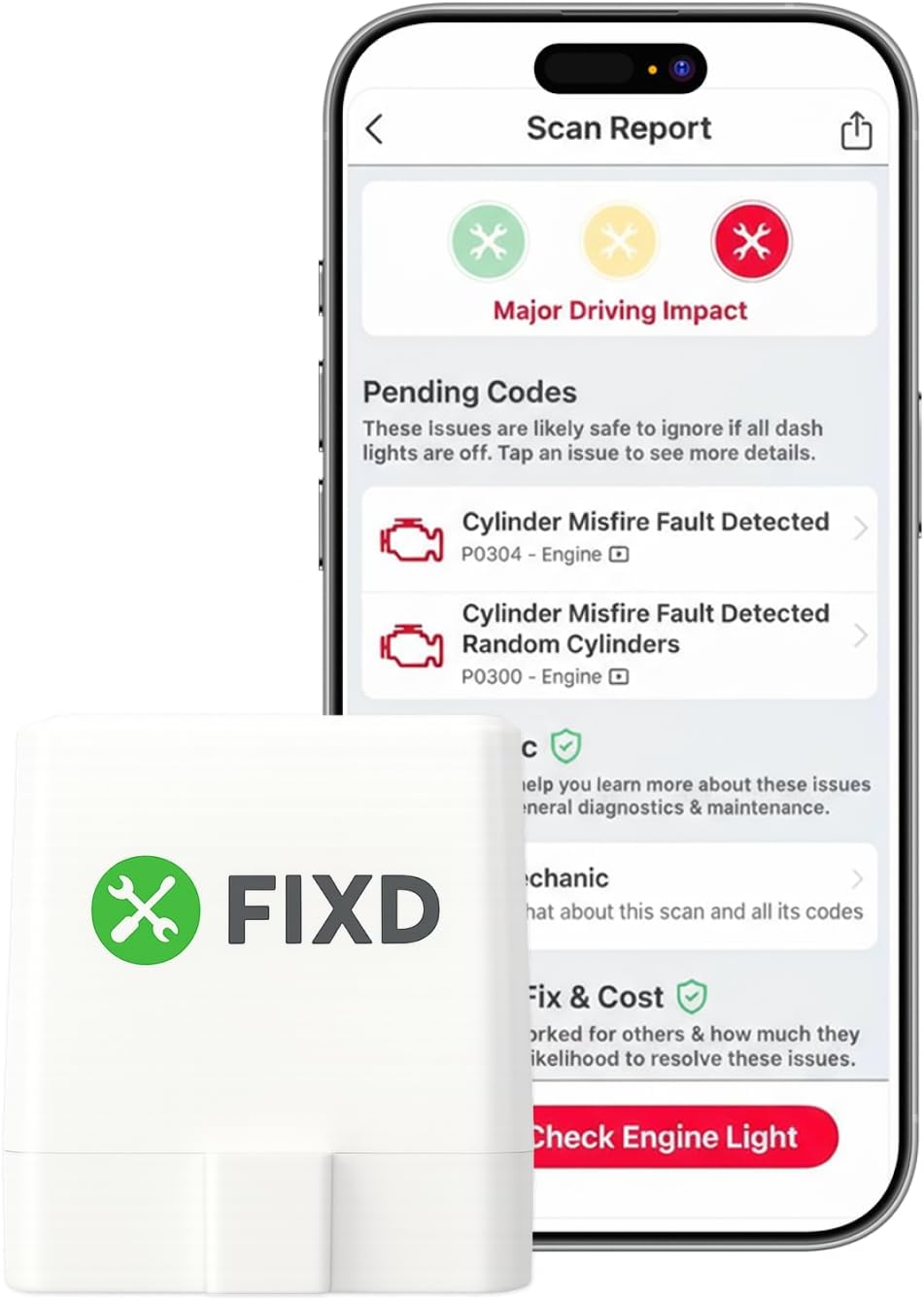
Best Bluetooth OBD2 Scanner
Detect 39,000+ Issues With Enhanced Codes. Save $1000s on car repairs & buying used vehicles by diagnosing problems yourself.
Shop on Amazon
Key Takeaways
- A solid BMW check engine light allows safe driving to a repair shop, but a flashing light signals active misfires that can damage your catalytic converter within minutes and demands immediate shutdown.
- The most common BMW check engine light triggers are ignition system failures (34%), oxygen sensor issues (18%), loose gas caps, EVAP leaks, and worn spark plugs on N20, B48, N55, and B58 engines.
- Use an OBD-II scanner ($20–$150) to read diagnostic trouble codes yourself before visiting a mechanic—this step alone can save $85–$120 by ruling out simple fixes like loose gas caps.
- Ignoring a solid check engine light can transform a minor $150–$250 sensor repair into a $1,500+ catalytic converter replacement, making prompt diagnosis critical to controlling costs.
- After repairing the underlying fault, perform a complete drive cycle with highway speeds and varied acceleration to allow the ECU to verify the fix and automatically clear the light.
- Never clear codes without fixing the root cause—the light will return within 10–100 miles, and unresolved faults can cause emissions test failure and damage your vehicle’s resale value.
Meaning and Severity
Solid vs. Flashing Indicators
Your BMW’s check engine light communicates urgency through its behavior. A solid yellow light indicates the system has logged a fault code but the engine can still operate safely for a short period. You’ll typically notice normal performance with no shaking or power loss, though fuel economy might drop slightly.
A flashing check engine light is an emergency warning. This rapid blinking means your engine is actively misfiring, raw fuel is entering the exhaust system and can overheat your catalytic converter to the point of permanent damage within minutes. When you see this flashing pattern, especially combined with engine shaking or rough idle, pull over safely and shut off the engine immediately.
Some BMW models also display additional text warnings on the iDrive screen like “Engine malfunction, reduced power” or “Drivetrain malfunction.” These messages help narrow down the severity, but the light’s behavior remains your primary indicator of how urgently you need to act.
Potential Risks and Urgency
Ignoring a solid check engine light for weeks can transform a minor sensor issue into expensive component failures. For example, a failing oxygen sensor that triggers a P0420 code might only cost $150–$250 to replace initially, but running the engine with incorrect fuel trim adjustments can damage your catalytic converter, pushing repair bills beyond $1,500.
Flashing lights demand immediate attention because active misfires send unburned fuel into the exhaust. Your catalytic converter operates at temperatures exceeding 1,200°F under normal conditions, and raw fuel causes it to glow cherry-red and crack internally. Once the honeycomb substrate inside melts or breaks apart, you’re facing a complete replacement.
Driving with a solid light to your nearest repair facility is generally safe for short distances (under 50 miles), but monitor your temperature gauge and listen for unusual sounds. If you notice overheating, steam, loud knocking, or sudden power loss, stop immediately, these symptoms indicate the problem has escalated beyond a simple sensor fault.
“My 2015 BMW 328i started flashing the check engine light on the highway. I kept driving for another 15 miles thinking it was minor. Turns out I had multiple misfires and cooked my catalytic converter. What should have been a $400 coil replacement turned into a $2,100 nightmare.” via r/BmwTech
Limp Mode and Engine Protection
BMW’s engine control unit (ECU) activates limp mode to prevent catastrophic damage when it detects serious faults. You’ll feel this immediately, acceleration becomes sluggish, RPMs might be limited to around 3,000, and top speed drops to roughly 40–50 mph. The check engine light stays solid, and you may see a specific warning message on your instrument cluster.
Limp mode commonly triggers from turbocharger boost pressure issues, throttle position sensor failures, or severe misfires across multiple cylinders. The system intentionally restricts power to protect vital components like your turbo, engine internals, and transmission from operating under unsafe conditions.
If limp mode activates during highway driving, safely move to the right lane and find the nearest exit. You can usually restart the car and regain normal power temporarily, but the underlying fault remains. Don’t attempt long drives in this state, the ECU has detected a condition that genuinely threatens engine longevity. Schedule immediate diagnostics using an OBD-II scanner to identify the specific fault code before the issue compounds.

Common Causes
Loose Gas Cap and EVAP Leaks
The simplest and most embarrassing cause of a BMW check engine light is a loose or damaged fuel filler cap. Your car’s evaporative emissions (EVAP) system maintains a sealed fuel tank to prevent gasoline vapors from escaping into the atmosphere. When the gas cap isn’t tightened properly or the rubber seal deteriorates, the system detects a pressure leak and triggers codes like P0442 or P0455.
After refueling, always turn your gas cap until you hear at least three clicks. BMW fuel caps from 2010 onward use spring-loaded mechanisms that provide tactile feedback when properly sealed. If your cap is cracked, missing its rubber gasket, or the tether is broken, replace it, genuine BMW caps cost around $25–$35, and aftermarket versions run $12–$18.
EVAP leaks can also originate from cracked charcoal canister hoses, a faulty purge valve, or a leak detection pump failure (common on N20 and B48 engines). These components live under your car near the fuel tank, exposed to road salt and temperature swings. A smoke test at a repair shop pressurizes the EVAP system with visible vapor to pinpoint crack locations.
Faulty Oxygen Sensor and Emissions Issues
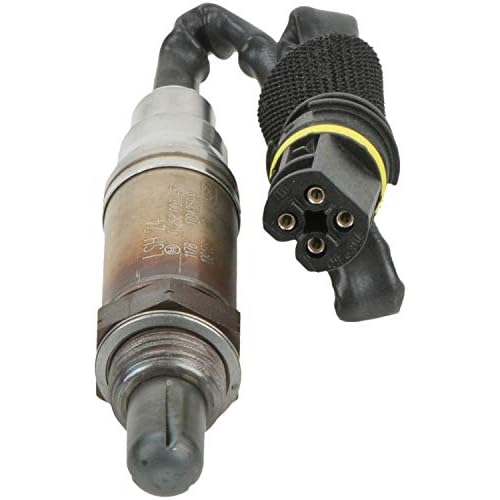
Oxygen sensors monitor exhaust gas composition before and after the catalytic converter, helping your ECU adjust the air-fuel mixture for optimal combustion and emissions control. BMW engines typically use four O2 sensors, two upstream (pre-cat) and two downstream (post-cat), and any one can fail over time.
Common failure codes include:
- P0171/P0174: System too lean (Bank 1/Bank 2)
- P0172/P0175: System too rich (Bank 1/Bank 2)
- P0420/P0430: Catalytic converter efficiency below threshold
Symptoms of a dying O2 sensor include rough idle, hesitation during acceleration, noticeably worse fuel economy (dropping 3–5 MPG), and sometimes a sulfur or rotten egg smell from the exhaust. Sensors typically last 60,000–100,000 miles but can fail earlier due to oil contamination, carbon buildup, or thermal stress from frequent short trips.
Replacing an oxygen sensor is straightforward with basic tools, you’ll need a 22mm O2 sensor socket and penetrating oil for the threads. Bosch oxygen sensors offer OEM-equivalent quality at lower prices than dealership parts. Clear the code after installation and drive 50–100 miles to allow the ECU to relearn fuel trims.
Failing Catalytic Converter Symptoms
When you see code P0420 or P0430, your first reaction might be panic about catalytic converter replacement costs. But these codes don’t always mean the cat itself is dead, they indicate the downstream O2 sensor isn’t detecting sufficient emissions reduction compared to the upstream sensor readings.
True catalytic converter failure shows specific symptoms beyond just the check engine light. You’ll notice a significant power loss, especially on highway acceleration. Your exhaust might smell strongly of sulfur or unburned fuel. In severe cases, you’ll hear a rattling sound from underneath the car when starting or accelerating, that’s the broken honeycomb substrate bouncing around inside the converter shell.
Before replacing the catalytic converter, verify your upstream O2 sensors are functioning correctly and check for exhaust leaks between the engine and the cat. A small crack in the exhaust manifold or a loose flange gasket can introduce fresh air that skews O2 sensor readings, falsely triggering efficiency codes.
Catalytic converter life expectancy on BMW TwinPower Turbo engines ranges from 80,000–150,000 miles under normal conditions. Repeated short trips, oil burning from worn valve stem seals, and running rich due to ignition misfires all accelerate cat degradation.
Worn or Fouled Spark Plugs
Spark plug and ignition coil failures are the leading cause of check engine lights on BMW N20, B48, N55, and B58 engines. Misfire codes P0300–P0308 point to specific cylinders or random misfires across the engine. You’ll feel the symptoms immediately, rough idle with noticeable shaking, hesitation when accelerating from a stop, and sometimes a rhythmic thumping sound from the engine bay.
BMW recommends spark plug replacement every 30,000–60,000 miles depending on your engine and driving conditions. But many owners stretch this interval to save money, only to face coil failures and misfires. The original NGK or Bosch plugs wear down their electrode tips and increase the gap beyond specification, forcing the ignition coils to work harder and fail prematurely.
Replacing plugs and coils together prevents return trips under the hood. For inline-six engines like the B58, budget about 90 minutes for a complete plug and coil refresh. Four-cylinder N20 and B48 engines take roughly 45 minutes. Use an ignition coil and spark plug kit designed specifically for your engine code to ensure proper fitment and heat range.
“Check engine light came on in my 2017 X3 with the N20 engine. Scanned it and got P0302, cylinder 2 misfire. Swapped the coil and plug myself in the driveway for under $60. Light cleared after 20 miles and hasn’t come back in 6 months.” via BimmerForums
Diagnosing BMW Issues
Using an OBD-II Scanner
Every BMW sold since 1996 includes an OBD-II diagnostic port located under the driver’s side dashboard, usually to the left of the steering column near the hood release. This standardized 16-pin connector lets you plug in a scanner and retrieve diagnostic trouble codes (DTCs) stored in your ECU’s memory.
Basic code readers cost $20–$40 and display generic powertrain codes, but they won’t show you BMW-specific data like live fuel trim values, turbo boost pressure, or Valvetronic motor position. Mid-range scanners ($80–$150) offer Bluetooth connectivity to smartphone apps, freeze frame data showing engine conditions when the fault occurred, and the ability to clear codes.
For serious BMW diagnostics, invest in a BMW-specific scanner or use software like Carly, BimmerLink, or INPA with a compatible Bluetooth adapter. These tools read manufacturer-specific codes, access individual module diagnostics (transmission, ABS, airbag), and display real-time sensor data graphically. You can monitor parameters like intake air temperature, throttle position percentage, and long-term fuel trim to spot issues before they trigger warning lights.
To use any scanner, turn your ignition to position II (all dash lights on, engine off), plug the scanner into the OBD port, and wait for it to establish communication. Most tools auto-detect your BMW’s protocol and display a menu to read codes, view live data, or perform emissions readiness tests.
Interpreting Diagnostic Trouble Codes
OBD-II codes follow a standardized format: a letter followed by four digits. The first character identifies the system:
- P: Powertrain (engine and transmission)
- B: Body (airbags, climate control, lighting)
- C: Chassis (ABS, steering, suspension)
- U: Network communication issues
The second digit tells you if it’s a generic (0) or manufacturer-specific (1) code. The third digit narrows down the subsystem, and the final two digits specify the exact fault. For example, P0300 is a generic code for random/multiple cylinder misfire, while P0171 indicates system too lean on bank 1.
When you pull codes, pay attention to whether they’re current (active right now), pending (detected once but not confirmed), or permanent (stored after multiple drive cycles). Pending codes often clear themselves if the condition was temporary, like a one-time misfire from bad fuel. Permanent codes require the fault to be fixed and several successful drive cycles before the ECU will erase them, even with a scanner.
Don’t fixate on a single code if multiple DTCs appear. Look for patterns, if you see P0171 (lean bank 1), P0174 (lean bank 2), and P0101 (MAF sensor range/performance), the mass airflow sensor is likely contaminated or failing, causing incorrect air readings that trigger lean conditions across both cylinder banks.
Understanding BMW-Specific Codes
Beyond generic OBD-II codes, BMW uses manufacturer codes that reveal faults in proprietary systems. These codes start with P1xxx or higher and require a BMW-capable scanner to read. Common BMW-specific codes include:
- P1014/P1017: VANOS camshaft timing over-advanced/retarded
- P1080/P1085: Valvetronic motor issues
- P1188: Turbocharger wastegate control fault
- P163A: High-pressure fuel pump low output
- P180A: Particulate filter clogged (diesel models)
VANOS system codes often stem from solenoid failures, dirty engine oil restricting cam adjusters, or stretched timing chains. Valvetronic faults can trigger limp mode instantly because this system controls valve lift electronically instead of using a traditional throttle plate. Turbo wastegate codes frequently trace back to vacuum leaks, stuck wastegate actuators, or boost pressure sensor failures.
When you encounter a BMW-specific code, search forums like Bimmerpost or BimmerForums for your exact engine code and model year. Other owners have likely documented their diagnosis process, parts replaced, and whether the fix was permanent.
When to See a BMW Specialist
Some check engine light scenarios demand professional diagnostics and specialized equipment. If you’ve scanned the codes, replaced obvious components like spark plugs or oxygen sensors, and the light returns within days, you’re dealing with an intermittent fault or a deeper system issue that needs expert analysis.
Seek professional help when you encounter:
- Multiple systems showing faults (engine, transmission, ABS all lighting up simultaneously suggests electrical or CAN bus communication problems)
- Drivetrain or transmission warning lights combined with check engine light
- Permanent codes that won’t clear after confirmed repairs
- Performance issues like severe power loss, stalling, or no-start conditions
- Turbocharger or high-pressure fuel system codes requiring pressure testing equipment
Independent BMW specialists often charge $100–$150 for comprehensive diagnostics using factory-level BMW ISTA software, compared to $150–$200+ at dealerships. They can perform guided fault finding, activate individual components to test functionality, and access technical service bulletins (TSBs) that document known issues and updated repair procedures for your specific VIN.
According to a 2025 analysis by RepairPal, BMW owners who perform initial OBD-II scanning themselves before visiting a mechanic save an average of $85–$120 on diagnostic fees by providing specific fault codes upfront and ruling out simple fixes like loose gas caps or expired air filters.
Resetting the Light
Proper Code-Clearing Procedures
Clearing your check engine light without addressing the underlying problem is tempting but eventually pointless, the light will return within 10–100 miles once the ECU detects the fault again during its continuous monitoring cycles. Always identify and fix the root cause before resetting codes.
Before clearing codes, write down all DTCs displayed and their descriptions. Note any freeze frame data showing engine conditions when the fault occurred, this information disappears when you clear codes and can be valuable if the problem returns intermittently.
After completing repairs, perform a proper drive cycle to allow the ECU to verify the fix. This typically involves:
- Start the engine cold and let it idle for 2–3 minutes
- Drive at steady highway speeds (55+ mph) for at least 10 minutes
- Include several gentle acceleration and deceleration cycles
- Allow the engine to fully warm up to normal operating temperature
This drive cycle gives the ECU time to run its built-in diagnostic tests (called readiness monitors) for systems like the catalytic converter, oxygen sensors, EVAP system, and secondary air injection. If all monitors complete without detecting faults, the check engine light will turn off automatically.
Manual and Scanner Reset Methods
The most reliable way to reset your BMW check engine light is with an OBD-II scanner’s “Clear Codes” or “Erase DTCs” function. With the ignition on and engine off, select this option and confirm the action. The scanner will communicate with your ECU to delete stored fault codes and turn off the warning light.
Some owners try the battery disconnect method, removing the negative terminal for 5–10 minutes to force an ECU reset. This works but also erases all learned adaptations including fuel trims, idle speed calibrations, and throttle body positions. Your BMW might idle roughly or shift strangely for 20–50 miles while the ECU relearns your driving patterns.
Never ignore a check engine light by disconnecting the bulb or using tape to cover it. Modern BMWs store fault histories in the ECU and other modules, and unresolved codes can affect emissions testing, resale value, and warranty claims. Some states require all readiness monitors to show “Ready” status before passing emissions inspections, simply clearing codes without fixing the problem will show “Not Ready” and result in automatic failure.
Precautions After Resetting
After clearing codes, monitor your BMW closely for the next few days and 100–200 miles. If the check engine light returns quickly (within 10–20 miles), you likely didn’t fix the actual problem, either the diagnosis was incorrect, the replacement part is defective, or there’s a secondary fault contributing to the issue.
Watch for changes in how your engine runs. Increased fuel consumption, rough idle, hesitation, or new unusual sounds suggest the original problem persists or you’ve created a new issue during repairs. Track your fuel economy using the onboard trip computer, a sudden drop of 3+ MPG often indicates lean/rich conditions or misfires the ECU hasn’t flagged yet.
Keep your OBD-II scanner in the car for a few weeks after repairs. If the light returns, scan it immediately to see if the same code appears or if new faults have developed. Intermittent problems like loose electrical connectors, cracked vacuum lines, or temperature-sensitive sensor failures can be difficult to diagnose because they don’t always trigger codes under all driving conditions.
Data Insights & Analysis
According to 2026 BMW service data, approximately 34% of all check engine light complaints on N20 and B48 four-cylinder engines trace back to ignition system failures, primarily worn spark plugs beyond 40,000 miles and deteriorating coil packs. The turbocharged design creates higher combustion pressures that accelerate electrode wear compared to naturally aspirated engines.
Research from the German automotive industry association VDA shows that oxygen sensor failures account for roughly 18% of emissions-related fault codes across all BMW models produced between 2015–2025, with average sensor lifespan decreasing by 12,000 miles when vehicles operate primarily in urban stop-and-go traffic versus highway driving.
Expert Note: BMW's sophisticated engine management system monitors over 200 parameters per second, cross-referencing sensor data to detect inconsistencies that suggest component failures. A single faulty mass airflow sensor doesn't just trigger a P0101 code, it creates a cascade effect where incorrect air readings force the ECU to compensate with improper fuel delivery, eventually triggering secondary lean/rich codes and potentially damaging the catalytic converter through incomplete combustion. This interconnected diagnostic logic explains why seemingly minor sensor failures can escalate into expensive repairs if ignored for extended periods.
Frequently Asked Questions
What does the BMW check engine light mean and when is it serious?
A solid yellow check engine light indicates your OBD-II system detected a fault but the engine is safe to drive short distances. A flashing light signals active misfires that can damage your catalytic converter within minutes—pull over immediately. Flashing demands urgent attention; solid lights allow safe driving to a repair shop.
Can I drive with a BMW check engine light on?
You can safely drive short distances (under 50 miles) with a solid yellow check engine light to reach a repair facility. A flashing light is an emergency requiring immediate shutdown. Monitor your temperature gauge and listen for unusual sounds; if you notice overheating, steam, or power loss, stop immediately.
What are the most common causes of a BMW check engine light?
The most common causes include loose fuel caps, faulty oxygen sensors, worn spark plugs and ignition coils, EVAP leaks, and failing catalytic converters. On N20, B48, N55, and B58 engines, ignition system failures account for approximately 34% of check engine light complaints, especially beyond 40,000 miles.
How do I diagnose a BMW check engine light myself?
Use an OBD-II scanner plugged into the diagnostic port under your driver’s side dashboard. Basic scanners ($20–$40) display fault codes; BMW-specific tools like Carly or BimmerLink provide manufacturer codes and real-time sensor data. Write down all codes before repairs, as this information disappears when cleared.
How much does a BMW check engine light diagnosis cost?
Dealerships typically charge $150–$200 for diagnostics, while independent BMW specialists charge $100–$150 using factory-level software. Performing initial OBD-II scanning yourself with a $30–$150 reader can save $85–$120 by ruling out simple fixes before professional evaluation.
Will my BMW pass emissions testing with the check engine light on?
No. An illuminated check engine light results in automatic emissions test failure across all US states. You must repair the underlying fault and complete all readiness monitors before retesting. Simply clearing codes without fixing the problem will show ‘Not Ready’ status and fail inspection.
Read More:
- How to Fix EPC Light on Audi (The Complete Diagnostic and Fix Guide)
- How to Fix EPC Light on VW (Common Causes and Solutions)
- Audi Check Engine Light (Meaning, Common Causes and DIY Fix Guide)
- Chevy Check Engine Light (Means, Root Causes & How to Fix It)