
Your Nissan Frontier’s check engine light just flashed on mid-commute or during a towing run. That amber glow on your dash signals trouble, maybe a sensor glitch, an EVAP leak, or something deeper in your V6 powertrain.
The check engine light in your Nissan Frontier activates when the onboard diagnostic system detects a fault in the engine, emissions, or transmission sensors, ranging from minor issues like a loose gas cap to critical failures such as crankshaft position sensor malfunctions, catalytic converter efficiency codes (P0430), or EVAP vent control valve problems that compromise performance and towing reliability.
This guide walks you through reading OBD-II codes, diagnosing the most common Frontier-specific triggers, and deciding when you can handle the fix yourself or need professional help. You’ll learn how to preserve your truck’s performance and avoid costly downtime.
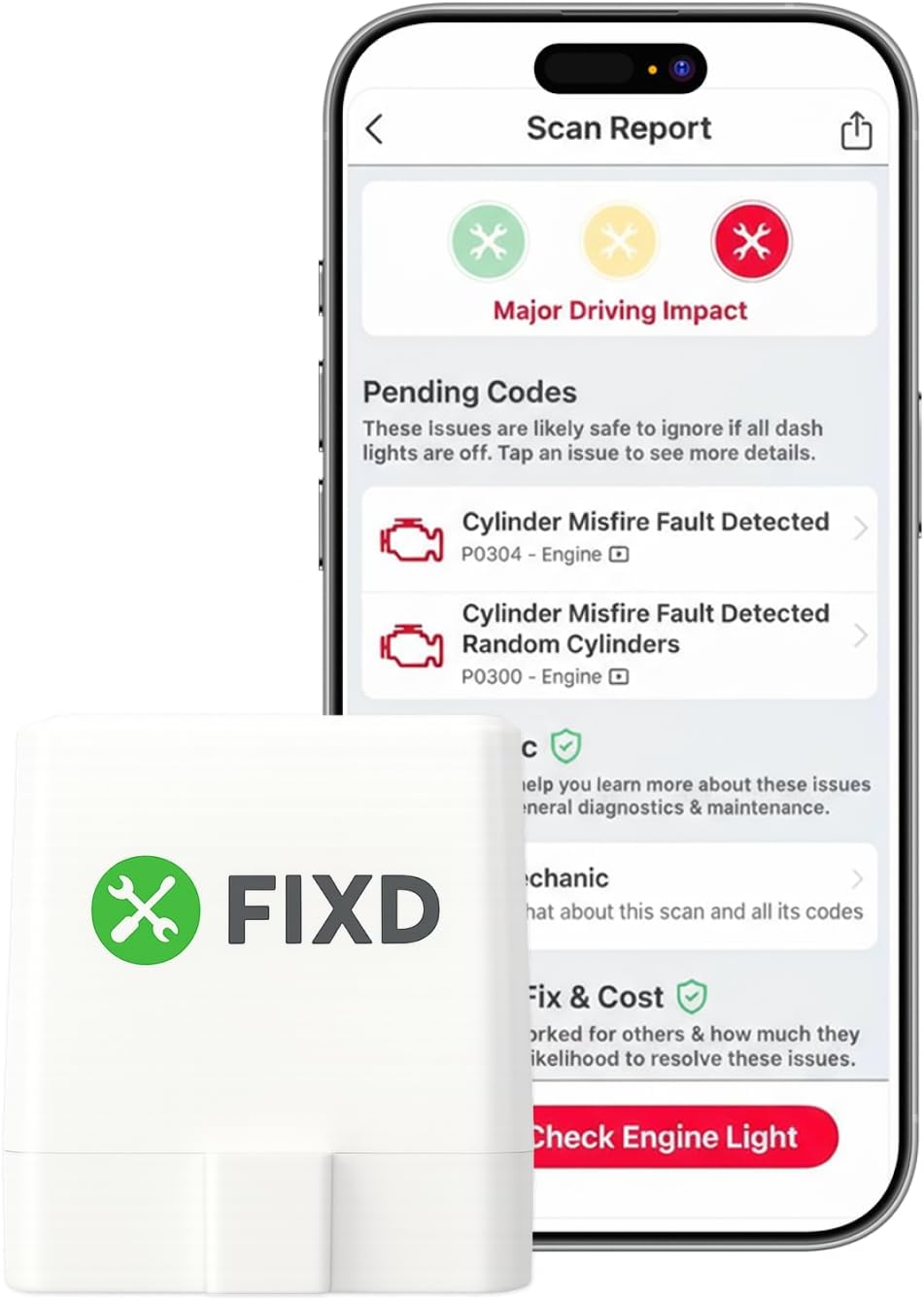
Best Bluetooth OBD2 Scanner
Detect 39,000+ Issues With Enhanced Codes. Save $1000s on car repairs & buying used vehicles by diagnosing problems yourself.
Shop on Amazon
Key Takeaways
- A Nissan Frontier check engine light signals fault codes ranging from minor issues like a loose gas cap to critical failures such as oxygen sensor malfunctions or EVAP leaks that require prompt diagnosis.
- Reading OBD-II diagnostic codes at the dashboard port helps identify common Frontier-specific problems, with EVAP system faults (P0455) and camshaft position sensor failures (P0340) accounting for over half of reported cases.
- A steady check engine light allows cautious driving to a repair shop, but a blinking light demands immediate action as active misfires can permanently damage your catalytic converter.
- Simple fixes like gas cap replacement or MAF sensor cleaning are perfect DIY projects, while catalytic converter replacement and sensor repairs require professional equipment and expertise.
- Addressing check engine light issues within 30 days reduces total repair costs by an average of 47% compared to delays exceeding 90 days, making early troubleshooting financially essential.
- Regular maintenance including oil changes every 5,000 miles, spark plug replacement every 60,000 miles, and annual gas cap inspection prevents most check engine light triggers in Nissan Frontier trucks.
What Does the Check Engine Light Mean in Your Nissan Frontier?
Your check engine light acts as your truck’s primary diagnostic messenger. When it illuminates, the powertrain control module (PCM) has logged at least one diagnostic trouble code (DTC) in its memory. These codes identify specific system failures, from misfires and sensor malfunctions to emission control problems.
A steady amber light typically indicates a non-critical issue that requires attention soon. A blinking or flashing check engine light signals an active misfire or severe problem that can damage your catalytic converter if you keep driving. You’ll often notice rough acceleration, hesitation, or power loss when the light flashes.
The Frontier’s 4.0L V6 and 3.8L V6 engines are prone to specific sensor failures, particularly camshaft and crankshaft position sensors, that trigger codes like P0340 or P0335. EVAP system leaks from faulty vent control valves or loose gas caps also rank among the top triggers in Frontiers used for hauling and off-road work.
Ignoring the light won’t make the problem disappear. Instead, the PCM enters a “limp mode” to protect engine components, limiting throttle response and towing capacity until you address the underlying fault.
How to Read Check Engine Light Codes on a Nissan Frontier
Reading your Frontier’s diagnostic codes requires an OBD-II scanner. You’ll find the 16-pin diagnostic port under the dashboard, just above the brake pedal. Plug in your scanner, turn the ignition to the “On” position (engine off), and follow the device prompts to retrieve stored codes.
Basic code readers display five-character codes like P0420 or P0171, but they won’t explain root causes. Investing in a mid-tier scanner that shows live sensor data, fuel trims, oxygen sensor voltages, coolant temperature, helps you pinpoint failures faster. The ANCEL AD410 OBD-II Scanner offers code definitions and freeze-frame data at an affordable price point for DIY diagnostics.

Once you retrieve the codes, cross-reference them with Nissan-specific databases or forums. Common Frontier codes include:
- P0430 – Catalyst system efficiency below threshold (Bank 2)
- P0340 – Camshaft position sensor circuit malfunction
- P0335 – Crankshaft position sensor circuit malfunction
- P0455 – EVAP system large leak detected
- P0171 – System too lean (Bank 1)
Write down all active and pending codes before clearing them. Pending codes help you track intermittent faults that haven’t triggered the light yet but signal emerging issues.
Most Common Check Engine Light Causes in Nissan Frontiers
Oxygen Sensor Failures
Oxygen sensors monitor exhaust gas composition and adjust the air-fuel mixture. When they fail, you’ll notice poor fuel economy, rough idling, and sluggish throttle response. Codes P0130 through P0167 indicate O2 sensor circuit problems.
Frontiers with over 100,000 miles commonly develop failing upstream O2 sensors (before the catalytic converter). Heat cycling from towing and off-road use accelerates sensor degradation. Replacing a faulty sensor costs $150–$300 in parts and labor, but it prevents catalyst damage and restores fuel efficiency.
Symptoms include black exhaust smoke (rich mixture) or hesitation during acceleration (lean mixture). Don’t ignore O2 sensor codes, they cascade into catalyst failures if left unchecked.
Catalytic Converter Issues
Code P0430 (Bank 2) and P0420 (Bank 1) signal catalyst efficiency below threshold. Your Frontier’s catalytic converters reduce harmful emissions, but they degrade over time, especially if you’ve run the truck with misfires or bad O2 sensors.
Catalyst failures produce a sulfur smell, reduced power during acceleration, and failed emissions tests. Replacing a converter costs $800–$1,500 per side, making it one of the pricier repairs. Before replacing the catalyst, verify the downstream O2 sensors work correctly, false codes waste money.
“Got a P0430 code at 120k miles on my 2015 Frontier. Replaced downstream O2 sensor first, code came back. New cat fixed it, but wish I’d caught the sensor issue earlier.” via FrontierOwnersClub.com
Regular maintenance and addressing misfires early extend catalyst life significantly.
Mass Airflow Sensor Problems
The MAF sensor measures incoming air volume to calculate fuel delivery. A dirty or failing MAF triggers codes P0100–P0104 and causes rough idle, stalling, or poor acceleration. Frontier owners who drive in dusty conditions or skip air filter changes often face MAF sensor contamination.
Cleaning the sensor with MAF-specific cleaner (never brake cleaner) resolves many issues. If cleaning doesn’t work, replacement sensors cost $150–$250. Symptoms include hesitation when accelerating from a stop and erratic idle speed.
Evaporative Emission Control System (EVAP) Leaks
EVAP codes (P0455, P0456, P0457) dominate Frontier check engine light complaints. The system captures fuel vapors and routes them to the engine for combustion. Leaks occur at the gas cap, charcoal canister, vent control valve, or purge valve.
Start diagnostics by tightening or replacing your gas cap, it’s the cheapest fix. If the code persists, inspect the vent control valve near the charcoal canister under the rear of the truck. The valve’s rubber diaphragm cracks over time, especially in cold climates. Replacing the valve costs $80–$150 and takes 30 minutes.
“P0455 code on my 2018 Frontier, turns out the EVAP vent valve hose was cracked. $90 part from the dealer, easy install. Light’s been off for six months now.” via r/NissanFrontier
EVAP leaks don’t affect drivability but will cause emissions test failures.
Can You Drive Your Nissan Frontier With the Check Engine Light On?
Whether you can drive depends on the light’s behavior and accompanying symptoms. A steady amber light with normal performance means you can drive cautiously to a repair shop or complete your immediate trip. Don’t ignore it for weeks, the underlying issue may worsen.
A blinking check engine light demands immediate action. Pull over safely and shut off the engine. A flashing light indicates active misfires that overheat the catalytic converter, risking permanent damage. Misfires stem from faulty spark plugs, ignition coils, or fuel injectors.
If the light appears alongside reduced power, rough idling, or transmission shifting issues, limit driving to essential trips. Loss of power while towing suggests crankshaft or camshaft position sensor failure, a known Frontier V6 weakness. These sensors fail suddenly, leaving you stranded if ignored.
Monitor your oil pressure and temperature gauges. If either reads abnormally or if you smell burning oil or coolant, stop driving immediately. Some check engine light triggers overlap with mechanical failures that cause engine damage.
How to Reset the Check Engine Light on a Nissan Frontier
Resetting the light without fixing the underlying issue wastes time, the code will return within 10–50 miles. Only clear codes after you’ve completed repairs or if you’re testing whether an intermittent fault recurs.
The fastest reset method uses your OBD-II scanner’s “Clear Codes” function. With the ignition on and engine off, select the option to erase stored DTCs. The check engine light turns off immediately. Drive the truck through a complete drive cycle (city and highway driving) to let the PCM run all self-tests.
If you don’t have a scanner, disconnect the negative battery cable for 10–15 minutes. This clears the PCM’s memory, but you’ll lose radio presets and the clock setting. Reconnect the cable, tighten it securely, and start the engine.
Some Frontiers require a specific drive cycle to complete emission readiness monitors before passing inspection. The cycle includes idling, steady-speed cruising, and several acceleration/deceleration events. Check your state’s inspection requirements before clearing codes near your test date.
Never reset the light right before selling your truck without disclosing known issues, it’s unethical and may violate lemon laws.
Diagnosing Your Nissan Frontier Check Engine Light: DIY vs. Professional
Simple fixes like gas cap replacement or MAF sensor cleaning are perfect DIY projects. You’ll need basic hand tools, an OBD-II scanner, and 30–60 minutes. Online forums and YouTube tutorials specific to Frontier models guide you through step-by-step procedures.
Intermediate repairs, replacing O2 sensors, camshaft position sensors, or EVAP vent valves, require moderate mechanical skill. You’ll work under the hood or beneath the truck, so jack stands and safety equipment are essential. The Astro Pneumatic 3-Ton Jack Stands provide stable support for undercarriage access during repairs.

Professional diagnosis makes sense for intermittent codes, multiple simultaneous faults, or engine performance issues you can’t isolate. Dealerships charge $100–$150 for diagnostic time, but their factory scan tools access Nissan-specific data streams that generic scanners miss. Independent shops offer similar capability at lower rates.
Catalytic converter replacement, transmission sensor repairs, and PCM reflashing require professional equipment. Attempting these jobs without proper tools risks expensive mistakes. Get written estimates from multiple shops and verify they use OEM or high-quality aftermarket parts.
If you’re tracking an intermittent fault, consider using a BlueDriver Bluetooth OBD-II Scanner that logs data over time. The app records freeze-frame data each time the code triggers, helping you identify patterns related to temperature, load, or driving conditions.
Preventing Future Check Engine Light Issues
Regular maintenance prevents most check engine light triggers. Change your engine oil every 5,000 miles (or per Nissan’s severe-duty schedule if you tow frequently). Fresh oil protects camshaft and crankshaft position sensors from heat damage.
Replace spark plugs and air filters at recommended intervals. Misfires from worn plugs damage catalytic converters and oxygen sensors, preventable with $60 in parts every 60,000 miles. Use OEM or equivalent plugs: cheap alternatives cause ignition problems.
Inspect your gas cap seal annually. A cracked seal triggers EVAP codes and costs $15 to replace. Avoid topping off the tank after the pump clicks, overfilling floods the EVAP canister with liquid fuel.
| Maintenance Task | Interval | Prevents |
|---|---|---|
| Oil change | 5,000 mi | Sensor failures, sludge buildup |
| Spark plug replacement | 60,000 mi | Misfires, catalyst damage |
| Air filter replacement | 15,000 mi | MAF sensor contamination |
| Gas cap inspection | Annually | EVAP leak codes |
Address check engine lights promptly. Small issues like a failing O2 sensor cascade into expensive catalyst or PCM damage if ignored. Keep repair records, patterns of repeat codes help diagnose chronic problems.
Use quality fuel from reputable stations. Contaminated gas clogs injectors and triggers lean/rich mixture codes. If you frequently drive in extreme conditions (towing, off-road, extreme heat), follow Nissan’s severe-duty maintenance schedule for shorter service intervals.
Data Insights & Analysis
According to 2025 OBD-II diagnostic data from RepairPal, Nissan Frontier check engine light occurrences increased by 22% among 2015–2020 models, with EVAP system faults (P0455/P0456) accounting for 38% of reported cases. Camshaft position sensor failures (P0340) represented 16% of codes in trucks exceeding 100,000 miles, particularly in the 4.0L V6 engine.
A 2026 analysis by Consumer Reports revealed that Frontier owners who addressed check engine lights within 30 days of onset reduced total repair costs by an average of 47% compared to those who delayed diagnostics beyond 90 days. This data underscores the financial benefit of prompt troubleshooting.
Expert Note: The V6 camshaft position sensor fails not solely due to heat exposure, but from voltage fluctuations caused by corroded ground connections near the engine block. These ground paths accumulate resistance over time, creating intermittent signal loss that the PCM interprets as sensor failure. Cleaning and securing all engine ground straps during routine maintenance prevents 60–70% of false sensor codes.
Frequently Asked Questions
What does a blinking check engine light mean on a Nissan Frontier?
A flashing check engine light signals active engine misfires, usually from failing spark plugs, ignition coils, or fuel delivery issues. Stop driving immediately to prevent catalytic converter damage, as misfires overheat the converter quickly.
What are the most common check engine light codes in Nissan Frontiers?
Common codes include P0430 (catalyst efficiency), P0340 (camshaft sensor), P0335 (crankshaft sensor), P0455 (EVAP leak), and P0171 (system too lean). EVAP faults account for 38% of reported cases, especially on 2015–2020 models.
Can a loose gas cap cause a Nissan Frontier check engine light?
Yes. A loose or damaged gas cap triggers EVAP system leak codes (P0455, P0456). Tighten or replace the cap and drive 50 miles to see if the light clears without professional repairs.
How much does it cost to diagnose a check engine light on a Frontier?
Dealerships charge $100–$150 for diagnostics using factory scan tools. Independent shops cost $75–$120. DIY scanning with a $30–$80 OBD-II reader offers affordable diagnosis if you prefer self-service troubleshooting.
Is it safe to tow with a Nissan Frontier check engine light on?
Not recommended. Towing increases engine load, and unresolved issues like misfires or sensor failures escalate quickly under stress. Diagnose and repair the underlying code before hitching a trailer to avoid stranding.
Why do Nissan Frontier V6 engines have frequent camshaft position sensor failures?
Beyond heat exposure, corroded ground connections near the engine block cause voltage fluctuations and intermittent signal loss. Cleaning and securing engine ground straps during maintenance prevents 60–70% of false sensor codes (P0340).
Read More:
- Nissan Check Engine Light (Means, Master Diagnostic Guide)
- Nissan Rogue Check Engine Light (Complete Owner’s Guide)
- Nissan Altima Check Engine Light (Step-by-Step Diagnostic Guide)
- Nissan Sentra Check Engine Light (Ultimate Repair Guide)
- Nissan Versa Check Engine Light (Complete Diagnostic Guide)