
That yellow engine diagnostic lamp glowing on your Mercedes instrument cluster isn’t random. It’s your onboard computer signaling a detected fault in emissions, ignition, or fuel delivery systems. The anxiety is understandable, luxury repair bills hurt, and nobody wants engine damage.
The Mercedes check engine light illuminates when your Engine Control Unit (ECU) logs a diagnostic trouble code (DTC) triggered by sensor readings outside normal operating parameters, most commonly oxygen sensor faults, loose gas caps, mass airflow sensor contamination, catalytic converter degradation, or cylinder misfires (P0300-series codes). A solid light indicates a stored fault, while a flashing light warns of active cylinder misfires that can destroy your catalytic converter within minutes.
This guide walks you through proper diagnostic sequences, common triggers across all Mercedes chassis, and when you can safely drive versus when you need immediate professional intervention. We’ll cover OBD-II scanning essentials, interpretation of Mercedes-specific fault codes, and cost-effective troubleshooting steps before scheduling expensive dealer appointments.
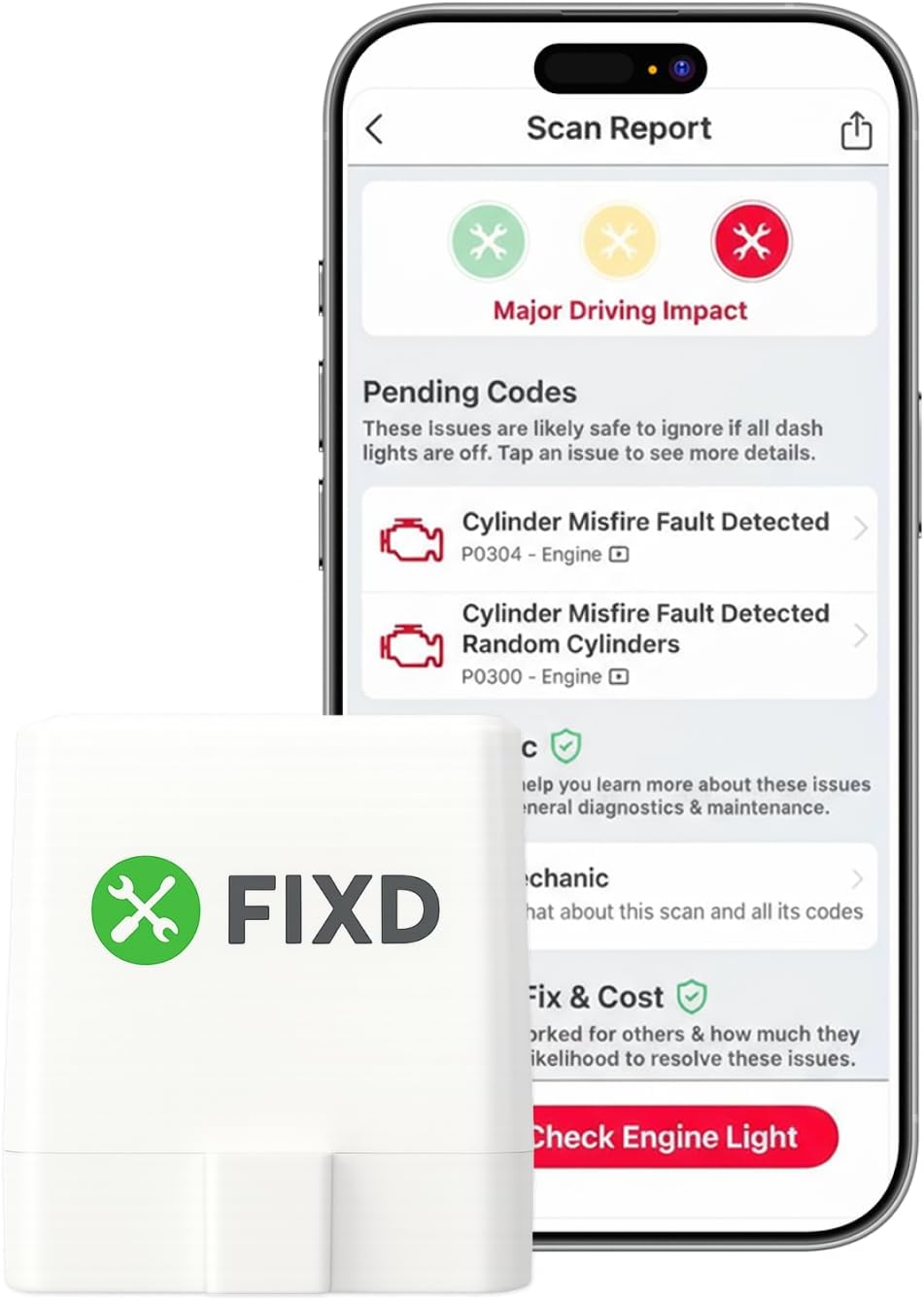
Best Bluetooth OBD2 Scanner
Detect 39,000+ Issues With Enhanced Codes. Save $1000s on car repairs & buying used vehicles by diagnosing problems yourself.
Shop on Amazon
Key Takeaways
- A solid Mercedes check engine light indicates a stored fault code that allows continued driving with reduced performance, while a flashing light signals active cylinder misfires requiring immediate engine shutdown to prevent catalytic converter damage costing $2,000+.
- Oxygen sensors, loose gas caps, catalytic converter degradation, and mass airflow sensor contamination are the most common triggers of your Mercedes check engine light across all chassis.
- An OBD-II scanner is essential for diagnosing Mercedes check engine light codes, with Mercedes-specific tools like FOXWELL NT510 providing more detailed fault information than generic code readers.
- Always diagnose and repair the underlying fault before clearing check engine light codes, as the light will return immediately if the root cause isn’t addressed, and freeze-frame data helps guide accurate repairs.
- Independent Mercedes specialists typically offer 30–50% cost savings compared to dealers while maintaining factory-equivalent diagnostic capabilities, making them a cost-effective alternative to manufacturer service centers.
- If you experience a flashing check engine light, engine overheating, severe power loss, or unusual noises and smoke, seek immediate professional help rather than attempting DIY diagnosis.
What Does the Check Engine Light Mean in Your Mercedes?
Your Mercedes check engine light, officially called the Malfunction Indicator Lamp (MIL), serves as the ECU’s primary warning system. When sensors detect conditions outside programmed thresholds, the ECU stores a diagnostic trouble code and illuminates the yellow engine symbol on your digital instrument cluster.
The system continuously monitors dozens of parameters: air-fuel mixture ratios, exhaust oxygen content, ignition timing, fuel pressure, evaporative emissions, and sensor voltage circuits. Any deviation triggers fault logging. Modern Mercedes vehicles use CAN-bus communication, linking sensors across powertrain, transmission, and emissions systems.
A solid check engine light means the ECU has detected and stored a fault code. The vehicle remains drivable, but you should diagnose the issue within a few days. Performance may feel slightly reduced as the ECU enters “limp mode” to protect components.
A flashing check engine light signals active cylinder misfires, unburned fuel entering the exhaust. This can overheat and permanently damage your catalytic converter (a $2,000+ part). Pull over safely and shut down the engine immediately. Continued driving risks catastrophic converter failure and potential engine damage.
Common Reasons Your Mercedes Check Engine Light Turns On
Faulty Oxygen Sensors
Oxygen sensors (O2 sensors) monitor exhaust gas oxygen levels before and after the catalytic converter. Mercedes vehicles typically use four O2 sensors, two upstream (pre-cat) and two downstream (post-cat). These sensors deteriorate over 80,000–100,000 miles as contamination from carbon deposits and fuel additives degrades the sensing element.
Failing O2 sensors trigger codes P0130–P0167. Symptoms include rough idle, poor fuel economy (15–20% worse), sluggish acceleration, and failed emissions tests. The ECU can’t optimize air-fuel ratios without accurate oxygen readings, causing the engine to run rich (too much fuel) or lean (too little fuel).
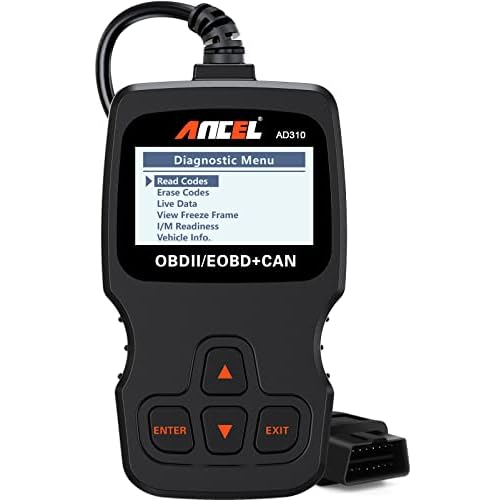
OBD-II Scanner makes reading these codes straightforward. Replacement involves unbolting the sensor from the exhaust manifold or catalytic converter, accessible for DIYers with proper jack stands and anti-seize compound.
Loose or Damaged Gas Cap
The most overlooked trigger is a loose, cracked, or missing gas cap. Your Mercedes evaporative emissions (EVAP) system maintains sealed fuel vapor pressure. A compromised seal allows vapors to escape, triggering codes P0440 (EVAP system malfunction), P0442 (small leak), or P0455 (large leak).
After refueling, ensure the cap clicks three times. Inspect the rubber seal for cracks or hardening. Gas caps cost $15–$30 but prevent unnecessary dealer diagnostic fees. The light may take 20–50 drive cycles to clear after proper sealing.
Catalytic Converter Issues
Catalytic converters reduce harmful emissions by converting carbon monoxide, hydrocarbons, and nitrogen oxides into harmless gases. Mercedes catalytic converters contain precious metals (platinum, palladium, rhodium) that degrade from contamination, overheating, or oil consumption.
Codes P0420 (Bank 1) or P0430 (Bank 2) indicate converter efficiency below threshold. Common causes include prolonged driving with misfires, bad O2 sensors feeding incorrect data, oil burning from worn piston rings, or physical damage from road debris. Replacement runs $1,800–$3,500 at dealers.
Mass Airflow Sensor Problems
The Mass Airflow (MAF) sensor measures incoming air volume so the ECU can calculate proper fuel injection. Contamination from dirty air filters, oil residue, or carbon buildup disrupts the heated wire element, causing inaccurate readings.
Symptoms include hesitation during acceleration, stalling at idle, black exhaust smoke, and codes P0100–P0104. Cleaning the MAF sensor with specialized MAF cleaner spray (never carburetor cleaner, which damages the element) often restores function. The sensor sits in the intake tract between the air filter and throttle body, accessible in 10 minutes.
How to Diagnose Your Mercedes Check Engine Light
Using an OBD-II Scanner to Read Diagnostic Codes
Every Mercedes built after 1996 includes an OBD-II diagnostic port located under the driver’s side dashboard, near the steering column. Plug in an OBD-II scanner to retrieve stored fault codes, the foundation of proper diagnosis.
Basic code readers display generic OBD-II codes (P0xxx) but miss Mercedes-specific manufacturer codes (P1xxx, P2xxx). FOXWELL NT510 offers Mercedes-specific coverage, reading module-level faults across engine, transmission, ABS, and airbag systems. Professional-grade tools like XENTRY or STAR Diagnostic provide complete access to all control modules.
After connecting the scanner, turn the ignition to position II (do not start the engine). Navigate to “Read Codes” or “Scan.” The scanner displays active and pending codes with brief descriptions. Write down all codes before clearing, multiple codes often point to a single root cause.
Understanding Mercedes-Specific Error Codes
Mercedes diagnostic codes follow standardized formats but include manufacturer-specific extensions. The first character indicates the system: P (powertrain), B (body), C (chassis), U (network communication). The second digit shows generic (0) or manufacturer-specific (1).
Common Mercedes fault codes:
- P0300: Random/multiple cylinder misfire
- P0171/P0174: System too lean (Banks 1/2)
- P0401: Insufficient EGR flow
- P1000: System readiness test incomplete
- P2004: Intake manifold runner control stuck open
Cross-reference codes with Mercedes-Benz USA technical resources or dedicated Mercedes forums. Multiple codes often trace to single failures, for example, a vacuum leak triggers lean codes (P0171/P0174) plus MAF sensor faults simultaneously.
Should You Drive Your Mercedes With the Check Engine Light On?
Driving with a solid check engine light carries manageable risk for most faults. The ECU activates failsafe modes, limiting power and adjusting timing to prevent damage. You’ll notice reduced performance, slower acceleration, lower top speed, or delayed transmission shifts, but the engine remains protected.
But, never drive with a flashing check engine light. Flashing indicates active misfires dumping raw fuel into the exhaust system. The catalytic converter can overheat to 1,400°F within minutes, causing permanent honeycomb substrate meltdown. Pull over immediately, shut down the engine, and arrange towing.
“Drove my E-Class with flashing light for 5 miles, converter melted inside. $2,800 dealer repair. Should’ve stopped.” via MBWorld Forums
Monitor your temperature gauge and listen for unusual sounds. If the engine overheats, loses power suddenly, or makes knocking noises, stop driving. For solid lights with no performance changes, schedule diagnosis within 5–7 days. Prolonged driving with stored faults can worsen damage and inflate repair costs.
How to Reset Your Mercedes Check Engine Light
Clearing the check engine light without addressing the underlying fault is pointless, the light returns immediately or within a few drive cycles once the ECU detects the condition again. Proper protocol: diagnose and repair the fault, then clear codes.
Using your OBD-II scanner, select “Clear Codes” or “Erase DTCs” after repairs. This resets the MIL and clears stored freeze-frame data. Alternatively, disconnect the negative battery terminal for 15 minutes to force an ECU reset, though this also erases radio presets, seat memory, and adaptive transmission learning.
Some faults require drive cycles to fully clear. The ECU monitors systems under specific conditions: cold starts, highway speeds, idle periods. Mercedes readiness monitors must complete before emissions testing. Check “Monitor Status” in your scanner to verify all systems show “Ready.”
“Replaced O2 sensor but light stayed on for 3 days. Finally cleared after 50 miles highway driving.” via BenzWorld Forums
Never reset codes before diagnosis. Fault codes include valuable freeze-frame data, engine RPM, coolant temperature, fuel trim values, captured the moment the fault occurred. This data guides accurate repairs.
When to Take Your Mercedes to a Mechanic
Some check engine light triggers demand professional diagnosis. If your OBD-II scanner shows codes you can’t interpret, multiple simultaneous faults, or system-level failures (transmission, ABS integration), schedule service with a Mercedes specialist or dealer.
Seek immediate professional help if you experience:
- Flashing check engine light (active misfires)
- Engine overheating or coolant loss
- Severe power loss or inability to accelerate
- Unusual noises (knocking, rattling, grinding)
- Smoke from exhaust (blue, white, or black)
- Burning smells or fluid leaks
Independent Mercedes specialists offer 30–50% cost savings versus dealers while using factory-equivalent diagnostic equipment. Verify ASE certification and Mercedes-specific training. Request detailed fault code reports before authorizing repairs.
For complex electrical faults, intermittent issues, or driveability problems without clear codes, dealer-level diagnostics with XENTRY access all control modules and manufacturer technical service bulletins (TSBs). Some recalls and software updates address check engine light triggers at no charge, verify your VIN against NHTSA recall database.
Frequently Asked Questions
What does the Mercedes check engine light mean and when should I be concerned?
The Mercedes check engine light (Malfunction Indicator Lamp) signals your ECU has detected a fault in emissions, fuel, or ignition systems. A solid light means you can drive safely for a few days, but a flashing light indicates active cylinder misfires that can destroy your catalytic converter within minutes—pull over immediately.
What are the most common reasons for a Mercedes check engine light to come on?
The most common triggers include faulty oxygen sensors (P0130–P0167), loose gas caps (P0440/P0442), catalytic converter degradation (P0420/P0430), mass airflow sensor contamination (P0100–P0104), and cylinder misfires. Oxygen sensor failures are the leading cause, occurring after 80,000–100,000 miles of wear.
Can I drive my Mercedes safely with the check engine light on?
Driving with a solid check engine light is generally safe for a few days—the ECU activates failsafe modes to protect the engine. However, never drive with a flashing light, which signals active misfires that can overheat and permanently damage your catalytic converter. Always pull over immediately if the light flashes.
How do I diagnose a Mercedes check engine light without going to a dealer?
Use an OBD-II scanner plugged into the diagnostic port under your steering column. Basic scanners read generic codes, but a Mercedes-specific scanner like the FOXWELL NT510 reads manufacturer codes (P1xxx, P2xxx). Write down all codes before clearing to identify root causes and determine if DIY fixes are possible.
Is it safe to reset the check engine light myself, or should I see a mechanic?
Never reset codes before diagnosis—you’ll lose valuable freeze-frame data that guides accurate repairs. After identifying and fixing the fault with your OBD-II scanner, select ‘Clear Codes’ to reset the light. If you see multiple faults or can’t interpret codes, consult a Mercedes specialist to avoid costly mistakes.
How much does it typically cost to fix a Mercedes check engine light?
Costs vary by fault: loose gas caps ($15–$30), oxygen sensor replacement ($200–$400 per sensor), MAF sensor cleaning ($50–$150), and catalytic converter replacement ($1,800–$3,500 at dealers). Independent specialists typically charge 30–50% less than dealerships while offering equivalent diagnostic equipment and expertise.
Read More:
- Mercedes Check Engine Light Reset (Here’s the Complete Guide)
- Mercedes E350 Check Engine Light (Complete Diagnostic Guide)
- Mercedes GLE 350 Check Engine Light (Ultimate Owner’s Guide)
- Mercedes C300 Check Engine Light (Complete Fix & Diagnosis Guide)
- Mercedes GLC 300 Check Engine Light (Master Diagnostic Guide)