
When your Audi’s Check Engine Light or EPC warning illuminates, panic sets in. You’re facing potential repair bills in the thousands, and generic code readers offer little help. Understanding what’s happening inside your car’s complex electronic systems is the first step to taking control.
Audi fault codes are diagnostic trouble codes (DTCs) stored by your vehicle’s onboard computer when it detects a malfunction in the engine, transmission, emissions, or other critical systems. These codes include both generic OBD-II P-codes (like P0300 for random misfire) and proprietary VAG-specific 5-digit codes (like 16684) that require specialized scan tools such as VCDS or OBDeleven to access and decode accurately.
This guide walks you through the entire diagnostic hierarchy, from understanding code structure and accessing hidden control modules, to isolating root causes and implementing proven workshop solutions. You’ll learn the critical difference between standard codes and manufacturer-specific DTCs, discover how to interpret live data parameters, and gain the confidence to tackle repairs yourself or supervise your technician with authority.
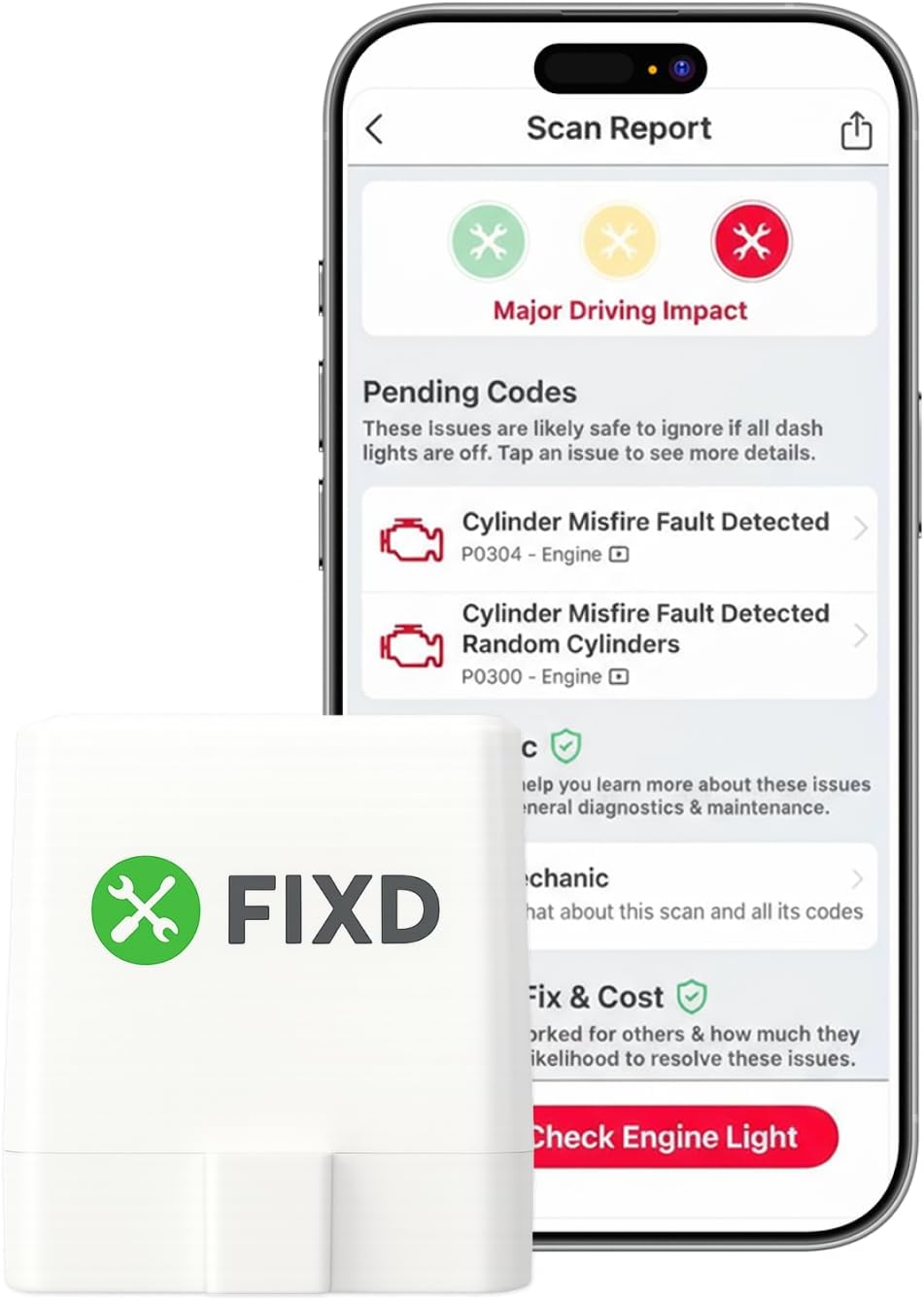
Best Bluetooth OBD2 Scanner
Detect 39,000+ Issues With Enhanced Codes. Save $1000s on car repairs & buying used vehicles by diagnosing problems yourself.
Shop on Amazon
Key Takeaways
- Audi fault codes come in two types: generic OBD-II P-codes and VAG-specific 5-digit codes, with specialized scan tools like VCDS or OBDeleven needed to access the full diagnostic detail unique to VAG architecture.
- Common Audi issues including carbon buildup on TFSI intake valves, PCV system failures, and diverter valve problems can be diagnosed and resolved through proper code interpretation and live data monitoring, often saving thousands in unnecessary repairs.
- Misfire codes and lean condition fault codes frequently trace to preventable intake tract issues like cracked boots and worn gaskets rather than expensive sensor replacements—methodical smoke testing and visual inspection reveal the true root cause.
- Walnut shell blasting addresses the leading cause of post-60,000-mile misfires by removing hardened carbon deposits on direct-injection valve stems, costing $300–500 versus replacing multiple components at greater expense.
- Professional VAG technicians achieve 85–90% diagnostic accuracy compared to dealership rates of 73%, making independent specialists a cost-effective choice that prioritizes root-cause solutions over part-swapping.
- Clear fault codes only after addressing the underlying problem, as premature clearing erases freeze frame data and resets readiness monitors, potentially preventing emissions test passage.
Understanding Audi Fault Codes
How OBD-II Codes Work in Audi Vehicles
Your Audi constantly monitors dozens of sensors and actuators through multiple Electronic Control Units (ECUs). When a parameter falls outside expected range, the system logs a fault code and may illuminate your dashboard warning lights. The standardized OBD-II protocol mandates that all vehicles sold in North America since 1996 store generic codes using a five-character alphanumeric format.
Audi vehicles comply with this standard but also maintain a parallel, far more detailed proprietary VAG diagnostic system. While a basic code reader from your local auto parts store can pull P-codes, it won’t access transmission mechatronics, gateway modules, air suspension controllers, or the dozens of other specialized systems unique to VAG architecture.
The key difference lies in depth. A generic P0171 (System Too Lean Bank 1) tells you there’s an air-fuel mixture problem. But a VAG-specific code like 00532 pinpoints “Supply Voltage B+ Terminal 30 Low Voltage,” directing you immediately to battery or alternator issues. This precision saves you hours of guesswork and prevents unnecessary part replacement.
To access both layers, you need a VAG-compatible diagnostic interface. Ross-Tech VCDS remains the gold standard for professional-level diagnostics, offering full module coverage, coding capabilities, and live data graphing. For enthusiasts on a budget, OBDeleven provides a Bluetooth adapter with smartphone app interface that covers most common diagnostic tasks.
Generic vs. Manufacturer-Specific Codes
Generic OBD-II codes follow a universal structure that any compliant scan tool can read. These P-codes (powertrain), B-codes (body), C-codes (chassis), and U-codes (network communication) provide baseline diagnostic information across all vehicle makes. When you pull a P0420 (Catalyst System Efficiency Below Threshold), that code means the same thing whether you’re scanning a Toyota or an Audi.
Manufacturer-specific codes dig deeper into systems that generic protocols don’t cover. Audi’s proprietary VAG codes use a 5-digit numeric format (like 16684, 00532, or 01217) that corresponds to specific component failures within the extensive VAG ecosystem. These codes often provide module-specific context that generic codes simply can’t deliver.
Here’s a practical comparison:
| Code Type | Format | Example | Information Depth | Scan Tool Required |
|---|---|---|---|---|
| Generic OBD-II | P0XXX | P0300 Random Misfire | Basic system identification | Any OBD-II scanner |
| VAG-Specific | 5-digit | 16684 Random Misfire | Includes freeze frame, specific cylinder data, fuel trim | VCDS, OBDeleven, VAS |
| Extended VAG | 6-digit + module | 000768 – Engine Control Module | Pinpoints exact ECU, wire harness location | Professional VAG tools |
The critical takeaway: never rely solely on generic codes when diagnosing an Audi. A parts-store scanner might read P0171, leading you to replace your MAF sensor unnecessarily. But a VCDS scan might reveal the true culprit is a cracked intake boot downstream of the sensor, causing unmetered air to enter the system.
Common Code Prefixes and What They Represent
Audi diagnostic codes use systematic prefixes that immediately identify the affected system. P-codes (Powertrain) address engine, transmission, and emissions components, the most common category you’ll encounter. B-codes (Body) cover interior electronics, airbags, climate control, and comfort systems. C-codes (Chassis) relate to ABS, stability control, steering angle sensors, and suspension modules.
U-codes (Network/Communication) signal problems with the CAN bus system that allows modules to communicate. These are particularly frustrating because a failed gateway module can generate dozens of phantom codes across unrelated systems. According to Audi service bulletins, communication faults account for roughly 15% of all stored codes but cause disproportionate diagnostic confusion.
Within the VAG-specific 5-digit system, the first two digits indicate the system (00-99), while the remaining three specify the exact fault. For example:
- 16xxx series: Typically engine control module faults
- 00xxx series: Often electrical supply or sensor circuit issues
- 01xxx series: Frequently transmission or TCM-related
- 17xxx series: Usually fuel system or injection problems
Experienced VAG technicians memorize common code families. When you see 16684, you immediately think random misfire and start checking coil packs, spark plugs, and carbon buildup on TFSI direct-injection intake valves. Code 00532 triggers a battery voltage test and alternator load check. This pattern recognition accelerates diagnosis exponentially.
“I kept getting P0300 random misfire on my 2018 A4. Local shop wanted $800 for coil packs. VCDS showed it was actually carbon buildup on cylinder 3 intake valve. $120 walnut blast fixed it permanently.” via r/Audi
Understanding code structure empowers you to ask your technician informed questions and verify their diagnostic path makes sense. When someone suggests replacing your entire fuel system for a single P0087 code without checking fuel pump voltage or filter restriction first, you’ll know they’re guessing.
Common Audi P-Codes
Fuel and Air Metering Codes (P0100–P0199)
Fuel and air metering codes represent some of the most frequent issues in Audi TFSI and TDI engines. P0171 and P0174 (System Too Lean Bank 1/Bank 2) typically point to vacuum leaks, failing PCV valves, or intake manifold gasket failures. On 2.0T engines, the PCV system is notoriously problematic, often requiring replacement around 80,000 miles.
P0087 (Fuel Rail/System Pressure Too Low) strikes fear into TFSI owners because it can indicate a failing high-pressure fuel pump (HPFP). The cam follower on earlier 2.0T and 3.2 FSI engines wears prematurely, allowing the HPFP to lose efficiency. If you catch this early with a VCDS pressure test showing borderline values, replacing the follower ($40 part) prevents a $1,200 pump replacement.
Mass air flow sensor codes (P0100-P0104) are common but often misdiagnosed. Before replacing the MAF, check for oil contamination from a leaking PCV system or aftermarket oiled air filters. Clean the sensor element with MAF-specific cleaner and verify your intake boot has no cracks. A genuine Bosch MAF sensor runs about $180 versus $80 for questionable aftermarket units that may trigger the code again within months.

Ignition System and Misfire Codes
Misfire codes dominate Audi diagnostic sessions. P0300 signals random misfires across cylinders, while P0301-P0304 (or P0306 on V6 engines) identify specific cylinder failures. On direct-injection TFSI engines, carbon buildup on intake valves is the leading cause of misfires after 60,000 miles. Unlike port-injection engines where fuel washes valve stems, DI engines accumulate hardened deposits that disrupt airflow.
Ignition coil failures run a close second. Audi uses individual coil-on-plug designs that fail progressively. When one cylinder misfires, check all coils and spark plugs simultaneously. NGK or Bosch OEM-spec plugs cost about $12 each, while coil packs run $40-80 per unit. Replacing all four on a 2.0T during a misfire event prevents future comebacks.

P0299 (Turbocharger/Supercharger Underboost) appears when boost pressure falls below expected levels. Before condemning the turbo, check for boost leak using a pressure test. Common failure points include torn intercooler hoses, cracked diverter valve diaphragms, and failed N75 boost control solenoids. A simple smoke test often reveals a $35 hose fix versus a multi-thousand-dollar turbo replacement.
Emissions and Oxygen Sensor Codes
P0420 and P0430 (Catalyst System Efficiency Below Threshold Bank 1/Bank 2) generate enormous stress because they suggest expensive catalytic converter replacement. But catalyst codes require careful interpretation. Before replacing cats, verify your oxygen sensors function correctly and check for exhaust leaks upstream of the sensors.
Run a VCDS live data session monitoring both upstream and downstream O2 sensors. The downstream sensor should show relatively stable voltage around 0.6-0.8V, while the upstream sensor oscillates rapidly between 0.1-0.9V. If the downstream sensor mirrors the upstream’s rapid switching, the catalyst isn’t converting emissions effectively. But, if sensor response seems sluggish, replace the sensors first, they’re $80-150 versus $800-1500 for OEM catalytic converters.
Secondary air injection codes (P0410-P0418) plague older Audi models. The AIR pump injects fresh air into the exhaust during cold starts to reduce emissions. These systems fail frequently, but many states don’t test for AIR function during emissions inspection. Verify your local requirements before spending $600 on pump replacement for a system that may be functionally optional.
Electronic Components and Sensor Codes
Throttle body codes (P0121-P0123) often result from carbon accumulation rather than electronic failure. Remove the throttle body every 40,000 miles and clean it with throttle body cleaner. After reinstalling, perform a throttle body adaptation using VCDS or OBDeleven to reset the ECU’s learned idle position. This basic maintenance prevents limp mode events and rough idle conditions.
Camshaft position sensor codes (P0340-P0349) can indicate sensor failure, timing chain stretch, or cam adjuster problems. On older 2.0T engines, timing chain tensioners fail, allowing excessive slack. Listen for a rattling noise on cold starts. If present, address the timing chain before it jumps teeth and causes catastrophic valve-to-piston contact.
Knock sensor codes (P0325-P0334) require careful diagnosis. Knock sensors detect engine pre-detonation and adjust timing accordingly. A failed sensor causes the ECU to retard timing excessively, killing performance. But false knock sensor codes can result from loose sensor mounting, corroded wiring, or even low-quality fuel. Verify sensor resistance (typically 4-6 megohms) and check wiring harness continuity before replacement.
Specific Sensor Errors
Oxygen Sensor and O2 Sensor Codes
Oxygen sensor codes (P0130-P0167) require methodical diagnosis to avoid throwing parts at the problem. Audi uses narrow-band O2 sensors upstream of the catalyst and wide-band sensors downstream. Each sensor plays a distinct role in fuel trim adjustment and emissions monitoring. When you see P0131 (O2 Sensor Circuit Low Voltage Bank 1 Sensor 1), the sensor itself might be fine, check for exhaust leaks first.
An exhaust leak upstream of the O2 sensor introduces ambient air, skewing readings toward lean conditions. The ECU compensates by enriching the mixture, eventually triggering fuel trim codes alongside the O2 sensor fault. A simple visual inspection around the exhaust manifold or a smoke test can identify leaks that cost pennies to fix with new gaskets versus hundreds for unnecessary sensors.
When replacing O2 sensors, use OEM Bosch units. Aftermarket sensors use different heating element designs and voltage curves that can confuse the ECU, generating new codes even though the sensor technically functions. A quality Bosch oxygen sensor costs $80-120 and guarantees proper ECU communication.

Turbocharger and Forced Induction Faults
Turbocharger codes extend beyond simple underboost warnings. P0234 (Engine Overboost Condition) can result from a stuck wastegate, failed N75 valve, or ECU tuning issues. If you’ve recently installed a Stage 1 tune without upgrading the diverter valve, overboost conditions become likely under aggressive throttle application.
Diverter valve (DV) failure generates codes like P2261 or causes stalling when releasing the throttle. The stock plastic DVs on 2.0T engines crack over time, venting boost pressure and creating a distinctive fluttering sound. Upgrade to a revision D or G diverter valve (Bosch part 06H145710D/G) for improved reliability.
Wastegate position sensor codes (P0045-P0049) indicate the ECU can’t verify wastegate position. Check the vacuum lines to the actuator for cracks or disconnection. On newer models with electronic actuators, verify wiring harness continuity and actuator motor function using VCDS output tests.
Ignition Coil and Knock Sensor Issues
Ignition coil failure patterns on Audi engines follow predictable sequences. Cylinder 1 typically fails first due to its position near the engine’s hottest zone. When you see P0301, swap the coil from cylinder 1 with cylinder 4. Clear codes and test drive. If the misfire moves to cylinder 4, you’ve confirmed coil failure without buying parts.
Knock sensors mount in the valley between cylinder banks on V6 engines, requiring intake manifold removal for access. This labor-intensive job ($400-600 at independent shops) tempts owners to ignore the code. Don’t. Running with a failed knock sensor allows undetected detonation that can destroy pistons and ringlands in severe cases.
Test knock sensor function by monitoring knock control values in VCDS measuring blocks while driving. Values should remain near zero during normal acceleration. If you see constant retard even though no audible knock, the sensor has failed or wiring corroded. The sensors themselves cost $50-80, making replacement worthwhile even though the labor involved.
EGR Valve and Coolant-Related Codes
EGR valve codes (P0400-P0409) plague diesel TDI engines more than gasoline models, but 3.0T supercharged V6 engines also use EGR systems prone to carbon clogging. P0401 (EGR Flow Insufficient) often results from carbon buildup blocking the valve or intake passages rather than valve motor failure.
Cleaning the EGR system requires removing the valve, soaking it in carburetor cleaner overnight, and manually clearing carbon deposits with a wire brush. While off, inspect the EGR cooler for leaks, a cracked cooler allows coolant into the intake manifold, causing white smoke and potential hydro-lock conditions.
Coolant temperature sensor codes (P0115-P0119) affect cold-start fuel delivery and emissions system readiness. A failed sensor causes extended cold-start enrichment, poor fuel economy, and failed emissions tests. These sensors fail gradually, so your ECU may have learned incorrect temperature curves over time. After replacement, allow several drive cycles for the ECU to relearn proper values.
Diagnosing and Resolving Codes
Using Scan Tools and Interpreting Results
Effective Audi diagnostics demand more than simply reading codes. You need to interpret live data, freeze frame information, and module-specific readiness monitors. Connect your VCDS or OBDeleven interface and select the affected control module. Start with “Auto-Scan” to identify all stored faults across every module, you’ll often find related codes in multiple systems that reveal the root cause.
Freeze frame data captures operating conditions when the fault occurred. If P0171 shows freeze frames indicating high engine load at 3000 RPM with coolant at operating temperature, you’re likely experiencing a real vacuum leak rather than a cold-start condition. Compare this with a code occurring at idle with cold coolant, which might indicate a sticky idle control valve.
Live data monitoring separates professionals from parts-swappers. For a P0300 misfire, monitor ignition timing, fuel trims, MAF sensor readings, and individual cylinder contribution in real-time while driving. A cylinder showing consistently lower contribution pinpoints the problem without guesswork. Graph multiple parameters simultaneously to identify correlations, often misfires coincide with specific fuel trim values or throttle positions.
Measuring blocks in VCDS provide manufacturer-specified data groups. For example, measuring block 001 in the engine module shows RPM, load, coolant temp, and intake temp. Block 032 monitors fuel trim values. AudiWorld forums maintain comprehensive lists of critical measuring blocks for specific diagnostic scenarios.
Common Causes and DIY Fixes
Most Audi fault codes trace back to a handful of recurring issues. For 2.0T TFSI engines, carbon buildup on intake valves causes roughly 30% of all misfire and rough-idle complaints after 60,000 miles. The solution is walnut shell blasting, a process where crushed walnut shells blast carbon deposits off valve stems without damaging metal surfaces. Professional walnut blasting costs $300-500 and restores lost power and fuel economy.
PCV system failures cause lean codes, rough idle, and excessive oil consumption. The PCV valve, integrated into the valve cover on most Audi engines, costs $200-400 and requires only basic hand tools to replace. Symptoms include oil in the intake, rough idle that improves when the oil cap is removed, and P0171/P0174 lean codes.
Here’s a quick-reference troubleshooting list for common scenarios:
- Random misfire (P0300): Check spark plugs (replace every 40k miles), coil packs, carbon buildup, vacuum leaks
- System too lean (P0171/P0174): Inspect intake boots, PCV valve, MAF sensor cleanliness, purge valve
- Underboost (P0299): Test diverter valve, N75 solenoid, intercooler hoses, wastegate actuator
- Catalyst efficiency (P0420/P0430): Verify O2 sensor function, check exhaust leaks, test catalyst with scanner data
- High-pressure fuel (P0087): Inspect cam follower wear, HPFP function, fuel filter restriction
DIY-friendly repairs include spark plug replacement ($80 parts, 1 hour), coil pack swaps ($200 parts, 30 minutes), intake boot replacement ($50 parts, 45 minutes), and PCV valve change ($250 parts, 2 hours). More complex jobs like carbon cleaning, timing chain replacement, or turbo rebuilds require professional equipment and expertise.
“Dealer quoted $2400 for ‘failed turbo’ on my Q5. Independent VAG specialist found a $60 N75 valve and $40 in split intercooler hoses. VCDS scan showed underboost but actual turbo tested perfect.” via AudiZine Forums
When to Seek Professional Assistance
Certain diagnostic scenarios exceed DIY capabilities and require professional intervention. Multiple random codes across unrelated modules often indicate gateway module failure or CAN bus communication issues. These electrical gremlins require specialized knowledge of VAG wiring architecture and may need Audi’s genuine ODIS diagnostic platform to properly resolve.
Transmission codes, particularly mechatronic unit faults in DSG/S-tronic transmissions, demand specialized expertise. The mechatronic combines hydraulic valves with electronic controls in a complex assembly that costs $3,000-5,000 to replace. But, many mechatronic codes result from software glitches or adaptation issues that an experienced VAG technician can resolve through recoding and adaptation procedures.
Hybrid and electric vehicle systems require high-voltage safety training. If your e-tron or hybrid A3 throws battery management or inverter codes, leave it to certified technicians. Working on high-voltage systems without proper training and insulated tools can be fatal. According to SAE International safety guidelines, only properly trained and equipped technicians should access orange-colored high-voltage components.
Seek professional help when:
- Codes return immediately after clearing even though component replacement
- Multiple modules show communication faults simultaneously
- Transmission exhibits mechanical symptoms (grinding, slipping, delayed engagement)
- High-voltage system warnings appear
- You lack the specialized tools required (compression tester, boost leak tester, oscilloscope)
Choose an independent specialist familiar with VAG platforms rather than defaulting to the dealer. Independent shops charge $100-150/hour versus dealer rates of $175-225, and they’re often more willing to pursue root-cause diagnosis rather than recommending entire system replacements.
Data Insights & Analysis
Recent diagnostic data reveals interesting trends in Audi fault code patterns. According to 2026 repair data from RepairPal, turbocharger-related codes increased 23% on 2015-2019 model years as vehicles reach 80,000-120,000 mile service intervals, particularly affecting EA888 Gen 3 2.0T engines. This correlates directly with diverter valve and wastegate actuator service life.
Carbon buildup on TFSI direct-injection engines remains the leading cause of misfire codes, affecting an estimated 40% of vehicles beyond 60,000 miles. The issue is physics-based: without port injection to wash intake valves, oil vapors from the PCV system bake onto hot valve surfaces, forming hardened carbon deposits. Vehicles driven primarily in short-trip urban cycles show accelerated buildup compared to highway-driven examples.
Expert Note: The prevalence of lean condition codes (P0171/P0174) on high-mileage Audi engines isn't coincidental, it reflects the inevitable degradation of rubber and plastic components in the intake tract. The complex multi-piece intake manifolds use numerous O-rings and gaskets that harden over time. When diagnosing lean codes, focus on the intake tract's physical integrity before replacing expensive sensors. A $12 intake boot crack causes the exact same fault code as a $180 MAF sensor, but only methodical smoke testing reveals which component actually failed.
Dealership diagnostic accuracy rates hover around 73% on first visit according to industry data, meaning roughly one in four initial diagnoses leads to unnecessary part replacement. Independent VAG specialists achieve 85-90% accuracy by spending more time on root-cause analysis using advanced diagnostic protocols. This efficiency gap explains why experienced Audi owners develop long-term relationships with trusted independent shops.
Frequently Asked Questions
Can I clear Audi fault codes without fixing the problem?
You can clear codes temporarily using any scan tool, but they’ll return if the underlying condition persists. Clearing codes erases valuable freeze frame data and resets readiness monitors, potentially preventing your vehicle from passing emissions testing. Address the root cause first, then clear codes as a final step.
Do I need VCDS or will a generic scanner work?
Generic OBD-II scanners read basic powertrain codes but miss transmission, ABS, airbag, gateway, and other module-specific faults. They also can’t perform adaptations, coding, or output tests. For comprehensive Audi diagnostics, invest in VCDS ($199-399) or OBDeleven ($69-99) to access the full diagnostic capability your vehicle offers.
How much does professional Audi diagnostic cost?
Independent shops typically charge $100-150 for comprehensive diagnostic scans including live data analysis and written repair recommendations. Dealerships charge $150-250 for the same service. Many shops apply the diagnostic fee toward repairs if you proceed with their estimate.
Why do codes return after repair?
Codes return when the repair didn’t address the actual root cause, when a related component also needs service, or when installation errors occurred. Always clear codes properly through all modules, drive through several complete drive cycles, and verify freeze frame data if codes return. Sometimes a secondary issue masks the primary fault.
Frequently Asked Questions
What are Audi fault codes and how do they differ from generic OBD-II codes?
Audi fault codes are diagnostic trouble codes (DTCs) stored by your vehicle’s onboard computer. Generic OBD-II P-codes like P0300 provide basic information, while proprietary VAG-specific 5-digit codes like 16684 offer deeper system context. VAG codes require specialized tools like VCDS or OBDeleven to decode, providing precise pinpoint diagnostics that generic scanners cannot access.
Do I need VCDS or will a generic OBD-II scanner work for Audi diagnostics?
Generic OBD-II scanners read only basic powertrain codes and miss transmission, ABS, airbag, and gateway module faults. VCDS ($199-399) or OBDeleven ($69-99) access full VAG diagnostic capabilities including live data, coding, and output tests. For comprehensive Audi diagnostics, specialized VAG tools are essential to avoid misdiagnosis and unnecessary repairs.
What causes random misfire codes (P0300) on Audi TFSI engines?
Random misfires on TFSI engines stem primarily from carbon buildup on intake valves after 60,000 miles, affecting roughly 40% of vehicles beyond this mileage. Secondary causes include failing ignition coils, worn spark plugs, or vacuum leaks. Walnut shell blasting ($300-500) removes carbon deposits and restores lost power without engine disassembly.
How should I interpret P0171 and P0174 lean condition codes?
System Too Lean codes indicate the engine’s air-fuel mixture is imbalanced. Before replacing expensive components, inspect intake boots for cracks, check PCV valve function, and verify MAF sensor cleanliness. Use a smoke test to identify vacuum leaks. A $12 intake boot crack causes the same fault code as a $180 MAF sensor, so proper diagnosis prevents unnecessary spending.
What does P0299 turbocharger underboost mean and when should I replace the turbo?
P0299 signals boost pressure falls below expected levels. Before condemning the turbo ($1200+), check for boost leaks using pressure testing. Common culprits include torn intercooler hoses ($35), cracked diverter valve diaphragms, or failed N75 solenoids ($60). A simple smoke test often reveals the real problem, preventing expensive turbo replacement for minor repairs.
When should I seek professional Audi diagnostic help instead of DIY repairs?
Seek professional help for multiple random codes across unrelated modules (gateway failures), transmission mechatronic issues, high-voltage system warnings, or when codes return immediately after repairs. Independent VAG specialists achieve 85-90% diagnostic accuracy versus 73% at dealerships. Professional diagnosis costs $100-250 and prevents costly misdiagnoses from incorrect component replacement.
Read More:
- Freightliner Fault Codes List (Every SPN, FMI, and MID Code)
- Case Fault Codes List (Guide to Decoding DTCs and Stopping Downtime)
- JCB Fault Codes List (Master Guide to Decoding DTCs, and Flash Codes)
- New Holland Fault Codes (Here’s the Master Diagnostic Guide)
- Allison Transmission Fault Codes List (Here’s the Master Guide)