
Your car jerks hard during acceleration, idles rough, and the check engine light just flashed on. That combination signals a real mechanical problem, not a minor glitch. Ignoring it risks stranding you or causing expensive damage to your engine or transmission.
Check engine light and car jerking almost always point to an engine misfire, failing ignition components, clogged fuel injectors, a dirty throttle body, or a slipping transmission torque converter, and an OBD-II scanner pulling codes like P0300 through P0308 will identify the exact cylinder or system causing the stumble within minutes.
This guide walks you through every major trigger, from fouled spark plugs to failing position sensors. You learn how to scan codes, test components with basic tools, and decide whether the problem is a quick fix or a sign of deeper trouble brewing in your drivetrain.
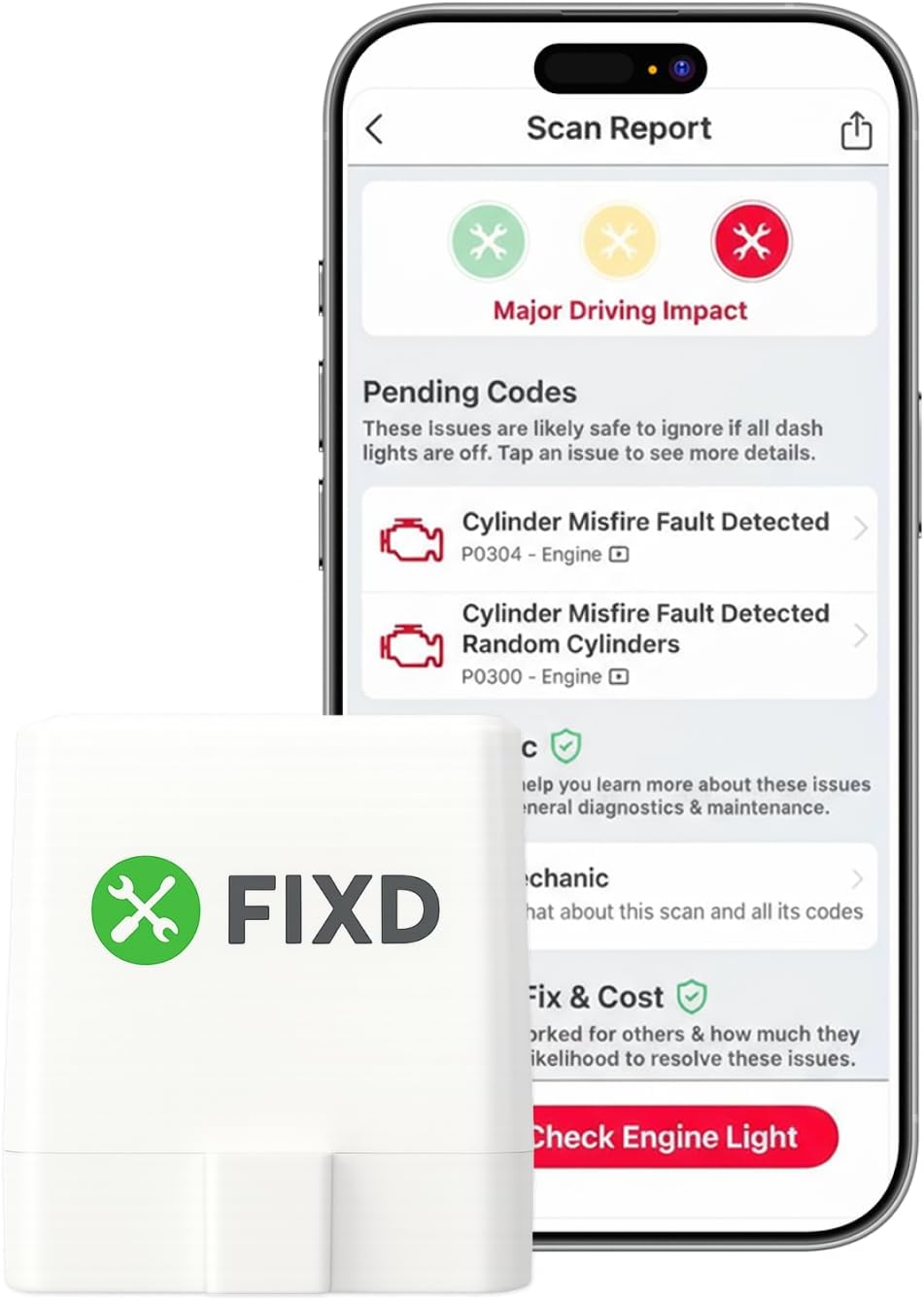
Best Bluetooth OBD2 Scanner
Detect 39,000+ Issues With Enhanced Codes. Save $1000s on car repairs & buying used vehicles by diagnosing problems yourself.
Shop on Amazon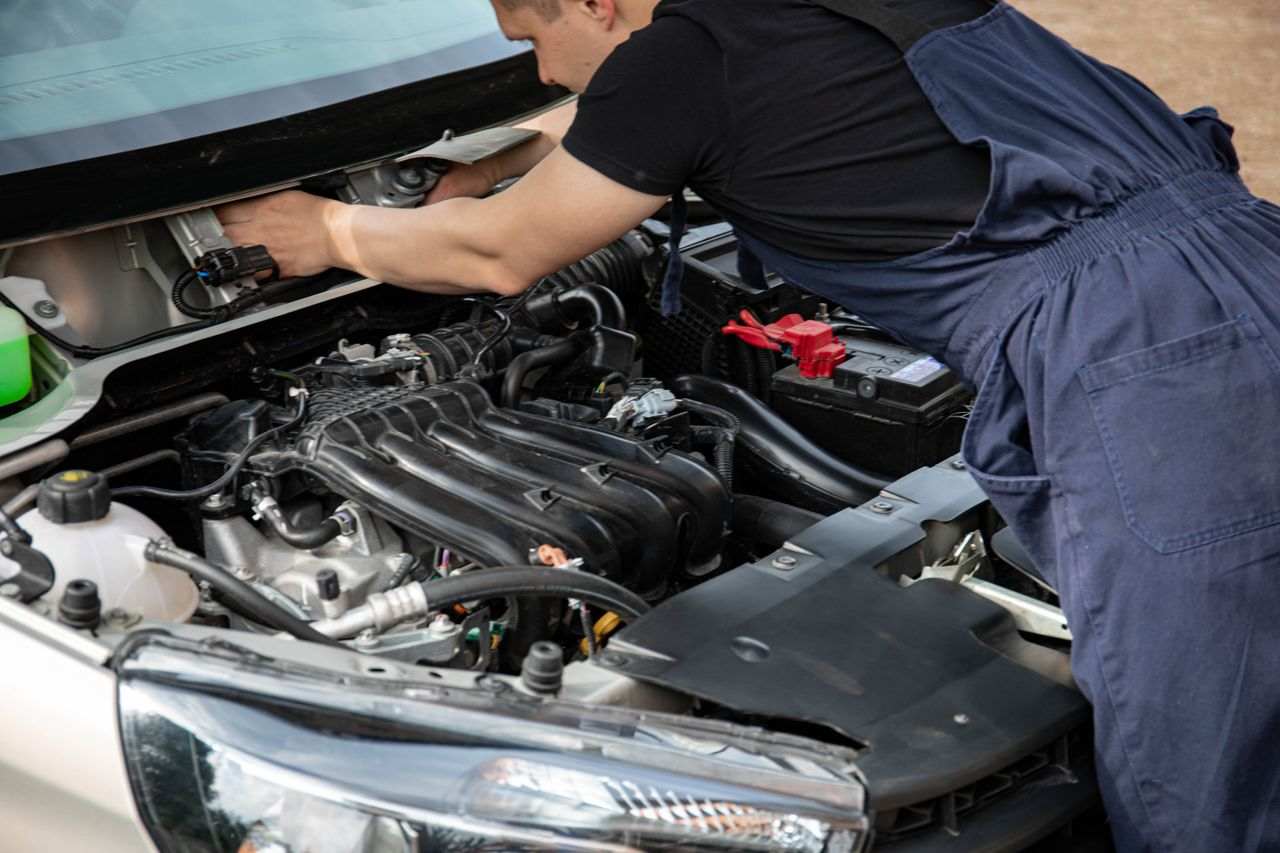
Key Takeaways
- Scan first, guess later — an OBD-II scanner pulling P0300 through P0308 tells you exactly which cylinder or system causes the jerk before you spend money on parts.
- Ignition parts fail in pairs — a worn spark plug often takes a nearby coil down with it, so test both when you find a misfire code.
- Transmission jerking feels different — a delayed, lurching shift or a shudder around 40 to 50 mph points to the torque converter, not the engine.
- Cleaning beats replacing — a dirty throttle body or clogged injector often responds to a thorough cleaning before you need new hardware.
- Delay costs more — driving on a sustained misfire can overheat the catalytic converter and turn a 50 dollar fix into a 1,500 dollar repair.
Why Your Car Jerks
Jerking happens when power delivery to your wheels becomes inconsistent. That inconsistency comes from three places: the engine is not burning fuel evenly, the fuel system is not delivering consistent pressure, or the transmission is not transferring torque smoothly. Each cause produces a distinct feel behind the wheel, and your check engine light usually narrows the search before you open the hood.
A rough idle with intermittent shaking points to the engine. A hesitation that happens only when you press the gas points to fuel delivery or throttle response. A jerk that happens specifically during gear changes or highway cruising points to the transmission. Learning to separate these feelings saves you hours of unnecessary testing.
Common Trigger Patterns
Drivers describe jerking in different ways depending on the root cause, and those descriptions matter during diagnosis. A shudder at idle that smooths out once you rev the engine usually means a fouled spark plug or weak coil. A jerk that only appears above 2,000 RPM often traces back to a clogged injector struggling to keep up with fuel demand.
A hard stumble right as you accelerate from a stop frequently comes from a dirty throttle body restricting airflow. A clunk or hesitation specifically between 3rd and 4th gear, or during torque converter lockup around 45 to 60 mph, points toward the transmission rather than the engine.
Temperature also plays a role. Cold mornings make weak ignition coils misfire more aggressively because the spark has to jump a wider resistance gap in cold metal. Hot weather can expose a failing crankshaft position sensor that drifts out of tolerance as components expand. Pay attention to when the jerking gets worse, not just that it happens.
Finally, note whether the jerking is constant or intermittent. A constant stumble on every single cylinder points to something affecting the whole engine, like a vacuum leak or bad camshaft sensor. An intermittent jerk that comes and goes points to one failing component, like a single weak coil or one dirty injector, that only fails under specific load conditions.
Mechanics at YourMechanic confirm that ignition and fuel delivery problems account for the majority of jerking complaints tied to an illuminated check engine light, ahead of transmission causes.
Reading Misfire Codes
Your first move should always be plugging in an OBD-II scanner. Codes P0300 through P0308 cover cylinder misfires, and the specific number tells you exactly where to look. P0300 means random, multiple cylinder misfire. P0301 through P0308 point to one specific cylinder, numbered according to your engine’s firing order.
A single cylinder code almost always means a localized problem, like one bad spark plug, one failing coil, or one clogged injector on that cylinder. A random P0300 code usually means something affecting multiple cylinders at once, like a vacuum leak, low fuel pressure, or a failing crankshaft position sensor feeding bad timing data to the whole engine.
P0300 Versus P0301 Codes
P0300 random misfire codes are trickier because they rule out a single bad part as the obvious culprit. Start by checking for vacuum leaks around intake hoses and gaskets, since even a small leak throws off the air fuel ratio across every cylinder. Next, check fuel pressure at the rail using a gauge, since a weak fuel pump starves all cylinders equally under load.
Single cylinder codes like P0301 narrow your search dramatically. Pull that cylinder’s spark plug and inspect it. A plug coated in black carbon suggests a rich fuel mixture or a failing injector. A plug with a wide, burned gap suggests normal wear and a simple replacement. Swap the ignition coil from that cylinder with a known good coil from another cylinder, then rescan. If the misfire code follows the coil to its new position, you found your failing part.
Drivers on car forums confirm this swap test works reliably in the field, even without expensive diagnostic equipment.
“Swapped the coil from cylinder 4 to cylinder 1 and the P0301 code became P0304 on the next scan. Confirmed it was the coil, not the plug. Saved me from replacing parts I didn’t need.” via r/MechanicAdvice
Always clear the code after testing and drive the car for a few miles before rescanning. A code that returns immediately confirms an active problem. A code that stays cleared for a long drive cycle might have been a one-time event, like a bad batch of fuel or a momentary vacuum disconnection that resolved itself.
Failing Ignition Coils
Ignition coils convert your battery’s 12 volts into the tens of thousands of volts needed to jump the spark plug gap. When a coil weakens, it produces a weaker spark that struggles to ignite fuel consistently, especially under load or at higher RPM. This produces exactly the kind of jerking and hesitation drivers report alongside a check engine light.
Symptoms of a failing coil include rough idle, reduced power during acceleration, poor fuel economy, and occasional backfiring through the exhaust. These symptoms often worsen gradually over weeks, which means many drivers adapt to the rough running without realizing how much worse it has become until the coil fails completely.
Testing Coil Resistance
A multimeter gives you a direct way to test coil health. Set it to ohms and check primary resistance across the coil’s low voltage terminals, then compare to your manufacturer’s specification, typically between 0.3 and 2.0 ohms depending on the vehicle. Secondary resistance, measured across the high voltage output, typically falls between 6,000 and 15,000 ohms.
A reading far outside these ranges confirms a failing coil. A reading of infinite resistance means a complete internal break and total failure. Keep in mind that coils often fail intermittently as they heat up, so a coil that tests fine cold might still fail once the engine reaches operating temperature. If your multimeter test comes back normal but the misfire persists after a heat cycle, you are likely dealing with heat-related coil breakdown that only shows up under real driving conditions.
Replace coils in pairs when possible, especially on engines with over 80,000 miles. If one coil has failed from age and heat cycling, its neighbors have experienced identical stress and often fail within a few months of each other.
Clogged Fuel Injectors
Fuel injectors spray a precise, atomized mist of fuel into each cylinder. When deposits build up inside the injector nozzle, the spray pattern becomes uneven, starving the cylinder of proper fuel delivery. This creates the same stumbling, jerking sensation as a misfire, and often triggers the exact same P0300 series codes.
Dirty injectors typically develop gradually from low quality fuel, infrequent fuel filter changes, or carbon buildup from short trips that never let the engine reach full operating temperature. Symptoms include rough idle, hesitation under acceleration, reduced fuel economy, and a smell of unburned fuel from the exhaust.
A fuel injector cleaning additive run through a full tank can resolve mild clogging within a few hundred miles. For moderate to severe clogging, a professional injector cleaning service using an ultrasonic bath removes deposits that additives cannot reach. If cleaning does not resolve the misfire, test injector resistance with a multimeter, since an injector with an internal electrical fault needs replacement, not cleaning.
Transmission Slippage Issues
Transmission related jerking feels distinct from engine misfires. Instead of a rough, shaking sensation, you feel a delayed lurch, a hard clunk between gears, or a shudder specifically during highway cruising. These symptoms often come with transmission-specific codes in the P0700 range, separate from the engine misfire codes.
Torque Converter Lockup Failure
The torque converter locks up at cruising speed to improve fuel efficiency, directly connecting the engine to the transmission like a manual clutch. When the lockup clutch inside the torque converter wears out or the solenoid controlling it fails, you feel a pulsing, shuddering jerk specifically between 40 and 60 mph that disappears when you accelerate or decelerate out of that speed range.
Low or degraded transmission fluid makes this problem worse. Fluid that has broken down from heat loses its ability to properly engage the lockup clutch, causing it to slip rather than fully engage. Check your transmission fluid level and condition first, since this is the cheapest possible fix for a torque converter symptom. Fluid that smells burnt or looks dark brown instead of red needs immediate replacement.
Drivers on car enthusiast forums report that overlooked transmission fluid becomes the hidden cause behind many jerking complaints that owners initially assumed were engine problems.
“Took it to three shops for a misfire that wasn’t there. Turned out to be the torque converter lockup solenoid. Fluid was also low and burnt smelling. Flushed it and replaced the solenoid, shudder gone completely.” via r/Cartalk
If fluid is clean and at the correct level but the shudder persists, the problem likely sits inside the torque converter clutch material itself. This typically requires transmission removal or a torque converter replacement, which costs significantly more than a fluid service, so confirm fluid condition first before assuming the worst.
Dirty Throttle Body
The throttle body controls airflow into your engine based on how far you press the gas pedal. Carbon deposits build up around the throttle plate over time, restricting smooth airflow and causing the engine to hesitate right as you accelerate from idle. This hesitation often feels like a jerk forward once airflow suddenly catches up with demand.
A dirty throttle body commonly triggers codes related to idle air control or throttle position sensor correlation, not always a direct misfire code. Symptoms include rough idle, stalling at stops, and a delayed throttle response that makes acceleration feel inconsistent or jerky.
Cleaning a throttle body is one of the most affordable fixes on this list. Using throttle body cleaner spray and a clean cloth, you can remove carbon deposits around the throttle plate in under 30 minutes. After cleaning, the vehicle’s computer needs to relearn the new idle airflow baseline, which usually happens automatically after a short idle period or a brief drive cycle.
Sensor Related Jerking
Your crankshaft and camshaft position sensors tell the engine computer exactly when each cylinder should fire. When either sensor drifts out of calibration or fails intermittently, the computer miscalculates ignition timing, causing erratic jerking that can feel like a transmission problem even though the transmission is fine.
A failing crankshaft position sensor often causes stalling at idle combined with jerking during acceleration, and frequently triggers a P0335 or P0336 code. A failing camshaft position sensor tends to produce rough idle and hesitation without necessarily stalling the engine completely. Both sensors are relatively affordable to replace and test with a scan tool that reads live sensor data in real time.
According to OBD Codes, position sensor faults rank among the top causes of P0300 random misfire codes precisely because they affect ignition timing across every cylinder simultaneously, rather than isolating the problem to one spark plug or coil.
Fast Diagnostic Steps
A structured diagnostic approach saves time and money. Work through these steps in order before assuming you need expensive repairs.
- Plug in an OBD-II scanner and record every active and pending code, not just the check engine light trigger.
- Pull the spark plugs on any cylinder with a misfire code and inspect the gap, color, and wear pattern.
- Test ignition coil resistance with a multimeter, comparing readings against manufacturer specifications.
- Check transmission fluid level and smell for burning, especially if jerking happens at steady highway speeds.
- Clean the throttle body if idle feels rough or acceleration hesitates before catching up.
- Inspect vacuum hoses and intake gaskets for cracks if you have a random multi-cylinder misfire code.
A reliable scanner makes this entire process faster. The OBD2 Bluetooth scanner connects to your phone and reads live sensor data, not just stored codes, which helps you catch intermittent sensor faults a basic code reader misses. For electrical testing, a quality multimeter for ignition coil testing lets you confirm coil resistance readings against factory specifications in minutes.
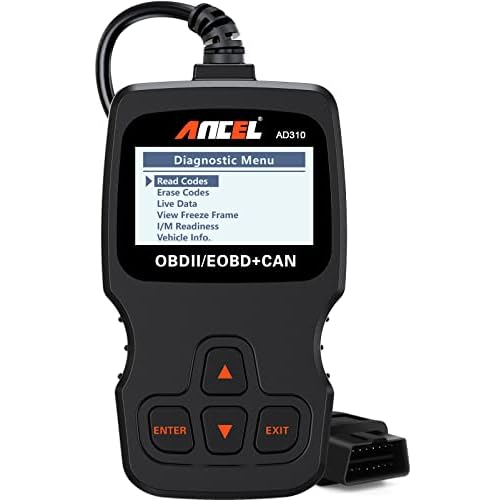
Watching a real diagnostic walkthrough helps connect these steps to the actual sounds and symptoms you are experiencing. This video from ChrisFix demonstrates diagnosing and fixing a misfire causing rough idle and jerking.
| Symptom Pattern | Likely Cause | Typical Code Range |
|---|---|---|
| Rough idle, smooths out at higher RPM | Fouled spark plug or weak coil | P0301 to P0308 |
| Jerk only above 2,000 RPM | Clogged fuel injector | P0300, P0171, P0174 |
| Hesitation right off idle | Dirty throttle body | P0506, P0507 |
| Shudder between 40 and 60 mph | Torque converter lockup failure | P0740 to P0744 |
| Stalling plus erratic jerking | Crankshaft or camshaft sensor fault | P0335, P0340 |
Data Insights & Analysis
Shop data compiled through 2025 shows misfire related codes, specifically the P0300 through P0308 range, remain among the top five most common check engine light triggers reported across independent repair shops in North America, according to trend data referenced by RepairPal. Ignition coil failure accounts for a significant share of these cases on vehicles past the 100,000 mile mark, particularly on engines using individual coil-on-plug designs rather than a shared distributor.
Separately, transmission related jerking complaints tied to torque converter lockup solenoids show a seasonal spike during winter months, when thickened fluid struggles to engage the lockup clutch smoothly at normal operating pressure. Drivers in colder climates report shudder symptoms appearing more frequently below 20 degrees Fahrenheit until the transmission fully warms up.
Frequently Asked Questions
Can a dirty fuel filter cause jerking and a check engine light?
Yes, a clogged fuel filter restricts fuel flow to the injectors, causing inconsistent fuel pressure that starves the engine under load. This typically produces a P0171 or P0174 lean condition code alongside hesitation and jerking that gets worse as you accelerate or climb hills, since those situations demand the most fuel flow.
Check your fuel filter replacement interval in your owner’s manual, since many vehicles recommend replacement every 30,000 to 50,000 miles depending on fuel quality. If you replace the filter and the lean code persists after a drive cycle, test fuel pump pressure directly with a gauge, since a weak pump produces identical symptoms to a clogged filter.
Why does my car jerk only when the engine is cold?
Cold jerking usually points to a weak ignition coil or a vacuum leak that becomes more noticeable before the engine reaches operating temperature. Cold metal and cold oil increase electrical resistance and mechanical friction, making marginal components fail more obviously until things warm up and expand into proper tolerance.
Let the car idle for five minutes and note whether the jerking fully disappears. If it does, suspect a coil or spark plug issue that improves with heat. If jerking persists even after the engine reaches full operating temperature, the problem is likely more serious, such as a sensor fault or fuel delivery issue that heat does not resolve.
Is it safe to keep driving with the check engine light on and jerking?
Short trips at low speed are generally safe, but sustained driving on a severe, uncorrected misfire risks dumping unburned fuel into your catalytic converter, which can overheat and destroy it. This turns an affordable spark plug or coil repair into an exhaust system repair costing several times more.
If the check engine light flashes rather than staying solid, pull over as soon as safely possible, since a flashing light specifically indicates an active misfire severe enough to cause immediate catalytic converter damage. A solid, steady light allows more time to diagnose calmly, but you should still address it within a few days rather than weeks.
How do I know if jerking comes from the engine or the transmission?
Engine misfires typically produce a shaking, rough sensation felt throughout the whole car, often worse at idle and smoothing out somewhat at speed. Transmission problems typically produce a distinct lurch, clunk, or shudder tied to specific speeds or gear changes, rather than a constant rough running sensation.
Pay attention to whether the check engine light pairs with a misfire code starting with P03, which points to the engine, or a code in the P07 range, which points to the transmission. Running both tests, the coil swap test for engine cylinders and a fluid check for the transmission, quickly separates the two possibilities in under 30 minutes.
Will cleaning fuel injectors fix a jerking problem permanently?
Cleaning resolves jerking caused by carbon deposits restricting spray pattern, which is a common and genuinely fixable cause in vehicles running on lower quality fuel or taking frequent short trips. Many drivers see significant improvement within one tank of fuel after using a quality injector cleaner additive.
If cleaning does not resolve the misfire code after a full tank and a drive cycle, the injector likely has an internal electrical or mechanical fault rather than a cleanable deposit issue. Test injector resistance with a multimeter at this point, since a reading outside manufacturer specification confirms the injector needs full replacement rather than further cleaning attempts.
Read More:
- Check Engine Light Came On Then Went Off (Causes Explained)
- Check Engine Light After Starting Car (Means and What to Do)
- Check Engine Light Keeps Coming On and Off (What It Really Means)
- Check Engine Light When Accelerating (Why It Happens & What to Do)
- Check Engine Light and Car Losing Power (Causes and Fixes)