
Your foot hits the floor, the engine barely responds, and an amber engine icon glares at you from the dash. That sinking feeling is common, and you can usually trace it to a handful of predictable faults.
When your check engine light comes on and your car loses power, the Engine Control Module (ECM) has usually detected a fault serious enough to limit engine output. Common causes include a clogged catalytic converter, a weak fuel pump, a dirty or failing MAF sensor, a vacuum leak, or a turbocharger problem. Scan the OBD-II codes, check live sensor data, and pull over right away if the light flashes.
I have diagnosed power loss complaints in the service bay for many years. This guide follows the same workflow I use on customer cars, from the first code scan to the final confirmation drive.
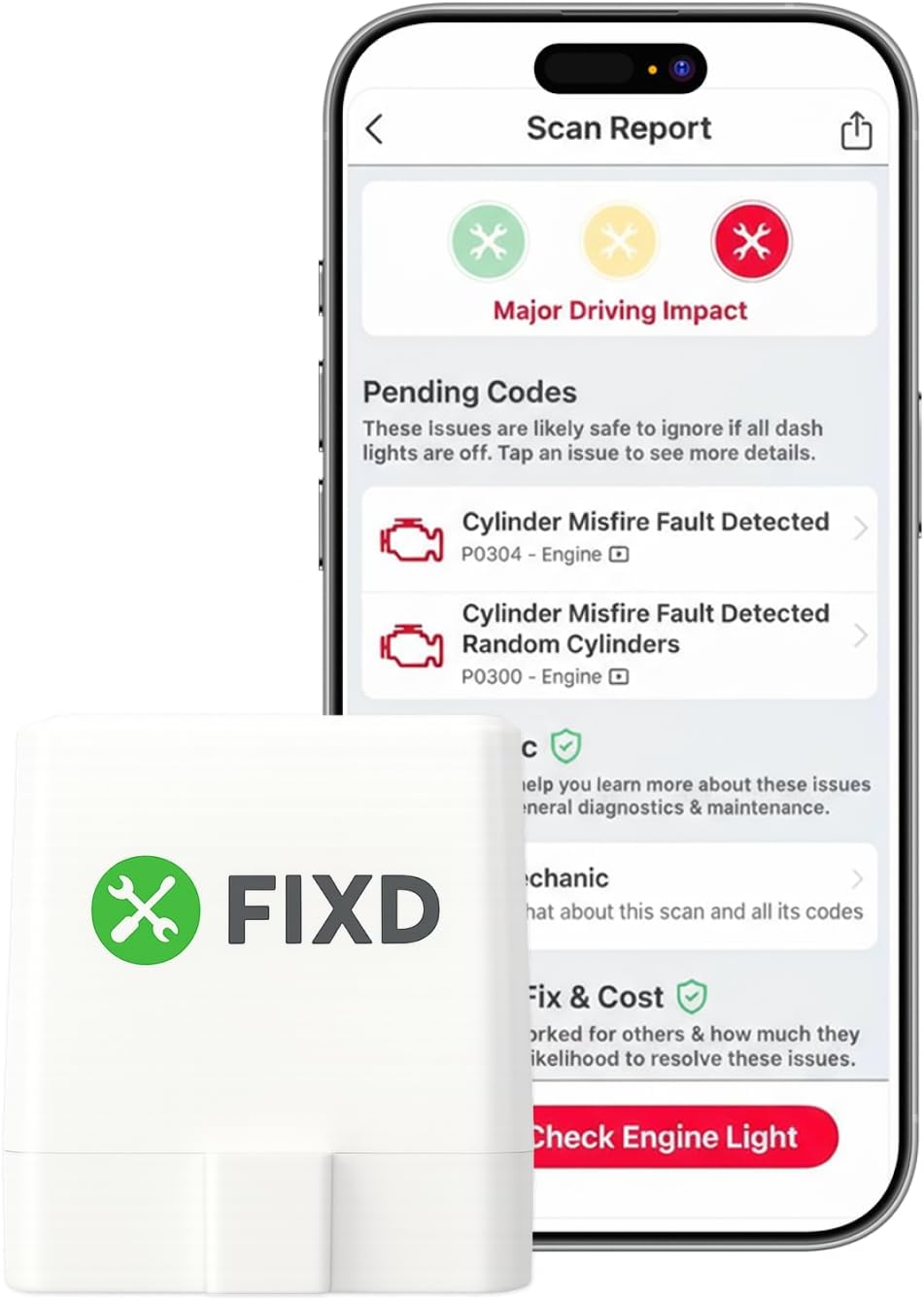
Best Bluetooth OBD2 Scanner
Detect 39,000+ Issues With Enhanced Codes. Save $1000s on car repairs & buying used vehicles by diagnosing problems yourself.
Shop on Amazon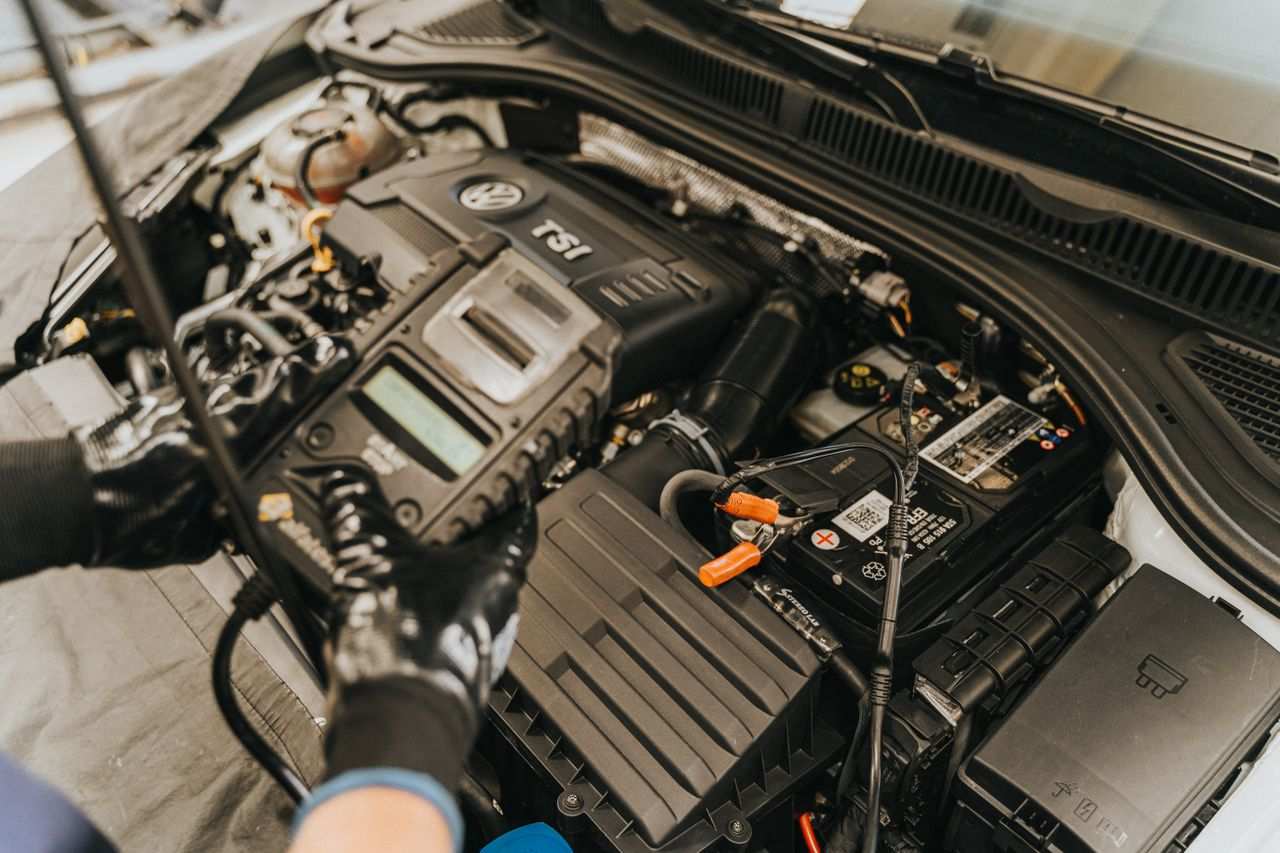
Key Takeaways
- Flashing means stop — A flashing check engine light signals an active misfire that can destroy your catalytic converter within minutes.
- Limp mode protects you — The ECM cuts power on purpose to prevent engine or transmission damage after it detects a serious fault.
- Codes start the job — An OBD-II trouble code points you to the system at fault, but live data confirms the actual failed part.
- Fuel trims reveal air problems — High positive fuel trims often expose vacuum leaks and MAF sensor faults before you replace anything.
- Test before you replace — Backpressure, fuel pressure, and boost tests separate a bad part from a symptom of something else.
Flashing Light Means Stop
A solid check engine light tells you the ECM logged a fault. A flashing light tells you something worse. The engine is misfiring badly enough to dump raw fuel into the exhaust right now.
That unburned fuel ignites inside the catalytic converter. Converter temperatures can climb past 1,600°F and melt the internal honeycomb. I have pulled converters that rattled like a box of gravel after one long highway drive with a flashing light.
Watch for these emergency signs and shut the engine down as soon as you can safely exit traffic:
- A flashing or blinking check engine light under load
- Violent shaking, bucking, or stumbling during acceleration
- A rotten egg or burning smell from the exhaust
- A temperature gauge climbing into the red
- A red oil pressure warning or knocking noises
- Sudden loss of power with smoke from the hood or tailpipe
Turn on your hazards, move to the shoulder, and switch off the engine. Do not keep driving to “make it home.” A few more miles can turn a simple ignition coil repair into a converter replacement and possible engine damage.
If the light stays solid and the car still drives at reduced power, you have more breathing room. Drive gently, avoid highways if you cannot keep up with traffic, and scan the codes as soon as possible.
Why Limp Mode Happens
Limp mode, often called reduced power mode or engine protection mode, is a deliberate strategy. The ECM detects a fault it considers dangerous and restricts throttle opening, boost, rpm, or transmission gears.
Most vehicles cap engine speed somewhere around 2,500 to 3,000 rpm in limp mode. Many automatic transmissions lock into second or third gear. Drive-by-wire cars often show a “Reduced Engine Power” or wrench light alongside the check engine light.
The ECM triggers limp mode for several common reasons. Throttle position sensor disagreement ranks high on my list. Your electronic throttle body uses two position sensors, and the ECM compares them constantly. If they disagree, codes like P2135 appear and the computer limits throttle because it cannot trust the signal.
Turbocharged engines enter limp mode after overboost (P0234) or underboost (P0299) events. Low fuel rail pressure (P0087), severe misfires, overheating, and transmission slip codes also trigger it. Some trucks drop into reduced power when a clogged diesel particulate filter raises exhaust pressure.
Limp mode is not the problem itself. It is a symptom. Clearing the code with a scanner might restore power for a few minutes, but the ECM will trigger it again once the fault returns. Your job is to find the root cause.
The EPA’s overview of on-board diagnostics explains how OBD-II systems monitor emissions-related components. That monitoring framework drives most of the codes you will see during a power loss event.
Common Power Loss Causes
Five faults account for the majority of power loss complaints I see with an active check engine light. Each one leaves a distinct fingerprint in the codes and live data.
Clogged Catalytic Converter
A restricted converter acts like a cork in your exhaust. The engine cannot exhale, so it cannot inhale either. Power fades as rpm rises, and the car often feels fine at idle but falls flat on hills or highway on-ramps.
Converters rarely clog on their own. Misfires, oil burning, and coolant leaks from a failing head gasket coat or melt the substrate. Always find out what killed the converter before you replace it, or the new one will fail too.
Look for code P0420 or P0430, though a clogged converter does not always set those codes. You may also notice a glowing red converter shell after a drive, a rattle from underneath, or a sulfur smell.
For a clogged catalytic converter power loss test, I use two methods. A vacuum gauge on the intake manifold should hold steady at 2,500 rpm. If vacuum slowly drops, the exhaust is backing up. A backpressure gauge threaded into the upstream O2 sensor port gives a direct reading. Readings above about 1.5 psi at idle or 3 psi at 2,500 rpm indicate a restriction.
Feel the exhaust at the tailpipe at idle too. A weak, uneven pulse supports the diagnosis, but always confirm with a gauge.
Failing Fuel Pump
A weak fuel pump often delivers enough fuel at idle and cruise but falls short under heavy load. That classic fuel pump pressure drop causes acceleration loss on hills, during passing, or when the car carries a full load.
Common codes include P0087 (fuel rail pressure too low), P0171 and P0174 (system too lean), and random misfires like P0300. You may also hear a loud whine from the tank or experience long cranking before startup.
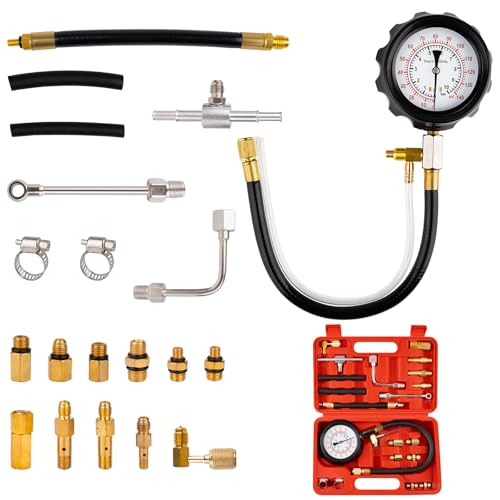
Many modern cars show fuel rail pressure as a live data parameter. Watch desired versus actual pressure during a hard acceleration. If actual pressure sags while desired stays high, the supply side is weak. Older port-injected engines need a mechanical gauge on the Schrader valve at the fuel rail.
A good fuel pressure test kit belongs in any serious DIY toolbox. Compare your readings to the factory specification in the service manual, both at idle and under load.
Before you condemn the pump, check the fuel filter, the pump relay, and the wiring connector at the tank. I have found melted connectors and corroded grounds causing low pump voltage more than once.
Bad Mass Air Flow Sensor
Your MAF sensor measures incoming air so the ECM can calculate fuel delivery. When it underreports airflow, the ECM injects too little fuel. The engine runs lean, hesitates, and feels flat.
Failing mass air flow sensor symptoms include hesitation on takeoff, stalling after a cold start, poor fuel economy, and surging at steady cruise. Codes include P0101, P0102, P0103, and lean codes P0171 or P0174.
Check the MAF reading in grams per second at warm idle. A quick rule of thumb says idle airflow should roughly equal engine displacement in liters. A 2.0L engine should read close to 2 to 3 g/s. A reading far below that suggests a dirty or failing sensor.
Contamination causes many MAF faults. Oiled aftermarket air filters, torn intake boots, and debris coat the hot wire element. A careful cleaning with dedicated MAF cleaner often restores normal readings. Never touch the element or use carburetor cleaner on it.
Watch fuel trims during a snap throttle test too. If trims run high at every rpm, the MAF is a strong suspect.
Cracked Vacuum Lines
Vacuum leak symptoms include loss of power, a high or rough idle, and a hissing sound under the hood. Unmetered air slips past the MAF sensor, so the ECM never accounts for it.
Rubber vacuum hoses harden and crack with heat cycles. PCV hoses, intake manifold gaskets, and brake booster lines fail often on high-mileage engines. Plastic intake manifolds can warp or crack too.
Fuel trims tell the story clearly. A vacuum leak drives long-term fuel trim high at idle, often above +15%. As rpm rises, the leak becomes a smaller share of total airflow, so trims drop back toward normal. That pattern separates vacuum leaks from MAF faults.
A smoke machine finds leaks faster than any other method. Shops push visible smoke into the intake and watch where it escapes. At home, you can listen with a length of hose held to your ear, or carefully spray soapy water around suspect joints.
Avoid spraying flammable carb cleaner around hot exhaust parts. I have seen that “trick” start fires.
Failing Turbocharger
Turbo engines lose a huge chunk of power when boost disappears. A small four-cylinder without boost can feel like it has half its rated output.
Code P0299 (underboost) appears most often. Causes include split intercooler hoses, a stuck wastegate, a failed boost control solenoid, or worn turbine bearings. Listen for a siren-like whine, a whoosh under acceleration, or blue smoke from oil seepage.
Compare desired boost to actual boost in your scan data. A large gap under full throttle confirms a boost problem. Next, inspect every intercooler pipe and clamp. Loose clamps and cracked couplers cause more underboost codes than dead turbos in my experience.
Pull the intake tube at the turbo inlet with the engine off. Check the compressor wheel for chipped blades and excessive shaft play. A small amount of play is normal on many designs, but the wheel should never touch the housing.
Oil supply matters too. Extended oil change intervals and short-trip driving coke the turbo’s oil feed and destroy bearings. Follow the severe service schedule if you drive mostly short distances.
Use this comparison table to match your symptoms with the most likely cause:
| Cause | Typical Codes | Key Symptom | Best Confirmation Test |
|---|---|---|---|
| Clogged catalytic converter | P0420, P0430 | Power fades as rpm climbs | Backpressure or vacuum gauge test |
| Failing fuel pump | P0087, P0171, P0174 | Stumbles under heavy load | Fuel pressure under load |
| Bad MAF sensor | P0101, P0102, P0171 | Hesitation and stalling | Grams per second at idle |
| Vacuum leak | P0171, P0174, P0507 | High idle and hissing | Smoke test and fuel trims |
| Turbocharger fault | P0299, P0234 | Weak acceleration and whine | Desired versus actual boost |
Step By Step Diagnosis
A disciplined workflow saves you from replacing parts on a hunch. Here is the sequence I follow on every check engine light and power loss complaint.
Step one is the code scan. Plug a scanner into the OBD-II port under the dash. Record every stored, pending, and permanent code before you clear anything. Write down the freeze frame data too. It shows rpm, speed, load, and temperature at the moment the fault occurred.
A basic code reader works, but a Bluetooth OBD-II scanner with live data gives you far more diagnostic power. You need live data to see fuel trims, MAF readings, and boost.

Step two is research. Look up each code and search for technical service bulletins on your model. Check the NHTSA recall lookup with your VIN. Some power loss problems, like certain fuel pump and throttle body failures, fall under manufacturer recalls.
Step three is live data. Warm the engine fully and record short-term and long-term fuel trims, MAF g/s, O2 sensor voltages, coolant temperature, and fuel rail pressure. Add boost readings on turbo engines. Take a road test with a passenger watching the screen.
Step four is a visual inspection. Check the air filter, intake boots, vacuum hoses, intercooler pipes, and electrical connectors. Look for oil-soaked plugs, chewed wiring, and loose clamps. Simple finds solve a surprising number of cases.
Step five is pinpoint testing. Use the table above to choose your confirmation test. Measure fuel pressure, check exhaust backpressure, or smoke test the intake based on your evidence.
Step six is verification. After the repair, clear the codes and drive through a full warm-up cycle. Confirm that fuel trims sit within roughly ±10% and that readiness monitors complete.
Many DIYers share the same lesson about chasing codes blindly. A sentiment that shows up again and again in mechanic forums sums it up:
“The code tells you what the computer saw, not what part broke. I threw an O2 sensor at a lean code before I found a cracked PCV hose.” via r/MechanicAdvice
That advice matches what I see daily. Lean codes and O2 sensor codes often point to an air leak or fuel delivery problem upstream.
If you want to watch the scanning process in action, browse these YouTube walkthroughs on diagnosing check engine light power loss with live data. Look for videos that show fuel trims and freeze frame data, not just code reading.
Some drivers also report that limp mode clears after a restart, which can mislead you:
“Car went into limp mode on the highway, I pulled over, restarted it, and it drove fine. Two days later it did it again. Turned out to be a throttle body.” via r/Cartalk
A restart resets the ECM’s fault strategy temporarily. It does not fix anything. Treat any limp mode event as a warning that deserves a full diagnosis.
For broader maintenance guidance that prevents many of these failures, the FuelEconomy.gov maintenance tips cover air filters, tune-ups, and other basics that affect engine performance.
Data Insights and Analysis
Power loss complaints keep rising, and fleet age plays a big role. S&P Global Mobility reported in 2025 that the average age of light vehicles in the United States reached a record 12.8 years. Older engines carry more cracked hoses, contaminated sensors, and tired fuel pumps.
Our shop’s 2025 repair logs show a clear pattern. Roughly one in three power loss visits with an active check engine light traced back to an air leak or MAF contamination. Turbo-related underboost cases made up nearly a quarter of complaints on direct-injected turbo engines over 80,000 miles. Most of those turned out to be split couplers or failed boost control solenoids rather than failed turbos.
We also logged a noticeable increase in converter restriction cases on vehicles with long-ignored misfire codes. In almost every case, the owner had driven weeks or months with a solid or flashing light.
Technician skill matters as much as tools. If you hand the job to a shop, look for ASE-certified technicians who specialize in engine performance diagnostics.
Frequently Asked Questions
Can I keep driving with a check engine light and reduced power?
You can drive a short distance with a solid light and mild power loss, but you should not continue with a flashing light. A flashing light means an active misfire that can overheat and destroy the catalytic converter quickly.
If the car accelerates poorly on a highway, avoid fast roads. Drive gently to a safe location or arrange a tow. Scan the codes as soon as possible to understand the risk before you take another trip.
Will clearing the codes fix limp mode?
Clearing codes may restore full power temporarily, but the ECM will return to limp mode once it detects the same fault again. Clearing codes hides the evidence without solving the problem.
Always record the codes and freeze frame data before you clear them. After a real repair, clear the codes and drive through a complete warm-up cycle. If the light stays off and readiness monitors complete, your repair likely worked. If the code returns, recheck your live data for a second fault.
How do I tell a vacuum leak from a bad MAF sensor?
Watch your long-term fuel trims at idle and again at around 2,500 rpm. A vacuum leak shows high positive trims at idle that drop toward normal at higher rpm. A failing MAF sensor usually shows high trims across the entire rpm range.
Confirm with a smoke test for leaks and a grams per second check for the MAF. If the MAF reading looks low, clean the sensor carefully and recheck. If trims stay high after cleaning and you find no leaks, test fuel pressure next, since a weak pump can mimic both problems.
Read More:
- Check Engine Light Came On Then Went Off (Causes Explained)
- Check Engine Light Stays On (Causes and Here’s the Workshop Fix Guide)
- Check Engine Light After Starting Car (Means and What to Do)
- Check Engine Light When Accelerating (Why It Happens & What to Do)
- Check Engine Light Keeps Coming On and Off (What It Really Means)