
You’re driving your Chevy Malibu to work, and suddenly that amber warning light stares back at you from the dashboard. Your stomach drops. Is it serious? Can you keep driving? Will this drain your bank account?
The check engine light on your Chevy Malibu appears when the onboard diagnostic system detects a fault in the engine, emissions, or powertrain, ranging from a loose gas cap to a misfiring cylinder. A solid light typically indicates a non-urgent issue you should address soon, while a flashing light signals an active misfire that can destroy your catalytic converter if you continue driving. The first step is to pull diagnostic trouble codes (DTCs) using an OBD-II scanner to identify the exact problem before attempting any fix.
This guide walks you through the diagnostic process, explains the most common Malibu engine codes, and helps you decide whether you can tackle the repair yourself or need a professional. You’ll learn how to read codes, interpret sensor failures specific to 1.5L Turbo, 2.0L Turbo, and 2.5L engines, and take action quickly to protect your Malibu and your wallet.
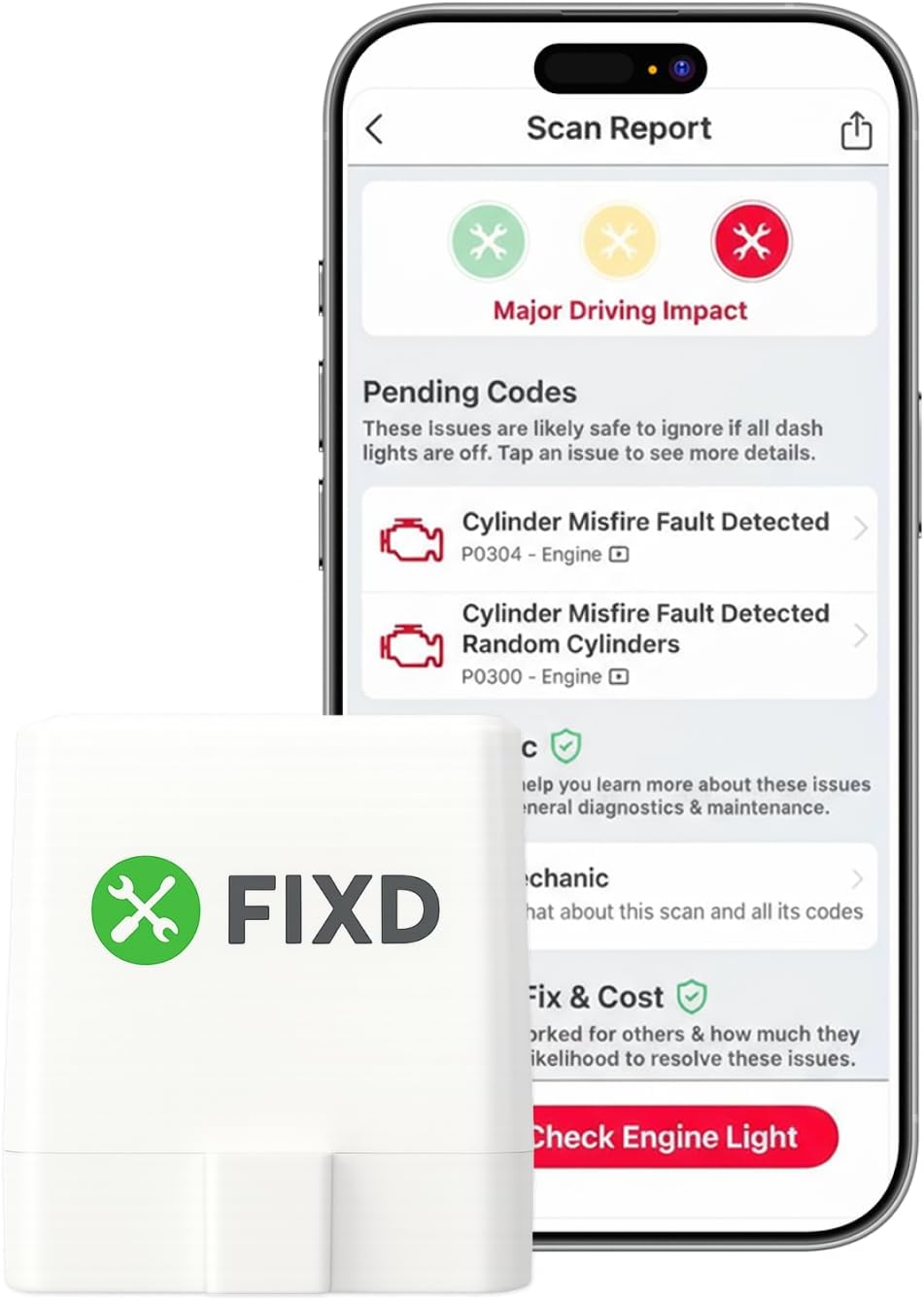
Best Bluetooth OBD2 Scanner
Detect 39,000+ Issues With Enhanced Codes. Save $1000s on car repairs & buying used vehicles by diagnosing problems yourself.
Shop on Amazon
Key Takeaways
- A solid Chevy Malibu check engine light indicates a non-urgent issue you can usually drive to a safe location, but a flashing light signals active misfires that can damage your catalytic converter and requires immediate pulling over.
- The most common Chevy Malibu check engine codes involve VVT solenoid faults (P0010-P0014), EVAP purge valve issues (P0496), and lean condition codes (P0171/P0174), often triggered by low oil, vacuum leaks, or dirty sensors.
- Use an OBD-II scanner to read diagnostic trouble codes before attempting repairs; many auto parts stores offer free scans, but owning your own Bluetooth scanner lets you track recurring issues and monitor live sensor data.
- Simple check engine light fixes like gas cap tightening, spark plug replacement, VVT solenoid swaps, and purge valve installation are DIY-friendly; reserve shop visits for complex repairs like timing chain or catalytic converter replacement.
- Regular maintenance every 5,000 miles (especially for turbocharged engines), air filter inspections every 15,000 miles, and timely spark plug/ignition coil replacement prevent most Malibu check engine codes and emissions test failures.
Warning Light Behavior
Differences Between Solid and Flashing Lights
A solid check engine light means the system logged a fault. You can usually drive short distances to a safe location or parts store, but don’t ignore it. The issue may worsen over time, reducing fuel economy or causing further damage.
A flashing check engine light is urgent. It signals an active engine misfire severe enough to send unburned fuel into the exhaust system. This raw fuel overheats and damages the catalytic converter, a repair that can exceed $1,200. Pull over safely and shut off the engine immediately.
Immediate Actions When the Light Appears
First, note the light’s behavior: solid or flashing. If flashing, stop driving. If solid, check for obvious symptoms like rough idle, loss of power, unusual smells, or strange sounds.
Next, inspect your gas cap. A loose, cracked, or missing cap is the most common trigger for check engine lights. Tighten it until it clicks three times, then drive for a day or two. The light may turn off on its own after several drive cycles.
If the light persists, retrieve the diagnostic trouble codes using an OBD-II scanner like the BlueDriver Bluetooth adapter. This tool connects to your smartphone and displays the exact fault code.

Potential Risks of Ignoring the Warning
Ignoring a solid check engine light can lead to decreased fuel efficiency, failed emissions tests, and escalating repair costs. A minor oxygen sensor failure, if left unaddressed, can eventually damage the catalytic converter.
Ignoring a flashing light risks catastrophic engine damage. Misfires dump raw fuel into the exhaust, melting the ceramic honeycomb inside the catalytic converter. Once melted, the converter must be replaced, an expensive, emissions-critical repair. Also, prolonged misfires can crack cylinder head components or overheat valves.
Diagnostic Process
Reading Diagnostic Trouble Codes (DTCs)
Every check engine light corresponds to one or more DTCs stored in the powertrain control module (PCM). These five-character codes begin with “P” (powertrain) followed by four digits. For example, P0171 indicates “System Too Lean (Bank 1),” pointing to a vacuum leak, dirty mass airflow sensor, or failing fuel pump.
Codes don’t always pinpoint the exact failed part. P0420 (Catalyst System Efficiency Below Threshold) might mean a bad catalytic converter, but it can also result from exhaust leaks or failing upstream oxygen sensors. Always read the code in context with symptoms and live sensor data.
Using OBD-II Scanners and Apps
Basic code readers cost $20–$30 and display DTCs, but advanced Bluetooth scanners like BlueDriver or Autel MaxiAP2500 offer live data, freeze frames, and repair suggestions. These tools pair with free smartphone apps (iOS or Android) and provide plain-English descriptions of each code.

Many auto parts stores, AutoZone, O’Reilly, and Advance Auto Parts, offer free code scans. But, owning your own scanner lets you clear codes, monitor repairs, and track recurring issues over time.
“My 2018 Malibu threw P0010 (VVT solenoid). I swapped it in my driveway for $40. Took 20 minutes. Cleared the code and it’s been perfect ever since.” via r/ChevyMalibu
OBD-II Port Location and Basic Steps
In the Chevy Malibu (2016–2026 models), the OBD-II port sits under the dashboard, just above the brake pedal on the driver’s side. It’s a 16-pin trapezoid connector, usually tucked behind a plastic panel.
To scan codes: Turn the ignition to “On” (engine off), plug in your scanner, and follow the prompts. Most Bluetooth scanners auto-detect the vehicle. Read and write down every code displayed, including pending codes, which haven’t yet triggered the check engine light.
Understanding Freeze Frame and Live Sensor Data
Freeze frame data captures engine conditions at the moment the fault occurred, engine speed, coolant temperature, throttle position, and fuel trim values. This snapshot helps you understand whether the problem happens at idle, highway speed, cold start, or under load.
Live data streams show real-time sensor readings. Compare oxygen sensor voltage, mass airflow readings, and short-term fuel trim (STFT) against factory specifications. Experienced DIYers use live data to diagnose intermittent faults that don’t always throw codes.
Common Causes
Frequent Check Engine Codes in the Malibu
The Chevy Malibu, especially the 1.5L Turbo (LFV engine), is prone to specific codes:
- P0010, P0011, P0013, P0014: VVT solenoid faults. These codes appear when the variable valve timing system can’t adjust camshaft timing. Low oil level or dirty oil clogs the solenoid screens.
- P0496: EVAP purge valve stuck open. The purge valve controls fuel vapor flow from the charcoal canister. When it sticks, you’ll experience rough idle, especially after refueling.
- P0300–P0304: Random or cylinder-specific misfires. Causes include bad ignition coils, fouled spark plugs, or low compression.
- P0171/P0174: System too lean. Often caused by vacuum leaks, dirty MAF sensors, or failing fuel injectors.
Sensor and Component Failures
Oxygen sensors (O2 sensors) degrade over time and trigger codes like P0131, P0137, or P0420. Symptoms include poor fuel economy, sluggish acceleration, and failed emissions tests. Upstream O2 sensors measure air-fuel ratio: downstream sensors monitor catalytic converter efficiency.
Mass airflow (MAF) sensors get contaminated by oil vapors or dirty air filters. A faulty MAF sends incorrect data to the PCM, causing lean codes (P0171) or rich conditions. Clean the sensor element with MAF cleaner spray or replace it if readings are erratic.
Ignition coils in the Malibu (especially older 2.4L Ecotec engines) fail frequently. A bad coil triggers misfire codes and produces a rough idle, hesitation, or loss of power. Coils are inexpensive ($25–$50 each) and easy to replace.
Emissions and EVAP System Issues
The evaporative emissions (EVAP) system prevents fuel vapors from escaping into the atmosphere. Common EVAP faults include:
- P0442: Small leak detected (often a loose or damaged gas cap)
- P0455: Large leak detected (cracked hoses, faulty purge valve, or damaged charcoal canister)
- P0496: Purge valve stuck open (causes rough idle and fuel smell)
Inspect EVAP hoses for cracks, check the gas cap seal, and test the purge valve. A replacement EVAP purge valve costs $20–$60 and installs in minutes.
Engine Performance and Fuel Delivery Problems
Thermostat housing leaks are common on the 1.5L Turbo engine. Coolant seeps from the plastic housing, causing overheating and triggering codes like P0128 (Coolant Thermostat Below Regulating Temperature). Replace the housing and thermostat together to prevent recurrence.
Fuel injectors can clog or leak, causing misfires or lean codes. Symptoms include hard starting, rough idle, and black smoke. Use fuel system cleaner additives or replace the injector if cleaning doesn’t resolve the issue.
Prevention and Maintenance
Preventive Maintenance Strategies
Prevent VVT solenoid and timing chain problems by changing engine oil every 5,000 miles (or sooner for turbocharged engines). The 1.5L Turbo requires clean, low-viscosity oil (0W-20 or 5W-30) to keep variable valve timing components operating smoothly.
Replace spark plugs and ignition coils according to the maintenance schedule, typically every 60,000–100,000 miles. Use OEM or quality aftermarket parts (ACDelco, NGK, Delphi) to avoid premature failures.
Inspect the air filter every 15,000 miles. A dirty filter restricts airflow, causing lean conditions and contaminating the MAF sensor. Replace cabin and engine air filters regularly to maintain proper engine breathing.
Resetting and Clearing the Check Engine Light
After repairs, clear the codes using your OBD-II scanner. Most scanners have a “Clear Codes” or “Erase DTCs” function. This resets the check engine light and allows the PCM to relearn sensor baselines.
Alternatively, disconnect the negative battery terminal for 10–15 minutes. This clears codes and resets the PCM, but you’ll lose radio presets and other learned settings. Drive the vehicle through several complete drive cycles (cold start, city driving, highway cruising, and cool-down) to allow the monitors to reset.
If the light returns immediately, the problem still exists. Recheck your repair or investigate additional faults.
Professional Repair Versus DIY Fixes
Simple fixes, gas cap replacement, spark plug swaps, VVT solenoid changes, and EVAP purge valve installs, are straightforward DIY jobs. You’ll need basic hand tools (ratchet set, sockets, screwdrivers) and an OBD-II scanner.
Complex issues, timing chain replacement, catalytic converter replacement, or internal engine repairs, require specialized tools, diagnostic equipment, and experience. If you’re uncomfortable diagnosing live sensor data or lack the tools, visit a trusted independent mechanic or Chevrolet dealership.
“I paid $380 for a shop to replace my purge valve and clear the P0496 code. Later found out it’s a $35 part and 10-minute job. Wish I’d tried it myself first.” via MalibuForums.com
Emissions Testing and Regulatory Compliance
Many states require emissions testing (smog checks) for vehicle registration. A check engine light is an automatic failure. Before testing, ensure all readiness monitors have completed. After clearing codes, drive 50–100 miles through varied conditions to set the monitors.
If your Malibu repeatedly fails emissions due to a faulty catalytic converter or O2 sensor, address the root cause. Delaying repairs can result in registration denial, fines, or increased repair costs. Consult your state’s DMV or emissions authority for specific requirements and exemptions.
Frequently Asked Questions
What does the Chevy Malibu check engine light mean?
The check engine light indicates your Malibu’s onboard diagnostic system detected a fault in the engine, emissions, or powertrain—ranging from a loose gas cap to a misfiring cylinder. Use an OBD-II scanner to read diagnostic trouble codes and identify the exact problem before attempting repairs.
Is it safe to drive with a flashing check engine light on my Chevy Malibu?
No. A flashing check engine light signals an active engine misfire severe enough to damage your catalytic converter. Pull over safely and shut off the engine immediately. Continuing to drive risks a repair exceeding $1,200 and potential engine damage.
Why is my Chevy Malibu throwing a P0010 or P0011 code?
P0010, P0011, P0013, and P0014 codes indicate VVT solenoid faults, common in Malibu’s 1.5L Turbo engine. Low oil level or dirty oil typically causes this. Check your oil, change it if needed, and the code may clear after several drive cycles.
Can I clear the Chevy Malibu check engine light myself?
Yes. After diagnosing and fixing the underlying issue, use an OBD-II scanner’s ‘Clear Codes’ function or disconnect the negative battery terminal for 10–15 minutes. Drive through several complete cycles to allow the PCM to relearn. If the light returns immediately, the problem persists.
What’s the most common reason for a check engine light in a Chevy Malibu?
A loose, cracked, or missing gas cap is the most frequent cause. Tighten it until it clicks three times and drive for a day or two—the light often turns off after several drive cycles without further action needed.
How much does it cost to fix a Chevy Malibu check engine light?
Costs vary widely. Simple fixes like gas cap replacement are free; VVT solenoid or EVAP purge valve replacements ($20–$60 parts) take 10–20 minutes DIY. Catalytic converter replacement exceeds $1,200, and diagnostic shop visits typically cost $100–$150 for code scanning.
Read More:
- Chevy Check Engine Light (Means, Root Causes & How to Fix It)
- Chevy Silverado Check Engine Light (Meaning, Causes and Quick Fix Guide)
- Chevy Equinox Check Engine Light (Means, Cause and How to Fix It)
- Chevy Trax Check Engine Light (Here’s the Quick Fix in 2015-Present)
- Chevy Traverse Check Engine Light (Means and Common Causes)