
That glowing amber icon on your RAV4’s dashboard doesn’t just ruin your commute. It can shut down your AWD system, cripple acceleration, and leave you second-guessing every trip to the store or school run.
The Toyota RAV4 check engine light activates when the onboard diagnostic system detects emissions, fuel delivery, ignition, or sensor malfunctions that exceed EPA or manufacturer thresholds, common triggers include loose gas caps, failing oxygen sensors, catalytic converter efficiency faults, mass airflow sensor contamination, EVAP leaks, and VVT oil control valve failures.
This guide walks you through the diagnostic decision tree, explains what each trouble code family means, and shows you exactly how to determine whether you’re facing a five-dollar gas-cap tighten or a four-figure catalytic converter replacement.
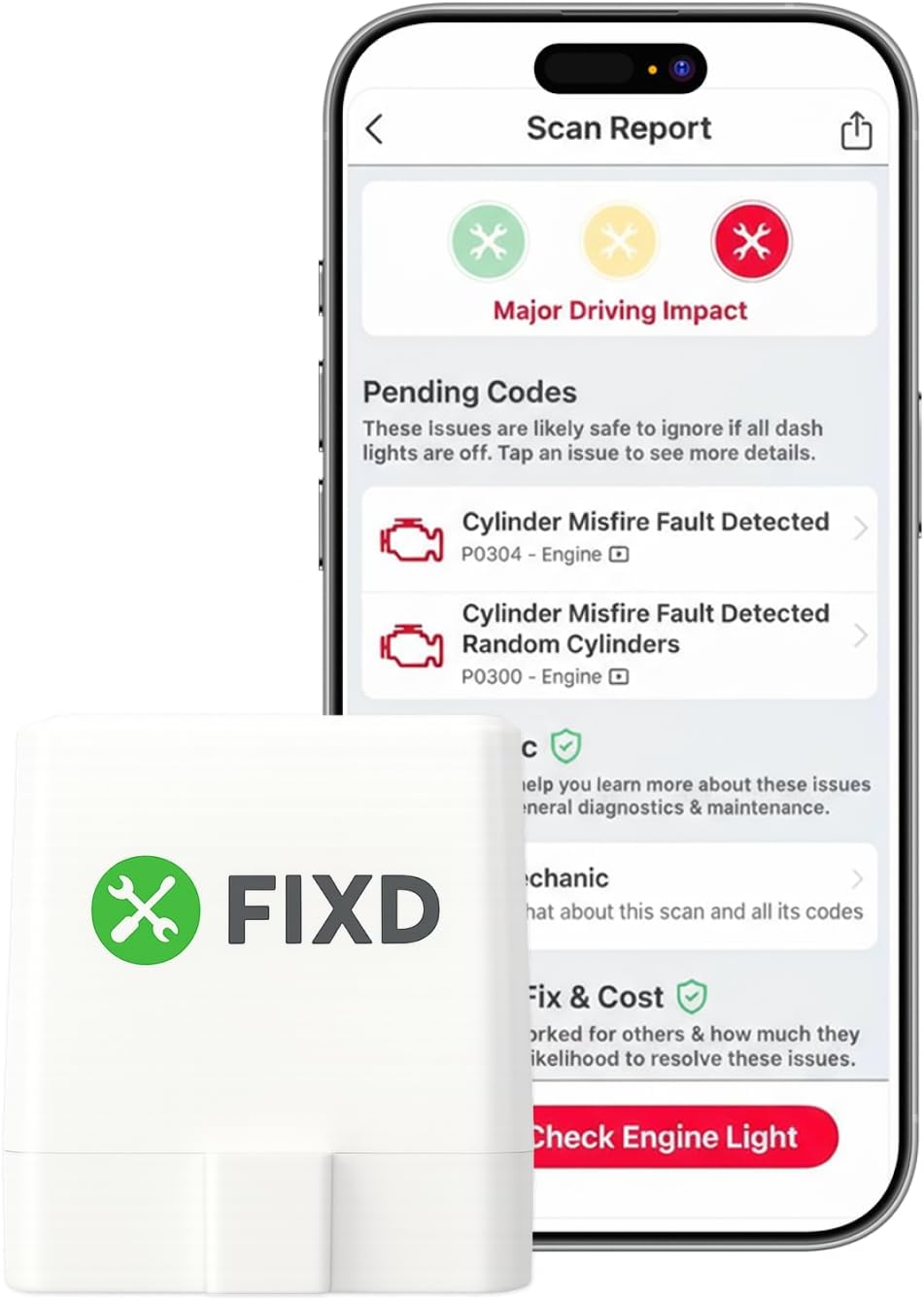
Best Bluetooth OBD2 Scanner
Detect 39,000+ Issues With Enhanced Codes. Save $1000s on car repairs & buying used vehicles by diagnosing problems yourself.
Shop on Amazon
Key Takeaways
- A steady Toyota RAV4 check engine light indicates a non-critical emissions fault that allows continued driving, while a flashing light signals an active misfire that can overheat the catalytic converter within minutes and requires immediate towing.
- The most common cause of a RAV4 check engine light is a loose, cracked, or missing gas cap triggering EVAP leak codes (P0441, P0442, P0456), which costs under $15 to fix but often goes undiagnosed by owners.
- Use an OBD-II scanner to read the diagnostic trouble code (DTC) and freeze-frame data—without the specific five-character code, you cannot accurately diagnose whether you’re facing a five-dollar repair or a four-figure catalytic converter replacement.
- Faulty oxygen sensors and catalytic converter degradation are the two most expensive RAV4 check engine light issues, with upstream O2 sensor replacement costing ~$30–$150 and catalytic converter replacement running $2,000+.
- RAV4 owners should never ignore a check engine light if accompanied by a master warning triangle showing “AWD System Malfunction,” as the ECM deliberately disables all-wheel drive to protect transmission and rear differential components from damage.
- After clearing codes with an OBD-II scanner or by disconnecting the battery, complete at least two full drive cycles before attempting emissions testing to allow the vehicle’s readiness monitors to register “Ready” status.
What Does the Check Engine Light Mean in Your RAV4?
Your RAV4’s engine control module (ECM) monitors dozens of sensors every millisecond. When it detects a parameter that strays outside preprogrammed limits, it logs a diagnostic trouble code (DTC) and illuminates the amber check engine lamp on your instrument cluster.
A steady light signals a non-critical fault. The vehicle remains drivable, but emissions compliance is compromised. A flashing check engine light indicates an active misfire that can overheat your catalytic converter within minutes, pull over safely and arrange towing.
Many RAV4 owners report that the check engine light disables the AWD system and displays a master warning triangle alongside messages like “AWD System Malfunction” or “Check AWD System.” Toyota’s drivetrain logic does this deliberately: if the ECM cannot trust sensor data or combustion stability, it shuts down auxiliary systems to protect the transmission and rear differential from damage.
Understanding the distinction between steady and flashing lamps is your first diagnostic checkpoint. The second is reading the stored codes with an OBD-II scanner, without that five-digit alphanumeric code, you’re guessing in the dark.
Most Common Causes of RAV4 Check Engine Light
Loose or Damaged Gas Cap
The most benign, and most frequent, check engine trigger on RAV4s is a loose, cracked, or missing fuel filler cap. When the EVAP system can’t maintain a sealed vacuum, the ECM logs P0441, P0442, or P0456 (small EVAP leak detected).
You’ll notice this code appears within a few drive cycles after refueling. Tighten the cap until it clicks three times. If the rubber seal looks cracked or the threads are stripped, replace it. You can pick up an OEM Toyota gas cap for under fifteen dollars, and most auto-parts stores stock aftermarket versions that meet the same spec.
If the light persists after replacement, inspect the charcoal canister and purge valve. Mud, road salt, or corrosion can compromise the canister housing on older RAV4s, especially in snow-belt states.
Faulty Oxygen Sensor
RAV4s mount two to four oxygen sensors depending on the model year and engine configuration: upstream (before the catalytic converter) and downstream (after). The upstream sensors measure exhaust oxygen content so the ECM can adjust fuel trim in real time. The downstream sensor verifies catalyst efficiency.
Common codes include P0135 (front O2 heater circuit), P0141 (rear O2 heater circuit), P0171 (system too lean), and P0420 (catalyst efficiency below threshold). You’ll often see P0420 after an upstream sensor degrades, it reports inaccurate data, the ECM over-corrects fuel delivery, and the downstream sensor flags the catalytic converter as underperforming.
“2018 RAV4 threw P0420 at 92k miles. Replaced bank 1 upstream O2, cleared code, light stayed off 6 months then came back. New cat finally fixed it.” via RAV4World Forums
Oxygen sensor replacement takes about thirty minutes per sensor if you have a wrench and penetrating oil. Heat cycles fuse the threads, so soak the bung overnight before attempting removal.
Catalytic Converter Issues
The catalytic converter transforms carbon monoxide, hydrocarbons, and nitrogen oxides into less harmful compounds. Over time, thermal cycling and contaminants degrade the precious-metal substrate. When conversion efficiency drops below 95 percent, the downstream O2 sensor reports the deficiency and the ECM logs P0420 (bank 1) or P0430 (bank 2).
RAV4 Hybrid owners sometimes see P0420 earlier than gas models because the hybrid system cycles the engine on and off hundreds of times per week. Each cold start pumps unburned fuel into the exhaust, accelerating catalyst wear.
Before replacing a two-thousand-dollar catalytic converter, verify that upstream O2 sensors, spark plugs, and ignition coils are in spec. A misfiring cylinder can saturate the catalyst with raw fuel, triggering a false P0420.
Mass Airflow Sensor Problems
The mass airflow (MAF) sensor sits between the air filter and throttle body, measuring intake volume so the ECM can calculate fuel delivery. Codes P0171 and P0174 (system too lean) often trace back to a contaminated MAF element.
Dirt, oil vapor from a saturated air filter, or aftermarket intake modifications can coat the hot-wire element. This causes underreporting of airflow, prompting the ECM to inject less fuel than the engine needs. Symptoms include rough idle, hesitation during acceleration, and poor fuel economy.
Clean the MAF with CRC MAF sensor cleaner, never use carburetor cleaner or compressed air, which can destroy the delicate wire. If cleaning doesn’t resolve codes, replacement MAF sensors run around one hundred fifty dollars for OEM Toyota units.
How to Diagnose Your RAV4 Check Engine Light
Using an OBD-II Scanner to Read Trouble Codes
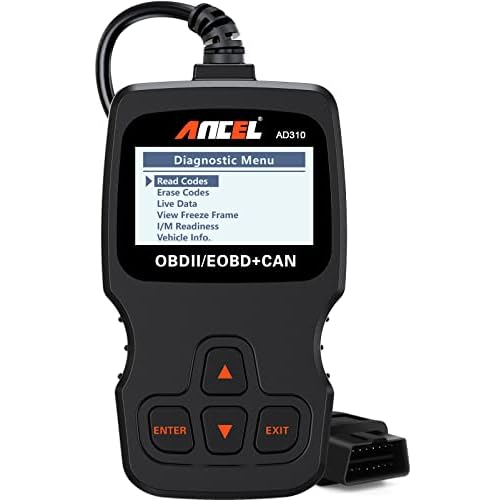
Every RAV4 model year since 1996 includes an OBD-II port located beneath the driver’s side dashboard, left of the steering column. Plug in a Bluetooth or wired scanner, BlueDriver and Autel offerings deliver Toyota-specific code definitions and freeze-frame data.

Turn the ignition to the “On” position without starting the engine. Launch the scanner app and select “Read Codes.” The device will return one or more five-character DTCs (e.g., P0420, P0171, P0441). Write them down, then tap “Read Freeze Frame” to capture engine RPM, coolant temperature, fuel trim, and throttle position at the moment the code was logged.
Freeze-frame data reveals patterns: if P0171 logged at idle with closed throttle, suspect a vacuum leak. If it logged under wide-open throttle at highway speed, check fuel pressure or the MAF sensor.
Cross-reference codes on Toyota’s Technical Service Bulletin archive or RAV4-specific forums like RAV4World and Toyota Nation. Many RAV4 owners have already documented the exact failure mode, parts sources, and repair procedures for your year and trim.
“Scanned my 2016 RAV4 with a $20 ELM327 adapter. Got P0456, small EVAP leak. Bought a new gas cap, cleared the code, never came back.” via r/rav4club
If you’d rather outsource diagnostics, most auto-parts chains offer free code scanning. Just remember they won’t interpret freeze-frame data or perform live sensor monitoring, you’ll get the raw code and a printout of possible causes.
What to Do When the Check Engine Light Comes On
Pull over safely if the light is flashing, continuing to drive can destroy the catalytic converter and cost you thousands. Arrange a tow to your shop or dealership.
If the light glows steady, complete your immediate trip but scan for codes as soon as possible. Check your gas cap first: remove it, inspect the seal, and reinstall until you hear three clicks. If that resolves the issue, the light will extinguish after two to three drive cycles (a drive cycle is a cold start followed by mixed city and highway driving until the engine reaches operating temperature).
Monitor your dashboard for secondary warnings. If you see “AWD System Malfunction” or a master warning triangle alongside the check engine light, the ECM has disabled all-wheel drive to protect drivetrain components. This is common on RAV4 models with active torque-control rear differentials.
Avoid aggressive acceleration, towing, or off-road driving until you’ve diagnosed and cleared the fault. The front-wheel-drive-only fallback mode offers reduced traction on wet pavement or snow.
Can You Drive with the Check Engine Light On?
Yes, if the light is steady and the vehicle exhibits no loss of power, unusual noises, or overheating. The RAV4 remains emissions-noncompliant, so you’ll fail state inspection until the fault is repaired and the readiness monitors complete.
Do not drive if:
- The check engine light is flashing (active misfire)
- You notice a strong sulfur or fuel smell (catalytic converter overheating or fuel leak)
- The engine runs rough, stalls, or loses power
- Coolant temperature exceeds normal range
- Oil pressure warning appears alongside the check engine light
RAV4 Hybrid owners should be aware that hybrid-system faults (like inverter coolant pump failure or high-voltage battery cell imbalance) can trigger the check engine light and simultaneously illuminate the red triangle “master warning.” If both appear, stop driving and consult a Toyota-certified hybrid technician.
Short trips to a repair facility or parts store are acceptable, but extended highway driving or heavy loads risk secondary damage. For example, an ignition coil that misfires intermittently can dump raw fuel into the exhaust, melting the catalytic substrate within minutes of sustained high-speed operation.
How to Reset the Check Engine Light on a Toyota RAV4
Once you’ve repaired the underlying fault, clear the code using your OBD-II scanner. Select “Clear Codes” in the app menu, this erases stored DTCs and resets readiness monitors to “Not Ready.”
Alternatively, disconnect the negative battery terminal for fifteen minutes. This clears adaptive memory and trouble codes but also erases radio presets, clock settings, and learned idle parameters. The ECM will relearn fuel trims and idle speed over the next fifty miles of mixed driving.
After clearing codes, drive the vehicle through at least two complete drive cycles before attempting emissions testing. The RAV4’s readiness monitors (EVAP, catalyst, O2 sensor, etc.) must register “Ready” or “Complete” status, most states allow one or two monitors to remain “Not Ready,” but the catalyst and misfire monitors must always show complete.
If the check engine light returns immediately or within a few miles, the repair was incomplete or the diagnostic was incorrect. Re-scan for codes and compare the new DTC list to your initial scan. Persistent or recurring codes often indicate wiring issues, ECM software bugs (check for Toyota recalls or TSBs), or multiple related faults that must be addressed in sequence.
For RAV4 Hybrid models, some hybrid-system codes require a Toyota Techstream scan tool to clear. Generic OBD-II scanners can read these codes but lack the protocol access to reset hybrid control module memory.
Frequently Asked Questions
What does a check engine light mean on a Toyota RAV4?
A check engine light indicates your RAV4’s engine control module detected a fault in emissions, fuel delivery, ignition, or sensors. A steady light means the vehicle is drivable but emissions-noncompliant. A flashing check engine light signals an active misfire that can damage your catalytic converter within minutes—pull over and arrange towing immediately.
What are the most common causes of a Toyota RAV4 check engine light?
Common triggers include a loose or damaged gas cap, faulty oxygen sensors, catalytic converter efficiency faults, mass airflow sensor contamination, EVAP leaks, and VVT oil control valve failures. A loose gas cap is the most frequent and least expensive cause, often resulting in codes P0441, P0442, or P0456.
Can I drive my RAV4 with the check engine light on?
Yes, if the light is steady and you notice no power loss, unusual noises, or overheating. However, avoid driving if the light is flashing, you smell sulfur or fuel, the engine runs rough, or oil pressure warning appears. Short trips to a repair facility are acceptable, but extended highway driving risks secondary damage.
How do I read trouble codes on my Toyota RAV4?
Plug an OBD-II scanner into the port beneath your driver’s side dashboard, left of the steering column. Turn the ignition to ‘On’ without starting, launch the scanner app, and select ‘Read Codes’ to retrieve five-character diagnostic trouble codes (DTCs). Freeze-frame data reveals engine conditions when the code was logged.
Why does the check engine light disable AWD on my RAV4?
Toyota’s engine control module deliberately shuts down the all-wheel-drive system when it detects sensor data or combustion stability issues. This protection prevents transmission and rear differential damage. You’ll see ‘AWD System Malfunction’ warnings when the ECM can’t trust critical drivetrain sensors.
How do I reset the check engine light after fixing the problem on my RAV4?
After repairing the fault, use your OBD-II scanner to select ‘Clear Codes,’ erasing stored diagnostic trouble codes and resetting readiness monitors. Alternatively, disconnect the negative battery terminal for fifteen minutes. Drive through two complete drive cycles (cold start plus mixed city and highway driving) before emissions testing.
Read More:
- Toyota Check Engine Light Reset (Here’s How to Perform It)
- Toyota Prius Check Engine Light (Means, Causes and Quick Fix Guide)