
That amber glow on your Nissan Kicks dashboard can trigger instant panic. You’re cruising along fine, then suddenly your check engine light decides to ruin your commute.
The Nissan Kicks check engine light activates when the onboard diagnostic system detects a malfunction in the engine, emissions, or sensor network. Common triggers include faulty oxygen sensors, loose gas caps, mass airflow sensor failures, or catalytic converter efficiency issues. The light signals stored diagnostic trouble codes (DTCs) that pinpoint the problem area.
Modern crossovers pack dozens of sensors monitoring everything from fuel mixture to exhaust chemistry. Your Kicks constantly runs self-checks, and when readings fall outside normal parameters, that warning light fires up. The good news? Many triggers are simple fixes you can handle yourself, no dealer visit required.
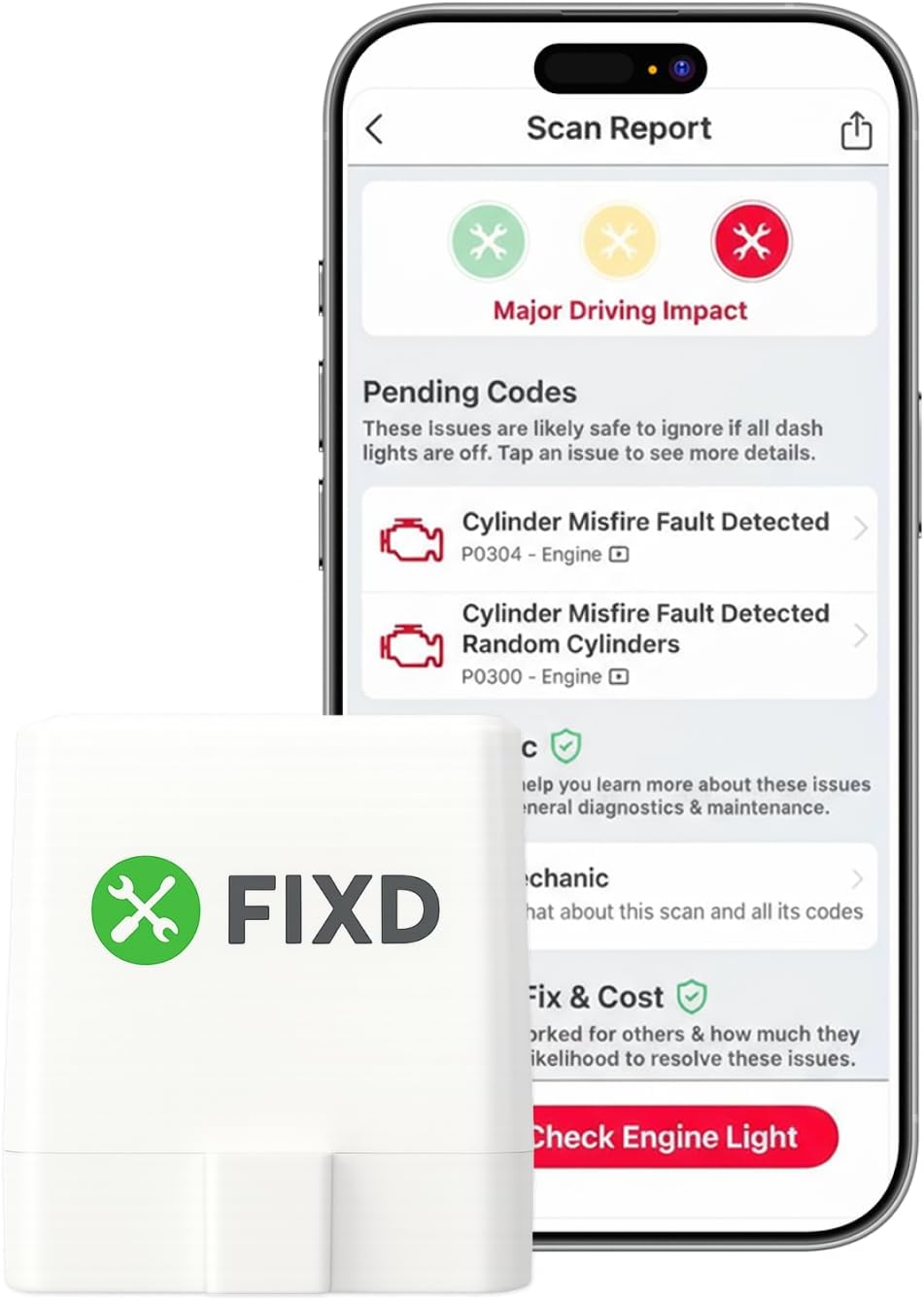
Best Bluetooth OBD2 Scanner
Detect 39,000+ Issues With Enhanced Codes. Save $1000s on car repairs & buying used vehicles by diagnosing problems yourself.
Shop on Amazon
Key Takeaways
- A Nissan Kicks check engine light indicates a detected malfunction in the engine, emissions, or sensor network that requires diagnostics to identify the specific fault code.
- Common causes like faulty oxygen sensors, loose gas caps, and mass airflow sensor failures can often be diagnosed and repaired yourself with a basic OBD-II scanner and simple tools.
- A steady check engine light means you can drive carefully and plan repairs, but a flashing light signals active misfires that can damage your catalytic converter within minutes and requires immediate attention.
- Use an inexpensive OBD-II scanner to retrieve diagnostic trouble codes at home or visit auto parts stores for free code reading before spending money on dealer diagnostics.
- Many Nissan Kicks repairs like oxygen sensor replacement or gas cap tightening can be completed as DIY fixes, while flashing lights and complex multi-system codes warrant professional mechanic evaluation.
What Does the Light Mean?
Your Nissan Kicks uses an onboard computer called the Engine Control Module (ECM) that monitors roughly 30-40 sensors in real time. When sensor readings drift outside factory specifications, the ECM logs a fault code and triggers the check engine light. This system protects your engine from damage and keeps emissions compliant.
The light’s behavior tells you the urgency level. A steady glow means the system detected a fault that isn’t immediately catastrophic, think minor sensor drift or emission leaks. You can drive carefully while planning diagnostics. A flashing check engine light signals active misfires or serious combustion problems that can damage your catalytic converter within minutes. Pull over safely and shut down the engine.
Your Kicks might also show the check engine light alongside other warnings like the slip indicator. That combo often points to throttle control or transmission communication issues rather than pure engine problems. The ECM cuts power to protect components when it detects conflicting sensor data.
Don’t confuse the check engine light with routine maintenance reminders. The Kicks uses separate indicators for oil changes and tire pressure. The check engine light specifically addresses emissions and powertrain faults stored as OBD-II diagnostic codes.
Most Common Causes
Oxygen Sensor Failures
Your Kicks has two to four oxygen sensors measuring exhaust chemistry before and after the catalytic converter. These sensors degrade over time, typically around 80,000-100,000 miles, as combustion byproducts coat the sensing element. A failing O2 sensor can’t accurately report air-fuel mixture, so the ECM throws codes like P0130 or P0420.
Symptoms include rough idle, reduced fuel economy, and sluggish acceleration. The engine runs too rich or too lean because the computer can’t adjust fuel delivery properly. Upstream sensors (before the cat) usually fail first since they face hotter, dirtier exhaust.
Replacing an oxygen sensor costs $150-$300 at a shop, but it’s a straightforward DIY job if you’ve got basic tools. The sensors thread into the exhaust pipe and connect via a single electrical plug. Just let the exhaust cool completely before attempting removal.
“My 2019 Kicks threw P0420 at 65k miles. Swapped the downstream O2 sensor myself in 20 minutes and the light stayed off.” via r/NissanKicks
Catalytic Converter Issues
The catalytic converter scrubs harmful emissions from exhaust gases. When efficiency drops below EPA thresholds, you’ll see code P0420 (Bank 1) or P0430 (Bank 2). The Kicks uses a single cat, so you’ll typically deal with P0420. Converter failure stems from oil consumption, coolant leaks into combustion chambers, or simply age-related deterioration of the catalyst substrate.
Before replacing a $600-$1,200 catalytic converter, verify the oxygen sensors are functioning correctly. Many shops misdiagnose P0420 as a bad cat when the real culprit is a lazy O2 sensor. Check for exhaust leaks too, air entering upstream of the sensor skews readings.
If your Kicks is under 80,000 miles or 8 years old (federal emissions warranty), Nissan covers catalytic converter replacement at no charge. Document your mileage and service history before visiting the dealer.
Mass Airflow Sensor Problems
The MAF sensor sits in the intake tube between your air filter and throttle body, measuring incoming air volume. The ECM uses this data to calculate proper fuel delivery. Contaminated MAF sensors trigger codes like P0101, P0102, or P0171 (lean condition). You’ll notice hesitation during acceleration, rough idle, or stalling when coming to a stop.
Dirty air filters let dust coat the MAF’s delicate hot-wire element. Try cleaning it first with specialized MAF cleaner spray (not throttle body cleaner or carb cleaner, which can damage the sensor). Remove the sensor, spray the wire element with short bursts, and let it air dry completely.
A FIXD OBD2 Professional Scanner lets you monitor MAF sensor readings in real time. At idle, expect 2-7 grams per second on a healthy 1.6L Kicks engine. Readings stuck at zero or wildly fluctuating indicate sensor failure.

Reading Diagnostic Trouble Codes
Using an OBD-II Scanner
Every Nissan Kicks built after 1996 includes an OBD-II diagnostic port located under the dashboard near the steering column. This 16-pin connector lets you retrieve stored fault codes using an inexpensive scanner. Plug the device in with the ignition off, then turn the key to the “on” position without starting the engine.
Budget code readers display basic P-codes and generic descriptions. Advanced scanners show live sensor data, freeze frame information (conditions when the fault occurred), and readiness monitors. The BlueDriver Bluetooth Professional Scanner pairs with your smartphone and provides detailed repair reports specific to your Kicks.

Free code reading is available at most auto parts stores like AutoZone or O’Reilly. They’ll pull codes and print a report, but won’t interpret data or diagnose root causes. Consider grabbing your own scanner, it pays for itself after one avoided diagnostic fee.
Understanding Common Nissan Kicks Error Codes
Here’s a breakdown of frequently encountered DTCs in Nissan Kicks models:
| Code | System | Likely Cause |
|---|---|---|
| P0420 | Catalyst efficiency | O2 sensor or catalytic converter |
| P0171 | Fuel trim lean | MAF sensor, vacuum leak, fuel pressure |
| P0300 | Random misfire | Spark plugs, ignition coils, fuel injectors |
| P0455 | EVAP large leak | Loose/damaged gas cap, cracked hoses |
| P0128 | Coolant thermostat | Stuck-open thermostat |
Some codes set after multiple drive cycles while others trigger immediately. The ECM needs two consecutive failures for most emission-related faults before illuminating the light. This prevents false alarms from temporary glitches.
Pending codes appear in scanner data before the light comes on. If you’ve recently fixed an issue, these pending codes clear after 40-80 warm-up cycles if the fault doesn’t recur.
Can You Drive With It?
A steady check engine light means you can continue driving, but schedule diagnostics within a few days. The vehicle remains drivable, but fuel economy might drop 10-25% and you’ll fail emissions testing. Monitor for changes in performance, if the light starts flashing or you notice new symptoms, stop driving immediately.
Flashing lights indicate active engine misfires that dump unburned fuel into the exhaust system. This superheats your catalytic converter, potentially melting the ceramic substrate and turning a $200 spark plug problem into a $1,500 repair. Pull over, let the engine cool, and arrange a tow if the flashing persists.
Some states allow limited driving with an illuminated check engine light, but you can’t pass inspection or registration renewal. Check your local DMV rules. Most jurisdictions give a 7-day grace period after repairs before requiring the readiness monitors to complete.
Ignoring the light voids your emissions warranty coverage on affected components. Nissan can deny claims if onboard data shows you drove extensively with stored fault codes. Document your repair timeline if issues arise during the warranty period.
DIY Fixes for Common Issues
Start with the simplest solution: check your gas cap. The Kicks uses a sealed fuel system monitored for leaks. A loose, cracked, or missing cap triggers EVAP codes (P0455, P0456) within 2-3 drive cycles. Remove and reinstall the cap until it clicks three times. Clear the code and drive 50-100 miles to see if it returns.
Low battery voltage causes bizarre sensor faults as the ECM struggles to power monitoring circuits. If your battery is 4+ years old or shows 12.2 volts or less at rest, replace it before chasing expensive sensor repairs. Weak batteries trigger everything from throttle position errors to VVT solenoid codes.
Clean your MAF sensor and throttle body as preventive maintenance every 30,000 miles. Remove the intake tube, spray both components with appropriate cleaners, and wipe away carbon deposits. This simple procedure prevents many P0171 lean codes and idle issues.
For intermittent misfires (P0300-P0304), inspect spark plugs and ignition coils. The Kicks uses iridium plugs rated for 100,000 miles, but cheap fuel or oil consumption fouls them prematurely. Replace all four plugs simultaneously, mixing old and new creates uneven combustion.
Consider using NordVPN to access regional repair databases and factory service bulletins not available in your area. Manufacturer TSBs (Technical Service Bulletins) often describe known issues and updated repair procedures for specific fault codes.
When to See a Mechanic
Bring your Kicks to a professional when you encounter these scenarios:
- Flashing check engine light with noticeable power loss or rough running
- Multiple codes spanning different systems (indicates complex electrical issues)
- Codes returning immediately after clearing even though component replacement
- P0420 catalyst codes on vehicles still under emissions warranty
- Any codes involving transmission control or ABS integration
Choose a shop with Nissan-specific diagnostic equipment. Generic scanners can’t access manufacturer-specific codes or perform active tests on variable valve timing solenoids, EVAP purge valves, or throttle relearning procedures. Dealerships have direct access to Nissan’s CONSULT diagnostic system and updated TSBs.
Get a written diagnostic report before authorizing repairs. Reputable shops charge $100-$150 for comprehensive diagnostics but apply that fee toward repairs. Avoid facilities that quote repairs without retrieving codes or performing component testing.
“Dealership wanted $800 for a new MAF sensor. Independent shop tested it, found a vacuum leak instead. $85 hose replacement fixed everything.” via KicksClub.org
How to Reset the Light
After fixing the underlying problem, you’ve got three reset options. The cheapest method uses your OBD-II scanner’s “clear codes” function. Connect the scanner, navigate to the erase/clear menu, and confirm. The light disappears immediately, but the ECM needs 50-100 miles of mixed driving to complete all readiness monitors.
The battery disconnect method works but erases radio presets, clock settings, and learned idle parameters. Remove the negative terminal for 15 minutes, reconnect, and start the engine. Let it idle for 10 minutes without touching the accelerator so the ECM relearns base values.
Some Kicks models respond to the pedal dance: turn the ignition on and off five times rapidly, ending in the on position. Press the accelerator to the floor and release five times within 10 seconds. The check engine light should blink, indicating diagnostic mode. Turn off the ignition and start normally.
Don’t reset codes before diagnosing the problem. Freeze frame data and readiness monitor status disappear when you clear codes, eliminating valuable diagnostic information. Always retrieve and document codes first, even if you plan immediate repairs.
Frequently Asked Questions
What causes a Nissan Kicks check engine light to come on?
The Nissan Kicks check engine light activates when the Engine Control Module detects faults in the engine, emissions, or sensor systems. Common triggers include faulty oxygen sensors, loose gas caps, mass airflow sensor failures, catalytic converter efficiency issues, or spark plug problems. The light signals stored diagnostic trouble codes that pinpoint the specific malfunction.
Can I drive my Nissan Kicks with the check engine light on?
A steady check engine light allows continued driving while you schedule diagnostics, though fuel economy may drop 10-25%. However, a flashing check engine light indicates active misfires that can damage your catalytic converter—pull over immediately and arrange a tow. You also cannot pass emissions testing or vehicle inspection with the light illuminated.
How do I read diagnostic trouble codes on a Nissan Kicks?
Connect an OBD-II scanner to the diagnostic port under your Kicks dashboard near the steering column. Advanced scanners show live sensor data and freeze frame information, while basic readers display generic codes. Many auto parts stores offer free code reading, but investing in your own scanner pays for itself after avoiding diagnostic fees.
What does a P0420 code mean on a Nissan Kicks?
P0420 indicates catalytic converter efficiency below EPA thresholds. This often stems from a failing oxygen sensor rather than a faulty converter itself. Before replacing an expensive catalytic converter ($600-$1,200), verify your O2 sensors are functioning correctly and check for exhaust leaks that skew sensor readings.
What’s the quickest check engine light fix for a Nissan Kicks?
Start with the simplest solution: check your gas cap. A loose, cracked, or missing cap triggers EVAP codes within 2-3 drive cycles. Remove and reinstall until it clicks three times. For MAF sensor issues, try cleaning with specialized MAF cleaner spray. A weak battery (4+ years old) can also cause false sensor faults.
How much does it cost to fix a Nissan Kicks oxygen sensor?
Replacing an oxygen sensor costs $150-$300 at a shop but is a straightforward DIY job requiring basic tools. The sensors thread into the exhaust pipe and connect via a single electrical plug. If your Kicks is under 80,000 miles or 8 years old, Nissan’s emissions warranty covers catalytic converter issues at no charge.
Read More:
- Nissan Check Engine Light (Means, Master Diagnostic Guide)
- Nissan Sentra Check Engine Light (Ultimate Repair Guide)
- Nissan Versa Check Engine Light (Complete Diagnostic Guide)
- Nissan Altima Check Engine Light (Step-by-Step Diagnostic Guide)
- Nissan Frontier Check Engine Light (Complete Fix Guide)
- Nissan Pathfinder Check Engine Light (Ultimate Fix Guide)