
Your Dodge Ram check engine light just lit up. You’re hauling a trailer or heading to the job site, and suddenly that amber glow on your dash makes your stomach drop.
The Dodge Ram check engine light signals your truck’s onboard diagnostic system (OBD-II) has detected a fault, ranging from a loose gas cap, oxygen sensor failure, ignition misfire, or EVAP leak to serious HEMI manifold leaks, Cummins DEF system errors, or catalytic converter damage. A steady light means you can drive cautiously and diagnose soon: a flashing light indicates severe engine misfire requiring immediate shutdown to prevent catalytic converter destruction.
This guide walks you through exactly what’s happening under your Ram’s hood, how to read diagnostic trouble codes using your key or a scan tool, and whether you can fix it yourself or need a mechanic. Let’s get your truck sorted.
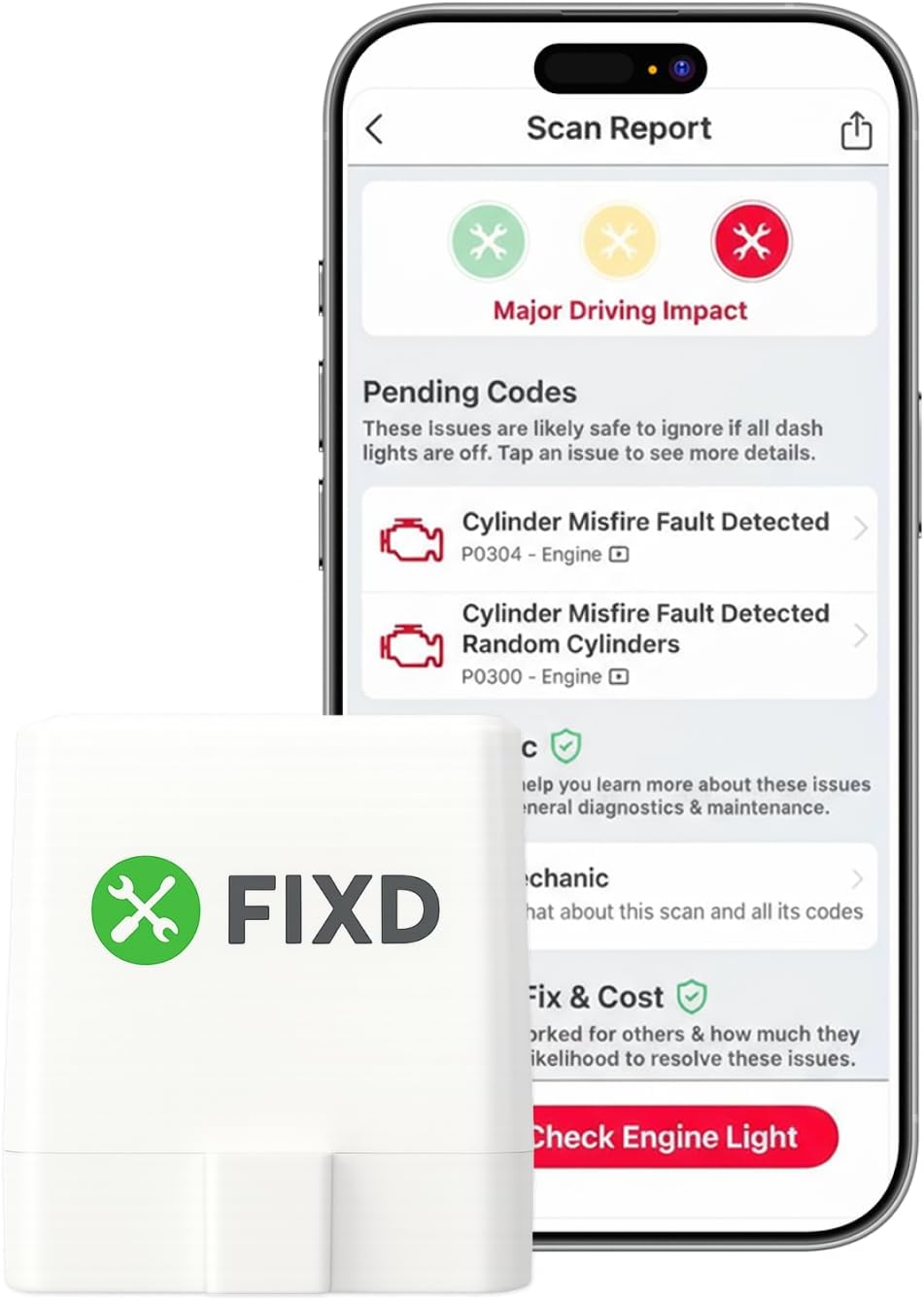
Best Bluetooth OBD2 Scanner
Detect 39,000+ Issues With Enhanced Codes. Save $1000s on car repairs & buying used vehicles by diagnosing problems yourself.
Shop on Amazon
Key Takeaways
- A steady Dodge Ram check engine light indicates a logged diagnostic trouble code that allows cautious driving, while a flashing light signals severe misfire requiring immediate shutdown to prevent catalytic converter damage.
- The most common Dodge Ram check engine light triggers are broken exhaust manifold bolts on 5.7L HEMIs (causing lean codes), EVAP leaks, oxygen sensor failures, ignition coil misfires, and Cummins DEF/DPF issues.
- You can read diagnostic codes using the key dance method on 2007–2020 Ram models or with a Bluetooth OBD-II scanner, which costs $25–$99 and saves you $100+ in dealership diagnostics.
- DIY-friendly fixes include gas cap replacement, EVAP valve swaps, spark plugs, ignition coils, and oxygen sensors, but flashing check engine lights, catalytic converter work, and internal engine repairs require professional help.
- Preventive maintenance such as regular oil changes, Top Tier gasoline, spark plug replacement every 60,000 miles, and annual MAF sensor cleaning significantly reduces check engine light occurrences on Dodge Ram trucks.
- Never clear codes without fixing the underlying problem first; ignoring a check engine light or repeat code clearing without repairs can mask serious issues and lead to thousand-dollar catalytic converter or engine damage.
Understanding Check Engine Light Behavior
Steady vs. Flashing Check Engine Light
A solid amber check engine light means your Ram’s powertrain control module (PCM) logged a diagnostic trouble code (DTC) but hasn’t detected an immediate threat to your catalytic converter. You can still drive, but don’t ignore it. Common triggers include oxygen sensor drift, small EVAP leaks (P0456), or intermittent misfires.
A flashing check engine light is your truck screaming for help. It signals a severe misfire that’s dumping unburned fuel into the exhaust, which will melt your catalytic converter within minutes. Pull over immediately, shut off the engine, and call for a tow. Continuing to drive risks thousand-dollar converter replacement plus potential engine damage from raw fuel washing cylinder walls.
Interpreting Dashboard Symptoms
Watch for companion warnings. If your check engine light appears alongside a lightning bolt (electronic throttle control), traction control icon, or “Service Electronic Stability Control,” you’re dealing with multiple systems talking to each other. Ram trucks often throw lean codes (P0171, P0174) when manifold bolts snap on 5.7L HEMIs, causing vacuum leaks that confuse the air-fuel ratio sensors.
Listen to your truck. A rough idle, hesitation under throttle, loss of power, or unusual exhaust smell often accompanies the light. Cummins diesel owners might notice reduced power (limp mode) with DEF system codes like P20EE, which points to a clogged diesel particulate filter or faulty NOx sensor.
Malfunction Indicator Lamp and Onboard Systems
Your malfunction indicator lamp (MIL), that’s the official name for your check engine light, connects to dozens of sensors monitoring everything from fuel pressure and ignition timing to emissions equipment and throttle position. The PCM constantly compares live data against programmed parameters. When readings fall outside acceptable ranges, it stores a DTC and illuminates the MIL.
Ram trucks use Chrysler’s NGC (Next Generation Controller) architecture, which is pretty sensitive to electrical glitches and connector corrosion. A single flaky ground wire or corroded sensor plug can trigger multiple codes. That’s why you should always pull codes before throwing parts at the problem.
Typical Triggers and Diagnostic Trouble Codes
Most Common Causes in Dodge Ram
According to 2026 Stellantis service bulletins and independent repair data, the top five triggers in Ram trucks are:
- Broken exhaust manifold bolts (5.7L HEMI): P0171, P0174 lean codes
- EVAP system leaks: P0456 (small leak), P0457 (loose cap)
- Oxygen sensor failures: P0130–P0167 range
- Ignition coil/spark plug misfires: P0300 (random), P0301–P0308 (cylinder-specific)
- Cummins DEF/DPF issues: P20EE, P2463, U0106
HEMI owners, pay attention to the Multi-Displacement System (MDS). When lifters stick or oil passages clog, you’ll see misfires on cylinders 1, 4, 6, or 7 during cylinder deactivation cycles. Keep your oil fresh, MDS is unforgiving about maintenance.
Evaporative Emission System and Gas Cap
P0456 is the most common EVAP code, indicating a small leak in the fuel vapor recovery system. Before you panic, check your gas cap. Remove it, inspect the rubber seal for cracks, and reinstall it until you hear three clicks. Drive through two complete drive cycles (cold start, warm-up, highway cruise, cool-down), and the code might clear itself.
If the light returns, suspect the EVAP purge valve or vent valve. Both are cheap (under $50) and bolt-on replacements. The purge valve sits on the intake manifold: the vent valve mounts near the fuel tank. A scan tool with live data can command these valves open and closed to pinpoint the culprit.
Misfire, Spark Plugs, and Ignition Components
Misfire codes (P0300 series) are second only to EVAP leaks in Ram trucks. The 5.7L HEMI uses individual coil-on-plug ignition, and those coils fail frequently after 60,000 miles. Symptoms include rough idle, hesitation, and reduced fuel economy. Swap coils between cylinders to see if the misfire follows the coil, if it does, replace all eight coils and plugs together.
“Had a flashing CEL on my 2018 Ram 1500. Turned out coil pack on cylinder 3 cracked. Replaced all 8 coils and plugs for $220 in parts, runs perfect now.” via Ram Forum
Cummins diesel misfires are rarer but can stem from injector issues or glow plug failures in cold weather. Use a quality OBD-II scanner to read live data and freeze-frame parameters.

Catalytic Converter and Oxygen Sensors
Oxygen sensors measure exhaust gases before (upstream) and after (downstream) the catalytic converter. When a sensor fails, your Ram can’t maintain proper air-fuel ratios, triggering codes P0130, P0133 (slow response), or P0420 (converter efficiency below threshold).
Before replacing a $1,200 catalytic converter, verify the downstream O2 sensors aren’t just fouled. Cummins trucks throw P20EE when soot accumulation clogs the DPF, which the PCM sometimes misinterprets as converter failure. Run a forced regeneration cycle or use an aftermarket DPF delete kit if your local emissions laws allow.
Methods for Reading and Clearing Codes
Chrysler Key Dance and Built-In Tools
Your Ram has a built-in code reader. Here’s the famous “key dance” trick:
- Insert your key into the ignition (don’t start the engine)
- Turn to ON, then OFF, then ON, OFF, ON, complete this cycle in five seconds
- Watch your odometer display cycle through diagnostics and show stored DTCs
You’ll see codes like “P0456” scroll across the screen. Write them down. This method works on 2007–2020 Ram trucks with mechanical keys. Newer push-button models require a scan tool.
Using OBD-II Scanners and Apps
A Bluetooth OBD-II adapter paired with the Torque Pro app (Android) or DashCommand (iOS) gives you live data, freeze frames, and code definitions. Plug the adapter into the 16-pin diagnostic port under your steering column, pair it with your phone, and you’ll see real-time engine parameters.
For professional-level diagnostics, the BlueDriver Bluetooth Pro OBDII Scan Tool offers Ram-specific code descriptions, repair reports, and smog check readiness. It’s $99 well spent if you plan to keep your truck long-term.

“Bought a cheap ELM327 scanner off Amazon for $25. Pulled codes myself and saved $120 at the dealer just for diagnostics.” via r/ram_trucks
Interpreting and Clearing Codes Safely
Once you’ve retrieved codes, cross-reference them on NHTSA’s complaint database or Ram Forums to see if your issue is a known pattern failure covered by recalls or extended warranties.
Don’t just clear codes and hope they stay gone. Fix the underlying problem first, then clear codes and drive through two complete drive cycles. If the light returns, you’ve missed something. Repeated code clearing without repairs can mask serious issues and damage downstream components like catalytic converters or turbos.
When to Seek Professional Help and Next Steps
Choosing DIY Repairs vs. a Mechanic
You can handle these yourself:
- Gas cap replacement
- EVAP purge/vent valve swap
- Spark plug and ignition coil changes
- Oxygen sensor replacement (if accessible)
- Code reading and basic diagnostics
You should call a pro for:
- Flashing check engine light (immediate tow)
- Catalytic converter replacement
- Internal engine work (lifters, timing chains)
- Transmission codes
- Cummins high-pressure fuel system repairs
Expert Note: Many Ram HEMI lean codes stem from exhaust manifold bolt failures, the studs break, gaskets leak, and the PCM thinks the engine's running lean. The repair requires drilling out broken bolts and installing upgraded fasteners. Unless you have a lift and extraction tools, this is a shop job.
Cost Considerations and Mobile Services
Independent shops charge $80–$150 per hour: dealerships run $140–$200. A typical diagnosis (pull codes, test sensors, smoke test EVAP) takes one hour. Mobile mechanics through YourMechanic or Wrench often cost 20–30% less and come to your driveway.
Common repair costs:
- Gas cap: $15–$35
- EVAP valve: $50–$150 parts + 0.5 hr labor
- O2 sensor: $60–$180 each + 1 hr labor
- Ignition coils (set of 8): $150–$300 + 1.5 hr labor
- Manifold repair (HEMI): $800–$1,500
- Catalytic converter: $1,200–$2,800
Preventive Maintenance to Avoid Future Issues
Keep your Ram healthy with these habits:
- Change oil every 5,000 miles (3,000 for Cummins with DPF)
- Use Top Tier gasoline to prevent carbon buildup
- Replace spark plugs every 60,000 miles (HEMI), 100,000 (Pentastar)
- Inspect air filter and clean MAF sensor annually
- Run fuel system cleaner (like Techron or Sea Foam) every oil change
- Monitor DEF levels and quality (Cummins only)
- Address minor leaks and sensor codes immediately
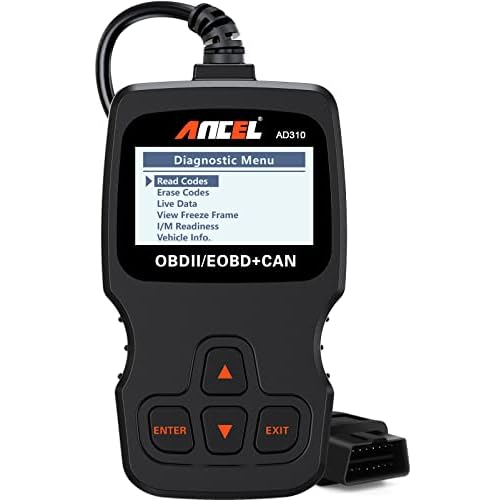
For ongoing monitoring, keep a dedicated code reader in your glove box. The ANCEL AD310 is under $30, reads and clears codes, and displays I/M readiness, perfect for pre-inspection checks or quick roadside diagnostics.
Your Ram’s check engine light isn’t a death sentence. With the right tools and a systematic approach, you’ll diagnose most issues in your driveway and decide confidently whether to turn wrenches yourself or hand the keys to a trusted mechanic. Keep that scanner handy, stay on top of maintenance, and your truck will keep hauling for years.
Frequently Asked Questions
What does a steady vs. flashing Dodge Ram check engine light mean?
A steady light means a diagnostic trouble code was logged but no immediate threat detected—you can drive cautiously and diagnose soon. A flashing check engine light signals severe engine misfire dumping unburned fuel into the exhaust, melting your catalytic converter within minutes. Pull over immediately and call for a tow.
What are the most common causes of Dodge Ram check engine light codes?
The top five triggers are broken exhaust manifold bolts (5.7L HEMI), EVAP system leaks, oxygen sensor failures, ignition coil/spark plug misfires, and Cummins DEF/DPF issues. P0456 (small EVAP leak) and P0171/P0174 (lean codes from manifold problems) are particularly common in Ram trucks.
Can I read Dodge Ram check engine light codes myself without a scanner?
Yes. Use the ‘key dance’ trick: insert your key, turn to ON-OFF-ON-OFF-ON within five seconds, and watch your odometer display diagnostic codes. This works on 2007–2020 mechanical-key models. For newer push-button trucks or live data, use a Bluetooth OBD-II adapter paired with Torque Pro or DashCommand app.
Should I clear the check engine light immediately or fix the problem first?
Always fix the underlying problem first, then clear the code. Drive through two complete drive cycles (cold start, warm-up, highway cruise, cool-down) to confirm the fix. Clearing codes without repairs masks serious issues and can damage catalytic converters or turbos.
How much does it cost to fix a Dodge Ram check engine light?
Costs range from $15–$35 for a gas cap to $1,200–$2,800 for catalytic converter replacement. Common repairs: EVAP valve ($50–$150 parts), O2 sensor ($60–$180), ignition coils ($150–$300), and manifold repair ($800–$1,500). Diagnosis typically costs $80–$200 per hour at independent shops or dealerships.
What preventive maintenance prevents Dodge Ram check engine light issues?
Change oil every 5,000 miles, use Top Tier gasoline, replace spark plugs every 60,000 miles (HEMI) or 100,000 (Pentastar), inspect air filters, monitor DEF levels on Cummins trucks, and address minor leaks immediately. Keep a dedicated code reader in your glove box for quick diagnostics.
Read More:
- BMW Check Engine Light (Quick Diagnostic Guide to Fix It Fast)
- Audi Check Engine Light (Meaning, Common Causes and DIY Fix Guide)
- Dodge Check Engine Light (Quick Codes & Fixes for HEMI & Pentastar)
- Chevy Check Engine Light (Means, Root Causes & How to Fix It)