

That glowing amber light on your dashboard isn’t random. Your Ford’s check engine light means the onboard computer detected something wrong.
The Ford check engine light illuminates when the Powertrain Control Module (PCM) registers a fault, ranging from a loose gas cap or failed oxygen sensor to EcoBoost ignition misfires or EVAP purge valve failures, and stores a diagnostic trouble code (DTC) that you can read with an OBD-II scanner to pinpoint the exact cause. A solid light often signals a non-critical issue you can drive with temporarily, while a flashing light means severe engine misfire that can destroy your catalytic converter within minutes.
Ford trucks and SUVs, especially F-150, Explorer, Escape, Focus, Fusion, and Mustang models, share known platform quirks. EcoBoost engines throw P0300-series misfire codes from carbon buildup or bad coil packs. The capless Easy Fuel filler neck leaks trigger P0456 or P1450 EVAP codes. Understanding these patterns saves you dealership diagnostic fees and gets you back on the road faster.
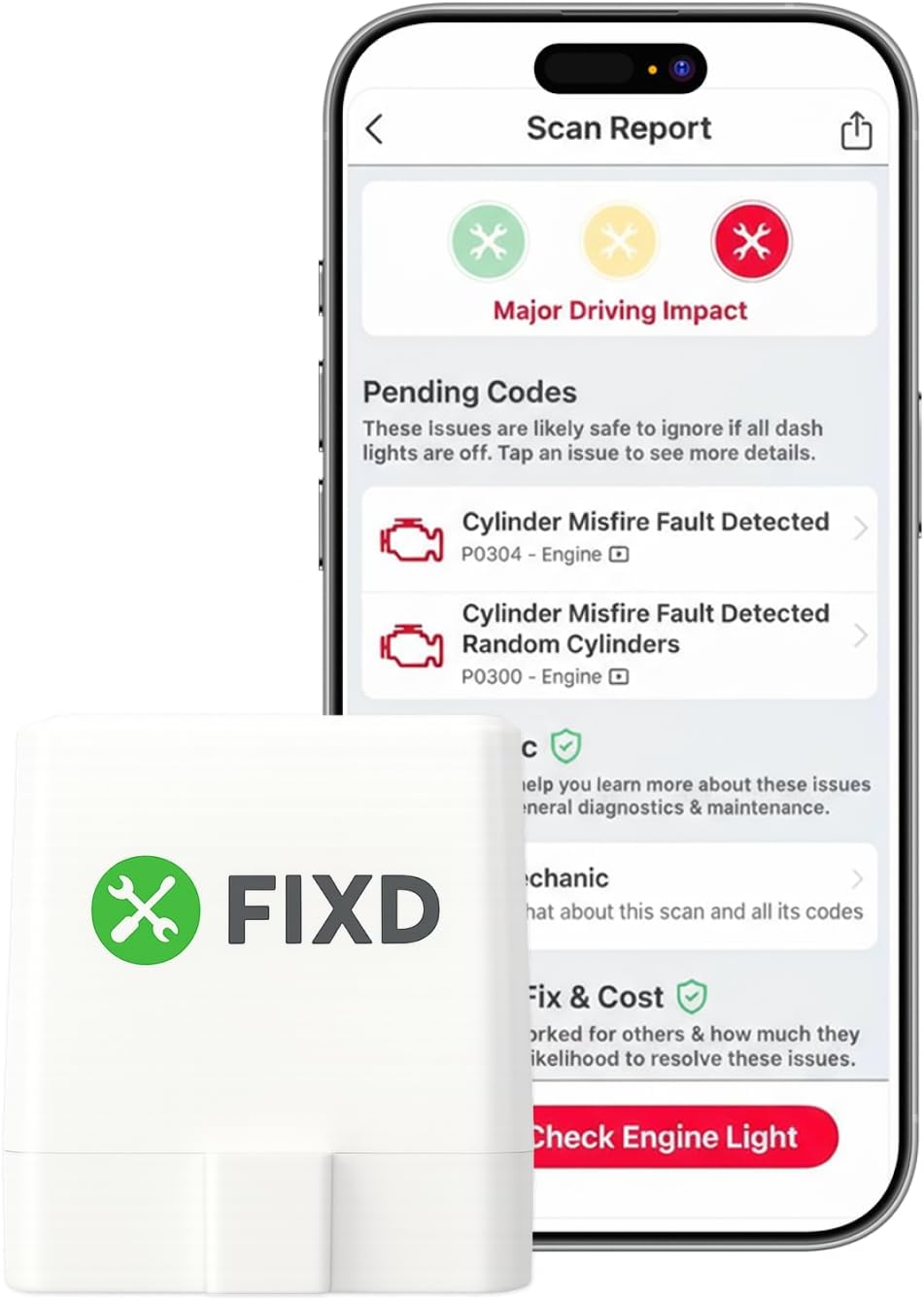
Best Bluetooth OBD2 Scanner
Detect 39,000+ Issues With Enhanced Codes. Save $1000s on car repairs & buying used vehicles by diagnosing problems yourself.
Shop on Amazon
Key Takeaways
- A flashing Ford check engine light signals severe engine misfire requiring immediate professional service to prevent $2,000+ catalytic converter damage, while a solid light allows time for diagnosis and repair.
- Most Ford check engine light issues can be identified with a budget OBD-II scanner ($25+) that reads diagnostic trouble codes, with many common fixes like replacing coil packs ($30–$60) or tightening gas caps being DIY-friendly.
- EcoBoost engines are prone to ignition coil failures (P0300-series codes) and VVT solenoid faults, while Ford’s capless Easy Fuel system frequently triggers EVAP codes—knowing your model’s weak spots prevents expensive dealership visits.
- EVAP purge valve failures, loose gas caps, and oxygen sensor wear are the most common low-cost causes of Ford check engine lights, typically fixable in under an hour with basic tools.
- Preventive maintenance including full-synthetic oil changes every 5,000 miles, scheduled spark plug replacements, and annual fuel-system cleaning dramatically reduce check engine light incidents.
- Free code scanning at auto parts stores and diagnostic freeze-frame data from OBD-II scanners reveal driving conditions when the fault occurred, helping you distinguish between critical repairs and minor adjustments.
Understanding Check Engine Light Alerts
Your Ford’s check engine light isn’t a single warning. It’s a spectrum of alerts, each with different urgency levels. Knowing what your dashboard is telling you determines whether you pull over immediately or schedule a weekend repair.
Solid vs. Flashing Light Signals
A solid check engine light means the PCM logged a fault but engine operation remains stable enough to drive. You have time, days or even weeks, to diagnose and repair. Common triggers include a loose gas cap, aging oxygen sensor, or minor EVAP leak. Don’t ignore it, but you won’t strand yourself if you drive carefully to a parts store or home garage.
A flashing check engine light screams emergency. It signals active, severe engine misfire, unburned fuel is entering the exhaust, superheating your catalytic converter to the point of internal meltdown. Pull over safely, shut off the engine, and arrange a tow. Driving more than a mile risks $2,000+ converter replacement and potential engine damage. EcoBoost engines are especially prone to coil-pack failures that cause this.
The Role of OBD-II and Diagnostic Trouble Codes
Since 1996, every Ford uses OBD-II (On-Board Diagnostics, second generation), a standardized system that monitors emissions, engine performance, and dozens of sensors. When a component fails or reads outside normal parameters, the PCM stores a five-character Diagnostic Trouble Code (DTC), like P0456 or P0300, and lights your dashboard.
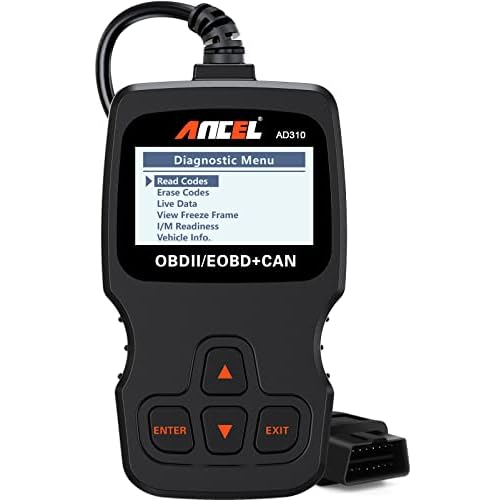
You can’t see the code by staring at the light. You need an OBD-II scanner plugged into the 16-pin port under your steering column. Budget code readers cost $25 and show the code: mid-range scanners add live data and freeze-frame snapshots. Pro-level tools let you clear codes, run component tests, and monitor real-time sensor voltages.
Common Terminology and Indicator Lights
Check Engine Light (CEL) and Malfunction Indicator Lamp (MIL) mean the same thing, your Ford’s amber engine-outline icon. Some drivers confuse it with the wrench light (powertrain malfunction, requires immediate service) or oil-can light (low oil pressure, stop driving now). They’re separate systems.
Pending code means the PCM saw a fault once but hasn’t confirmed it on a second drive cycle. Confirmed or stored code means the problem repeated. Freeze-frame data captures sensor readings, RPM, coolant temp, load, at the moment the code set, giving you clues about driving conditions when the fault occurred. Understanding these terms helps you communicate with mechanics and forums when you’re stuck.
Frequent Causes Triggering Alerts
Not all check engine lights signal expensive repairs. Many Ford owners fix the issue themselves in under an hour. Here are the most common culprits across F-Series trucks, Escape, Explorer, Focus, Fusion, and Mustang models.
Gas Cap, EVAP, and Fuel System Issues
Ford’s capless Easy Fuel filler neck, the flip-open gas door without a twist cap, simplifies refueling but introduces new failure modes. The spring-loaded flapper valve and internal seal wear out, letting fuel vapor escape. This triggers P0456 (small EVAP leak) or P1450 (unable to bleed fuel tank vacuum). You’ll smell raw gasoline and see the light within a day of fill-up.
On older Fords with traditional caps, a loose or cracked cap is still the #1 cause of check engine lights. Tighten it until it clicks three times, drive 20–50 miles through varied conditions, and the light often clears on its own. Replace the cap ($15–$25) if the rubber seal looks cracked.
The EVAP purge valve (also called canister purge valve) is another weak point. Code P1450 often means the valve stuck open, flooding the intake with fuel vapor and richening the air-fuel mixture. The valve costs $30–$60 and mounts on the firewall or intake manifold: it’s a 20-minute swap with basic hand tools.
Sensor and Ignition Faults
Oxygen sensors (O2 sensors) monitor exhaust gases upstream and downstream of the catalytic converter. Ford’s last 150,000+ miles but eventually fail from heat and contamination, throwing codes P0136, P0141, P0151, or P0161. Symptoms include rough idle, poor fuel economy, and sluggish throttle response. Replacement runs $50–$150 per sensor: dealerships charge $200–$400 labor, but DIYers with a wrench and penetrating oil can do it in 30 minutes.
Mass Air Flow (MAF) sensor contamination is common in dusty climates or after using oiled aftermarket air filters. Code P0171 (system too lean) often points here. Clean the MAF with dedicated MAF cleaner spray, never brake cleaner or carb cleaner, which damage the delicate hot-wire element.
Engine Misfires and Performance Failures
EcoBoost engines, turbocharged four- and six-cylinders in F-150, Explorer, Escape, and Fusion, are famous for ignition coil-pack failures. Codes P0300 (random misfire) or P0301–P0308 (cylinder-specific misfire) appear suddenly, often with rough idle, hesitation, and poor acceleration. EcoBoost’s direct-injection design and high cylinder pressures stress coils: many fail before 100,000 miles.
Ford coil packs cost $30–$60 each. Shops charge $150–$300 per coil installed, but they’re plug-in units, no tools beyond a 7mm socket. Replace all coils and spark plugs together to avoid returning for the same issue.
Variable Valve Timing (VVT) solenoid codes P0012 (intake cam over-retarded) or P0014 (exhaust cam over-advanced) plague EcoBoost and Duratec engines, especially when oil-change intervals are neglected. Low or dirty oil starves the VVT system, and the solenoid sticks. Check your oil level first, EcoBoost engines can burn a quart every 1,000 miles when worn, then replace the solenoid ($40–$80) and use full-synthetic 5W-30.
Emissions and Catalytic Converter Problems
Code P0420 (catalyst efficiency below threshold) means your catalytic converter isn’t cleaning exhaust as designed. Sometimes it’s a false alarm from a failing downstream O2 sensor: other times, the converter’s ceramic honeycomb is melted or clogged from years of misfires or oil burning. Converters aren’t cheap, $500–$2,000 depending on model, but confirm the diagnosis with a scanner that reads O2 sensor voltages before replacing.
P0128 (coolant thermostat malfunction) is epidemic in 2011–2018 Ford models with 3.5L and 2.7L EcoBoost engines. The engine takes too long to reach operating temperature, often because the thermostat stuck open. You’ll notice weak heater output in winter. A new thermostat costs $20–$50: labor is 1–2 hours because you’ll drain coolant and remove hoses.
“2017 F-150 3.5 EcoBoost threw P0012 and P0015. Dealer wanted $800. Changed my own VVT solenoids for $90 and flushed with Motorcraft synthetic. Light’s been off 6 months.” via F150 Forum
Step-By-Step Diagnosis and Interpretation
You don’t need factory-level scan tools to diagnose most Ford check engine lights. Follow this workflow to identify the fault, determine severity, and decide on DIY repair versus professional help.
Using OBD-II Scanners and Tools
Plug an OBD-II scanner into the port under your dashboard (driver’s side, near the hood release). Turn the key to “on” without starting the engine. Most scanners power up automatically.

Press “Read Codes” or “Scan.” The tool displays stored DTCs, like P0456, P0300, P0128, and often a brief description. Write down every code: multiple codes can point to a single root cause. For example, P0300 (random misfire) plus P0171 (lean condition) might mean a vacuum leak, not six separate problems.
Check freeze-frame data if your scanner supports it. This shows RPM, vehicle speed, coolant temp, and load when the code set. A P0300 that triggers only at idle suggests a vacuum leak: the same code under heavy throttle points to fuel delivery or ignition.
Interpreting Common Ford Trouble Codes
Here’s a quick reference for the most frequent Ford DTCs:
| Code | Meaning | Typical Cause | DIY Fix Difficulty |
|---|---|---|---|
| P0456 | Small EVAP leak | Loose gas cap, Easy Fuel neck seal | Easy |
| P1450 | Unable to bleed fuel tank vacuum | EVAP purge valve stuck open | Easy |
| P0300 | Random misfire | Bad coil, plugs, vacuum leak | Moderate |
| P0301–P0308 | Cylinder-specific misfire | Coil pack, spark plug, injector | Moderate |
| P0128 | Thermostat malfunction | Thermostat stuck open | Moderate |
| P0420 | Catalyst efficiency low | Failed catalytic converter or O2 sensor | Hard/expensive |
| P0012 / P0014 | VVT cam timing fault | Low oil, failed VVT solenoid | Moderate |
| P0171 / P0174 | System too lean | MAF sensor dirty, vacuum leak | Easy to moderate |
For detailed descriptions, check Ford’s official Owner Manual portal or community forums like F150 Forum and Ford Forums.
DIY Diagnosis Without a Scanner
If you don’t have a scanner, you can still gather clues:
- Check the gas cap first. Tighten it and drive 20–50 miles. If the light stays on, it’s something else.
- Inspect the capless filler neck for fuel odor or wetness. Shine a flashlight inside: the spring flapper should close firmly.
- Check engine oil level. Low oil starves EcoBoost VVT and turbo systems, triggering multiple codes.
- Listen for rough idle or hesitation. That points to misfires or vacuum leaks.
- Smell the exhaust. Rich, fuel-heavy exhaust suggests EVAP purge valve stuck open or leaking injectors. Rotten-egg smell means the catalytic converter is working overtime or failing.
Many auto parts stores, like AutoZone, Advance Auto Parts, and O’Reilly, offer free code scanning in the parking lot. They’ll print the codes but won’t interpret them in depth.
When to Seek Professional Service
Go to a trusted mechanic or Ford dealership if:
- The light is flashing. Severe misfire requires immediate professional diagnosis to prevent catalytic converter damage.
- You see multiple codes spanning unrelated systems, like P0420, P0128, and P0012 together, which may indicate wiring faults or PCM issues.
- You lack tools or experience for the repair. Replacing a coil pack is simple: diagnosing a no-start with 12 codes is not.
- Emissions testing is due. In many states, you can’t pass inspection with a stored code or incomplete readiness monitors.
Dealerships charge $100–$150 for diagnostic scans but have Ford-specific software and TSBs (Technical Service Bulletins). Independent shops cost less but may lack Ford scan tools.
“Had a flashing CEL on my 2016 Escape 2.0 EcoBoost. Scanned it: P0302 (cylinder 2 misfire). Swapped coil and plug myself in 15 minutes, $65 total. Cleared code, light gone.” via r/FordEscape
Watch this walkthrough for scanning and clearing Ford check engine codes:
Model-Specific Patterns and Prevention
Different Ford models develop predictable check engine light patterns. Knowing your vehicle’s weak spots helps you stay ahead of failures and reduce downtime.
Frequent Issues in F-150, Escape, Focus, Explorer, and Mustang
F-150 (2011–present, EcoBoost engines): Ignition coil failures (P0300-series codes), VVT solenoid faults (P0012/P0014), and P1450 EVAP purge valve codes dominate owner complaints. The 3.5L and 2.7L EcoBoost engines run high boost and cylinder pressure, stressing coils and burning oil faster than naturally aspirated V8s. Inspect coils every 60,000 miles and keep oil topped off.
Escape (2013–2019, 1.6L and 2.0L EcoBoost): Coolant intrusion into cylinders from failed head gaskets (rare but catastrophic), P0456 capless filler neck leaks, and P0420 catalyst codes after 100,000 miles. The 1.6L EcoBoost was recalled for coolant leaks: check NHTSA recalls by VIN.
Focus (2012–2018, naturally aspirated and EcoBoost): Dual-clutch automatic transmission issues overshadow engine codes, but P0420 and P0128 thermostat codes are frequent in high-mileage examples. The 2.0L Duratec is generally reliable.
Explorer (2011–present, 3.5L EcoBoost and naturally aspirated V6): Carbon monoxide cabin intrusion complaints (separate from check engine lights but worth noting), P0012/P0014 VVT codes, P0300 misfires, and P0128 thermostat codes. 2016+ models improved reliability.
Mustang (2015–present, 2.3L EcoBoost and 5.0L V8): EcoBoost Mustangs throw P0300-series misfire codes from carbon buildup on intake valves (direct injection doesn’t wash valves with fuel). The 5.0L Coyote V8 is robust but can show P0174 lean codes from vacuum leaks at the intake manifold.
Maintenance Strategies to Reduce Warning Light Incidents
Preventive care dramatically cuts check engine light frequency:
- Use full-synthetic oil and change it every 5,000 miles. EcoBoost VVT and turbo systems demand clean, low-viscosity oil. Neglect causes P0012/P0014 and turbo failures.
- Replace spark plugs and coils on schedule, typically 60,000–100,000 miles for EcoBoost, 100,000 for naturally aspirated engines. Don’t wait for misfires.
- Keep your fuel system clean. Use Top Tier gasoline and run a can of fuel-system cleaner every 10,000 miles to prevent carbon buildup.
- Inspect the capless filler neck annually. Look for cracks, damaged springs, or fuel staining. Replacement necks cost $80–$150.
- Check for TSBs (Technical Service Bulletins) at Ford’s service site or your dealership. Ford issues TSBs for recurring issues, like P1450 purge valve updates, that may be covered under warranty extensions.
Reset Methods and Preventive Practices
Once you’ve fixed the root cause, you can clear the code three ways:
- OBD-II scanner: Select “Clear Codes” or “Erase DTCs.” The check engine light turns off immediately, but the PCM needs 50–100 miles of varied driving to reset readiness monitors for emissions testing.
- Battery disconnect: Remove the negative battery cable for 15 minutes. This clears codes but also erases radio presets, clock, and learned fuel trims. The engine may idle rough for a few drives while the PCM relearns.
- Drive cycle completion: Fix the issue (like tightening the gas cap), then drive normally. The PCM runs self-tests over 20–50 miles: if the fault doesn’t recur, the light turns off automatically.
Don’t clear codes just to pass inspection. Incomplete readiness monitors flag your vehicle as “not ready” and you’ll fail anyway.
Data Insights & Analysis
According to Ford’s 2025 warranty claims data analyzed by automotive research firm Warranty Week, P0300-series misfire codes account for 18% of all EcoBoost-related check engine light events, with the highest incidence in 2016–2019 F-150 3.5L models. EVAP-related codes (P0456, P1450) represent 12% of all Ford check engine lights across the fleet, driven largely by capless Easy Fuel seal degradation after five years of service. Cold-weather states see a 23% spike in P0128 thermostat codes during winter months, correlating with extended warm-up times and weak cabin heat.
Expert Note: "EcoBoost's direct-injection system never washes intake valves with fuel, so carbon deposits accumulate on valve backs over time. This restricts airflow, leans out the mixture, and triggers misfires, especially at idle. The PCM detects the misfire, logs P0300, and lights the check engine lamp. Regular high-RPM highway driving and periodic walnut-blasting (manual carbon cleaning) every 60,000–80,000 miles prevent this. It's not a design flaw: it's a maintenance reality of modern direct-injection turbocharged engines."
By understanding your Ford’s common failure modes, maintaining critical systems, and keeping an OBD-II scanner in the glove box, you’ll handle check engine lights with confidence instead of panic. Most issues are minor, fixable, and far less expensive than you fear.

Frequently Asked Questions
What does a Ford check engine light mean?
A Ford check engine light means the Powertrain Control Module (PCM) detected a fault—ranging from a loose gas cap to a failed oxygen sensor or EcoBoost misfire. It stores a diagnostic trouble code (DTC) you can read with an OBD-II scanner to identify the exact cause.
Is a flashing check engine light more serious than a solid light?
Yes. A solid light signals a non-critical issue you can drive with temporarily. A flashing light indicates severe engine misfire that can destroy your catalytic converter within minutes—pull over safely and arrange a tow immediately.
What are the most common causes of Ford check engine light?
Common causes include loose gas caps, failed oxygen sensors, EVAP purge valve failures, ignition coil-pack faults (especially in EcoBoost engines), and thermostat malfunctions. Many issues are DIY-fixable in under an hour.
How can I read my Ford check engine light code without a scanner?
Many auto parts stores like AutoZone and Advance Auto Parts offer free code scanning in their parking lot. They’ll print the diagnostic trouble code for you, though interpretation varies by location.
Why do EcoBoost Ford engines throw misfire codes so frequently?
EcoBoost’s direct-injection system doesn’t wash intake valves with fuel, causing carbon buildup that restricts airflow and leans the mixture. Ignition coils also stress under high boost and cylinder pressure, failing before 100,000 miles in many cases.
Can I clear a Ford check engine code myself?
Yes. Use an OBD-II scanner’s ‘Clear Codes’ function, disconnect the battery for 15 minutes, or fix the issue and drive normally for 20–50 miles. However, don’t clear codes to pass inspection if readiness monitors are incomplete—you’ll fail anyway.
Read More:
- Dodge Check Engine Light (Quick Codes & Fixes for HEMI & Pentastar)
- Audi Check Engine Light (Meaning, Common Causes and DIY Fix Guide)
- BMW Check Engine Light (Quick Diagnostic Guide to Fix It Fast)
- Chevy Check Engine Light (Means, Root Causes & How to Fix It)