
Seeing that amber engine icon glow on your Ford Escape’s dashboard instantly triggers anxiety. You’re wondering if it’s safe to drive, what’s broken, and how much the repair will cost.
The Ford Escape check engine light can appear for dozens of reasons, from a loose gas cap or dirty capless fuel filler seal to severe engine misfires, failed oxygen sensors, stuck EVAP purge valves (P1450), ignition coil failures (P0300–P0304), or EcoBoost coolant intrusion, and the only way to know for sure is to pull the diagnostic trouble code (DTC) with an OBD-II scanner, interpret the code, then inspect or replace the specific sensor, component, or system identified.
This guide walks you through understanding what solid versus flashing lights mean, the most common Ford Escape DTCs across 1.5L, 1.6L, 2.0L EcoBoost, and 2.5L Duratec engines, how to scan and reset codes yourself, and when you can safely drive versus when you need immediate action to prevent catalytic converter damage.
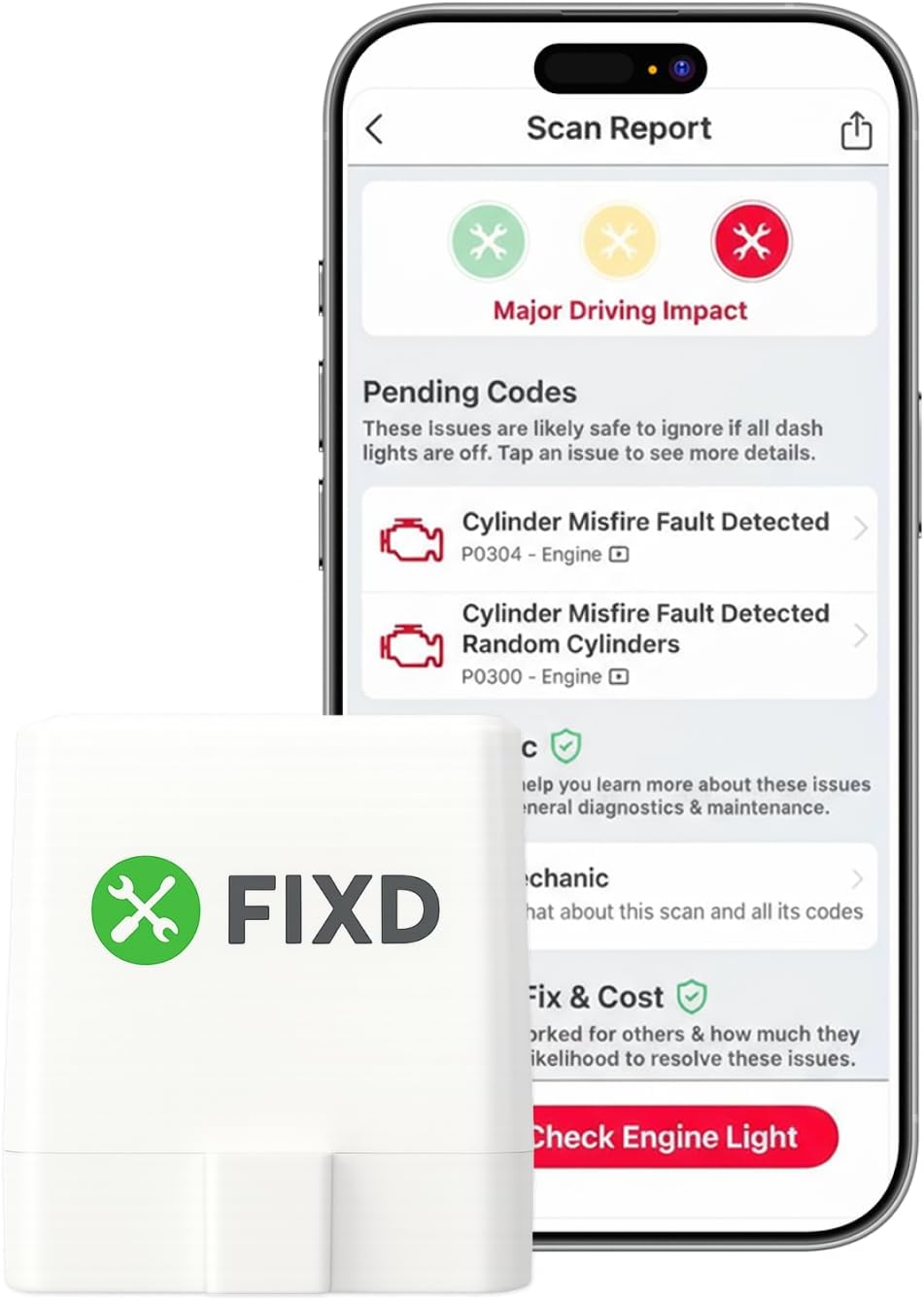
Best Bluetooth OBD2 Scanner
Detect 39,000+ Issues With Enhanced Codes. Save $1000s on car repairs & buying used vehicles by diagnosing problems yourself.
Shop on Amazon
Key Takeaways
- A flashing Ford Escape check engine light signals an active severe misfire that can destroy your catalytic converter in minutes—pull over immediately and arrange a tow rather than risk a $1,200+ repair.
- Pull a diagnostic trouble code (DTC) with an affordable OBD-II scanner ($25–$50) to identify the exact fault; common causes include oxygen sensor failures, ignition coil failures, and EVAP purge valve issues across 1.5L, 1.6L, 2.0L EcoBoost, and 2.5L Duratec engines.
- EcoBoost engines on 2013–2019 Escape models frequently experience ignition coil failures around 60,000–80,000 miles and EVAP purge valve sticking—prioritize these components when diagnosing misfire or emissions codes.
- After fixing the fault, clear codes using your scanner’s erase function (never disconnect the battery), then complete a drive cycle—idle, gentle acceleration to 40–60 mph, steady cruise, and deceleration—to verify the repair and reset PCM readiness monitors.
- Prevent recurring check engine light issues by changing oil every 5,000 miles, replacing spark plugs and coils on schedule (60,000 miles for EcoBoost), using Top Tier gasoline, and inspecting the capless fuel filler quarterly.
Understanding Check Engine Light Signals
Solid vs. Flashing Warning Indicators
A solid check engine light indicates the on-board diagnostic system (OBD-II) has detected a fault that affects emissions or drivability but hasn’t yet caused severe, real-time engine damage. You can typically drive short distances to a safe location, scan the code, and schedule a repair within a few days. Common solid-light triggers include failed oxygen sensors, small EVAP system leaks, or thermostat rationality codes like P0128.
A flashing check engine light signals an active, severe misfire that can overheat and destroy your catalytic converter within minutes. If the light blinks rapidly, pull over immediately, shut off the engine, and arrange a tow. Continuing to drive risks melting the catalyst substrate, turning a $150 ignition coil repair into a $1,200+ converter replacement. Flashing lights often accompany codes P0300 (random misfire) or P0301–P0304 (cylinder-specific misfires), frequently caused by failed ignition coil packs or fouled spark plugs on EcoBoost engines.
Role of Diagnostic Trouble Codes (DTCs)
When the powertrain control module (PCM) detects a sensor reading outside expected parameters, it logs a five-character DTC and illuminates the check engine light. Ford Escape DTCs follow the OBD-II standard: the first character (P for powertrain, B for body, C for chassis) identifies the system, the second digit (0 = generic, 1 = manufacturer-specific) tells you if it’s universal or Ford-proprietary, and the remaining three digits pinpoint the exact fault.
For example, P0456 is a generic small EVAP leak, while P1450 is a Ford-specific code indicating the EVAP canister purge valve is stuck open or leaking vacuum. The National Highway Traffic Safety Administration (NHTSA) maintains recall and technical service bulletin databases that can help you identify known Escape issues tied to specific codes.
Without pulling the code, you’re guessing. A $25 Bluetooth OBD-II scanner like the FIXD OBD2 Professional Scanner transforms cryptic dashboard warnings into actionable repair steps in under 60 seconds.
Key Differences in Troubleshooting Steps
Different DTCs require different diagnostic paths. Sensor codes (P0130–P0167 for O2 sensors) usually mean you’ll test or replace a single component. Misfire codes (P0300–P0304) demand checking ignition coils, spark plugs, fuel injectors, and compression. EVAP codes (P0442, P0456, P1450) often involve inspecting the capless Easy Fuel filler neck seal, purge valve, and vapor hoses.
Ford Escape platforms, especially 2013–2019 models with 1.5L and 2.0L EcoBoost engines, are notorious for ignition coil failures around 60,000–80,000 miles and EVAP purge valve sticking, so prioritize those components when scanning misfire or EVAP DTCs. Always address flashing lights first, solid lights second, and never ignore a code just because the vehicle seems to run fine.
Major Reasons the Warning Appears
Common Sensor Failures and What They Mean
Oxygen (O2) sensor failures top the list of Escape check engine light causes. The upstream O2 sensor (Bank 1 Sensor 1) monitors air-fuel mixture before the catalytic converter: the downstream sensor checks converter efficiency. Codes P0131, P0134, P0171, or P0174 signal lean conditions, rich mixtures, or sensor circuit faults. O2 sensors typically last 80,000–100,000 miles but can fail sooner if you use low-quality fuel or skip oil changes, allowing carbon deposits to coat the sensor tip.
Mass airflow (MAF) sensor codes (P0101, P0102) trigger when dirt, oil, or debris on the hot-wire element skew intake air readings, causing rough idle and poor fuel economy. A quick MAF cleaning with CRC MAF Sensor Cleaner often resolves the fault. Coolant temperature sensor codes (P0117, P0118, P0128) indicate the PCM sees unrealistic engine temperature data, often due to a stuck-open thermostat that won’t let the engine reach operating temperature, common on 2.5L Duratec engines.
According to Ford’s Technical Service Bulletins, certain 2013–2016 Escape 1.6L EcoBoost engines suffered coolant intrusion into cylinder #3 due to head gasket and cylinder head porosity issues, triggering P0303 misfires and eventual catastrophic engine damage if ignored.
Ignition and Engine Misfire Issues
EcoBoost engines run higher cylinder pressures and temperatures, stressing ignition components. Ignition coil packs fail frequently on 1.5L and 2.0L turbo models, throwing codes P0300 (random misfire), P0301 (cylinder 1), P0302, P0303, or P0304. You’ll feel rough idle, hesitation, and reduced power. Coils cost about $40–$60 each: replacing all four plus spark plugs during the same service prevents repeat comebacks.
Spark plugs on EcoBoost engines should be replaced every 60,000 miles with OEM Motorcraft platinum or iridium plugs gapped to spec. Aftermarket plugs or incorrect gaps cause misfires and can damage coils. One Escape owner on the Escape Fanatics forum reported:
“Flashing CEL at 68k miles turned out to be all four coils toast. Dealership wanted $800: I did it myself for $220 in parts. Runs perfect now.” via Escape Fanatics
Carbon buildup on intake valves in direct-injection EcoBoost engines can also cause misfires and P0300-series codes. Unlike port-injection engines, DI engines don’t wash valves with fuel, so carbon accumulates over time, requiring walnut-blasting or chemical cleaning every 80,000–100,000 miles.
Emissions System Problems
Ford’s capless Easy Fuel system, while convenient, creates unique EVAP issues. Dirt, debris, or ice on the spring-loaded flapper seal inside the fuel neck can prevent a proper seal, allowing fuel vapor to escape and triggering P0456 (small EVAP leak) or P1450 (canister purge valve). Inspect the filler neck with a flashlight: clean any dirt with a damp cloth.
The EVAP canister purge valve, mounted on the engine, controls fuel vapor flow from the charcoal canister to the intake manifold. When it sticks open, the engine runs rich at idle, stumbles, and logs P1450. Replacement takes 15 minutes and costs about $35 for an OEM Motorcraft valve.
Catalytic converter efficiency codes (P0420, P0430) indicate the downstream O2 sensor sees insufficient chemical conversion. Sometimes a failed sensor is the culprit: other times, prolonged misfires have damaged the catalyst. The Environmental Protection Agency (EPA) mandates converter warranties up to 80,000 miles, so check if yours is still covered before paying out-of-pocket.
Transmission and Drivability Concerns
Though less common, transmission codes can illuminate the check engine light. P0700 is a generic transmission control system code that requires further scan of transmission-specific DTCs. P0720 (output speed sensor) or P0731 (gear ratio errors) may appear on Escapes with the 6F35 automatic transmission, especially if transmission fluid is low or degraded.
If you notice harsh shifts, delayed engagement, or slipping along with the check engine light, check your transmission fluid level and condition. Ford specifies Mercon LV fluid: using the wrong type can cause shift issues and set codes.
Diagnosing the Problem Accurately
Reading and Interpreting Ford Trouble Codes
Once you’ve pulled the DTC, cross-reference it using free online databases like OBD-Codes.com or the FIXD app. Write down the code number, freeze-frame data (engine RPM, coolant temp, fuel trim values at the moment the code set), and any pending codes that haven’t yet triggered the light.
P0128 on a 2.5L Duratec typically means the thermostat is stuck open: coolant never reaches 195°F, fuel economy drops, and the heater blows lukewarm air. Replacement is straightforward: drain coolant, unbolt the thermostat housing, install a new OEM thermostat and gasket, refill, and burp the system.
P0171/P0174 (system too lean) can stem from vacuum leaks, dirty MAF sensor, weak fuel pump, or clogged fuel filter. Start with the simplest checks: inspect intake hoses for cracks, clean the MAF, then test fuel pressure if lean codes persist.
How to Use OBD-II Scanners on Ford Escape
Locate the OBD-II port under the driver-side dashboard, just above the brake pedal. Plug in your scanner with the ignition off, then turn the key to “ON” (engine off). The scanner powers up, establishes communication, and displays “Ready.”
Select “Read Codes” to view active and pending DTCs. Note all codes, sometimes multiple faults point to a single root cause (for example, a bad MAF can trigger lean codes, misfire codes, and fuel trim codes simultaneously). Choose “Freeze Frame” to see sensor data snapshot at the moment the code set: this helps confirm intermittent issues.
After repairs, select “Clear Codes” to erase DTCs and reset the check engine light. The PCM will turn the light back on if the fault persists or reappears during the next drive cycle. For a comprehensive walkthrough, this YouTube video on Ford OBD-II diagnostics demonstrates live code reading and interpretation on a second-generation Escape.
When to Inspect or Replace Key Components
If you see P0301–P0304, swap the suspect ignition coil with one from a different cylinder and re-scan. If the misfire follows the coil, replace it. If the misfire stays with the same cylinder, check the spark plug, fuel injector, or perform a compression test.
For EVAP codes, start with a visual inspection: check the Easy Fuel filler neck seal, purge valve vacuum hoses, and canister for cracks. Use a smoke machine (or rent one from an auto parts store) to pinpoint tiny leaks in the EVAP system.
O2 sensor codes warrant a live-data test with a scanner that graphs sensor voltage. A healthy upstream O2 sensor should toggle rapidly between 0.1V and 0.9V at idle. If it’s flat-lined or sluggish, replace it with an OEM Motorcraft or high-quality Bosch sensor, cheap sensors often fail within months.
Properly Resetting and Preventing Recurrence
Safe Methods for Resetting the Warning
After confirming and fixing the fault, clear codes using your OBD-II scanner’s “Erase Codes” function. This resets the check engine light and PCM readiness monitors. Never disconnect the battery to clear codes: doing so erases learned idle, fuel trim, and transmission shift data, causing rough running and poor drivability until the PCM relearns.
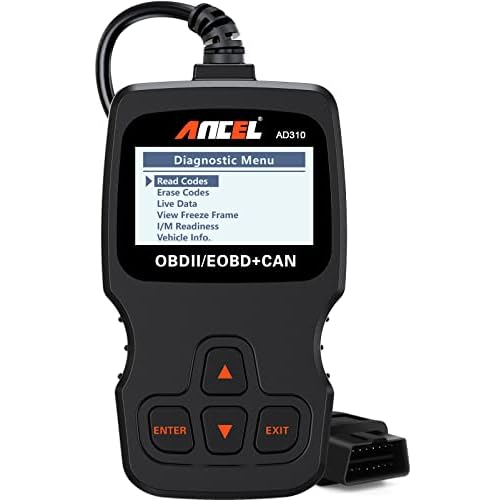
If you lack a scanner, some auto parts stores offer free code reading and clearing. Alternatively, invest in an affordable tool like the ANCEL AD310 OBD-II Scanner, it pays for itself after one avoided diagnostic fee.
Drive Cycle and ECU Memory Reset Explained
After clearing codes, the PCM enters a “not ready” state for emission monitors (catalyst, O2 sensor, EVAP, etc.). To pass state inspection or verify your repair, complete a drive cycle: a specific sequence of idle, acceleration, cruise, and deceleration that exercises all monitored systems.
A typical Ford Escape drive cycle involves idling for two minutes, gentle acceleration to 40–60 mph, steady cruise for five minutes, deceleration without braking, then repeating. Check your scanner’s readiness status: all monitors except EVAP usually set within one or two trips. EVAP may require an overnight cold-soak and fuel level between ¼ and ¾ tank.
Maintenance Practices to Avoid Repeat Issues
Prevent future check engine lights with these habits:
- Change oil every 5,000 miles using synthetic 5W-20 or 5W-30 (consult your owner’s manual). Dirty oil accelerates turbo and VVT component wear.
- Replace spark plugs and coils on schedule: 60,000 miles for EcoBoost engines, 100,000 miles for naturally aspirated 2.5L.
- Use Top Tier gasoline to minimize carbon deposits on intake valves and O2 sensors.
- Inspect and clean the capless fuel filler quarterly: dirt intrusion is the #1 cause of EVAP codes.
- Check coolant and oil levels monthly: low coolant can trigger P0128, while low oil starves the turbo and VVT phasers.
By scanning codes immediately, addressing root causes instead of just clearing lights, and following Ford’s maintenance intervals, you’ll keep your Escape running smoothly and avoid expensive emergency repairs.
Frequently Asked Questions
What does a flashing check engine light mean on a Ford Escape?
A flashing check engine light signals an active, severe misfire that can destroy your catalytic converter within minutes. Pull over immediately and arrange a tow. Continuing to drive risks turning a $150 ignition coil repair into a $1,200+ converter replacement.
How do you diagnose a Ford Escape check engine light with an OBD-II scanner?
Locate the OBD-II port under the driver-side dashboard above the brake pedal. Plug in your scanner with ignition off, turn key to ON, select ‘Read Codes’ to view diagnostic trouble codes (DTCs), then cross-reference the code using free databases like OBD-Codes.com for repair guidance.
What are the most common reasons for a check engine light on Ford Escape?
Common causes include failed oxygen sensors, ignition coil failures (especially on EcoBoost engines), EVAP system leaks from the capless fuel filler seal, dirty mass airflow (MAF) sensors, and thermostat issues. Ford Escape models with 1.5L and 2.0L EcoBoost engines often experience coil failures around 60,000–80,000 miles.
Can you drive a Ford Escape with a solid check engine light?
Yes, a solid check engine light indicates a detected fault affecting emissions or drivability but not severe, real-time engine damage. You can drive short distances to a safe location, scan the code, and schedule a repair within a few days. Never drive with a flashing light.
What does the P0300 code mean on a Ford Escape?
P0300 indicates a random misfire detected across multiple cylinders, often caused by failed ignition coil packs or fouled spark plugs on EcoBoost engines. You’ll feel rough idle, hesitation, and reduced power. Replace all four coils and spark plugs simultaneously to prevent repeat issues.
How often should you replace spark plugs on a Ford Escape with an EcoBoost engine?
Spark plugs on EcoBoost engines should be replaced every 60,000 miles with OEM Motorcraft platinum or iridium plugs gapped to specification. Aftermarket plugs or incorrect gaps cause misfires and can damage ignition coils, so stick to factory replacements.
Read More:
- Ford Check Engine Light (Means and Step-By-Step Diagnosis)
- Dodge Check Engine Light (Quick Codes & Fixes for HEMI & Pentastar)
- Audi Check Engine Light (Meaning, Common Causes and DIY Fix Guide)
- BMW Check Engine Light (Quick Diagnostic Guide to Fix It Fast)
- Chevy Check Engine Light (Means, Root Causes & How to Fix It)