
Your Ford F-150’s dashboard just lit up with that dreaded amber engine icon. You’re halfway to a job site, mid-tow, or simply merging onto the highway when panic sets in.
A Ford F-150 check engine light signals that your truck’s onboard computer has detected a fault, ranging from a loose fuel cap or failed oxygen sensor to ignition coil misfires, EVAP purge valve errors, or EcoBoost cam phaser timing issues, and you can retrieve the specific diagnostic trouble code (DTC) using an inexpensive OBD2 scanner, then decide whether it’s a quick DIY fix or requires immediate professional attention, especially if the light is flashing and indicates an active engine misfire that risks catalytic converter damage.
This guide breaks down every common culprit behind your F-150’s check engine light, walks you through code retrieval and interpretation, and shows you exactly when you can safely drive versus when you need to pull over and call for help.
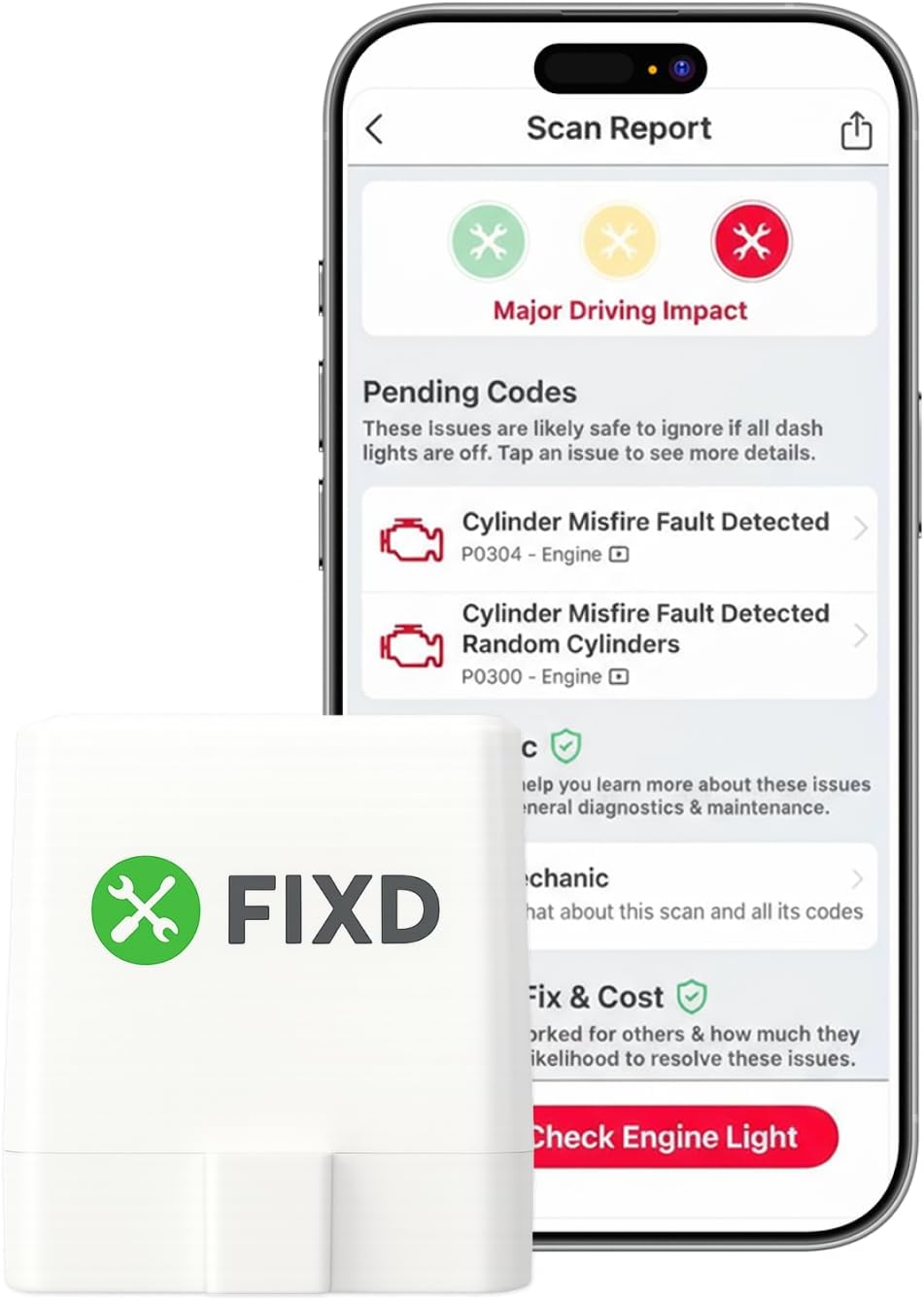
Best Bluetooth OBD2 Scanner
Detect 39,000+ Issues With Enhanced Codes. Save $1000s on car repairs & buying used vehicles by diagnosing problems yourself.
Shop on Amazon
Key Takeaways
- A Ford F-150 check engine light indicates your engine control unit (ECU) has detected a fault—retrieve the specific diagnostic trouble code using an OBD2 scanner to determine whether it’s a quick fix or requires professional help.
- A flashing check engine light signals an active engine misfire and demands immediate attention to prevent catalytic converter damage, while a solid light allows safe driving to a mechanic or auto parts store.
- The most common causes of a Ford F-150 check engine light are misfires from failed spark plugs or ignition coils, dirty MAF sensors, failing oxygen sensors, and EVAP system leaks from the capless fuel neck seal.
- After repairs, clear codes with an OBD2 scanner and complete a full drive cycle (cold start, idle, 40–60 mph cruise, and deceleration) to ensure all emissions monitors are ready and prevent inspection failures.
- Prevent future check engine light issues by changing oil every 5,000 miles on EcoBoost engines, replacing air filters every 15,000–20,000 miles, using Top Tier gasoline, and inspecting the capless fuel neck seal annually.
- Simple fixes like spark plugs, O2 sensors, and EVAP purge valves typically cost $50–$300 in parts, while major repairs like cam phasers or catalytic converters can exceed $1,500 at a dealership.
Understanding the Ford F-150 Check Engine Light
How the Malfunction Indicator Lamp Works
Your F-150’s Malfunction Indicator Lamp (MIL), that amber engine symbol, connects directly to the Engine Control Unit (ECU). The ECU monitors dozens of sensors across your powertrain, emissions, and fuel systems. When sensor readings fall outside preprogrammed parameters, the ECU logs a diagnostic trouble code (DTC) and illuminates the light. Think of it as your truck’s way of saying “I detected something wrong, and here’s the code to prove it.”
The system runs continuous background checks on oxygen sensors, mass airflow (MAF) sensors, throttle position, fuel trims, and ignition timing. Ford F-150s, especially EcoBoost models, rely heavily on variable valve timing (VVT) actuators, turbocharger wastegate controls, and evaporative emission (EVAP) components.
Any hiccup in these subsystems triggers immediate code storage. Modern F-150s (2015 and newer) use OBD-II protocols, making code retrieval straightforward with a handheld scanner or Bluetooth adapter paired to your smartphone.
Key Differences Between Solid and Flashing Lights
A solid check engine light means your ECU has stored a fault code, but the issue isn’t immediately catastrophic. You can typically drive home or to an auto parts store to scan the code. Common solid-light triggers include a failing oxygen sensor, small EVAP leak (P0456), or a stuck thermostat causing a P0128 low-coolant-temperature code. These faults impact emissions, fuel economy, or long-term reliability but don’t pose immediate danger.
A flashing check engine light is a red alert. It signals an active, severe engine misfire, usually one or more cylinders not firing correctly. Unburned fuel passes into the exhaust, superheating the catalytic converter and risking permanent converter damage (a $1,000+ repair). Pull over immediately if you see a flashing MIL, especially if you notice rough idle, hesitation, or loss of power. Common culprits include failed ignition coil packs, fouled spark plugs, or low compression.
Overview of OBD, ECU, and the Role of Sensors
OBD-II (On-Board Diagnostics, second generation) is the standard diagnostic protocol mandated since 1996. Your F-150’s ECU uses inputs from upstream and downstream oxygen sensors, MAF or MAP sensors, camshaft and crankshaft position sensors, knock sensors, and coolant temperature sensors to adjust fuel injection, spark timing, and valve timing on the fly. EcoBoost engines add complexity with twin turbochargers and direct injection, both sensitive to sensor drift or mechanical wear.
Sensors communicate via voltage or frequency signals. When a sensor fails, say, an O2 sensor sending erratic voltage, the ECU can’t maintain optimal air-fuel ratios, so it switches to “limp mode,” enriches the fuel mixture, and lights the MIL. Ford F-150s also feature an EVAP system that tests fuel-tank vapor sealing: a cracked capless Easy Fuel neck seal or stuck purge valve generates P1450 or P0456 codes. Understanding this chain helps you troubleshoot logically instead of replacing parts at random.
Most Common Reasons for Activation
Misfires and Ignition System Issues
Ignition-related misfires are the top reason Ford F-150 owners see a check engine light. Codes P0300 (random misfire), P0301–P0308 (cylinder-specific misfires), and P0316 (misfire on startup) point to spark plugs, coil packs, or fuel delivery problems. F-150s with the 5.0L Coyote V8 or 3.5L/2.7L EcoBoost V6 use individual coil-on-plug assemblies: a single failed coil leaves that cylinder dead.
Spark plugs on EcoBoost engines typically need replacement every 60,000–80,000 miles due to direct injection and high cylinder pressures. Worn plugs increase electrode gap, causing weak or intermittent spark. Coil packs can fail from heat cycling or oil contamination if valve cover gaskets leak. A quality OBD2 scanner reveals which cylinder is misfiring, letting you swap coils or plugs strategically. Always replace spark plugs in sets to maintain even combustion and idle quality.

Sensor Failures and Air Intake Problems
Mass airflow (MAF) and oxygen (O2) sensor failures are chronic on high-mileage F-150s. The MAF sensor, mounted in the intake tube between the air filter and throttle body, measures incoming air volume. Dirt, oil residue from over-oiled aftermarket filters, or sensor element degradation cause the ECU to miscalculate fuel delivery, triggering lean codes (P0171/P0174) or rich codes (P0172/P0175).
O2 sensors live in the exhaust stream and degrade over time from heat and contaminants. Ford F-150s have upstream (pre-catalytic-converter) and downstream sensors: upstream sensors control fuel trim, while downstream sensors monitor converter efficiency.
A failing upstream O2 sensor skews fuel trims and hurts fuel economy: a bad downstream sensor throws P0420 or P0430 (catalyst efficiency below threshold). Replacing O2 sensors is straightforward with a wrench and penetrating oil, but ensure you buy OEM or quality aftermarket sensors, cheap units fail within months.
“My 2017 F-150 3.5L EcoBoost threw P0171 and P0174. Cleaned the MAF with CRC MAF cleaner, cleared codes, and it’s been fine for 8,000 miles since.” via r/f150
Exhaust and Emission System Faults
Catalytic converter efficiency codes (P0420/P0430) appear when downstream O2 sensors detect insufficient exhaust cleanup. This doesn’t always mean the converter is dead, often, a failing upstream O2 sensor or exhaust leak ahead of the sensor skews readings. True converter failure shows up after extended driving with misfires or oil/coolant consumption, which poisons the catalyst substrate.
Exhaust leaks, cracked manifolds, loose heat shields, or corroded flex pipes, can also trigger O2 sensor codes or P0430. Ford’s truck exhaust manifolds (especially on older 5.4L Triton V8s) are notorious for cracking. Listen for ticking or hissing noises on cold starts. A simple visual inspection or smoke test reveals leaks without expensive diagnostics.
Fuel System and EVAP-Related Causes
EVAP system faults are among the most common yet least understood. The EVAP system captures fuel vapors from the tank and routes them to the engine for combustion. Key components include the purge valve, vent valve, charcoal canister, and capless Easy Fuel filler neck. Code P1450 indicates a stuck-open purge valve, flooding the intake with fuel vapors and causing rough idle or hesitation. P0456 signals a small EVAP leak, often from a cracked capless fuel neck seal or loose/damaged vapor hoses.
The capless Easy Fuel system, standard on 2009+ F-150s, uses a spring-loaded flapper and rubber seal. Dirt, ice, or wear lets vapors escape, setting EVAP codes. Inspect the filler neck for cracks, clean debris, and replace the seal if damaged. Purge valves are inexpensive and mount on or near the intake manifold: replacing one takes 15 minutes with basic hand tools. Always clear codes after the fix and drive through a complete drive cycle to confirm the repair.
Diagnosing and Interpreting Ford Trouble Codes
Retrieving and Decoding DTCs
Pulling codes requires an OBD2 scanner, available for under $30 at any auto parts store or online. Locate the OBD-II port under your dash, left of the steering column. Plug in the scanner, turn the ignition to “ON” (engine off), and follow prompts to read codes. Write down all codes and freeze-frame data, snapshots of engine conditions when the fault occurred.
Ford-specific codes (starting with “P1”) supplement generic OBD-II codes (“P0”). P1450 is Ford shorthand for EVAP purge valve stuck open: P0171 is a generic lean bank 1 code. Free online databases like OBD-Codes.com or manufacturer resources decode every code. Freeze-frame data shows RPM, coolant temp, and load at fault time, critical clues for intermittent issues.
Interpreting Key Codes Like P0171, P0300, and P0420
P0171 (Bank 1 System Too Lean): The ECU added extra fuel to compensate for insufficient air-fuel mixture. Causes include vacuum leaks (intake manifold gaskets, PCV hoses), dirty MAF sensor, weak fuel pump, or clogged fuel filter. Start with a MAF cleaning and visual vacuum-leak inspection before replacing parts.
P0300 (Random Misfire): Multiple cylinders misfire intermittently. Check spark plugs, coil packs, fuel pressure, and compression. Low fuel pressure or a failing fuel pump can starve all cylinders, mimicking ignition failure. EcoBoost engines also throw P0300 if cam phasers rattle due to low oil or worn timing components.
P0420 (Catalyst Efficiency Below Threshold): Either your catalytic converter is failing or an upstream O2 sensor is lying to the ECU. Replace upstream O2 sensors first, they’re cheaper and more likely culprits. If sensors are new and the code persists, the converter may need replacement, though this is rare on trucks under 150,000 miles with proper maintenance.
“Got P0420 on my 2016 F-150 5.0. Swapped both upstream O2 sensors, cleared code, and 10,000 miles later it’s still gone. Saved me $1,200 on a cat replacement.” via r/fordf150
When to Seek Help from a Mechanic
If codes point to cam phaser issues (P0012/P0014/P0016), internal engine faults, or transmission-related codes, visit a professional. EcoBoost cam phaser replacement requires timing chain removal, well beyond typical DIY scope. Flashing check engine lights with multiple misfire codes and rough running demand immediate towing: catalytic converter damage escalates fast.
A trusted mechanic can perform compression tests, leak-down tests, and advanced fuel-system diagnostics that handheld scanners can’t. Always get a second opinion if a shop quotes catalytic converter replacement without first checking O2 sensors and exhaust leaks.
How to Reset and Prevent Future Warnings
Resetting the Check Engine Light After Fixes
After repairs, clear codes using your OBD2 scanner’s “Erase Codes” function. Alternatively, disconnect the negative battery terminal for 10–15 minutes to reset the ECU, though this also clears radio presets and adaptive learning. Modern F-150s relearn idle and fuel trims within a few drive cycles. If the light returns immediately, the underlying fault persists: recheck your repair or investigate additional fault codes.
Some emissions-related codes require a complete drive cycle, a specific sequence of idle, acceleration, cruise, and deceleration, before the monitor sets to “Ready.” Your state’s emission inspection won’t pass until all monitors show ready status. Consult your owner’s manual or online Ford drive-cycle guides for the exact procedure.
Drive Cycles and Ensuring a Proper Reset
A Ford drive cycle typically involves: cold start (coolant below 122°F), idle for 2–3 minutes, steady 40–60 mph cruise for 5+ minutes, deceleration without braking, and a final idle period. This sequence allows the ECU to test EVAP, catalyst, O2 sensor, and misfire monitors. If a monitor doesn’t complete, check for pending codes or incomplete repairs.
Short trips and city driving prevent monitors from completing. Plan a 20-minute highway drive after clearing codes to expedite readiness. If monitors remain incomplete after multiple cycles, suspect an ongoing intermittent fault or failed component preventing the test from running.
Routine Maintenance Tips to Avoid Recurrence
Prevent check engine lights with regular oil changes (every 5,000 miles for EcoBoost engines), quality fuel, and timely spark plug replacement. Use Top Tier gasoline to reduce carbon buildup on intake valves and injectors. Inspect the capless fuel neck seal annually, dirt and ice cause 80% of EVAP leaks. Replace air filters every 15,000–20,000 miles to protect the MAF sensor.
Monitor coolant and oil levels closely on EcoBoost trucks: low oil triggers cam phaser codes and accelerates turbocharger wear. Address oil leaks immediately and use the correct viscosity (5W-30 or 5W-20 per your owner’s manual). Proactive maintenance costs far less than emergency repairs and keeps your F-150 reliable for the long haul.
Understanding Repair Costs and Emission Tests
Simple fixes, spark plugs, ignition coils, O2 sensors, EVAP purge valves, range from $50 to $300 in parts plus a few hours of DIY labor. MAF sensors run $80–$150: capless fuel neck seals are under $20. Professional diagnosis typically costs $100–$150 for a full scan and inspection. Major repairs like cam phasers, catalytic converters, or fuel pumps can exceed $1,500 at a dealership but often cost half that at independent shops.
Most states require passing an OBD-II emissions test for registration renewal. A check engine light or incomplete monitors trigger automatic failure. Clear codes, complete drive cycles, and confirm all monitors are ready before your inspection appointment. Keep repair receipts and code printouts, some states offer grace periods or waivers if you’ve invested in good-faith repairs.
Frequently Asked Questions
What does the Ford F-150 check engine light mean?
The check engine light signals your F-150’s Engine Control Unit (ECU) has detected a fault code—ranging from a loose fuel cap to oxygen sensor failure, ignition coil misfires, or EVAP issues. Use an OBD2 scanner to retrieve the specific diagnostic trouble code (DTC) and determine if it’s a quick fix or requires professional attention.
What’s the difference between a solid and flashing check engine light on my F-150?
A solid check engine light indicates a stored fault code that isn’t immediately catastrophic; you can typically drive safely to diagnose. A flashing light signals an active engine misfire, risking catalytic converter damage. Pull over immediately with a flashing light and avoid driving until repaired.
What are the most common reasons for a Ford F-150 check engine light?
Top causes include ignition coil pack or spark plug failure (P0300/P0301-P0308 codes), oxygen sensor degradation (P0171/P0420), MAF sensor contamination, EVAP system leaks or stuck purge valves (P0456/P1450), and exhaust system faults. EcoBoost engines add cam phaser and turbocharger issues to this list.
How do I retrieve and interpret Ford F-150 diagnostic trouble codes?
Purchase an inexpensive OBD2 scanner (under $30), locate the OBD-II port left of your steering column, and plug it in with the engine off. The scanner displays all codes and freeze-frame data. Online databases like OBD-Codes.com decode Ford-specific codes (P1) and generic codes (P0) to identify the exact problem.
Can I drive my F-150 with a check engine light on?
Yes, if the light is solid and your truck runs normally, you can drive to a mechanic or auto parts store to scan codes. If the light is flashing, rough idle occurs, or you lose power, pull over immediately. Flashing lights indicate active misfires that can destroy your catalytic converter within miles.
What’s the best way to reset the check engine light after repairs?
Use your OBD2 scanner’s ‘Erase Codes’ function to clear codes after repairs. Then complete a full drive cycle—cold start, 2-3 min idle, 5+ min at 40-60 mph cruise, deceleration, and final idle—to allow ECU monitors to reset. If the light returns immediately, the underlying fault persists and needs further investigation.
Read More:
- Ford Check Engine Light (Means and Step-By-Step Diagnosis)
- Ford Escape Check Engine Light (Quick Diagnostic Guide for DIY Owners)
- Ford Focus Check Engine Light (Here’s the Fixes You Can Do Today)