
That orange glow on your Ford Fusion’s dashboard is impossible to ignore. It’s the check engine light, and whether it’s solid or flashing, it’s triggered a cascade of questions: Is my car safe? What’s broken? How much will this cost?
The Ford Fusion check engine light activates when the onboard diagnostics (OBD-II) system detects a fault in the emissions, ignition, fuel, or sensor systems, common triggers include loose gas caps, EVAP purge valve failures (P1450), oxygen sensor faults, ignition coil misfires (especially on 1.5L and 2.0L EcoBoost models), and capless Easy Fuel filler neck seal leaks. A solid light means the issue is present but not critical: a flashing light signals active engine misfire requiring immediate attention to prevent catalytic converter damage.
The good news? Most Fusion check engine lights stem from simple, inexpensive fixes you can diagnose yourself with a basic OBD2 scanner. This guide walks you through the most common causes, how to read trouble codes, and when you can safely reset the light versus when you need professional help.
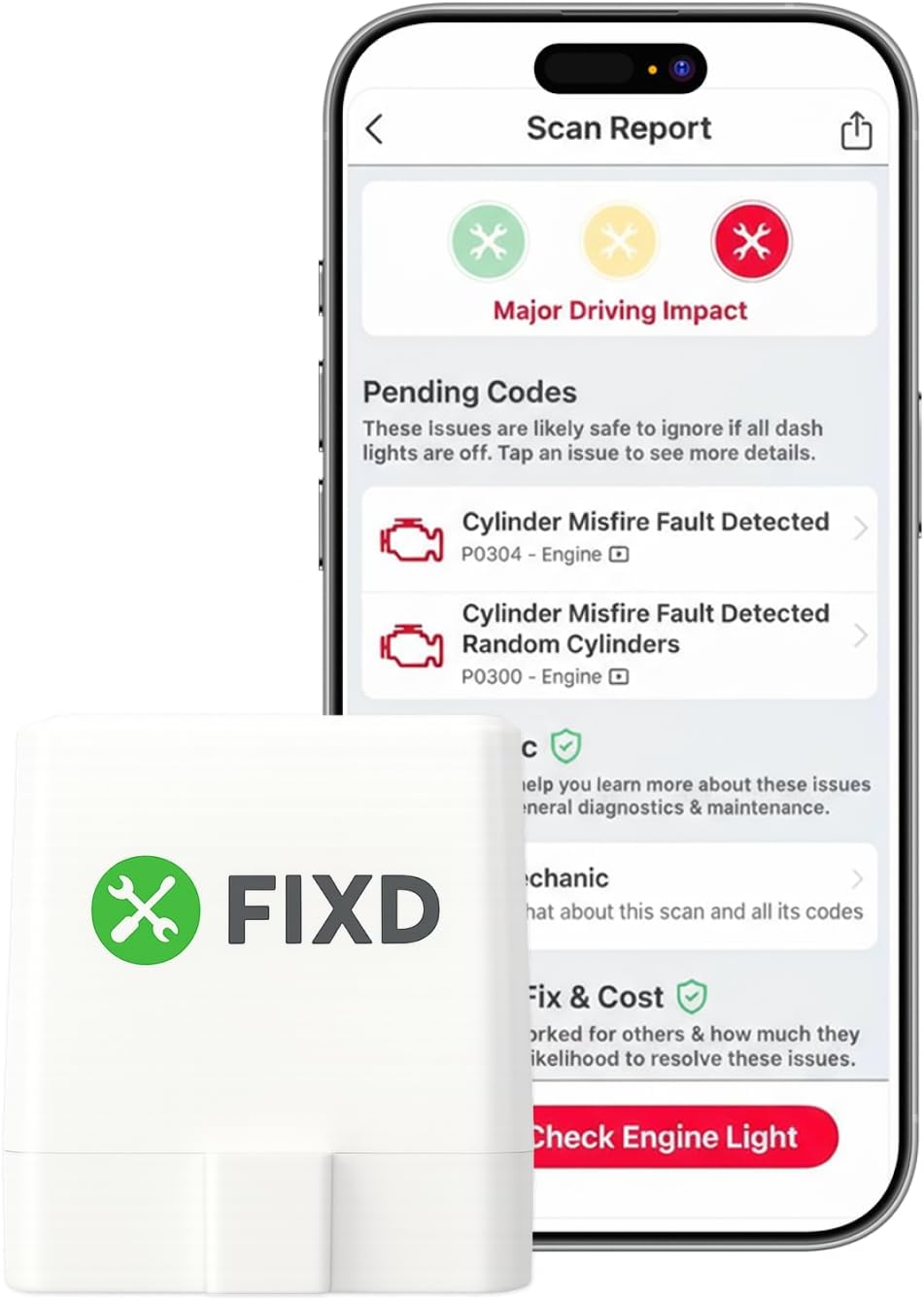
Best Bluetooth OBD2 Scanner
Detect 39,000+ Issues With Enhanced Codes. Save $1000s on car repairs & buying used vehicles by diagnosing problems yourself.
Shop on Amazon
Key Takeaways
- A Ford Fusion check engine light signals fault detection by the OBD-II system; a solid light allows cautious driving, while a flashing light indicates active misfire requiring immediate attention to prevent catalytic converter damage.
- The most common cause of a Ford Fusion check engine light is a loose or damaged gas cap, followed by EVAP purge valve failures and oxygen sensor faults, many of which you can diagnose and fix yourself with a basic OBD2 scanner.
- Ignition coil failures are prevalent on EcoBoost models (1.5L and 2.0L), producing misfire codes P0301–P0304; replacing all four coils and spark plugs together with OEM Motorcraft parts prevents repeat failures.
- Reading diagnostic trouble codes (DTCs) with a Bluetooth OBD2 scanner like BlueDriver reveals the exact cause, allows you to access freeze-frame data, and helps you determine whether a DIY fix or professional service is needed.
- Preventive maintenance—including Top Tier gasoline, timely spark plug replacement every 60,000 miles, annual Easy Fuel filler neck inspection, and prompt code resolution—stops minor issues from escalating into expensive repairs like catalytic converter replacement.
Introduction
What the Check Engine Light Means in a Ford Fusion
Your Fusion’s check engine light is the dashboard icon that looks like an engine outline. It’s part of the OBD-II (On-Board Diagnostics, version 2) system mandated on all vehicles sold in the U.S. since 1996. When the powertrain control module (PCM) detects a fault that affects emissions or drivability, it logs a diagnostic trouble code (DTC) and illuminates the light.
The system continuously monitors dozens of sensors, oxygen sensors, mass airflow, throttle position, camshaft position, and more, looking for readings outside normal parameters.
Ford Fusions across all generations (2006–2012, 2013–2020, and hybrid/plug-in variants) share similar OBD-II architecture, but each powertrain has quirks. The 1.5L and 2.0L EcoBoost engines are prone to ignition coil failures and turbocharger-related codes. The 2.5L Duratec sees EVAP system issues and thermostat rationality codes (P0128). Hybrid and Energi models add battery management and electric motor codes to the mix.
Differences Between Solid and Flashing Lights
A solid check engine light means the PCM has stored a fault code, but the issue isn’t immediately damaging the engine. You can typically continue driving, cautiously, while you arrange a diagnostic scan. Common solid-light triggers include a loose gas cap, minor EVAP leak, failing oxygen sensor, or thermostat stuck open.
A flashing check engine light is urgent. It indicates an active misfire severe enough to send unburned fuel into the exhaust, which can overheat and destroy the catalytic converter within minutes. Pull over safely, let the engine idle or shut it off, and arrange a tow or very gentle drive to a repair facility. On EcoBoost Fusions, flashing lights often accompany P0300-series misfire codes caused by failed ignition coils or fouled spark plugs.
Role of the Onboard Diagnostics System
The OBD-II system runs continuous self-tests called monitors. Drive cycles, specific sequences of city and highway driving, allow the PCM to verify catalyst efficiency, EVAP integrity, oxygen sensor response, and more. When a sensor reading falls outside acceptable limits for two consecutive drive cycles, the PCM sets a “pending” code: if the fault persists, it becomes a “confirmed” code and triggers the light.
The system also performs readiness monitors. After you clear codes or disconnect the battery, these monitors reset to “not ready.” You’ll need to complete a full drive cycle, typically 50–100 miles of mixed driving, before all monitors report “ready” again. This matters for emissions testing in states that require it.
Common Symptoms Associated With the Warning
Beyond the dashboard icon, you might notice:
- Rough idle or hesitation: Misfires, dirty mass airflow sensors, or vacuum leaks disrupt combustion.
- Reduced fuel economy: A failing oxygen sensor can cause the PCM to run rich, burning extra fuel.
- Hard starting or stalling: Cam/crank position sensor faults confuse ignition timing.
- Loss of power: Boost pressure issues on EcoBoost models, or a clogged catalytic converter restricting exhaust flow.
- Smell of raw fuel: EVAP purge valve stuck open floods the intake with vapor.
Sometimes you’ll feel nothing unusual, the light appears because of an intermittent sensor glitch or a small EVAP leak detected during a parked purge test. That’s why reading the actual code is essential before you panic or spend money.
Most Frequent Causes
Loose Gas Cap and Evaporative Emission Leaks
The single most common trigger across all Ford Fusions is a loose, damaged, or missing gas cap. The EVAP system keeps fuel vapors sealed inside the tank and routes them to the engine for combustion. A loose cap allows vapor to escape, triggering codes like P0456 (small EVAP leak) or P0457 (loose cap detected). Tighten the cap until it clicks three times, then drive 20–50 miles to see if the light clears on its own.
Ford’s capless Easy Fuel filler neck, introduced on second-generation Fusions, uses a spring-loaded flapper door and rubber seal. Over time, dirt, ice, or debris can prevent the seal from closing fully, causing a persistent small leak. Inspect the filler neck: remove the cap insert, shine a flashlight inside, and look for cracks, dirt buildup, or a torn seal. Replacement Easy Fuel capless adapters run $30–60 and snap in without tools.

Another notorious culprit is the EVAP purge valve (canister purge solenoid). On many Fusions, code P1450 indicates the purge valve is stuck open, flooding the intake manifold with fuel vapors and causing rough idle, stumbling, or a strong fuel smell. The valve sits on the firewall or intake manifold and costs $25–50. Replacement takes 10 minutes: unplug the electrical connector, release the hose clamps, swap the valve, and clear the code.
Sensor Failures (Oxygen, Mass Airflow, Camshaft Position)
Oxygen (O2) sensors monitor exhaust gas composition upstream and downstream of the catalytic converter. Codes P0131, P0132, P0135 (Bank 1 Sensor 1) or P0141 (Bank 1 Sensor 2) indicate heater circuit failures or lazy sensor response. Expect $50–150 per sensor: front (upstream) sensors fail more often due to heat exposure. Use an OBD2 scanner to confirm which bank and sensor before buying parts.
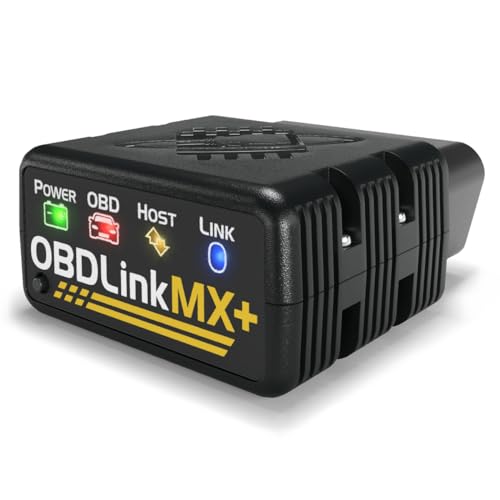
The mass airflow (MAF) sensor measures intake air volume. A dirty or failing MAF triggers P0171 (system too lean) or P0101 (MAF performance). Before replacing it ($80–200), try cleaning the delicate sensing wire with MAF-specific cleaner spray, never touch the wire with your fingers or compressed air.
Camshaft and crankshaft position sensors tell the PCM when to fire spark plugs and injectors. Codes P0340, P0341 (CMP sensor) or P0335, P0336 (CKP sensor) cause no-start or stalling. These sensors live in harsh, high-vibration zones: replacement runs $40–100 each.
Ignition and Fuel System Issues
EcoBoost Fusions, especially 1.5L and 2.0L turbocharged models, are infamous for ignition coil failures. The coil-on-plug design places each coil directly atop a spark plug, exposed to extreme heat and vibration. When a coil fails, you’ll see P0301, P0302, P0303, or P0304 (cylinder-specific misfire) or P0300 (random misfire). The check engine light may flash under acceleration.
“2014 Fusion 1.5 EcoBoost, 80k miles. Flashing CEL, rough idle, P0303 code. Swapped coil pack on cylinder 3 with cylinder 1, misfire followed the coil. $35 Motorcraft coil fixed it.” via r/fordfusion
Replace all four coils and spark plugs together ($200–300 DIY) to avoid repeat failures. Use OEM Motorcraft coils: cheap aftermarket units fail within months.
Fuel injector clogging or leaks trigger P0171, P0174 (lean codes) or cylinder-specific misfire codes. Run a quality fuel-system cleaner like Chevron Techron through a full tank every 5,000 miles to prevent buildup.
Catalytic Converter and Emissions-Related Faults
Code P0420 (catalyst efficiency below threshold, Bank 1) or P0430 (Bank 2) means the catalytic converter isn’t cleaning exhaust gases as designed. This can stem from a genuinely worn-out cat ($800–1,500 installed) or false triggers from failing oxygen sensors. Always replace faulty O2 sensors first and retest before replacing the converter.
P0128 (coolant thermostat rationality) is common on 2.5L Duratec and early EcoBoost models. A thermostat stuck open prevents the engine from reaching normal operating temperature, reducing fuel economy and triggering the light. The integrated thermostat housing (includes sensor and gasket) costs $60–120 and bolts onto the engine block, budget 1–2 hours for replacement and coolant refill.
EcoBoost engines with coolant intrusion into cylinders (head gasket or block porosity issues) will throw multiple misfire codes alongside P0128 or overheating warnings. Check your oil dipstick: milky, foamy oil or a sweet coolant smell in the crankcase means internal coolant leak, stop driving immediately and seek professional diagnosis.
Reading Trouble Codes
Using an OBD-II Scanner
The OBD-II diagnostic port on your Fusion hides under the dashboard, left of the steering column, near the hood release or fuse panel. It’s a trapezoid-shaped 16-pin connector. Plug in your scanner with the ignition off, then turn the key to “ON” (engine off). The scanner powers up and connects to the PCM.
Entry-level code readers ($25–50) display codes and definitions but offer no live data. Mid-range Bluetooth adapters like the BlueDriver or FIXD pair with your smartphone, provide live sensor readings, freeze-frame data (snapshot of conditions when the code set), and guided repair tips. Professional-grade scanners ($200+) offer bi-directional control and module reprogramming.

Navigate to “Read Codes” or “Scan.” The tool displays alphanumeric DTCs: P codes are powertrain (engine/transmission), B are body, C are chassis, U are network. Most check engine lights stem from P-codes.
Understanding Common Diagnostic Trouble Codes
Here’s a quick-reference table for Fusion owners:
| Code | Description | Typical Cause | DIY Fix? |
|---|---|---|---|
| P0456 | Small EVAP leak | Loose gas cap, filler neck seal | Yes |
| P1450 | Unable to bleed vacuum | EVAP purge valve stuck open | Yes |
| P0171/P0174 | System too lean | Vacuum leak, dirty MAF, low fuel pressure | Moderate |
| P0300–P0304 | Misfire detected | Ignition coils, spark plugs, injectors | Yes (coils/plugs) |
| P0420/P0430 | Catalyst efficiency low | Failed catalytic converter or O2 sensor | Sometimes |
| P0128 | Coolant thermostat | Thermostat stuck open | Moderate |
| P0340/P0335 | Cam/crank sensor | Sensor failure | Moderate |
Write down all codes, pending and confirmed, before clearing them. Freeze-frame data shows RPM, load, coolant temp, and vehicle speed when the fault occurred, helping you recreate conditions during a test drive.
Ford-Specific Codes and Their Meanings
Ford uses manufacturer-specific codes (P1xxx) alongside generic OBD-II codes (P0xxx). P1450 is Ford’s code for “unable to bleed fuel tank vacuum,” almost always pointing to a stuck-open purge valve or a faulty fuel tank pressure sensor. P144C indicates EVAP purge valve performance issues on newer models.
P2196 and P2197 are Ford’s enhanced O2 sensor codes for “stuck rich” or “stuck lean” on Bank 1 Sensor 1, common on Hybrid models due to the start-stop cycling stressing the sensor.
Hybrid and Energi Fusions may show P1A00-series codes for high-voltage battery faults or electric motor issues, these require Ford-specific diagnostics and aren’t DIY-friendly.
Recommended Tools and Resources
For DIY diagnostics, invest in:
- BlueDriver Bluetooth OBD2 scanner ($100): Live data, Ford-specific codes, emissions readiness check, repair reports.
- Basic socket set and spark plug socket: 10mm, 13mm for coils: 5/8″ or 16mm deep socket for plugs.
- Multimeter: Test sensor voltages and continuity.
- Fuel system cleaner: Chevron Techron or BG 44K.
Online resources include FordFusionClub.com forums, where owners share TSBs (Technical Service Bulletins) and recall info, and Ford’s official owner portal, which lists recalls by VIN. YouTube channels like “Ford Boss Me” and “South Main Auto Repair” offer real-world Fusion repair walkthroughs. Always cross-reference codes with Ford’s TSB database, some issues (like early EcoBoost coolant intrusion) have extended warranty coverage even out of bumper-to-bumper warranty.
Fix and Reset
Steps for DIY Diagnosis and Reset
- Scan the code: Use your OBD2 scanner to pull all stored and pending codes. Note freeze-frame data.
- Research the code: Look up each DTC in your scanner app or online. Check forums for Fusion-specific patterns.
- Inspect the obvious: Tighten the gas cap, check for vacuum hose disconnects, look for oil or coolant leaks.
- Test and replace: Swap ignition coils between cylinders to see if the misfire follows: clean the MAF sensor: replace the purge valve.
- Clear the code: Once you’ve fixed the root cause, use the scanner’s “Clear Codes” function. The light should go out immediately.
- Test drive: Complete a full drive cycle (mix of city and highway, including cold start and sustained cruise) to confirm monitors set to “ready” and the code doesn’t return.
If the light returns within a few drive cycles, the repair didn’t address the root cause or a new fault has appeared. Re-scan and compare new codes to the original list.
“Had P0456 on my 2017 Fusion for weeks. Tightened cap, drove 30 miles, light stayed on. Bought a new gas cap ($12 AutoZone). Cleared code, light’s been off for 2,000 miles.” via r/MechanicAdvice
When to Seek Professional Assistance
Head to a mechanic or Ford dealer if:
- The light is flashing (active misfire risk).
- You see multiple unrelated codes (P0300 + P0420 + P0128), suggesting a cascading failure.
- Codes involve the catalytic converter, transmission, or hybrid battery, these require specialized tools and safety precautions.
- You’ve replaced parts but the code returns immediately.
- The car exhibits severe symptoms: overheating, white smoke, loss of power, or oil contamination.
Dealerships charge $100–150 for diagnostics but have access to Ford’s Integrated Diagnostic System (IDS) and TSB lookup. Independent shops often charge $50–80 for a scan and can source aftermarket parts at lower cost.
Preventing Recurring Problems
Stay ahead of check engine lights with these habits:
- Use Top Tier gasoline: Detergent additives prevent injector and intake valve deposits.
- Replace spark plugs every 60,000 miles (or per Ford’s maintenance schedule): Worn plugs stress ignition coils.
- Inspect the Easy Fuel neck annually: Clean debris, check the seal, replace if cracked.
- Change engine oil on time: Sludge and varnish clog variable cam timing solenoids, triggering codes.
- Address codes promptly: A small EVAP leak today can become a failed purge valve tomorrow: ignoring a misfire destroys the catalytic converter.
- Keep coolant fresh: Flush every 100,000 miles to prevent thermostat corrosion and sensor fouling.
For EcoBoost owners, consider upgrading to an upgraded ignition coil set with higher voltage output, it reduces misfire risk and improves cold-start performance, especially in northern climates.
By understanding your Fusion’s common fault patterns and keeping a scanner in the glove box, you’ll transform that orange dashboard glow from a source of panic into a straightforward maintenance checklist.
Frequently Asked Questions
What causes a Ford Fusion check engine light to appear?
The check engine light activates when the OBD-II system detects faults in emissions, ignition, fuel, or sensor systems. Common causes include loose gas caps, EVAP purge valve failures, oxygen sensor faults, ignition coil misfires on EcoBoost models, and capless filler neck seal leaks.
Is a flashing check engine light more serious than a solid one?
Yes. A solid light indicates a non-critical fault; a flashing light signals active engine misfire requiring immediate attention. Flashing lights can damage the catalytic converter within minutes, so pull over safely and avoid driving to a repair facility.
How do I read Ford Fusion check engine light codes myself?
Use an OBD-II scanner plugged into the diagnostic port under the steering column. Mid-range Bluetooth scanners like BlueDriver provide live data and Ford-specific codes. Write down all codes and freeze-frame data before clearing them to help identify the root cause.
Can I reset a Ford Fusion check engine light without fixing the problem?
You can clear the code using a scanner, but the light will return if the underlying issue isn’t resolved. Address the root cause first—whether it’s tightening a gas cap, replacing ignition coils, or fixing an EVAP leak—then clear the code.
What is the most common check engine light code on Ford Fusions?
P0456 (small EVAP leak) is the most frequent, usually triggered by a loose gas cap. Other common codes include P1450 (EVAP purge valve stuck open), P0300-P0304 (misfires), and P0171/P0174 (system too lean). Each requires different diagnostics and repairs.
How much does it cost to fix a Ford Fusion check engine light?
Costs vary widely: a loose gas cap is free to tighten; EVAP purge valves cost $25–50; oxygen sensors run $50–150 each; ignition coil replacements are $200–300 DIY; catalytic converters cost $800–1,500. Diagnostics at a dealer are $100–150, independents charge $50–80.
Read More:
- Ford Check Engine Light (Means and Step-By-Step Diagnosis)
- Ford Escape Check Engine Light (Quick Diagnostic Guide for DIY Owners)
- Ford F150 Check Engine Light (Here’s the Quick Fixes & Code Guide)
- Ford Focus Check Engine Light (Here’s the Fixes You Can Do Today)