
That amber glow on your Sierra’s dash just changed your day. Whether you’re towing a trailer to the job site or cruising at highway speed, the check engine light creates immediate uncertainty about reliability and repair costs.
The GMC Sierra check engine light signals that your truck’s powertrain control module (PCM) detected an emissions or engine performance issue, ranging from a loose gas cap to Active Fuel Management lifter failure, and requires OBD-II scanning to pinpoint the exact diagnostic trouble code (DTC) before you determine whether it’s safe to drive or demands immediate repair.
Understanding what triggers that warning and how to respond keeps your Sierra running strong and prevents minor issues from escalating into expensive repairs.
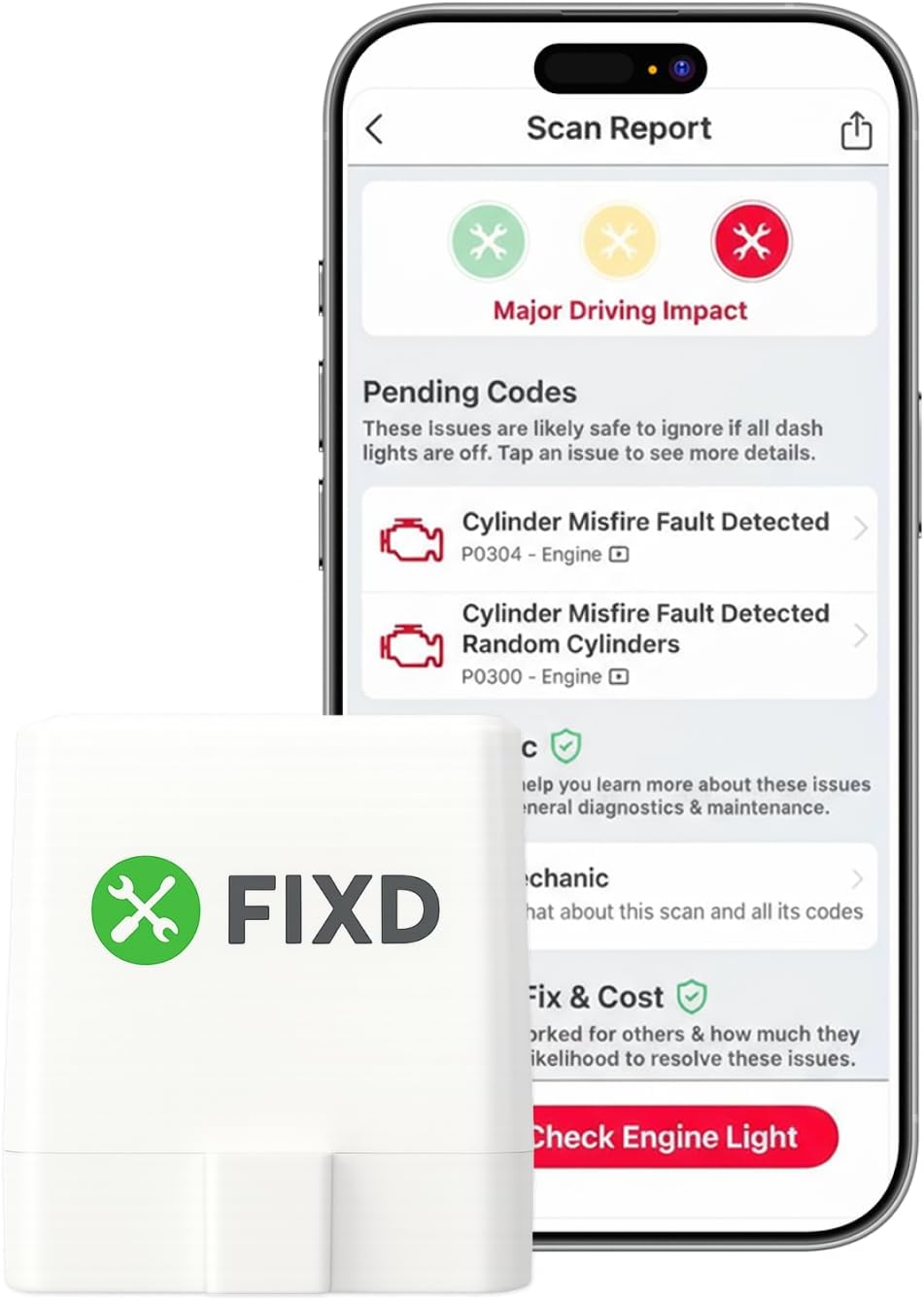
Best Bluetooth OBD2 Scanner
Detect 39,000+ Issues With Enhanced Codes. Save $1000s on car repairs & buying used vehicles by diagnosing problems yourself.
Shop on Amazon
Key Takeaways
- A GMC Sierra check engine light signals that your truck’s powertrain control module detected an emissions or performance issue—use OBD-II scanning to identify the exact diagnostic trouble code before determining if it’s safe to drive.
- A solid check engine light allows cautious driving; a flashing light indicates active misfires that can damage your catalytic converter within minutes and requires immediate pulling over and towing.
- Common causes of the GMC Sierra check engine light include faulty oxygen sensors, loose gas caps, catalytic converter issues, mass airflow sensor contamination, and spark plug or ignition coil problems.
- Always start diagnosis by checking your gas cap—tightening it or replacing it if cracked often resolves EVAP codes without additional repair costs.
- Professional diagnosis is essential for AFM/DFM lifter failure, Duramax diesel codes, and transmission-related faults, as DIY repairs risk costly damage and misdiagnosis.
- Only clear the check engine light after confirming repairs are complete, since erasing codes eliminates freeze-frame data that mechanics need to pinpoint the root cause of intermittent problems.
What Does the GMC Sierra Check Engine Light Mean?
Your Sierra’s check engine light connects directly to the PCM, which continuously monitors dozens of sensors across the EcoTec3 V8, 2.7L Turbo, or Duramax Diesel engine. When sensor readings fall outside acceptable parameters, the PCM logs a fault code and illuminates that warning.
A solid light indicates the system detected an issue but the truck remains drivable. A flashing check engine light signals active cylinder misfires that can damage your catalytic converter within minutes, pull over immediately if you see it blinking.
Many Sierra owners notice the light accompanied by “StabiliTrak Off” and “Traction Control Off” warnings. That’s normal, when the PCM enters failsafe mode, it disables stability systems to prevent conflicting interventions. You’ll also see reduced throttle response and limited towing capacity until you clear the fault.
The PCM stores codes even after the light turns off. That history helps technicians spot intermittent problems like AFM lifter collapse or EVAP leaks that only appear under specific conditions.
Most Common Causes of a Check Engine Light in GMC Sierra
Faulty Oxygen Sensor
Oxygen sensors measure exhaust gas composition to adjust fuel trim. The 5.3L and 6.2L EcoTec3 engines use four O2 sensors, two upstream (pre-cat) and two downstream (post-cat). When one fails, you’ll see codes P0131, P0151, P0161, or P0171.
Symptoms include rough idle, reduced fuel economy, and sluggish acceleration. Cold starts may run rich, leaving a sulfur smell. Upstream sensor failure affects fuel delivery, while downstream sensors impact emissions monitoring. Sierra 1500 models from 2014–2019 commonly throw O2 codes around 80,000 miles.
Replacement requires a 22mm O2 sensor socket and anti-seize compound. Always replace sensors in pairs (both upstream or both downstream) to maintain balanced readings. Confirm wiring harness integrity before installing new sensors, rodent damage often mimics sensor failure.
Loose or Damaged Gas Cap
The EVAP system maintains a sealed fuel tank to prevent vapor leaks. A loose, cracked, or missing gas cap triggers codes P0442 (small leak) or P0455 (large leak). This gmc sierra gas cap evap leak fix ranks as the simplest check engine light cause.
You’ll hear a hissing sound when removing the cap if the seal failed. Inspect the rubber gasket for cracks or hardening. Aftermarket caps often lack proper venting, causing pressure buildup. Always use an OEM-spec cap with the correct valve configuration for your model year.
Tighten the cap until it clicks three times. The light may stay on for 20–40 miles while the PCM runs EVAP self-tests. If the code returns, inspect the charcoal canister and purge valve for cracks.
Catalytic Converter Issues
Catalytic converters reduce NOx and hydrocarbon emissions. Code P0420 (Bank 1) or P0430 (Bank 2) indicates efficiency below threshold. Your Sierra has one cat per exhaust bank on V8 models, positioned just behind the manifolds.
Failed cats cause rattling sounds, sulfur odor, and severe power loss during acceleration. Internal substrate breakage creates backpressure that chokes the engine. Most failures stem from prolonged misfires that overheat the catalyst, melting the honeycomb structure.
Duramax diesel owners see different codes, P2002 indicates DPF (diesel particulate filter) restriction. Forced regeneration cycles clear accumulated soot, but repeated codes mean physical DPF replacement. This gmc sierra catalytic converter error code repair costs vary widely depending on whether you need OEM or aftermarket parts.
Mass Airflow Sensor Failure
The MAF sensor measures incoming air volume to calculate fuel injection timing. Codes P0101, P0102, or P0103 point to MAF issues. Your truck may idle fine but stumble during acceleration or stall when releasing the throttle.
Contaminated sensor elements cause false readings. Oil from over-oiled aftermarket air filters commonly coats the hot-wire element. Cleaning with MAF-specific cleaner (never brake cleaner) restores function in 60% of cases.
The sensor sits between your air filter and throttle body. Remove the two Torx screws, disconnect the harness, and spray the element from 6 inches away. Let it air-dry for 10 minutes before reinstalling. If codes persist, replacement becomes necessary.
Spark Plug and Ignition Coil Problems
Misfires trigger codes P0300 (random) or P0301–P0308 (cylinder-specific). Active Fuel Management systems in 5.3L engines create unique failure patterns. When AFM lifters collapse, you’ll see this gmc sierra afm dfm lifter misfire code alongside rough idle and ticking sounds.
Coil-on-plug ignition means each cylinder has a dedicated coil. When one fails, you feel a distinct vibration at idle and see reduced power. Swap the suspect coil with another cylinder, if the misfire code follows the coil, you’ve confirmed the diagnosis.
Spark plugs should be replaced every 100,000 miles on EcoTec3 engines. Use ACDelco 41-110 iridium plugs gapped to 0.040″. Torque to 11 ft-lbs using a 5/8″ spark plug socket. Over-torquing cracks the porcelain insulator and causes immediate misfires.
How to Diagnose Your GMC Sierra Check Engine Light
Start with an OBD-II scanner to pull stored codes. Basic code readers cost $25–$50, but I recommend the BlueDriver Bluetooth Pro OBDI Scanner because it provides Sierra-specific code definitions and freeze-frame data showing exact conditions when the fault occurred.

Plug the scanner into the OBD port under your steering column, left of the brake pedal. Turn the ignition to “On” without starting the engine. The scanner pulls active and pending codes within 10 seconds. Write down all codes, multiple faults often share a root cause.
Freeze-frame data reveals engine RPM, coolant temperature, fuel trim, and throttle position when the code set. A misfire at 3,200 RPM under load points to spark plugs or coils. The same code at idle suggests vacuum leaks or AFM lifter issues.
For persistent issues, use a scan tool with live data graphing. Watch oxygen sensor voltage switch between 0.1V and 0.9V, sluggish response indicates sensor aging. Long-term fuel trim beyond ±10% signals air leaks or MAF problems.
“My 2015 Sierra threw P0300, P0305, and P0307 after the AFM kicked in during highway cruising. Scanned with my Autel and saw lifter collapse on cylinders 5 and 7. Disabler kit fixed it permanently.” via GM-Trucks.com Forum
What to Do When the Check Engine Light Comes On
First, assess whether the light is solid or flashing. A solid light means continue driving cautiously and scan codes soon. Check your gas cap immediately, tighten it and see if the light clears after your next drive cycle.
If the light flashes, you’re experiencing active misfires. Continued driving melts your catalytic converter and racks up damage. Pull over safely, shut down the engine, and arrange towing. That gmc sierra flashing check engine light loss of power scenario demands immediate attention.
Monitor your truck’s behavior. If you lose significant power, hear knocking sounds, or see transmission temperature warnings, stop driving. The PCM may limit torque to protect drivetrain components, leaving you stranded on the highway.
For solid lights without performance changes, you can drive to a parts store for free code scanning. Many advance auto and AutoZone locations offer this service. But, free scans only read codes, they don’t interpret freeze-frame data or provide Sierra-specific guidance.
“Check engine light and StabiliTrak warning hit simultaneously on my 2500HD Duramax. Turned out to be a bad DEF quality sensor (P20EE). Refilled with fresh DEF and cleared codes, problem solved.” via DuramaxForum.com
Record all symptoms, when the light appeared, driving conditions, ambient temperature, and recent repairs. This information helps mechanics diagnose intermittent faults that don’t appear during shop testing.
How to Reset the Check Engine Light on a GMC Sierra
Clearing codes requires an OBD-II scanner with reset capability. Connect your scanner, navigate to “Erase Codes” or “Clear DTCs,” and confirm. The light extinguishes immediately, but the PCM needs 50–100 miles of mixed driving to complete all readiness monitors.
Disconnecting the battery clears codes but erases radio presets, seat memory, and adaptive transmission learning. If you choose this method, remove the negative terminal for 15 minutes, then reconnect and let the truck idle for 5 minutes to relearn idle parameters.
Don’t clear codes before diagnosis. You’ll lose valuable freeze-frame data that pinpoints failure conditions. Only reset after confirming repairs or if you’re testing whether an intermittent issue returns.
Some states require complete readiness monitors for emissions testing. Clearing codes sets all monitors to “Not Ready,” requiring a drive cycle that includes city, highway, and idle conditions. Check your state’s emissions requirements before clearing codes near inspection time.
When to See a Mechanic for Your GMC Sierra Check Engine Light
Certain codes demand professional diagnosis. AFM/DFM lifter failure (P0300 with mechanical ticking) requires cylinder head disassembly. Attempting DIY repair risks dropping valve springs into the crankcase. Dealerships charge $2,500–$4,500 for lifter replacement, while independent shops run $1,800–$3,200.
Duramax diesel codes related to DPF, DEF, or turbocharger systems need specialized scan tools that command regeneration cycles and actuator tests. That gmc sierra duramax diesel check engine light complexity exceeds most DIY capabilities.
Transmission codes (P0700, P0717, P0777) often interact with engine management. When you see simultaneous powertrain codes, professional diagnosis prevents replacing parts that aren’t actually failed.
If you’ve replaced multiple components without resolving the issue, stop. You’re likely chasing symptoms rather than root causes. A good technician uses factory scan tools to run bi-directional tests, actuating solenoids and sensors to isolate failures.
Choose ASE-certified technicians with GM training. Generic shops often misdiagnose AFM issues as simple misfires, leading to unnecessary spark plug and coil replacements. Verify the shop has access to GM Technical Service Bulletins (TSBs) covering your model year, many check engine light issues have documented fixes.
Frequently Asked Questions
What does the GMC Sierra check engine light mean?
The check engine light signals your truck’s PCM detected an emissions or engine performance issue. A solid light means the truck is drivable, but a flashing light indicates active misfires that can damage your catalytic converter—pull over immediately if it’s flashing.
What are the most common causes of check engine light in a GMC Sierra?
The most common causes include faulty oxygen sensors, loose or damaged gas caps, catalytic converter issues, mass airflow sensor failure, and spark plug or ignition coil problems. Each triggers specific diagnostic trouble codes (DTCs) that an OBD-II scanner can identify.
How do I diagnose a GMC Sierra check engine light?
Use an OBD-II scanner to pull stored codes from the PCM. Review freeze-frame data showing engine RPM, temperature, and throttle position when the fault occurred. A dedicated scanner like BlueDriver provides Sierra-specific code definitions for accurate diagnosis.
Can I drive my GMC Sierra with the check engine light on?
A solid check engine light allows cautious driving. However, a flashing light indicates active misfires damaging your catalytic converter—stop driving immediately and arrange towing. Monitor for power loss, knocking sounds, or transmission temperature warnings.
What’s the simplest fix for a GMC Sierra check engine light?
A loose or damaged gas cap is often the easiest fix. Tighten the cap until it clicks three times; if the code returns, inspect the rubber gasket for cracks. This fixes P0442 or P0455 EVAP leak codes without professional service.
When should I see a mechanic for my GMC Sierra check engine light?
Seek professional help for AFM/DFM lifter failure, Duramax diesel system codes, transmission codes, or if you’ve replaced multiple parts without resolving the issue. ASE-certified technicians with GM training can access factory scan tools and Technical Service Bulletins for accurate diagnosis.
Read More:
- GMC Check Engine Light Reset (Here’s the Proven Methods)
- GMC Check Engine Light Flashing Then Stops (Critical Diagnostic Guide)
- GMC Canyon Check Engine Light (Complete Diagnostic Guide)
- GMC Terrain Check Engine Light (Means and Complete Owner’s Guide)