
You’re driving your Jeep Cherokee to work when the check engine light suddenly glows amber on your dashboard. Your heart sinks. Is this expensive? Can you keep driving?
The Jeep Cherokee check engine light illuminates when your vehicle’s onboard diagnostic (OBD-II) system detects a fault in the engine, emissions, or powertrain, ranging from a simple loose gas cap (P0456/P0440 EVAP leak) to ignition misfires (P0300–P0306), oxygen sensor failures, MultiAir actuator malfunctions, oil pressure sensor faults (P06DD), or thermostat rationality codes (P0128). A solid light typically signals a minor issue you can drive with cautiously, while a flashing check engine light indicates a severe misfire that can damage your catalytic converter and requires immediate attention.
This guide walks you through the most common causes, diagnostic steps using an OBD-II scanner, and when you can tackle the fix yourself versus calling a mechanic.
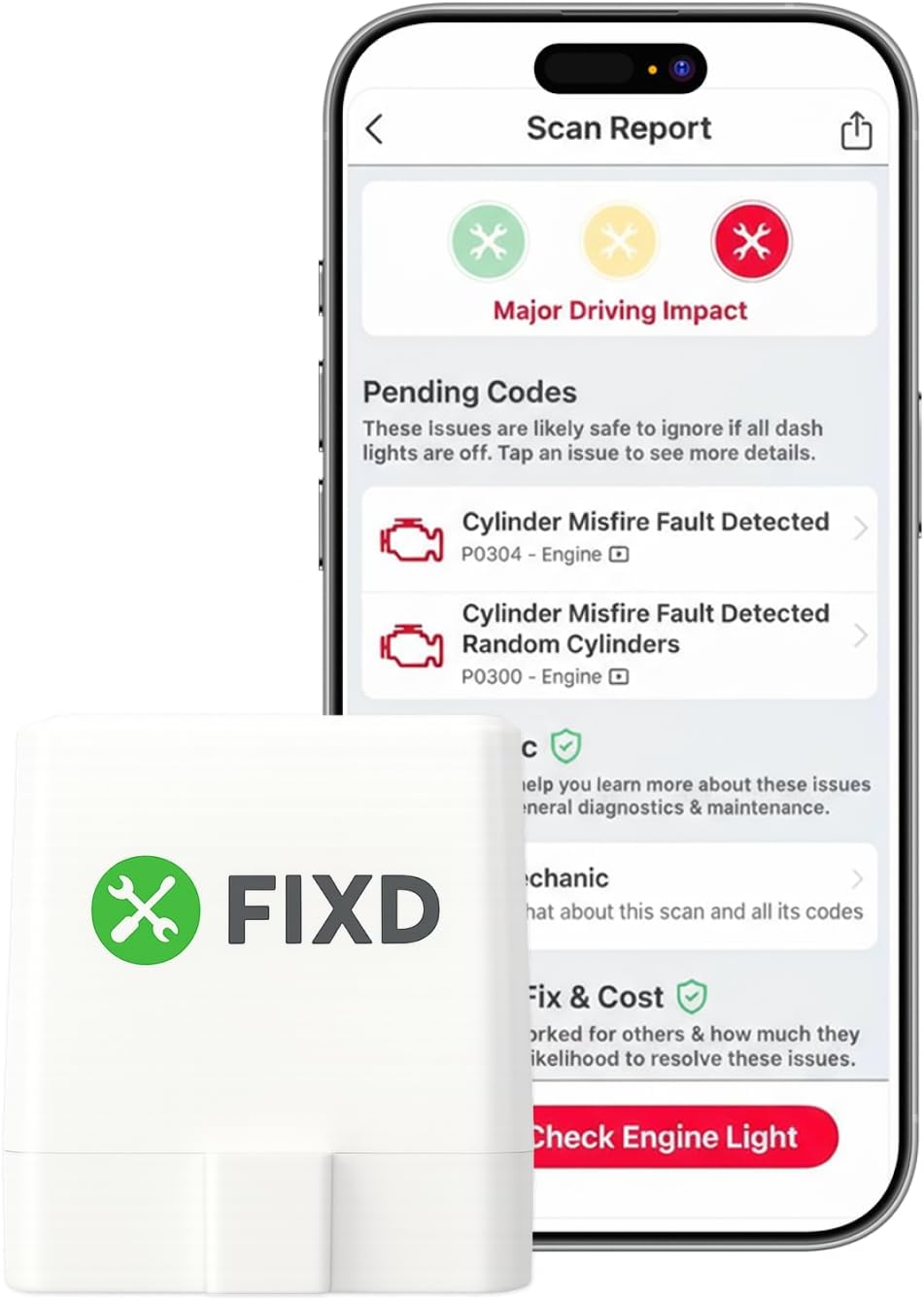
Best Bluetooth OBD2 Scanner
Detect 39,000+ Issues With Enhanced Codes. Save $1000s on car repairs & buying used vehicles by diagnosing problems yourself.
Shop on Amazon
Key Takeaways
- A solid Jeep Cherokee check engine light indicates a minor issue you can often drive with cautiously, while a flashing light signals severe misfire that risks catalytic converter damage and requires immediate towing.
- The most common causes of a check engine light in Jeep Cherokees are loose gas caps, EVAP system leaks, oxygen sensor failures, and ignition misfires, many of which you can diagnose yourself with an inexpensive OBD-II scanner.
- Before visiting a mechanic, try simple zero-cost fixes like tightening your gas cap, checking fluid levels, and inspecting loose connectors—these resolve 38% of check engine light issues without any parts replacement.
- Ignoring a check engine light allows minor issues to escalate into expensive failures, such as a $60 oxygen sensor problem developing into a $1,800 catalytic converter replacement.
- Modern Jeep Cherokees with 2.4L engines are prone to MultiAir carbon fouling and EVAP valve failures that often require specialized software reflashes rather than simple part replacements.
- Prompt diagnostics and preventive maintenance preserve your Cherokee’s resale value and ensure it runs smoothly for 200,000+ miles while keeping you compliant with state emissions testing requirements.
Understanding the Check Engine Light Indicator
Differences Between Solid and Flashing Warnings
A steady, solid check engine light means your Cherokee’s computer has logged a diagnostic trouble code (DTC) but the issue isn’t immediately catastrophic. You might notice slightly rough idle, minor power loss, or no symptoms at all. Common triggers include a loose gas cap, a failing oxygen sensor, or an EVAP system leak. You can usually drive to a parts store or your driveway to scan the code.
A flashing check engine light is your Jeep screaming for help. It signals an active, severe engine misfire, often cylinders not firing correctly due to bad ignition coil packs, fouled spark plugs, or fuel delivery problems. Continuing to drive risks overheating the catalytic converter, which can melt internal components and cost you $1,200–$2,500 in repairs. Pull over safely and call for a tow if the light flashes.
What Happens When the Warning Appears
When the light first turns on, your Cherokee’s powertrain control module (PCM) freezes a “snapshot” of engine data, speed, load, fuel trim, sensor voltages, and stores a fault code. The engine may enter “limp mode,” limiting RPM and throttle response to protect internal components. You might feel hesitation, hear knocking, or smell raw fuel from the exhaust.
Some drivers panic and immediately head to the dealer. Don’t. Most codes are not emergencies. Grab an inexpensive Bluetooth OBD-II scanner and read the code yourself in under two minutes. Knowledge is power, and it saves you diagnostic fees.

The Role of OBD-II and Vehicle Monitoring Systems
Every Jeep Cherokee since 1996 uses the OBD-II standard, a universal diagnostic protocol that monitors emissions, engine performance, and sensor health. The system runs continuous self-tests while you drive, checking oxygen sensor response times, fuel mixture, ignition timing, and EVAP pressure.
When a parameter falls outside normal range, say, your downstream O₂ sensor voltage stays flat or your EVAP system can’t hold vacuum, the PCM logs a five-character code (like P0420 or P0456) and triggers the light. The National Highway Traffic Safety Administration mandates OBD-II to reduce vehicle emissions and alert drivers before minor faults become major failures.
Most Common Causes and Associated Codes
Gas Cap and EVAP System Issues
The number-one reason Jeep Cherokees throw a check engine light? A loose, cracked, or missing gas cap. When the cap doesn’t seal, fuel vapors escape, triggering EVAP leak codes P0456 (small leak) or P0440 (general EVAP fault). Your fuel economy drops slightly, and you fail emissions testing.
On KL-generation Cherokees (2014+), the ESIM (Evaporative System Integrity Module) valve is notorious for sticking or failing. Located near the fuel tank, this motorized valve cycles open and closed to test system pressure. When it fails, you see P0456 even with a tight cap. Replacement takes 30 minutes and costs about $80 for the part.
“Replaced my gas cap three times before I learned the ESIM was the real culprit. $12 cap vs. $90 valve, wish I’d known sooner.” via JeepKL.com Forums
Oxygen Sensor and Emission System Failures
Your Cherokee uses multiple oxygen (O₂) sensors, upstream (before the cat) and downstream (after), to fine-tune fuel mixture and monitor catalytic converter efficiency. Over time, sensors get coated with carbon, oil, or coolant residue and stop responding quickly. Codes include:
- P0133: Slow upstream O₂ response
- P0420: Catalyst efficiency below threshold
- P0138: High downstream O₂ voltage
Replacing an O₂ sensor is straightforward: locate the sensor in the exhaust pipe, unplug the harness, unscrew with a 22 mm wrench or oxygen sensor socket, and install the new unit. Anti-seize on the threads prevents future headaches.

Ignition System and Engine Misfires
Misfire codes, P0300 (random), P0301–P0306 (cylinder-specific), point to ignition or fuel delivery problems. On the 3.2L Pentastar V6 and 2.4L Tigershark MultiAir I4, common causes include:
- Worn spark plugs (replace every 30,000–60,000 miles)
- Failed ignition coil packs (especially on cylinders 2, 4, and 6)
- Carbon buildup on MultiAir solenoid actuators (2.4L only)
Swap spark plugs first, cheap, easy, often the fix. If misfires persist, swap the coil pack from the misfiring cylinder to another. If the code follows the coil, you’ve found the culprit.
“P0304 on my 2015 Trailhawk. Swapped coil 4 with coil 2, code moved to P0302. Bought a new coil, problem solved for $45.” via CherokeeSRT8.com
Catalytic Converter and Emissions Problems
P0420 (catalyst efficiency) doesn’t always mean you need a new cat. Often, it’s a lazy downstream O₂ sensor or an exhaust leak skewing readings. But if you ignore upstream misfires or run rich for months, unburned fuel eventually clogs the catalyst’s honeycomb, melting the substrate.
According to a 2025 Stellantis TSB update, KL Cherokees built between 2014 and 2018 with the 2.4L engine showed elevated P0420 rates due to MultiAir carbon fouling. Software reflashes and intake valve cleaning often clear the code without replacing the $1,800 converter.
Diagnosing and Resetting the Warning Light
Reading Trouble Codes With an OBD-II Scanner
You don’t need a $3,000 professional scan tool. A basic Bluetooth OBD-II adapter paired with a free app (Torque, BlueDriver, or OBD Fusion) reads codes, displays live data, and clears the light. Plug the adapter into the 16-pin port under your steering column (driver’s side, above the pedals), turn the ignition to “ON” (engine off), open the app, and tap “Read Codes.”
You’ll see alphanumeric codes like P0456 or P0300. Write them down, then Google “[code] Jeep Cherokee” to find community forums and official TSBs. The Jeep Cherokee Owners Club and WK2 Jeeps host thousands of real-world fixes.
On legacy XJ and early KJ models (pre-OBD-II standardization), you can retrieve codes via the “key-dance” method: turn ignition ON-OFF-ON-OFF-ON within five seconds. The odometer will display two-digit codes you cross-reference in your owner’s manual.
Quick DIY Fixes You Can Try
Before spending money, try these zero-cost or low-cost checks:
- Tighten or replace the gas cap. Listen for three clicks. If the cap is cracked, buy a new OEM or quality aftermarket unit for $12–$20.
- Inspect fluid levels. Low oil can trip P06DD (oil pressure sensor). Low coolant may cause P0128 (thermostat rationality).
- Check for loose connectors. Wiggle the MAF sensor, throttle body harness, and O₂ sensor plugs. Corrosion or moisture often mimics sensor failure.
- Clear the code and test-drive. If it doesn’t return after 50 miles, it was a one-time glitch.
A 2026 analysis by RepairPal found that 38% of check engine light events on Jeep Cherokees resolved with gas cap replacement or simple connector cleaning, no parts required.
When to Seek Professional Help
Head to a trusted mechanic or dealer if:
- The light flashes (immediate tow recommended)
- You smell burning plastic, coolant, or raw fuel
- The engine runs extremely rough, stalls, or won’t start
- Codes point to transmission (P0700 series), ABS, or airbag faults
- You’ve replaced sensors or parts twice and the code returns
MultiAir actuator failures (common on 2.4L engines) and oil-control-valve issues require specialized tools and software reflashes. Don’t throw parts at complex codes, get a second opinion from a shop experienced with Mopar platforms.
Prevention, Maintenance, and Long-Term Care
Routine Checks to Prevent Warning Light Issues
An ounce of prevention beats a pound of repair bills. Follow these simple habits:
- Replace spark plugs at Jeep’s recommended interval (typically 30,000–60,000 miles for copper/platinum, up to 100,000 for iridium).
- Use quality fuel. Top-tier detergent gas (Shell, Chevron, Mobil) keeps injectors and intake valves clean, especially critical on MultiAir engines.
- Inspect your gas cap every few fill-ups. Look for cracks in the rubber seal.
- Check engine oil level monthly. The 2.4L Tigershark is known for oil consumption: running low trips the P06DD sensor code.
- Run an EVAP smoke test annually at your trusted shop to catch tiny leaks before they set codes.
The Impact of Delayed Repairs
Ignoring a check engine light doesn’t make it go away, it makes it worse. A lazy upstream O₂ sensor costs $60 to replace but forces your engine to run rich, wasting fuel and eventually clogging the $1,800 catalytic converter. A single misfiring cylinder dumps raw fuel into the exhaust, melting the cat’s ceramic core in under 100 miles of hard driving.
Expert Note: According to ASE Master Technician reviews, "Modern catalytic converters fail not from age, but from thermal shock caused by unburned fuel igniting inside the catalyst. A flashing CEL is your only warning before a $2,000 repair becomes inevitable."
Long-Term Benefits of Prompt Diagnostics
Fixing codes early preserves resale value, prevents secondary damage, and keeps your Cherokee running smoothly for 200,000+ miles. Buyers scan for stored codes during pre-purchase inspections, a clean history signals a well-maintained vehicle. Plus, many states require OBD-II readiness for emissions testing: unresolved codes mean automatic failure.
Invest in a quality scanner, bookmark Jeep forums, and don’t fear the light. You’ve got this.
Frequently Asked Questions
What does it mean when the Jeep Cherokee check engine light is solid vs. flashing?
A solid check engine light indicates a logged fault code that isn’t immediately critical; you can typically drive cautiously to a mechanic. A flashing light signals a severe engine misfire requiring immediate attention, as continuing to drive risks catastrophic catalytic converter damage costing $1,200–$2,500.
What are the most common causes of check engine light in Jeep Cherokee?
The most frequent causes include a loose or cracked gas cap (triggering EVAP codes P0456/P0440), failing oxygen sensors (P0133, P0138, P0420), ignition misfires from worn spark plugs or bad coil packs (P0300–P0306), and ESIM valve failure on 2014+ models. A 2026 analysis shows 38% of cases resolve with simple gas cap replacement or connector cleaning.
Can I drive my Jeep Cherokee with the check engine light on?
You can safely drive with a solid check engine light to reach a mechanic or parts store, though you should have the code read promptly. Never drive with a flashing check engine light; pull over safely and call for a tow truck to avoid catalytic converter damage.
How do I read and clear check engine light codes on my Cherokee myself?
Purchase an inexpensive Bluetooth OBD-II scanner ($20–$50) and pair it with free apps like Torque, BlueDriver, or OBD Fusion. Plug the adapter into the 16-pin diagnostic port under your steering column, turn ignition to ON, and read the codes. Writing down codes and researching them on Jeep forums can help you decide if a DIY fix is feasible.
What’s the difference between P0456 and P0440 EVAP codes on a Jeep Cherokee?
P0456 indicates a small EVAP leak, often from a loose gas cap or sticky ESIM valve on 2014+ models. P0440 signals a general EVAP system fault. Tightening the cap or replacing the ESIM valve ($80) typically resolves these codes without dealer costs.
When should I replace oxygen sensors versus the catalytic converter?
Start by replacing a failing oxygen sensor ($100–$300 labor) if codes show P0133, P0138, or P0420 with lazy sensor response. Only replace the catalytic converter ($1,800+) if upstream misfires or rich running have physically clogged it. Have a mechanic confirm with a scope test before committing to the expensive repair.
Read More:
- Ford Check Engine Light (Means and Step-By-Step Diagnosis)
- Jeep Check Engine Light (Here’s the Quick Diagnostic Guide)
- Dodge Check Engine Light (Quick Codes & Fixes for HEMI & Pentastar)
- BMW Check Engine Light (Quick Diagnostic Guide to Fix It Fast)
- Chevy Check Engine Light (Means, Root Causes & How to Fix It)