
That amber or yellow Malfunction Indicator Light (MIL) on your Toyota’s dashboard never lights up at a convenient time. Whether it’s solid, flashing, or accompanied by TRAC OFF and VSC warnings, it triggers immediate worry.
Your Toyota check engine light means the On-Board Diagnostics (OBD-II) system detected a fault affecting emissions, engine performance, or drivetrain components. A solid light indicates a non-urgent issue you can address soon, while a flashing light signals active misfires requiring immediate attention to prevent catalytic converter damage.
Most Toyota owners fear expensive dealership bills, but many triggers, from loose gas caps to dirty sensors, are fixable at home with basic tools and an OBD-II scanner. This guide walks you through the most common causes, diagnostic workflows, and safe driving decisions.
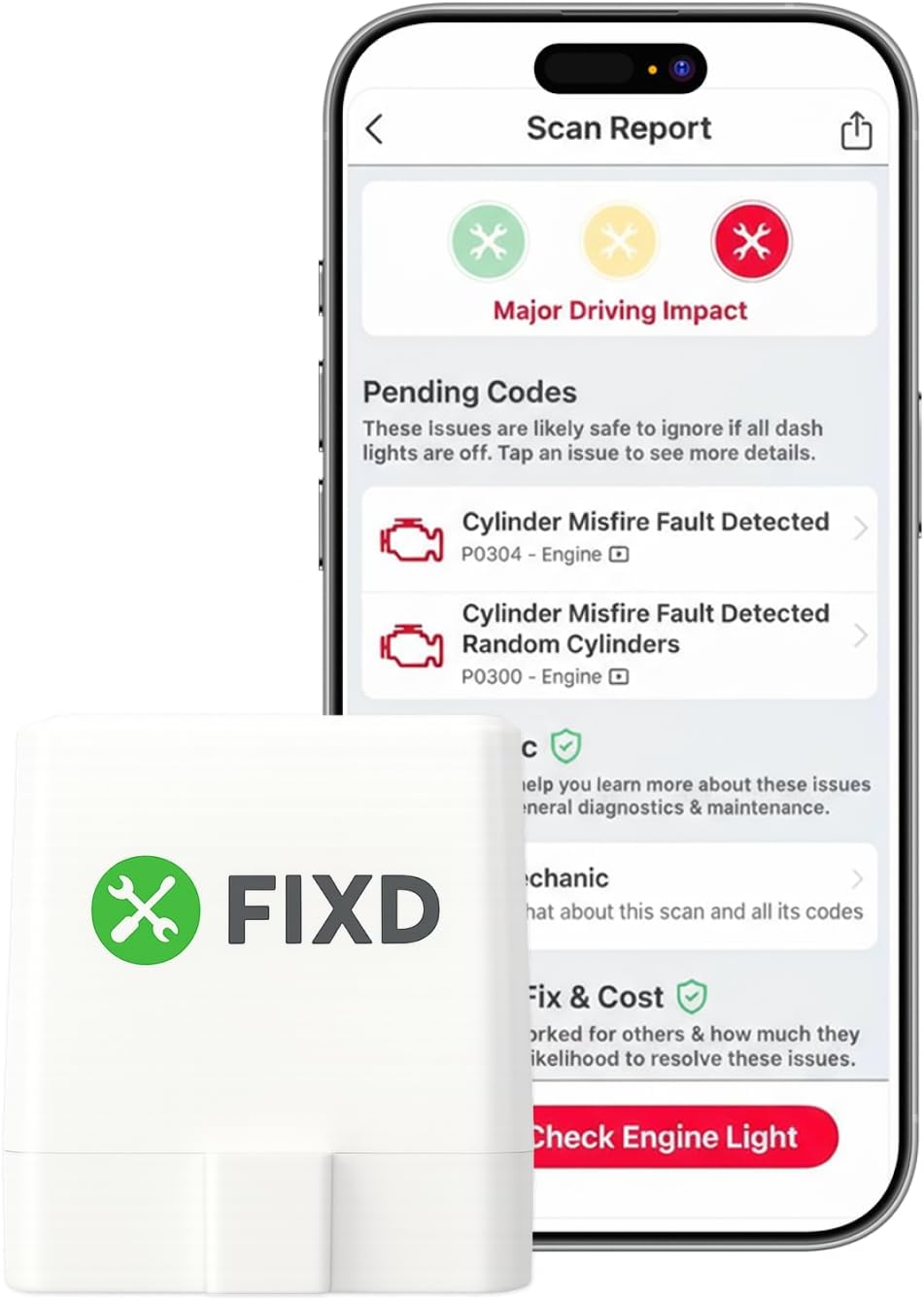
Best Bluetooth OBD2 Scanner
Detect 39,000+ Issues With Enhanced Codes. Save $1000s on car repairs & buying used vehicles by diagnosing problems yourself.
Shop on Amazon
Key Takeaways
- A Toyota check engine light can signal anything from a loose gas cap ($12 fix) to catalytic converter damage ($1,800 replacement), so reading the diagnostic code with an OBD-II scanner is your first step toward an affordable diagnosis.
- Flashing check engine lights indicate active misfires that risk catalytic converter damage; pull over safely and arrange a tow immediately rather than continuing to drive.
- Common causes like oxygen sensor failures, dirty mass airflow sensors, and EVAP system leaks often require only basic tools and cleaning rather than expensive dealership repairs.
- A steady check engine light is typically non-urgent and allows you to drive to a repair shop for diagnosis, but pair it with monitoring for secondary symptoms like overheating or loss of power.
- Simultaneous TRAC OFF and VSC warning lights usually stem from one root cause (such as a faulty MAF sensor) affecting interconnected systems rather than three separate failures.
- After repairing the underlying issue, allow 50–100 miles of mixed driving before emissions testing to ensure the engine control module completes its self-tests and confirms a permanent fix.
What Does It Mean?
The check engine light is your Toyota’s primary emissions and engine management warning system. When your vehicle’s Engine Control Module (ECM) registers sensor readings outside normal parameters, voltage irregularities, fuel mixture imbalances, ignition timing faults, or exhaust emissions exceeding thresholds, it stores a Diagnostic Trouble Code (DTC) and illuminates the MIL.
Toyota uses two light states. A steady amber light signals a stored fault that doesn’t immediately threaten your engine. You can typically drive to a repair shop or auto parts store for a free code scan. A flashing check engine light indicates active cylinder misfires. Raw unburned fuel is passing into the exhaust, risking catalytic converter overheating and permanent damage. Pull over safely and arrange a tow.
Many Toyota owners report simultaneous TRAC OFF and VSC warning lights. These systems share sensor inputs with the engine management system. A faulty Mass Air Flow sensor, for example, can confuse traction control algorithms, triggering multiple dashboard warnings at once. This doesn’t mean three separate failures, often it’s one root cause affecting interconnected systems.
“My 2018 Camry threw check engine + TRAC OFF + VSC all at once. Turned out to be a $12 gas cap. Cleared everything.” via r/Toyota
Common Causes Explained
Oxygen Sensor Failures
Oxygen (O2) sensors monitor exhaust gas composition upstream and downstream of your catalytic converter. Toyota engines rely on these readings to maintain stoichiometric air-fuel ratios (14.7:1). When sensors degrade, typically after 60,000–100,000 miles, the ECM receives false lean or rich signals, triggering codes like P0135 (heater circuit malfunction) or P0171 (system too lean).
You’ll notice reduced fuel economy before the light appears. Failed O2 sensors cause the ECM to operate in open-loop mode, using preset fuel maps instead of real-time feedback. Your engine runs less efficiently, wasting fuel and increasing emissions. Newer Toyotas use wide-band Air-Fuel Ratio (AFR) sensors that function similarly but offer finer resolution.
Replacement involves disconnecting the wiring harness, unthreading the old sensor (often seized by exhaust heat), and torquing a new unit to spec. Upstream sensors sit between the engine and catalytic converter: downstream sensors monitor converter efficiency. Both are critical for passing emissions tests and maintaining optimal performance.
Catalytic Converter Issues
Code P0420 (catalyst system efficiency below threshold) ranks among the most common Toyota DTCs. Your catalytic converter uses platinum, palladium, and rhodium to convert hydrocarbons, carbon monoxide, and nitrogen oxides into harmless water vapor and CO2. When the downstream O2 sensor readings mirror upstream values too closely, the ECM concludes the converter isn’t processing exhaust effectively.
Internal substrate damage, caused by persistent misfires, oil contamination, or coolant ingestion, reduces conversion capacity. You won’t always hear rattling or notice performance loss. The ECM simply compares pre- and post-cat oxygen readings and sets the code when efficiency drops below EPA mandates. Sometimes P0420 appears due to failing O2 sensors rather than actual converter failure. Always verify sensor health first.
Mass Airflow Sensor Problems
The MAF sensor measures incoming air volume using heated platinum wires. Dust, oil vapors from aftermarket intakes, or dirt bypass around your air filter coat these delicate elements, skewing voltage signals. The ECM then injects incorrect fuel quantities, causing rough idle, hesitation, or stalling. Codes P0171/P0174 (system too lean) often accompany dirty MAF sensors.
Cleaning takes five minutes. Remove the sensor housing, spray the exposed hot-wire elements with MAF sensor cleaner, let it evaporate, and reinstall. Never use throttle body cleaner or brake cleaner, these leave residues that worsen readings. If cleaning doesn’t resolve the fault, replacement is straightforward: unplug the electrical connector, remove two bolts, and swap units.

Loose or Damaged Gas Cap
Your fuel system is sealed and pressurized to capture evaporative emissions. The ECM monitors pressure using an EVAP system leak detection pump. A loose, cracked, or missing gas cap allows fuel vapors to escape, triggering codes P0455 (large EVAP leak) or P0457 (loose cap). This is the cheapest fix on the list and accounts for roughly 10–15% of all check engine lights.
After refueling, twist your cap clockwise until you hear three clicks. Inspect the rubber seal for cracks or deformation. If your cap is damaged, purchase an OEM Toyota replacement, aftermarket caps sometimes lack proper venting valves, causing new codes. The light won’t clear immediately after tightening: you’ll need to drive through several drive cycles (cold start, highway cruise, idle) before the ECM reruns its EVAP self-tests.
Diagnosing Your Toyota
Using an OBD-II Scanner to Read Trouble Codes
Every Toyota sold in North America since 1996 includes an OBD-II diagnostic port under the dashboard, typically near the steering column or above the brake pedal. A basic code reader like the ANCEL AD310 scanner connects in seconds, allowing you to retrieve stored DTCs without a dealership visit.
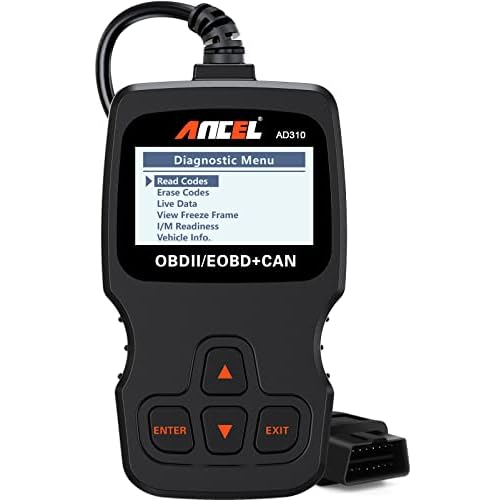
Turn the ignition to ON (engine off), plug the scanner into the 16-pin port, and power it up. Select “Read Codes” from the menu. The device displays alphanumeric codes (e.g., P0420, P0171, P0300) and brief descriptions. Write down all codes before clearing them, multiple simultaneous codes often reveal related failures. Some advanced scanners stream live sensor data, letting you monitor O2 sensor voltages, fuel trims, and MAF readings in real time.
Auto parts stores like AutoZone and O’Reilly offer free code scanning, but they won’t interpret results or guarantee fixes. Invest in your own scanner if you plan to maintain your Toyota long-term. Models with Bluetooth connectivity pair with smartphone apps, providing code libraries, repair guides, and freeze-frame data showing exact operating conditions when the fault occurred.
Interpreting Toyota-Specific DTC Codes
Diagnostic trouble codes follow a standardized format. The first character indicates the system: P (powertrain), B (body), C (chassis), or U (network). The second digit denotes whether it’s a generic OBD-II code (0) or manufacturer-specific (1). The third digit identifies the subsystem, 1 for fuel/air, 2 for injector circuits, 3 for ignition, 4 for auxiliary emissions.
Common Toyota codes include:
- P0171/P0174: System too lean (vacuum leak, dirty MAF, weak fuel pump)
- P0300: Random cylinder misfire (bad coils, fouled plugs, low compression)
- P0420/P0430: Catalytic converter efficiency below threshold
- P0455: Large EVAP leak (gas cap, purge valve, cracked hoses)
- P0441: EVAP purge flow fault (stuck canister purge valve)
Freeze-frame data captures engine RPM, vehicle speed, coolant temperature, and fuel trim values at the moment the code set. If P0300 (misfire) occurred at 3,200 RPM under load, you’ll investigate ignition components. If it happened at idle, suspect vacuum leaks or fuel delivery issues. Context matters more than the code itself.
Resetting the Light
After repairing the root cause, you have three options to clear stored codes and extinguish the check engine light. The simplest method uses your OBD-II scanner’s “Clear Codes” function. This erases all DTCs and resets readiness monitors (self-tests the ECM runs during normal driving). Your state’s emissions inspection may fail if monitors haven’t completed, so allow 50–100 miles of mixed driving before testing.
Alternatively, disconnect your battery’s negative terminal for 15 minutes. This forces a full ECM reset, clearing codes and learned fuel trims. You’ll lose radio presets and clock settings, and the engine may idle roughly for a few drive cycles while the ECM relearns idle air control and fuel delivery parameters. Some Toyotas require a throttle relearn procedure: key on (engine off), wait 30 seconds, key off, wait 30 seconds, repeat three times.
The third option requires patience. If the fault doesn’t recur, the ECM automatically clears the code after 40–80 warm-up cycles (engine temperature rising from cold to operating range). The light extinguishes once the system passes three consecutive self-tests. This confirms a permanent fix rather than a temporary Band-Aid. If the light returns immediately after clearing, you haven’t addressed the underlying problem.
“Cleared my P0420 code three times. Kept coming back. Finally replaced the downstream O2 sensor, problem solved.” via ToyotaNation Forums
When to Drive
A steady check engine light rarely indicates immediate danger. You can drive to a parts store for diagnosis or schedule a repair appointment within a few days. Monitor for secondary symptoms, overheating, loss of power, unusual noises, and pull over if conditions worsen. Continue normal driving, but avoid heavy towing, long highway trips, or aggressive acceleration until you identify the fault.
A flashing check engine light demands immediate action. Active misfires dump raw fuel into the exhaust, overheating the catalytic converter to temperatures exceeding 1,400°F. This melts the internal honeycomb substrate, turning a $150 ignition coil problem into a $1,800 converter replacement. Reduce speed, avoid acceleration, and drive to the nearest safe location. Arrange a tow rather than continuing.
If your check engine light appears with TRAC OFF and VSC warnings, your traction control and stability systems have disabled themselves due to conflicting sensor data. You still have full braking and steering, but electronic stability intervention won’t activate during emergency maneuvers. Drive cautiously, especially in rain or snow, and diagnose the fault promptly. Often a MAF sensor cleaning or gas cap tightening restores all three systems simultaneously.
Frequently Asked Questions
What does a solid Toyota check engine light mean, and is it safe to drive?
A solid check engine light indicates a non-urgent fault stored in your Toyota’s engine control module. You can safely drive to a repair shop or auto parts store for diagnosis. However, a flashing check engine light signals active misfires requiring immediate attention to prevent catalytic converter damage—pull over and arrange a tow.
What are the most common causes of a Toyota check engine light?
Common causes include loose or damaged gas caps (10–15% of cases), faulty oxygen sensors, dirty mass airflow sensors, and catalytic converter issues. Oxygen sensor failures typically occur after 60,000–100,000 miles and cause reduced fuel economy. Many issues are fixable at home with basic tools and an OBD-II scanner.
How can I check the error code for my Toyota’s check engine light?
Use an OBD-II scanner connected to the diagnostic port under your dashboard, typically near the steering column. Turn the ignition on, plug in the scanner, select ‘Read Codes,’ and write down the alphanumeric codes displayed. AutoZone and O’Reilly offer free scanning, though investing in your own scanner is worthwhile for long-term maintenance.
Why does my Toyota show check engine light along with TRAC OFF and VSC warnings?
These systems share sensor inputs with your engine management system. A single faulty component, like a mass airflow sensor or loose gas cap, can trigger multiple dashboard warnings simultaneously. Diagnosing and fixing the root cause typically resolves all three warnings at once.
How do I clear the check engine light after fixing the problem?
You have three options: use your OBD-II scanner’s ‘Clear Codes’ function, disconnect the battery’s negative terminal for 15 minutes for a full ECM reset, or allow the light to clear automatically after 40–80 warm-up cycles if the fault doesn’t recur. Allow 50–100 miles of mixed driving before emissions testing to ensure readiness monitors complete.
What does a flashing check engine light indicate and what should I do?
A flashing light signals active cylinder misfires dumping raw fuel into the exhaust, risking catalytic converter damage at temperatures exceeding 1,400°F. Immediately reduce speed, avoid acceleration, and drive to a safe location. Arrange a tow rather than continuing to drive, as ignoring this can turn a $150 coil problem into an $1,800 converter replacement.
Read More:
- Toyota Check Engine Light Reset (Here’s How to Perform It)
- Toyota Prius Check Engine Light (Means, Causes and Quick Fix Guide)
- Toyota RAV4 Check Engine Light (Complete Diagnostic Guide)
- Toyota Corolla Check Engine Light (Here’s the Complete Guide)
- Toyota Camry Check Engine Light (Complete Fix Guide)