
Your Hyundai’s transmission is acting up, and you need answers fast. Whether it’s a shudder from a stop, a blinking D light, or full limp mode, this guide covers it all.
Hyundai transmission problems most commonly stem from dual-clutch transmission (DCT) shudder during low-speed takeoff, Transmission Control Module (TCM) software faults triggering limp mode, degraded or incorrect fluid causing slippage, and faulty shift solenoids or electric oil pump failures. Many of these issues are covered under Hyundai’s 10-year/100,000-mile powertrain warranty or active recall campaigns, so check your VIN before paying out of pocket.
This guide walks you through identifying your exact transmission type, decoding failure symptoms with specific OBD-II codes, and choosing between a TCU reset, fluid service, or component replacement. Let’s get your Hyundai shifting right again.
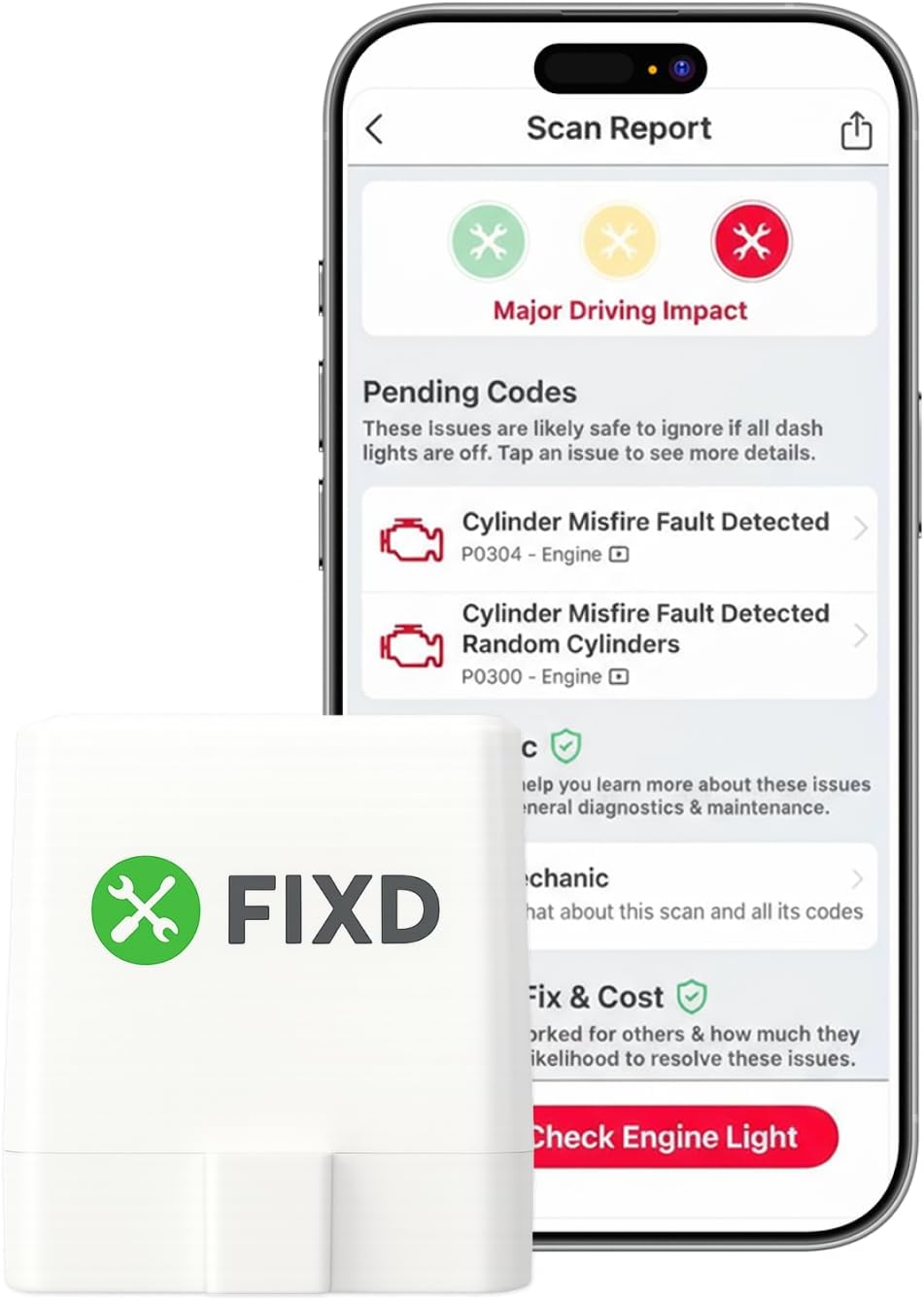
Best Bluetooth OBD2 Scanner
Detect 39,000+ Issues With Enhanced Codes. Save $1000s on car repairs & buying used vehicles by diagnosing problems yourself.
Shop on Amazon
Key Takeaways
- Hyundai transmission problems like DCT shudder, harsh shifts, and limp mode often stem from worn clutch packs, degraded fluid, or TCM software faults—many of which are covered under the 10-year/100,000-mile powertrain warranty.
- Start any transmission diagnosis by pulling OBD-II codes (P0700, P0810, P0730) and checking your VIN for active recalls before paying for repairs.
- Preventable transmission damage begins with fluid maintenance: change SP-IV fluid every 60,000 miles (30,000 under severe duty) and use only Hyundai-specified fluid to avoid costly mechanical failures.
- Dry 7-speed DCT models like the 2017–2021 Elantra and 2016–2021 Tucson show the highest complaint rates, while newer 8-speed wet DCT platforms (2022+) demonstrate significantly improved durability and reliability.
- Many Hyundai transmission issues resolve without full replacement—a TCM software update, clutch pack replacement, or fluid service often restores normal operation at a fraction of the cost.
- Cold-climate short trips and aggressive stop-and-go driving accelerate transmission wear; highway driving and proper maintenance intervals are critical to extending your Hyundai’s transmission lifespan.
Hyundai equips its lineup with three main transmission families: traditional Shiftronic automatics (6-speed and 8-speed), EcoShift Dual-Clutch Transmissions (dry 7-speed DCT and wet 8-speed DCT), and the Intelligent Variable Transmission (IVT) used in compacts like the Elantra and Kona. Each architecture has distinct failure patterns.
Before you diagnose anything, identify your transmission type on the sticker inside the driver’s door jamb or in your owner’s manual. A dry DCT shudder at 5 mph is a fundamentally different problem than an 8-speed automatic slipping at highway speed. Mixing up these systems leads to wasted money and incorrect repairs. Your first step is always: know your hardware.
Recognizing Signs of Hyundai Transmission Trouble
Delayed and Rough Shifting Symptoms
If your Hyundai hesitates from a complete stop or jerks between gears, you’re experiencing the most reported symptom across DCT and automatic models. In the 7-speed dry DCT (found in the 2017–2023 Tucson and older Veloster Turbo), a 1-2 second delay from standstill followed by a lurch is often the clutch pack losing its friction material. For Shiftronic 8-speed models like the eighth-generation Hyundai Sonata, slipping between 3rd and 4th gear at moderate throttle typically points to worn shift solenoids or low fluid pressure.
Fixing hesitation from complete stop in modern Hyundai vehicles often starts with a TCU adaptive learning reset. But if that delay returns within 500 miles, physical wear is the cause.
Warning Lights and Limp Mode Activation
A blinking D light on dashboard in a Hyundai Elantra or Kona means the TCM has detected a critical fault and restricted output to protect the transmission. Common stored codes include P0700 (general transmission malfunction), P0810 (clutch position sensor error on DCT models), and P0730 (incorrect gear ratio). Electric oil pump failure is a known trigger for sudden limp mode in DCT-equipped vehicles, and Hyundai issued safety recalls specifically addressing this component.
Don’t ignore limp mode. Pull the codes immediately with a scan tool like the FOXWELL NT201 OBD2 Scanner and document them before visiting a shop.

Distinct Noises, Smells, and Performance Issues
A whining noise during deceleration in your Santa Fe or Palisade AWD could indicate a blown transmission fluid cooler line, especially if you spot pink-tinted fluid pooling under the vehicle. A burnt clutch smell in any DCT model is a red flag, but note that dry DCTs can produce a faint clutch odor during heavy stop-and-go traffic without being damaged. The key distinction: if the smell persists after highway driving, internal damage is likely.
Grinding during reverse selection in Sonata automatics often means the reverse band or servo is worn. Active torque transfer system AWD rear differential fluid noise, a clunking from the rear, is a separate issue from the main transmission and requires its own fluid service.
Transmission Fluid Check and Leak Identification
Most modern Hyundai models lack a traditional dipstick. Checking Hyundai transmission fluid level without a dipstick requires raising the vehicle, removing the check plug at operating temperature (around 95–113°F), and observing if fluid drips out at the correct level. Use only the specified fluid: SP-IV for Shiftronic automatics, specialized DCT fluid for dual-clutch units, and dedicated IVT fluid for continuously variable models. Using the wrong type causes immediate damage.
Look for leaks at the axle seals, cooler lines, and pan gasket. A Hyundai transmission fluid change with SP-IV vs IVT fluid type confusion is one of the most common shop errors on these vehicles.
Detailed Overview of Common Transmission Problems by Model
Hyundai Elantra Transmission Challenges
The 2017–2021 Elantra with the 7-speed dry DCT is the most complaint-heavy model in Hyundai’s lineup for transmission issues. Owners report shifting delays and gear jerking, especially in stop-and-go traffic. Many of these vehicles qualify for the extended DCT warranty or recall coverage. The 2021+ Elantra switched to the IVT in most trims, which reduced shudder complaints significantly but introduced occasional droning at highway speeds.
“My 2019 Elantra Sport DCT started shuddering at 35k miles. Dealer replaced the clutch assembly under warranty and also did a TCM update. Drives like new now.” via r/Hyundai
Typical Sonata and Tucson Issues
The eighth-generation Hyundai Sonata (2020–2026) uses an 8-speed automatic that occasionally develops harsh 2-3 and 5-6 upshifts. A software update for the Hyundai transmission control module released in 2024–2025 addressed many of these calibration faults. The Tucson’s 2016–2021 dry DCT experienced the full range of symptoms: judder, delayed engagement, and limp mode. The 2022+ Tucson moved to an 8-speed wet DCT, which dramatically improved durability.
| Model | Transmission | Common Problem | Primary Fix |
|---|---|---|---|
| 2017–2021 Elantra | 7-Speed Dry DCT | Low-speed shudder, jerking | Clutch pack replacement, TCM update |
| 2020–2026 Sonata | 8-Speed Automatic | Harsh upshifts, slipping | Software recalibration, solenoid replacement |
| 2016–2021 Tucson | 7-Speed Dry DCT | Judder, limp mode | Clutch assembly, electric oil pump recall |
| 2022–2026 Tucson | 8-Speed Wet DCT | Occasional delayed shifts | TCU adaptive reset |
| 2019–2026 Santa Fe | 8-Speed DCT/Auto | Delayed acceleration, high RPM | Fluid service, solenoid check |
Santa Fe and Veloster Transmission Concerns
The Hyundai Santa Fe with delayed acceleration and high RPM revving is a well-documented complaint on 2019–2023 models. The root cause varies between low transmission fluid pressure and a failing electric oil pump. The Veloster N’s wet 8-speed DCT is far more durable than the dry unit, but it still requires fluid changes at 30,000–40,000 mile intervals to prevent premature clutch wear.
8-Speed Dual-Clutch Transmission Recalls
Hyundai issued multiple recalls for DCT-equipped vehicles, primarily targeting the electric oil pump and TCM software. Check your VIN at NHTSA’s recall lookup tool to verify coverage. The 10-year/100,000-mile powertrain warranty covers most internal transmission failures, but you must prove consistent maintenance records. Keep every receipt.
Major Contributing Factors and Causes
Transmission Control Module and Software Faults
The TCM manages shift timing, clutch engagement pressure, and torque converter lockup. A software glitch can cause phantom limp mode, harsh shifts, or complete loss of motive power, even when the mechanical hardware is perfectly fine. Hyundai has released over a dozen TSBs addressing TCM calibration since 2020. A reflash takes under an hour and solves many drivability complaints without any parts replacement.
Impact of Fluid Quality, Leaks, and Maintenance
Degraded fluid is the single most preventable cause of Hyundai transmission failure. SP-IV fluid in Shiftronic automatics should be changed every 60,000 miles under normal conditions, or 30,000 miles under severe duty. IVT fluid replacement intervals follow a similar schedule. Contaminated fluid causes valve body sticking, clutch glazing, and solenoid clogging. If your fluid is dark brown or smells burnt, you’re already behind on maintenance.
“Changed my 2020 Tucson DCT fluid at 40k as a precaution. The old fluid was already dark. Shifts noticeably smoother now.” via r/MechanicAdvice
Mechanical Failures: Clutches, Solenoids, and Pump Failure
In dry DCTs, the clutch pack is a wear item that typically lasts 60,000–100,000 miles depending on driving conditions. Shift solenoids in the 8-speed automatic fail from fluid contamination or electrical burnout. Electric oil pump failure in DCT models triggers an immediate safety limp mode because the pump supplies critical cooling and lubrication pressure. All three of these failures produce distinct code patterns:
- P0700 – General transmission fault (start here)
- P0810 – Clutch position sensor circuit (DCT specific)
- P0730 – Incorrect gear ratio (slipping confirmation)
- P0868 – Transmission fluid pressure low
- P2764 – Torque converter clutch solenoid circuit
Environmental and Driving Habit Influences
Frequent short trips in cold climates accelerate DCT clutch wear because the dry clutch never reaches optimal operating temperature. Aggressive stop-and-go driving in hilly terrain is the worst-case scenario for any dual-clutch unit. If you regularly tow with a Santa Fe or Palisade, fluid changes should move to the severe-duty interval. Your driving environment directly determines your transmission’s lifespan.
Professional Diagnosis, Solutions, and Prevention
Troubleshooting With Diagnostic Trouble Codes
Start every diagnosis by pulling codes with a quality OBD-II scanner. Record freeze-frame data, it tells you exactly what conditions triggered the fault. Cross-reference codes against Hyundai TSBs, which you can access through a subscription service like ALLDATA or a Hyundai dealer’s GDS system. Don’t clear codes before documenting them. That data is your diagnostic roadmap.
For hands-on diagnostics, a solid INNOVA 5610 Scan Tool gives you transmission-specific live data including line pressure, solenoid duty cycles, and clutch slip percentages.
Repair and Replacement Options
Hyundai transmission replacement vs actuator calibration is a critical cost decision. Many DCT shudder complaints resolve completely with a clutch pack replacement and TCM recalibration, far less invasive than a full assembly swap. For Shiftronic automatics, replacing individual shift solenoids is often sufficient when the valve body and torque converter are still healthy. A full transmission replacement should be your last resort, not your first recommendation.
Software Updates and Module Reprogramming
A 2026 software update for Hyundai’s TCM addresses revised shift logic for both the 8-speed automatic and wet DCT platforms. Your dealer performs this update using the KDS (Kia Diagnostic System) or GDS tool. Independent shops can flash TCMs with J2534 pass-through devices if they have a Hyundai TechInfo subscription. Always perform a TCU adaptive learning reset after any software flash, the transmission needs to relearn your driving patterns from scratch.
Here’s a helpful walkthrough on diagnosing Hyundai DCT issues:
Prevention Strategies and Maintenance Best Practices
Follow this maintenance hierarchy to maximize your Hyundai transmission’s lifespan:
- Change transmission fluid at 60,000 miles (normal) or 30,000 miles (severe duty)
- Use only genuine Hyundai-specified fluid (SP-IV, DCT fluid, or IVT fluid)
- Check your VIN for open recalls every 6 months at NHTSA.gov
- Monitor for early symptoms: any shudder, delay, or warning light warrants immediate code scanning
- Avoid riding the brake in traffic with DCT models, use the brake pedal fully or release it completely
Data Insights and Analysis
According to NHTSA complaint data, transmission-related reports for Hyundai vehicles increased approximately 18% between 2023 and 2025, with the dry 7-speed DCT accounting for the largest share of owner complaints across the Elantra and Tucson lineups. Meanwhile, Hyundai’s transition to wet DCTs and IVTs in 2022+ models has correlated with a measurable drop in warranty claims for shudder and judder symptoms.
Consumer Reports’ 2025 reliability survey rated the 2022+ Tucson’s 8-speed wet DCT significantly higher than its dry DCT predecessor, marking one of the largest single-generation reliability improvements in Hyundai’s recent history.
Expert Note: "Dry DCT shudder isn't caused by heat alone, it's the result of micro-glazing on the clutch friction surfaces that occurs when the clutch repeatedly slips at low delta speeds during creep-mode engagement. The TCM software update changes the engagement ramp rate to reduce this slip window, but once the friction material is glazed beyond its recovery threshold, only physical replacement restores normal operation."
Frequently Asked Questions
What are the most common Hyundai transmission problems?
Common Hyundai transmission problems include DCT shudder at low speeds, delayed or rough shifting, TCM software faults causing limp mode, degraded transmission fluid, and faulty shift solenoids. The specific issue depends on your transmission type: dry 7-speed DCT, 8-speed automatic, wet DCT, or IVT. Identifying your symptoms and transmission type is the first step to proper diagnosis.
How do I know if my Hyundai has a transmission problem?
Warning signs include hesitation from complete stops, jerking between gears, blinking D light on dashboard, whining or grinding noises, burnt clutch smell, or limp mode activation. Pulling OBD-II codes with a scanner like the FOXWELL NT301 confirms transmission faults. Common codes include P0700 (general transmission malfunction) and P0810 (clutch position sensor error on DCT models).
Does Hyundai’s warranty cover transmission problems?
Yes. Hyundai’s 10-year/100,000-mile powertrain warranty covers internal transmission failures for original owners, with 5 years/60,000 miles coverage for second owners. Many transmission issues are also covered by active recall campaigns. Maintain service records to avoid claim denials, and check your VIN at NHTSA.gov for recall eligibility.
What should I use to check my Hyundai transmission fluid level?
Most modern Hyundai models lack dipsticks. Raise the vehicle, remove the check plug at operating temperature (95–113°F), and observe if fluid drips correctly. Use only specified fluid: SP-IV for Shiftronic automatics, DCT fluid for dual-clutch units, and IVT fluid for continuously variable models. Using wrong fluid causes immediate damage.
How often should I change Hyundai transmission fluid to prevent problems?
Change transmission fluid every 60,000 miles under normal conditions or 30,000 miles under severe duty (frequent towing, stop-and-go traffic, extreme temperatures). Degraded fluid causes valve sticking, clutch glazing, and solenoid clogging. Regular fluid changes are the single most preventable cause of transmission failure in Hyundai vehicles.
Can a Hyundai transmission problem be fixed with a software update instead of replacement?
Yes. Many Hyundai transmission issues resolve with TCM software reflashing without parts replacement. Hyundai released over a dozen technical service bulletins addressing TCM calibration since 2020. A software update takes under an hour and often solves harsh shifts, phantom limp mode, and drivability complaints. Perform a TCU adaptive learning reset after any flash.
Read More:
- Ford Transmission Problems (Symptoms, Recalls, and What to Do)
- Chevy Transmission Problems (How to Diagnose the Shudder, the Lock-Up)
- Ford F150 Transmission Problems (Guide to the 10R80 and 6R80)
- Dodge Ram Transmission Problems (Fixes for Every Model Year)
- GM 10-Speed Transmission Problems (Fixes for Valve Body Wear)
- Honda CVT Transmission Problems (Here’s the Master Fixes)