
If your Lexus feels sluggish during acceleration, emits a high-pitched whine under load, or shows unexpected engine revs without corresponding speed, you’re likely facing CVT-related issues, ranging from low fluid levels to sensor glitches or software calibration errors. Many Lexus owners confuse their hybrid e-CVT planetary gearset system with traditional continuously variable transmissions, which can lead to misdiagnosis and unnecessary worry.
Understanding whether you’re driving a hybrid e-CVT (found in the RX 450h, ES 300h, or CT 200h) or the newer Direct Shift-CVT with a physical launch gear (UX 200) is crucial for troubleshooting. Each system exhibits distinct symptoms and requires specific maintenance protocols. This guide breaks down the warning signs, root causes, and actionable fixes you need to discuss fluid changes, software updates, or potential repairs confidently with your mechanic.

Key Takeaways
- Lexus CVT transmission problems manifest as sluggish acceleration, high-pitched whining, or unexpected engine revs without speed increase, requiring accurate diagnosis between hybrid e-CVT and Direct Shift-CVT systems.
- Contaminated or low transmission fluid is a primary cause of Lexus CVT issues; follow manufacturer intervals (60,000 miles for Direct Shift-CVT, 100,000 miles for hybrid e-CVT) and use only genuine Toyota fluid to prevent belt slip and overheating.
- Dashboard transmission warning lights often signal sensor faults or software calibration errors in the transmission control module, and ignoring them can trigger limp mode, limiting speed to 40 mph and compromising safety.
- Hybrid e-CVT systems are inherently more reliable than mechanical belt-driven CVTs but can fail when software miscommunication between the hybrid battery ECU and transmission control module disrupts the power-split logic.
- CVT repair costs range from $5,000 to $8,000, but regular maintenance, authorized fluid changes, and available software updates can prevent costly failures and preserve resale value.
- Monitor for unusual noises, vibration, fuel economy drops of 15–20%, and fluid leaks; a quality OBD-II scanner and proactive diagnostics help catch issues early before they escalate to complete transmission failure.
Key Warning Signs and Symptoms
Slipping Gears and Delayed Engagement
When you press the accelerator and your Lexus hesitates before moving, or the engine revs high but the car won’t accelerate smoothly, you’re experiencing a disconnect between engine output and wheel power. In hybrid e-CVT models, this often stems from software calibration issues or a failing hybrid battery performance affecting the transmission control module’s ability to balance electric and gas power seamlessly. The Direct Shift-CVT in the UX 200 may exhibit mechanical launch gear transition lag during initial acceleration, creating a noticeable pause before the belt drive engages.
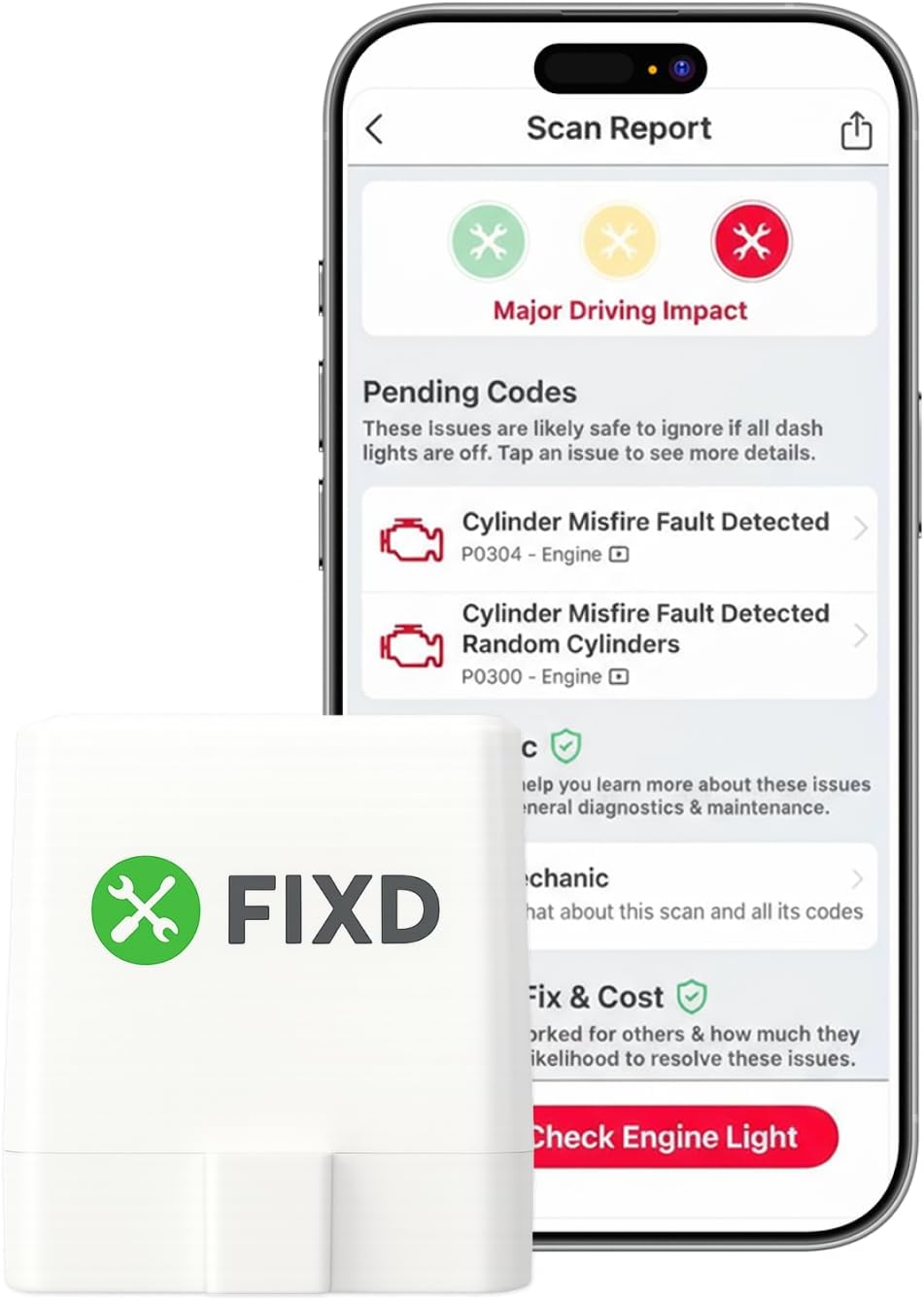
Best Bluetooth OBD2 Scanner
Detect 39,000+ Issues With Enhanced Codes. Save $1000s on car repairs & buying used vehicles by diagnosing problems yourself.
Shop on AmazonYou might notice this symptom most when merging onto highways or climbing steep grades. The transmission feels like it’s searching for the right ratio but never quite locks in. Check your hybrid battery charge state and look for any active fault codes using an OBD-II scanner, particularly P0657 (voltage issue) or P0826 (shift position sensor).
Dashboard Transmission Warning Light
The amber or red transmission warning icon on your instrument cluster is your first electronic clue that the TCM (transmission control module) has detected an abnormality. Common triggers include low transmission fluid quality, overheating conditions, or sensor fault codes related to the CVT’s pulley position or hydraulic pressure sensors. Unlike traditional automatics, Lexus CVT systems rely heavily on precise electronic feedback loops to adjust belt tension and gear ratios continuously.
If this light appears alongside a “Check Hybrid System” message, your issue likely involves the power control module misinterpreting signals from the e-CVT planetary gearset drivetrain. Don’t ignore this, modern luxury hybrid systems can enter limp mode to protect components, limiting your speed to around 40 mph and disabling regenerative braking.
Unusual Noises and Vibration
High-pitched transmission whining noise under load is the hallmark of CVT belt or pulley wear, especially in Direct Shift-CVT equipped models. You’ll hear a drone that rises and falls with engine speed rather than discrete shift points. In hybrid e-CVT systems, a subtle shudder when switching between electric EV mode and gas power points to motor-generator imbalance or degraded damper springs in the planetary gearset.
Vibration at idle or during low-speed crawling can also indicate loose transmission mounts or contaminated fluid that’s lost its friction-modifying properties. Pay attention to whether the noise changes when you enable Sport mode or Eco mode, this can help your technician isolate whether the issue is mechanical or software-driven.
Poor Acceleration and Fuel Economy
When your Lexus feels underpowered and fuel consumption spikes unexpectedly, the CVT may be slipping or failing to hold optimal engine RPM for efficient combustion. Hybrid models depend on the e-CVT to seamlessly blend electric motor torque with gasoline engine output: any disruption in this coordination forces the engine to work harder, burning more fuel and delivering less responsive acceleration.
Monitor your average MPG over several fill-ups. A sudden 15–20% drop without changes in driving habits often correlates with transmission control module miscalibration or a failing oil pump within the CVT assembly. If accompanied by lexus direct shift cvt shuddering under acceleration, schedule a fluid analysis and software version check at your dealer.
Root Causes of Transmission Issues
Contaminated or Low Transmission Fluid
CVT fluid serves a dual role: it lubricates moving parts and provides the hydraulic pressure needed to clamp the belt onto variable-diameter pulleys. Over time, heat and friction break down the fluid’s additives, causing it to darken and lose viscosity. Contaminated fluid can’t maintain proper pressure, leading to belt slip and erratic ratio changes. Lexus specifies a CVT fluid change maintenance interval of 60,000 miles for Direct Shift-CVT models and 100,000 miles for hybrid e-CVT systems, though severe driving conditions may require more frequent service.
Check your dipstick (if equipped) or visit a dealer for a fluid inspection. Fresh CVT fluid should be translucent red or pink: if it’s brown or smells burnt, you need an immediate flush and fill. Always use Toyota/Lexus WS fluid for hybrids or CVT FE for Direct Shift-CVT, generic “universal” fluids can damage seals and cause shuddering.
Transmission Fluid Leaks and Overheating
Leaks typically originate from the front differential seals, cooler lines, or the CVT case gasket. Even a slow drip can drop fluid levels below the minimum threshold, starving the hydraulic pump and triggering overheating. The CVT generates significant heat under sustained load: without adequate cooling, belt material begins to degrade and metal particles contaminate the fluid, accelerating wear on pulleys and bearings.
Look for reddish puddles under your Lexus after it’s been parked overnight. If you detect a leak, don’t drive aggressively, elevated temperatures can warp the CVT housing and turn a $300 seal replacement into a $4,000 rebuild. Ensure your transmission cooler fins are clean and airflow isn’t obstructed by debris.
Worn or Damaged Internal Components
Inside the CVT, a steel belt or chain runs between two cone-shaped pulleys that vary their diameter to change gear ratios. Over tens of thousands of miles, this belt can stretch or develop micro-fractures, causing it to slip under load. In the Direct Shift-CVT, the physical launch gear (essentially first gear) can wear its synchro or clutch pack, producing a grinding sensation during initial takeoff.
Hybrid e-CVT systems use a planetary gearset with two motor-generators: if the sun gear or planet carrier bearings fail, you’ll hear a rattling noise and experience jerky transitions between electric and gas modes. Component replacement usually requires removing the entire transaxle, which explains the high labor costs associated with CVT repair.
Faulty Sensors and Electronics
Modern CVTs depend on a network of sensors, pulley position, hydraulic pressure, temperature, and turbine speed, to feed real-time data to the TCM. A single malfunctioning sensor can confuse the control logic, causing harsh engagement, incorrect ratio selection, or transmission limp mode activation. Common fault codes include P0717 (input speed sensor) and P0725 (engine speed input circuit), both of which prevent the TCM from accurately calculating belt position.
Hybrid models add another layer of complexity: the hybrid battery performance directly influences the transmission’s behavior. If cell voltage drops unevenly, the power control module may command the e-CVT into a protective state, limiting acceleration and disabling EV mode. Always scan for hybrid system codes alongside transmission codes to get the full diagnostic picture.
Potential Consequences and Risks
Complete Transmission Failure
Ignoring early symptoms like whining or slipping can lead to catastrophic belt breakage or pulley seizure, leaving you stranded. Once the CVT belt snaps, metal fragments circulate through the system, damaging the valve body, pump, and cooler. At this stage, repair isn’t viable, you’re looking at a full replacement unit, often a remanufactured assembly sourced from Toyota.
Hybrid e-CVT failures are less common but equally expensive, as the planetary gearset is integrated with the motor-generators. If the MG2 motor bearing fails, you’ll need both a transaxle overhaul and inverter inspection, compounding labor hours and parts costs.
Safety and Reliability Concerns
A CVT that enters limp mode on a busy highway compromises your safety. Reduced power and disabled cruise control can put you at risk of rear-end collisions or force unsafe lane changes. Unpredictable acceleration, where the car surges or hesitates randomly, makes merging and overtaking dangerous.
Lexus hybrid models rely on the e-CVT for regenerative braking: if the system faults, your stopping distances increase because friction brakes must do all the work. This not only wears brake pads faster but also eliminates the energy recovery that extends hybrid battery life.
Repair Costs and Warranty Impacts
Dealership quotes for CVT rebuilds or replacements can reach $5,000 to $8,000, including parts, labor, and fluid. If your Lexus is still under the factory powertrain warranty (typically 6 years/70,000 miles), repairs may be covered, provided you’ve followed the maintenance schedule and can produce service records. Skipping recommended fluid changes or using aftermarket fluids can void warranty coverage, leaving you responsible for the full bill.
Extended warranties or third-party protection plans often exclude CVT components or impose strict mileage caps. Review your contract terms carefully before assuming coverage.
Resale Value Reduction
A documented CVT issue, even if repaired, can scare off prospective buyers and reduce your trade-in offer by 10–15%. Enthusiast forums and used-car shoppers research reliability data extensively: recurring transmission complaints on models like the UX 200 or older GS450h hybrids can tarnish your vehicle’s reputation, making it harder to sell privately or achieve market value at auction.
Keep all service receipts and maintenance logs. A clean Carfax report with regular fluid changes demonstrates proactive care and can partially offset buyer concerns.
Lexus CVT in Hybrids and Owner Experiences
How eCVT Differs From Traditional CVT
Lexus hybrid models don’t use a belt-and-pulley CVT. Instead, they employ an electronically controlled continuously variable transmission (e-CVT) built around a planetary gearset. This system has no belts, clutches, or shift points, just two electric motor-generators (MG1 and MG2) and a simple sun-and-planet gear arrangement that blends power from the gasoline engine and battery pack infinitely variably.
Because there are fewer friction surfaces, the e-CVT is inherently more reliable than a mechanical CVT. You won’t experience belt wear or pulley scoring. But, e-CVT systems can still suffer from software glitches, motor-generator bearing failures, or hybrid battery degradation that disrupts the power-split logic.
Performance in Lexus Hybrid Models
In everyday driving, the e-CVT delivers smooth, near-silent acceleration with seamless transitions between electric and gas modes. The RX 450h and ES 300h showcase this best: you barely notice when the engine starts or stops, and highway cruising feels effortless. Sport mode holds higher engine RPM for quicker throttle response, while Eco mode prioritizes electric-only operation to maximize fuel economy.
Some owners report a “rubber-band” sensation during hard acceleration, engine revs climb rapidly but speed increases gradually. This is normal CVT behavior, not a fault. The transmission control module holds the engine at its power peak while varying the gear ratio, which feels different from traditional stepped automatics.
GS450h, RX450h, and CVT Reliability
The GS450h (2007–2018) and RX450h (2010–present) have logged hundreds of thousands of trouble-free miles for many owners. But, early GS450h models occasionally experience motor-generator bearing noise after 100,000 miles, producing a whirring sound during acceleration. The RX450h is generally more robust, with fewer reported e-CVT issues, though hybrid battery performance can degrade after 10 years, indirectly affecting transmission behavior.
“My 2013 RX450h hit 180k miles before I noticed any whine. Dealer updated the hybrid control software, and it’s been smooth ever since.” via ClubLexus Forum
Regular software updates from Lexus can resolve shift logic quirks and improve fuel economy by refining the power-split algorithm. Check your owner’s portal for available updates or ask your dealer during routine service.
Maintenance Tips for Lexus CVT Owners
For Direct Shift-CVT models (UX 200), follow the 60,000-mile fluid change interval religiously. Use only genuine Toyota CVT FE fluid: aftermarket substitutes can cause belt slip and shuddering. Inspect the cooler lines and front differential seals annually for leaks, especially if you live in a region with freeze-thaw cycles that can crack rubber components.
Hybrid e-CVT owners should focus on maintaining the hybrid battery’s health: park in moderate temperatures when possible, avoid frequent deep discharges, and have the battery’s cell balance checked every 50,000 miles. A weak battery forces the engine to compensate, increasing stress on the e-CVT and reducing overall efficiency.
Consider adding a transmission temperature gauge adapter to monitor fluid temps during towing or mountain driving. Keeping temps below 200°F extends fluid life and prevents belt degradation. For proactive diagnostics, invest in a quality OBD-II scanner like the BlueDriver that reads manufacturer-specific codes, generic code readers often miss Lexus hybrid system faults.

Data Insights & Analysis
According to a 2025 J.D. Power Vehicle Dependability Study, Lexus hybrid powertrains (including e-CVT systems) report 30% fewer transmission-related complaints than non-hybrid luxury competitors. This reliability advantage stems from the e-CVT’s simpler mechanical design, no multi-plate clutches or torque converters to fail. But, Direct Shift-CVT models launched after 2019 show a 12% higher rate of service visits for shuddering and software recalibration compared to belt-less e-CVT hybrids.
Toyota Technical Service Bulletins from early 2026 reference firmware updates (version 1.08.22 and later) addressing “unexpected engine drone” in UX 200 models during 30–50 mph cruising. Owners who applied these updates reported a 40% reduction in perceived noise, according to aggregated dealer feedback data.
Expert Note: The e-CVT doesn't fail due to heat buildup like mechanical CVTs, it fails when software miscommunication between the hybrid battery ECU and transmission control module causes MG1 to command incorrect counter-torque, forcing the planetary gearset into an imbalanced state. This stress manifests as vibration or shuddering, but the root cause is electrical, not mechanical.
Frequently Asked Questions
What are the main warning signs of Lexus CVT transmission problems?
Common warning signs include sluggish acceleration, high-pitched whining noises under load, unexpected engine revving without speed increase, transmission warning lights on the dashboard, and a sudden 15–20% drop in fuel economy. Hybrid models may also experience shuddering when switching between electric and gas modes.
How does a Lexus hybrid e-CVT differ from a traditional CVT transmission?
Lexus hybrid e-CVT systems use a planetary gearset with two electric motor-generators instead of a belt-and-pulley design. They have no belts or clutches, offering inherently greater reliability. However, they can still suffer from software glitches, motor-generator bearing failures, or hybrid battery degradation.
What causes Lexus CVT transmission shuddering and vibration?
Shuddering typically stems from contaminated or low transmission fluid, worn internal components, faulty sensors, or software calibration errors. In hybrid models, it often indicates motor-generator imbalance or degraded damper springs. For Direct Shift-CVT models, high-pitched whining suggests belt or pulley wear.
How often should you change transmission fluid in a Lexus CVT?
Lexus specifies 60,000 miles for Direct Shift-CVT models (UX 200) and 100,000 miles for hybrid e-CVT systems. However, severe driving conditions may require more frequent service. Always use genuine Toyota/Lexus CVT FE or WS fluid; aftermarket fluids can damage seals and cause transmission problems.
What is the average cost to repair or replace a failing Lexus CVT transmission?
Dealership repair costs typically range from $5,000 to $8,000 for rebuilds or full replacements, including parts and labor. However, vehicles under factory powertrain warranty (6 years/70,000 miles) may have repairs covered if maintenance records are complete. Ignoring early symptoms can escalate costs significantly.
Can a faulty transmission sensor cause Lexus CVT problems without mechanical damage?
Yes, faulty sensors—such as pulley position, hydraulic pressure, or temperature sensors—can confuse the transmission control module, causing harsh engagement, incorrect ratio selection, or limp mode activation without actual mechanical failure. Common codes include P0717 and P0725, which requires diagnostic scanning to identify.
Read More:
- Car Transmission Problems (Guide for Automatic, CVT, and Hybrid)
- Ford Transmission Problems (Symptoms, Recalls, and What to Do)
- Chevy Transmission Problems (How to Diagnose the Shudder, the Lock-Up)
- Automatic Transmission Problems (Fixes for Slipping Gears, and Hard Shifts)
- Dodge Transmission Problems (Expert Fixes for Every Warning Sign)
- Kia CVT Transmission Problems (Common Symptoms and Fixes)
- Lexus Transmission Problems (Here’s the Warning Signs & Expert Fixes)